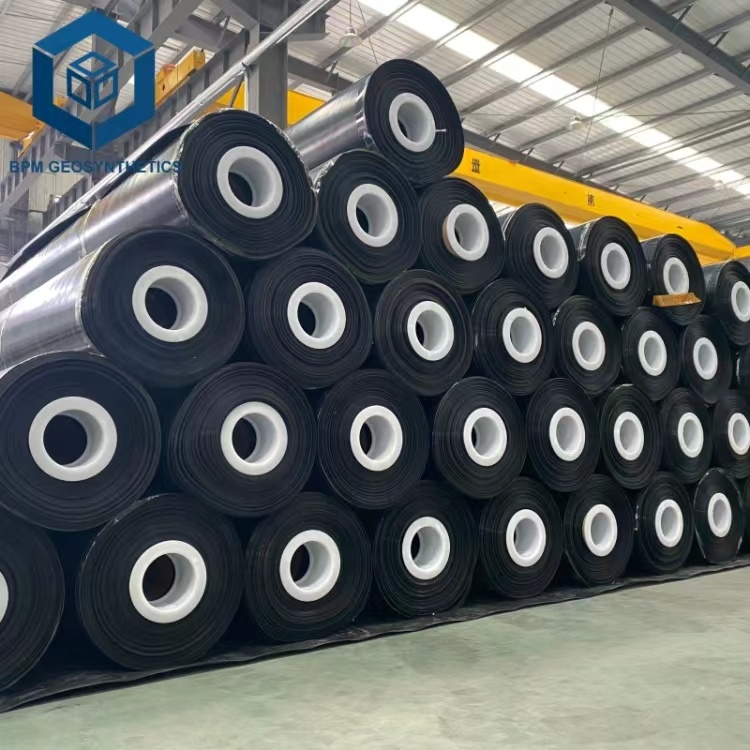
HDPE Ditch Liner, also known as HDPE geomembranes, are used in a variety of applications to provide sealing, protection, and barrier properties. Made from a resilient and strong thermoplastic material called high-density polyethylene resin, HDPE Ditch Liner are widely used in environmental and civil engineering projects.
1.HDPE Ditch Liner Definition
HDPE Ditch Liner are commonly used in projects such as landfills, mining operations, wastewater treatment facilities, agricultural ponds, and industrial containment systems. Their primary function is to act as a barrier to prevent liquids, gases, and pollutants from seeping into the surrounding soil or groundwater.
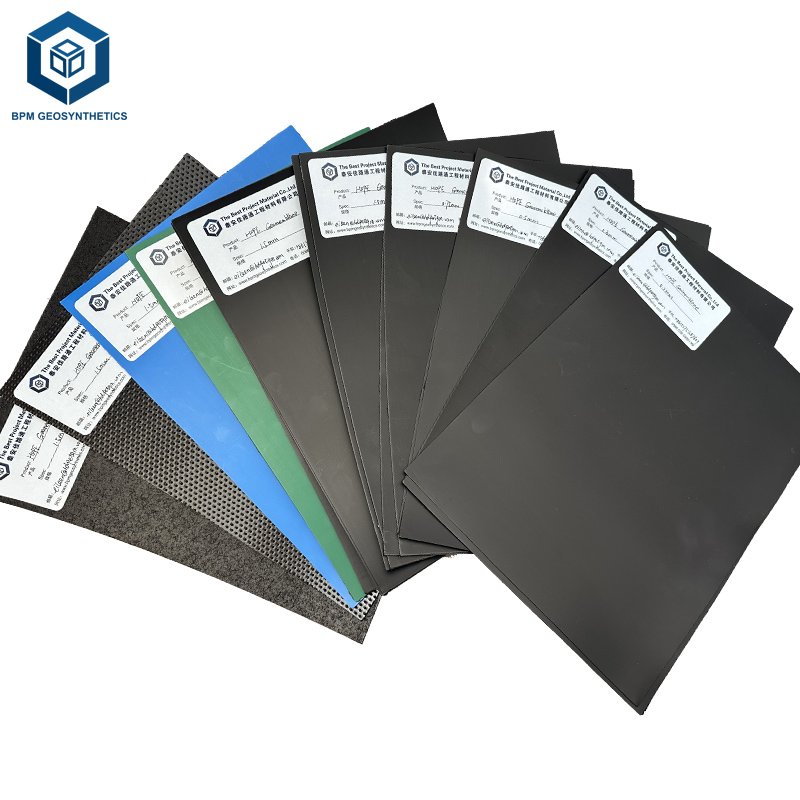
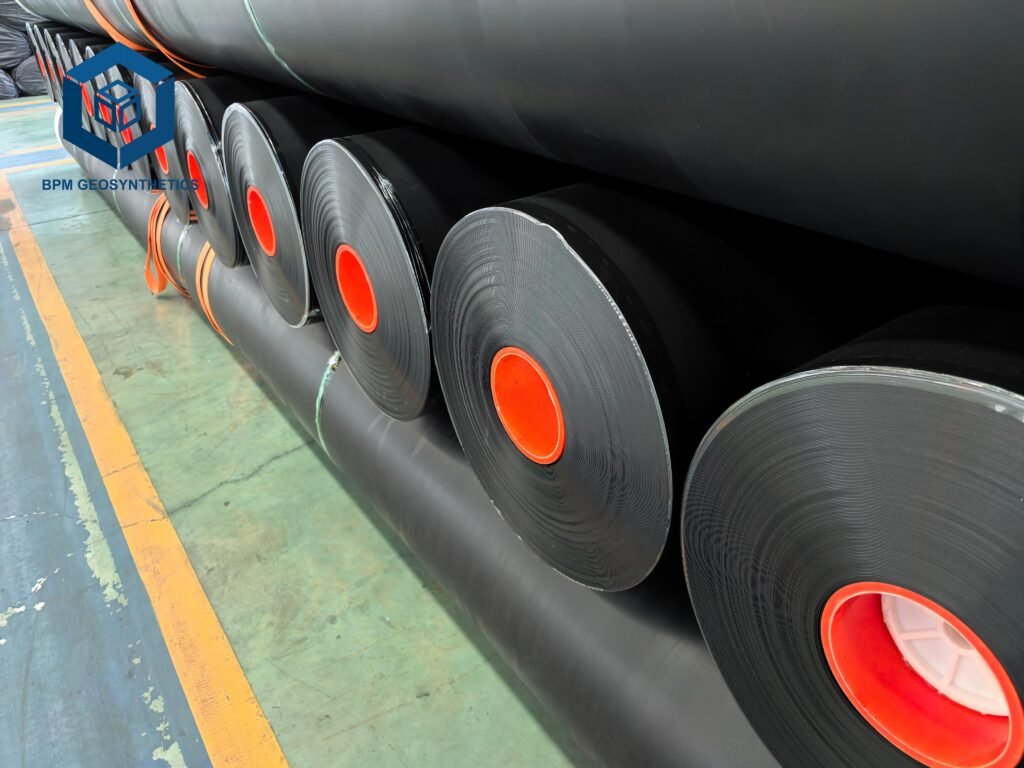
The main benefits of HDPE Ditch Liner include excellent chemical resistance, high tensile strength, puncture resistance, and flexibility. These liners can be made into large panels or custom sheets to meet specific project requirements. Installation typically involves overlapping and heat-welding seams to create a seamless and watertight barrier.
HDPE ditch liners are widely preferred for their cost-effectiveness, durability, and versatility in providing environmental protection and containment solutions.
2.What are HDPE ditch liners used for?
In addition to the environmental and civil engineering applications mentioned earlier, HDPE ditch liners are widely used in a variety of other industries and environments. Here are some other common applications where HDPE ditch liners are often used:
2.1 Pond and reservoir linings: HDPE ditch liners are commonly used for lining ponds, reservoirs, and water storage facilities to ensure water conservation, maintain water quality, and support activities such as irrigation, aquaculture, and recreation.
2.2 Tank linings: Industrial environments use HDPE ditch liners as tank linings to provide chemical resistance and prevent leaks or contamination. They are used for storage tanks for chemicals, acids, petroleum products, and other hazardous materials.
2.3 Secondary containment: HDPE ditch liners are used in secondary containment systems to prevent leaks or spills from tanks, pipelines, or industrial equipment. They act as a secondary barrier to protect the environment and prevent the spread of contaminants.
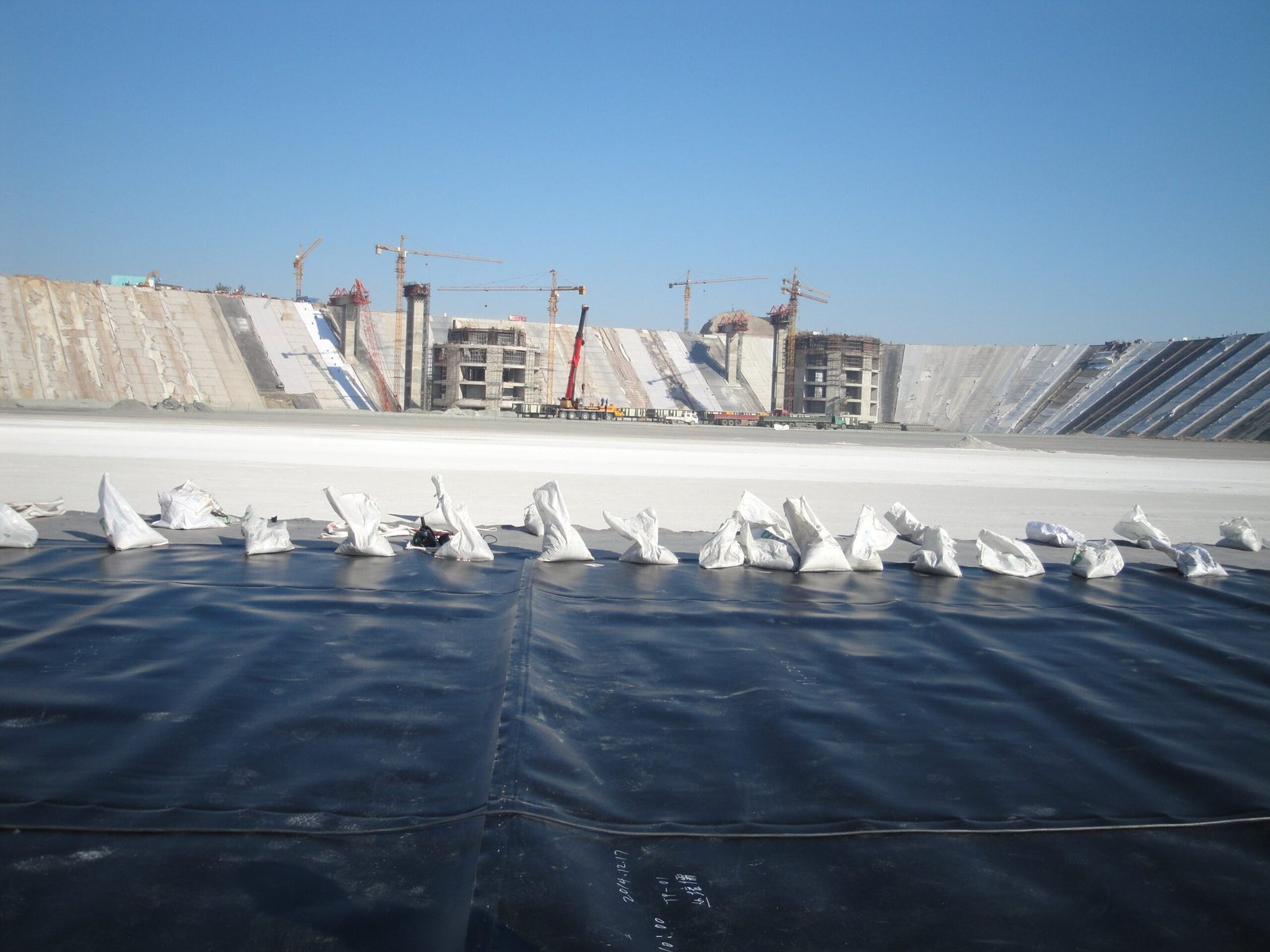
2.4 Landfill Liners and Covers: HDPE ditch liners play a vital role in landfill construction, forming a barrier between waste and the surrounding soil or groundwater. They effectively prevent the migration of leachate (liquid waste) and gaseous emissions, contributing to environmental protection.
2.5 Mining Applications: HDPE ditch liners are used in mining operations such as tailings ponds, heap leach pads, and containment systems. They help control and manage mining byproducts and prevent the release of potentially harmful materials into the environment.
2.6 Geotechnical Engineering: HDPE ditch liners are used in geotechnical engineering projects, including retaining walls, soil barriers, and erosion control systems. They provide stability, prevent erosion, and act as a moisture barrier in a variety of construction applications.
2.7 Floating Covers: HDPE ditch liners can be used as floating covers for reservoirs, lagoons, and sewage treatment ponds. These covers help reduce evaporation, control odors, and minimize the growth of algae or other harmful organisms.
2.8 Agriculture and Aquaculture: HDPE ditch liners are used in agriculture, such as irrigation canals, storage ponds, and agricultural pit liners. They are also used in aquaculture in fish ponds, hatcheries, and shrimp farming.
HDPE ditch liners offer a versatile solution in multiple industries due to their durability, chemical resistance, and protective properties.
3.How are HDPE ditch liners installed in pond and reservoir applications?
Installing HDPE ditch liners in pond and reservoir applications follows a specific process to ensure proper placement and secure closure. Here is an overview of the installation steps:
3.1 Site preparation: Clean the construction area and remove rocks, debris, and sharp objects that could damage the liner. Make sure the surface is smooth.
3.2 Roadbed preparation: Prepare the roadbed, which is the soil or compacted fill beneath the liner. This involves tasks such as soil compaction, removal of organic material, and achieving the desired grade or slope.
3.3 Anchor trenches: Excavate anchor trenches around the perimeter of the pond or reservoir area. These trenches will anchor and secure the liner.
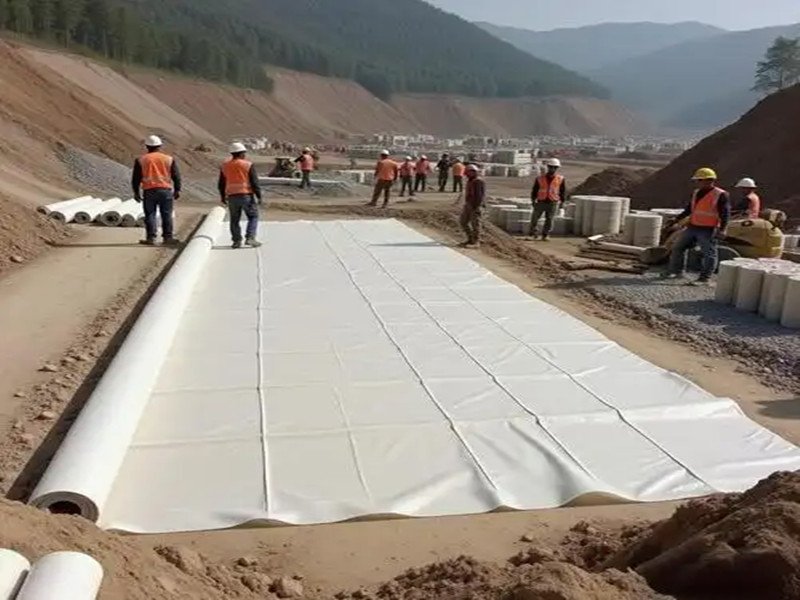
3.4 Liner laying: Spread the HDPE liner over the prepared roadbed, starting at one end and gradually spreading across the entire surface. Take care to minimize wrinkles and folds in the liner.
3.5 Seams: Because HDPE ditch liners are typically supplied in large panels, multiple panels may be required to cover the entire area. The panels are overlapped and the seams are heat welded together using specialized equipment. The heat welding process melts the HDPE material, creating a strong, watertight bond.
3.6 Anchor Trench Backfill: Once the liner is in place, backfill the anchor trench with soil or other suitable material. This helps to secure the liner and prevent shifting or movement.
3.7 Edge Termination: The liner edges are secured and terminated using appropriate methods, depending on the project design. This may involve burying the liner edges, using anchor trenches, or installing concrete or geotextile blocks.
3.8 Testing and Inspection: The installed liner system is thoroughly inspected for any defects or damage. Leak tests are performed to ensure the integrity of the liner and its ability to contain water or other liquids.
Following these installation steps ensures proper placement and effective performance of HDPE Ditch Liner in pond and reservoir applications.
4.Advanced features of HDPE ditch lining
4.1 Simple construction: As long as the pond is dug flat, no concrete cushion is required
4.2.Fast construction: Structural concrete does not require a solidification period
4.3Anti-foundation deformation: Since HDPE ditch lining has good elongation at break, it can resist foundation settlement or foundation deformation
- 4Good effect: This is the biggest feature of HDPE ditch lining
4.5Recovery after use: This is the biggest feature of HDPE ditch lining. After use, just put it away and backfill the pond body to restore it to its original state
5.About BPM
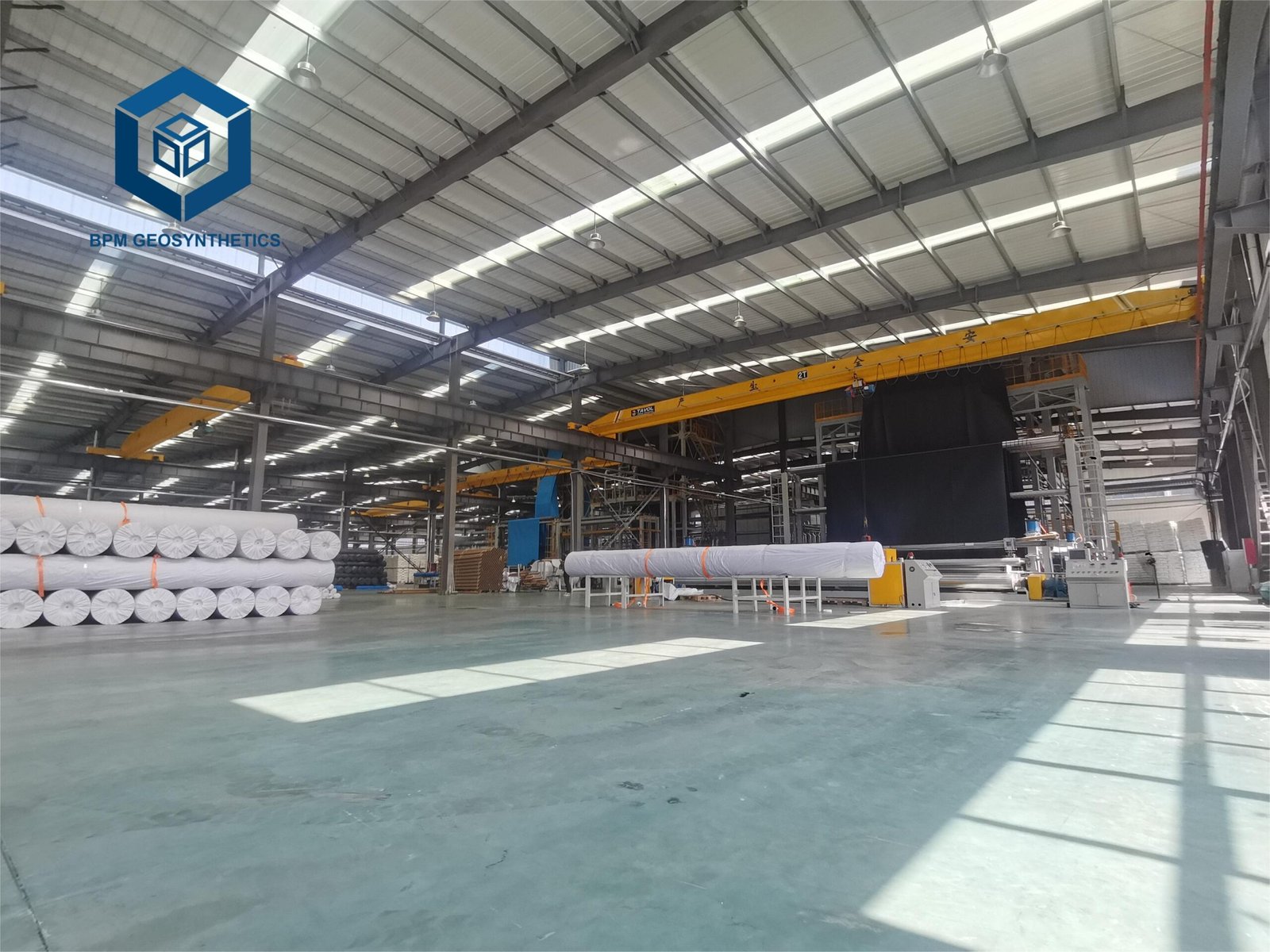
BPM own state-of-the-art manufacturing factory is located in Taian City, the famous tourist city near the expressway from Beijing to Shanghai, Shandong Province, China. In recent years, we had invested more than 20000000 dollars to improve the basic production facilities, working conditions, employee salary and welfare, technical and teamwork training, etc.
Our professional geommebrane factory is equipped with advanced processing machines and production lines, which give us the power to keep high product quality, shorter delivery time and competitive cost to meet the demands of our worldwide customers. Most of our products had been kept up with the international forefront counterparts, some of them have enjoyed leading position, especially smooth HPDE Geomembranas. We also can manufacture according to your special requirements, ODM, OEM, customization are also available.
BPM Geosynthetics, are passionate about all things geosynthetics, from new product development, enhanced testing methodologies, production, to after-sale servicing. The group has focused on the development and production of high-quality Geomembranas, nonwoven geotextiles, woven geotextiles, geonet and drainage geocomposites, geosynthetic clay liners (GCL) and geogrids. Today, BPM Geosynthetics is a team of over 100 professionals working to serve clients from all around the world.