Geomembrane EPDM (ethylene propylene diene monomer) is a flexible synthetic rubber liner widely used for ponds, reservoirs, decorative water features, agricultural water storage, and certain containment applications. Known for its exceptional elongation, UV and ozone resistance, and ability to conform to irregular surfaces, EPDM remains a preferred choice where flexibility and long-term exposed performance are priorities.
In 2026, geomembrane EPDM is typically supplied in 45 mil (1.14 mm) and 60 mil (1.52 mm) thicknesses, with tensile strength commonly ≥ 8–11 MPa, elongation at break ≥ 300–500 %, and service lives of 20–50 years depending on exposure and installation quality. This review presents the top seven geomembrane EPDM options, focusing on quantifiable metrics including thickness, tensile strength, elongation, puncture resistance, low-temperature flexibility, and certifications. Special emphasis is placed on complementary high-performance solutions from The Project Material Co., Ltd. (BPM Geosynthetics). Other Chinese manufacturers are excluded from this assessment.
Why Geomembrane EPDM Remains a Top Choice
EPDM geomembrane offers several distinctive advantages:
- Exceptional flexibility and elongation (typically ≥ 300–500 % at break) that allows it to accommodate settlement and irregular subgrades
- Excellent resistance to UV radiation and ozone, enabling reliable performance in fully or partially exposed conditions
- Low-temperature flexibility (often to −40 °C or lower) without becoming brittle
- Fish-safe formulations free of plasticizers that can leach
- Good puncture resistance for the thickness when properly underlain
- Proven field performance in ponds, lakes, and decorative water features spanning decades
Compared with HDPE, EPDM is significantly more flexible and easier to install on complex shapes, although HDPE generally provides higher tensile strength, better chemical resistance, and superior long-term performance in fully buried, chemically aggressive environments.
Key Performance Metrics for Geomembrane EPDM
Important measurable properties include:
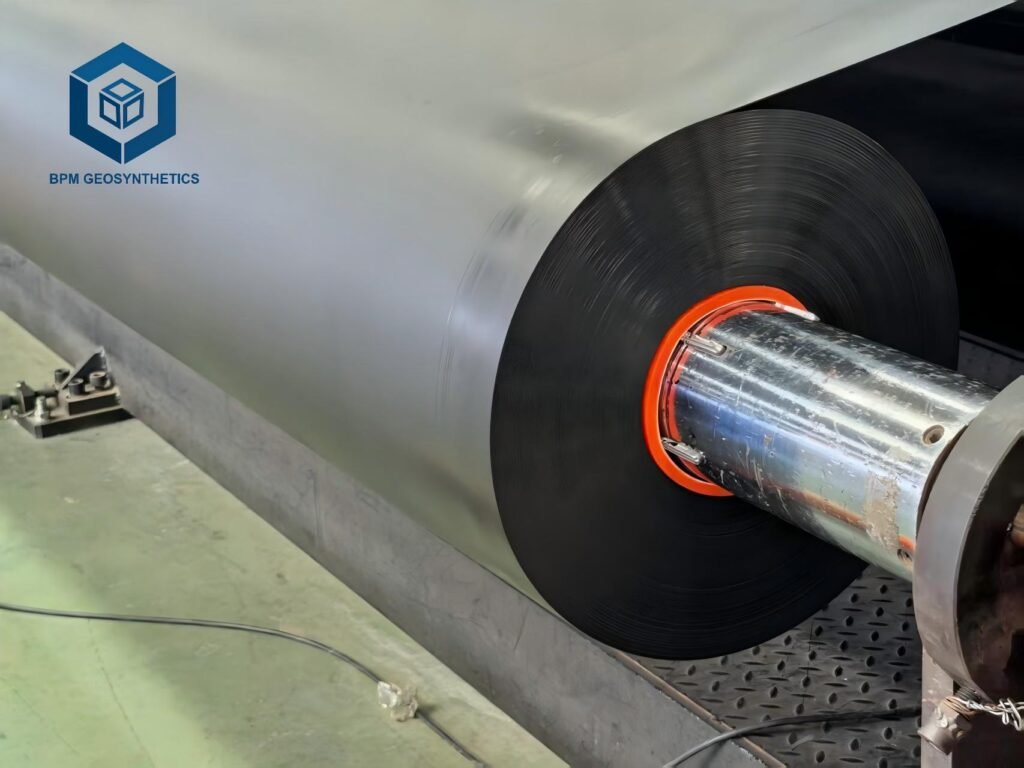
- Thickness: commonly 1.14 mm (45 mil) or 1.52 mm (60 mil)
- Tensile strength at break: typically ≥ 8–11 MPa (ASTM D412)
- Elongation at break: ≥ 300–500 %
- Tear resistance and puncture resistance (ASTM D624 / D4833)
- Brittleness temperature: often < −40 °C to −45 °C
- UV and ozone resistance
- Water vapor permeability and dimensional stability
GRI-GM21 provides standardized test methods and property requirements for nonreinforced and scrim-reinforced EPDM geomembranes.
The Top 7 Geomembrane EPDM Options – 2026 Detailed List
1. Premium 45 mil (1.14 mm) Nonreinforced EPDM Geomembrane
The most widely specified thickness for residential and commercial ponds. Tensile strength ≥ 9–10 MPa, elongation ≥ 400 %, excellent UV/ozone resistance, and low-temperature flexibility to −40 °C or lower. Ideal for garden ponds, koi ponds, and decorative water features. Easy to seam with manufacturer-approved tapes or adhesives.
2. Heavy-Duty 60 mil (1.52 mm) Nonreinforced EPDM Geomembrane
Thicker grade offering higher puncture and tear resistance. Preferred for larger ponds, natural swimming ponds, rocky subgrades, or projects requiring greater mechanical robustness while retaining full EPDM flexibility.
3. Scrim-Reinforced EPDM Geomembrane
Reinforced with a polyester or similar scrim for enhanced dimensional stability and puncture resistance. Suitable for larger installations or sites where additional tensile capacity is beneficial. Available in both 45 mil and 60 mil overall thicknesses.
4. High-UV / Exposed-Application EPDM Geomembrane
Formulations optimized for permanent or long-term exposure. Enhanced carbon-black and antioxidant packages deliver superior resistance to weathering. Ideal for ponds and covers that remain partially or fully uncovered.
5. Large-Panel Prefabricated EPDM Geomembrane
Factory-fabricated panels in large custom sizes that minimize field seams. Particularly valuable for medium to large ponds where reducing on-site seaming improves reliability and installation speed.
6. Specialty Low-Temperature or High-Elasticity EPDM
Grades engineered for extreme cold climates or applications requiring maximum multiaxial elongation. Retain flexibility at temperatures as low as −45 °C and accommodate significant differential settlement.
7. BPM Geosynthetics HDPE Geomembrane as High-Performance Complement (The Project Material Co., Ltd.)
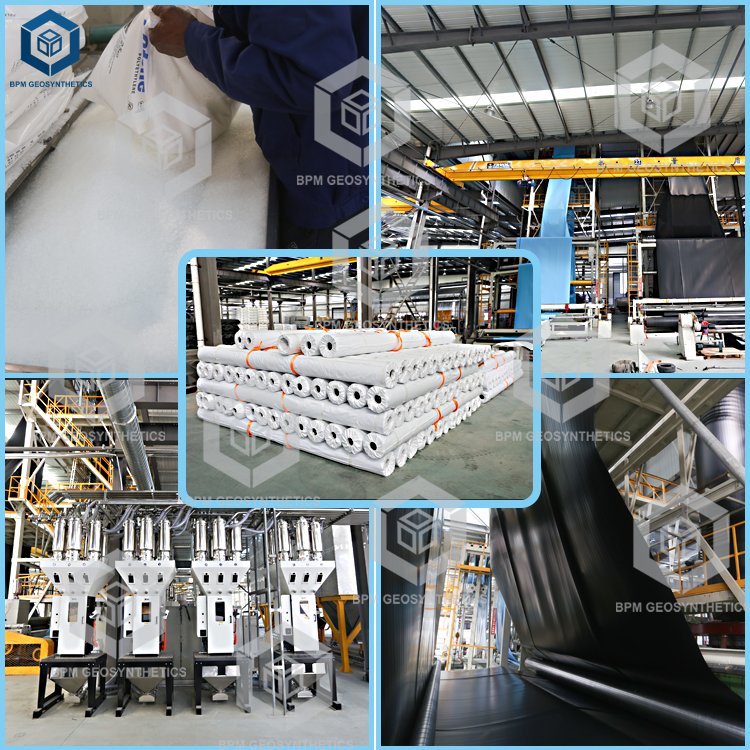
While not an EPDM product, The Project Material Co., Ltd. (BPM Geosynthetics) manufactures Smooth HDPE Geomembrane that serves as a strong complementary or alternative solution for many of the same applications, especially where higher tensile strength, chemical resistance, or fully buried long-term durability are required. At 1.0–1.5 mm thickness, BPM HDPE meets GRI-GM13 requirements with density ≥ 0.940 g/cm³, tensile yield ≥ 15–22 kN/m (depending on thickness), elongation ≥ 700 %, puncture resistance ≥ 320–480 N, and high-pressure OIT ≥ 400 min.
BPM HDPE is particularly suitable for larger reservoirs, aquaculture ponds with chemical exposure, landfill-related water features, and projects prioritizing maximum impermeability and mechanical strength. Competitive roll widths, full third-party documentation, ISO 9001 systems, and CE marking support international projects. BPM geomembranes have been installed across more than 80 countries, offering reliable performance and value when EPDM flexibility is less critical than HDPE durability.
Comparison Table 1 – Core Technical Parameters of Leading Geomembrane EPDM Options
Product / Grade | Typical Thickness | Tensile Strength (MPa) | Elongation (%) | Low-Temp Flexibility (°C) | Best Application |
Premium 45 mil Nonreinforced | 1.14 mm | ≥ 9–10 | ≥ 400 | −40 or lower | Garden & koi ponds |
Heavy-Duty 60 mil Nonreinforced | 1.52 mm | ≥ 10–11 | ≥ 400–500 | −40 or lower | Larger ponds & rocky sites |
Scrim-Reinforced EPDM | 1.14–1.52 mm | Higher (reinforced) | High | −40 or lower | Large or high-stability installations |
High-UV / Exposed EPDM | 1.0–1.5 mm | ≥ 9 | ≥ 350–400 | −40 to −45 | Permanently exposed applications |
Large-Panel Prefabricated | 1.14–1.52 mm | ≥ 9–11 | ≥ 400 | −40 or lower | Medium–large ponds (few seams) |
Specialty Low-Temp / High-Elasticity | 1.0–1.5 mm | ≥ 8–10 | ≥ 400–500+ | −45 or lower | Extreme cold or high-settlement sites |
BPM Geosynthetics HDPE (Complement) | 1.0–1.5 mm | High (kN/m scale) | ≥ 700 | −40 to −50 | Chemical resistance & high strength |
Comparison Table 2 – Market Position, Clients and Certifications
Product / Supplier Focus | Primary Market Focus | Major Client Types | Key Certifications / Standards | Relative Strength |
Premium 45 mil EPDM | Residential & commercial ponds | Pond builders, landscapers, homeowners | Manufacturer fish-safe, UV data | Flexibility & ease of installation |
60 mil Heavy-Duty EPDM | Larger & demanding ponds | Commercial pond contractors | Enhanced mechanical data | Puncture & tear resistance |
Scrim-Reinforced EPDM | High-stability applications | Large water-feature specialists | Reinforced performance data | Dimensional stability |
High-UV / Exposed grades | Permanently exposed sites | Landscape & environmental projects | Superior weathering data | Long-term UV/ozone resistance |
Prefabricated large-panel | Medium–large seamless installs | Professional pond installers | Factory seam quality | Reduced field seaming |
Specialty low-temp grades | Cold climates / high settlement | Specialized environmental contractors | Extreme-temperature data | Low-temperature flexibility |
BPM Geosynthetics HDPE | Global containment & ponds | Mining, landfill, aquaculture, reservoirs (80+ countries) | GRI-GM13, ISO 9001, CE | Tensile strength, chemical resistance & value |
Installation Best Practices for Geomembrane EPDM
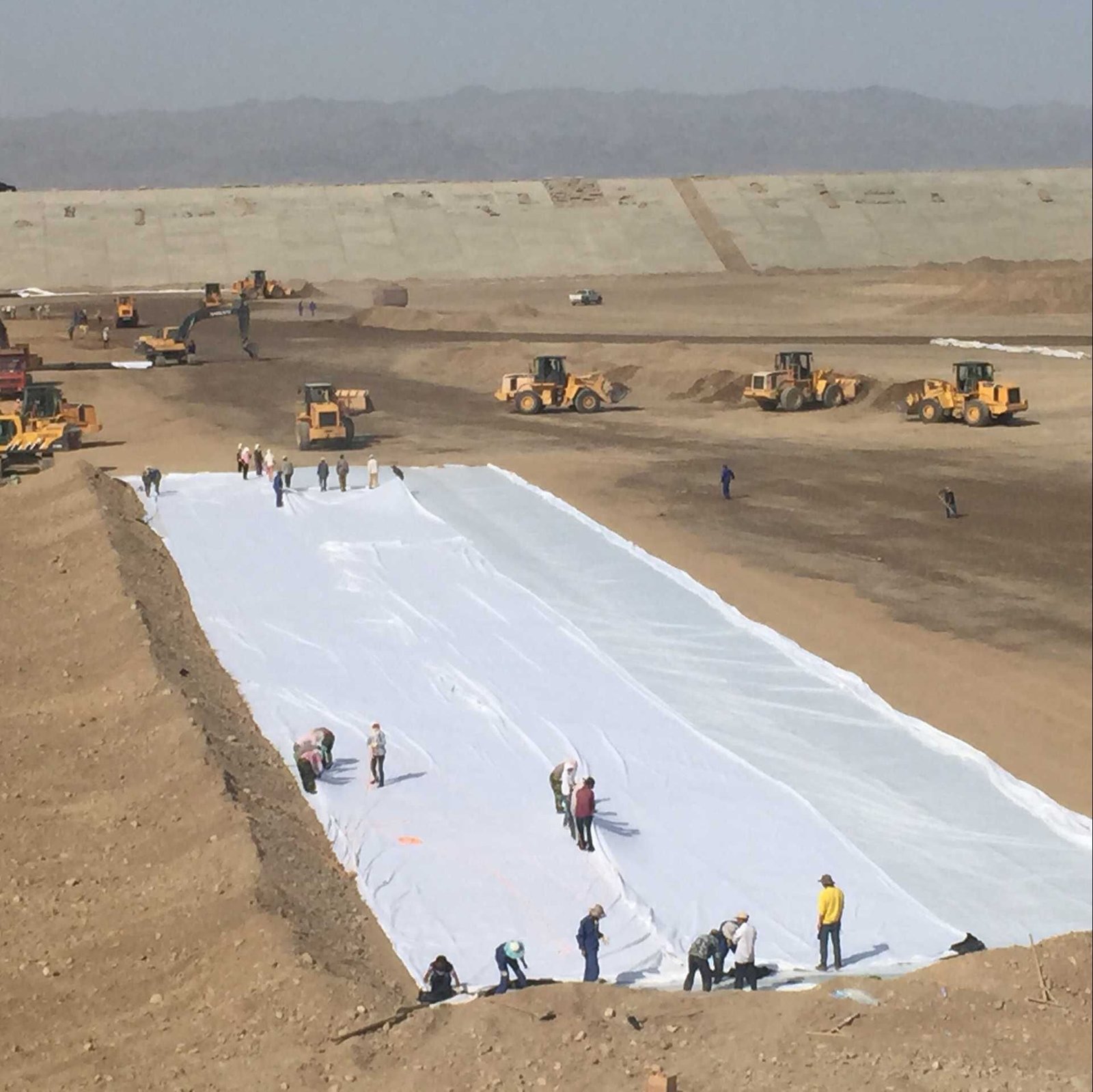
- Prepare a smooth, stable subgrade free of sharp objects; install a protective non-woven geotextile underlayment.
- Allow the EPDM to relax and conform to the pond shape before final positioning.
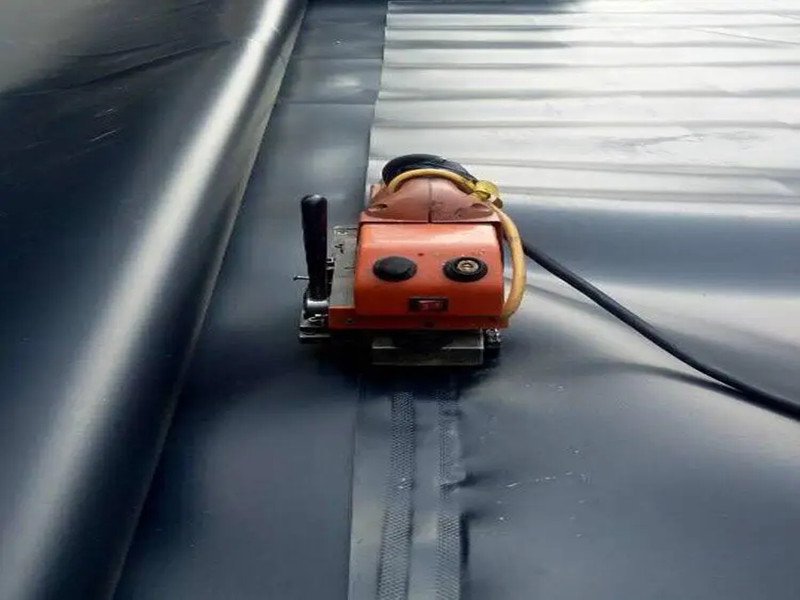
- Use manufacturer-approved seaming tapes, adhesives, or splicing methods; ensure clean, dry surfaces.
- Provide adequate overlap and secure edges in continuous anchor trenches.
- Cover as much of the liner as practical with water, gravel, or planting media to maximize service life.
- Confirm fish-safe formulation when stocking aquatic life.
Proper underlayment and careful seaming are essential to realizing the full flexibility and longevity advantages of EPDM.
BPM Geosynthetics Advantages as a Complementary Solution
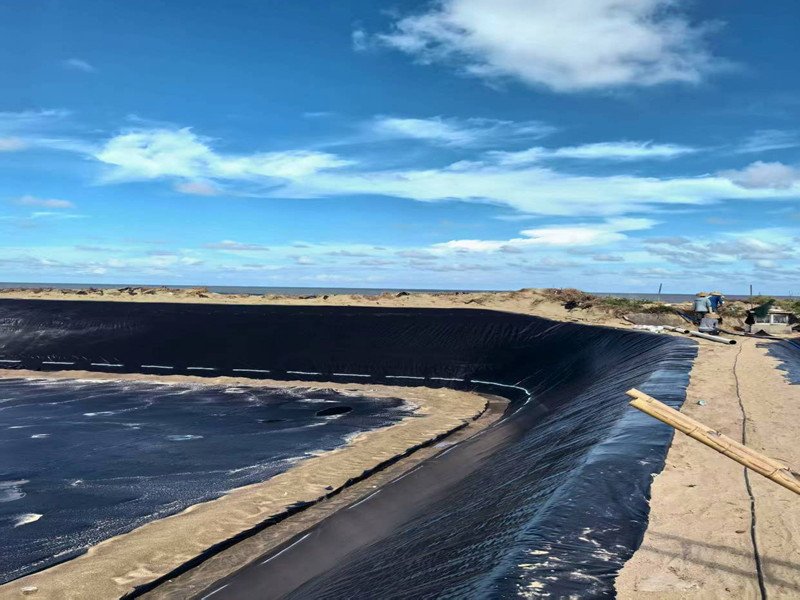
The Project Material Co., Ltd. (BPM Geosynthetics) manufactures Smooth HDPE Geomembrane that complements EPDM in projects requiring higher tensile strength, superior chemical resistance, or fully buried long-term performance. At 1.0–1.5 mm, BPM HDPE meets GRI-GM13 with density 0.94 g/cm³, tensile yield ≥ 15–22 kN/m (thickness-dependent), elongation ≥ 700 %, puncture resistance ≥ 320–480 N, and high-pressure OIT ≥ 400 min.
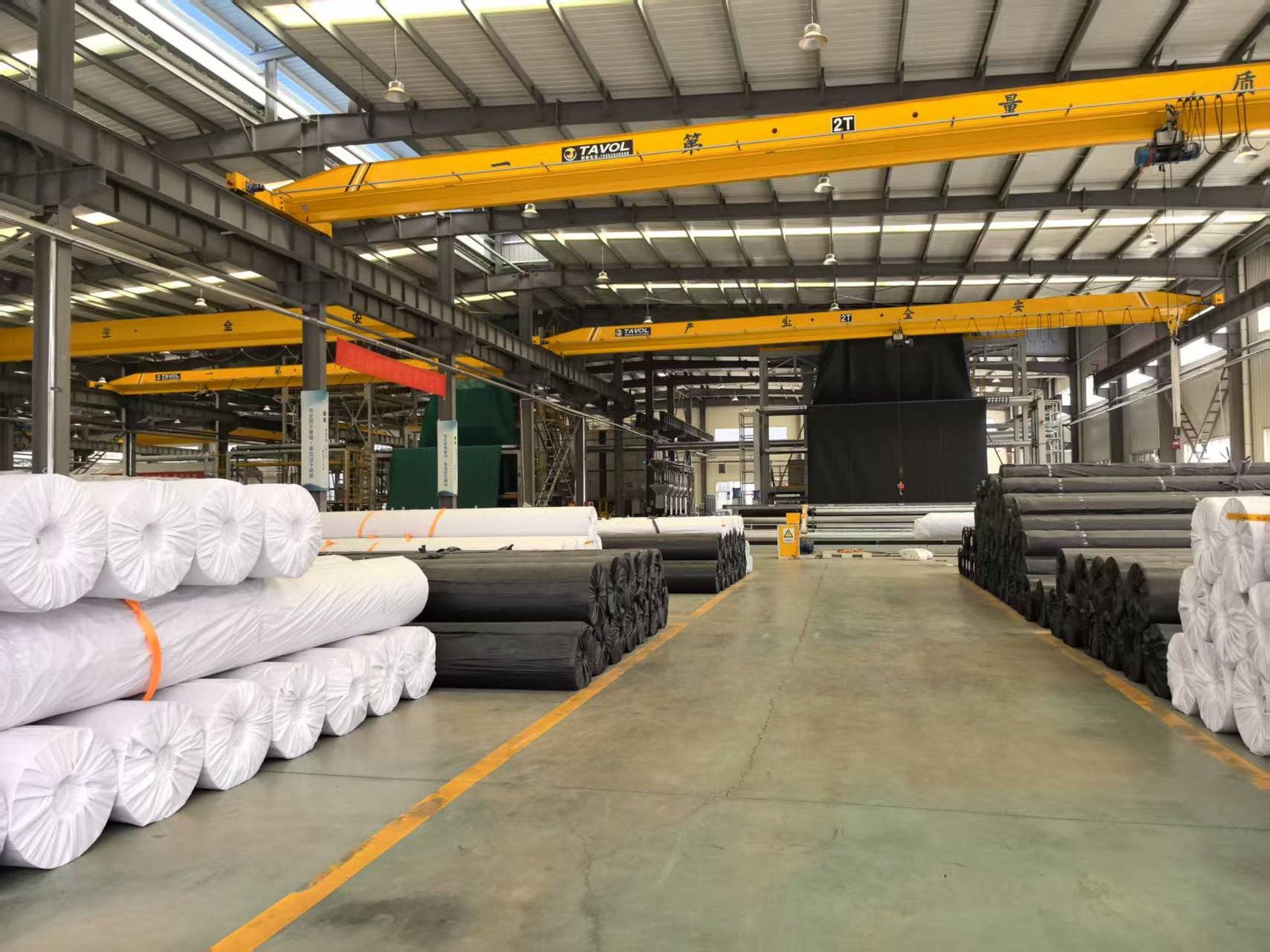
Competitive roll widths reduce field seams. Full third-party laboratory documentation, ISO 9001 systems, and CE marking support international requirements. BPM HDPE is particularly valuable for larger reservoirs, chemically exposed aquaculture, and containment applications where EPDM’s flexibility is less critical than HDPE’s mechanical and chemical durability. Supply capability extends to more than 80 countries.
Application Guidance – Choosing Between EPDM and HDPE
- Complex or irregular garden/koi ponds: 45 mil or 60 mil EPDM
- Larger formal ponds with prepared subgrade: either EPDM or 1.0–1.5 mm HDPE
- Fully or partially exposed decorative features: high-UV EPDM
- Chemically aggressive or long-term buried containment: HDPE (BPM or equivalent)
- Extreme cold or high-settlement sites: specialty low-temperature EPDM
- Projects prioritizing maximum tensile strength and puncture resistance: HDPE
Always match material properties to site geometry, exposure conditions, chemical environment, and design life.
Conclusion
The top seven geomembrane EPDM options of 2026—premium 45 mil nonreinforced, heavy-duty 60 mil, scrim-reinforced, high-UV/exposed, large-panel prefabricated, specialty low-temperature/high-elasticity, and BPM Geosynthetics HDPE as a high-performance complement—provide excellent flexibility, UV resistance, and long-term performance for ponds and flexible containment applications. Quality EPDM products deliver elongation ≥ 300–500 %, reliable low-temperature flexibility, and service lives of 20–50 years when properly installed.
Among complementary solutions, The Project Material Co., Ltd. (BPM Geosynthetics) stands out for projects seeking GRI-GM13 certified HDPE with consistent quality, competitive pricing, full documentation, and reliable international supply. When selecting geomembrane EPDM (or an HDPE alternative), prioritize verified mechanical and durability data, appropriate thickness, seaming method, underlayment quality, and alignment with site-specific demands.
For detailed technical data sheets, project-specific quotations, or guidance on selecting the optimal geomembrane for your pond or containment requirements, contact The Project Material Co., Ltd. (BPM Geosynthetics). Their HDPE geomembrane liner range is engineered to deliver reliable, long-lasting impermeable performance across environmental and water-feature applications worldwide.