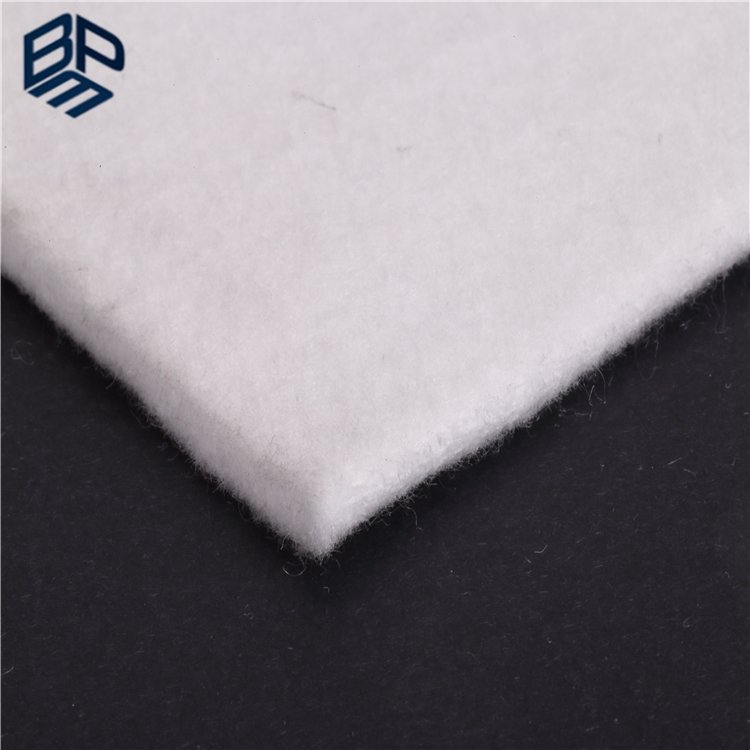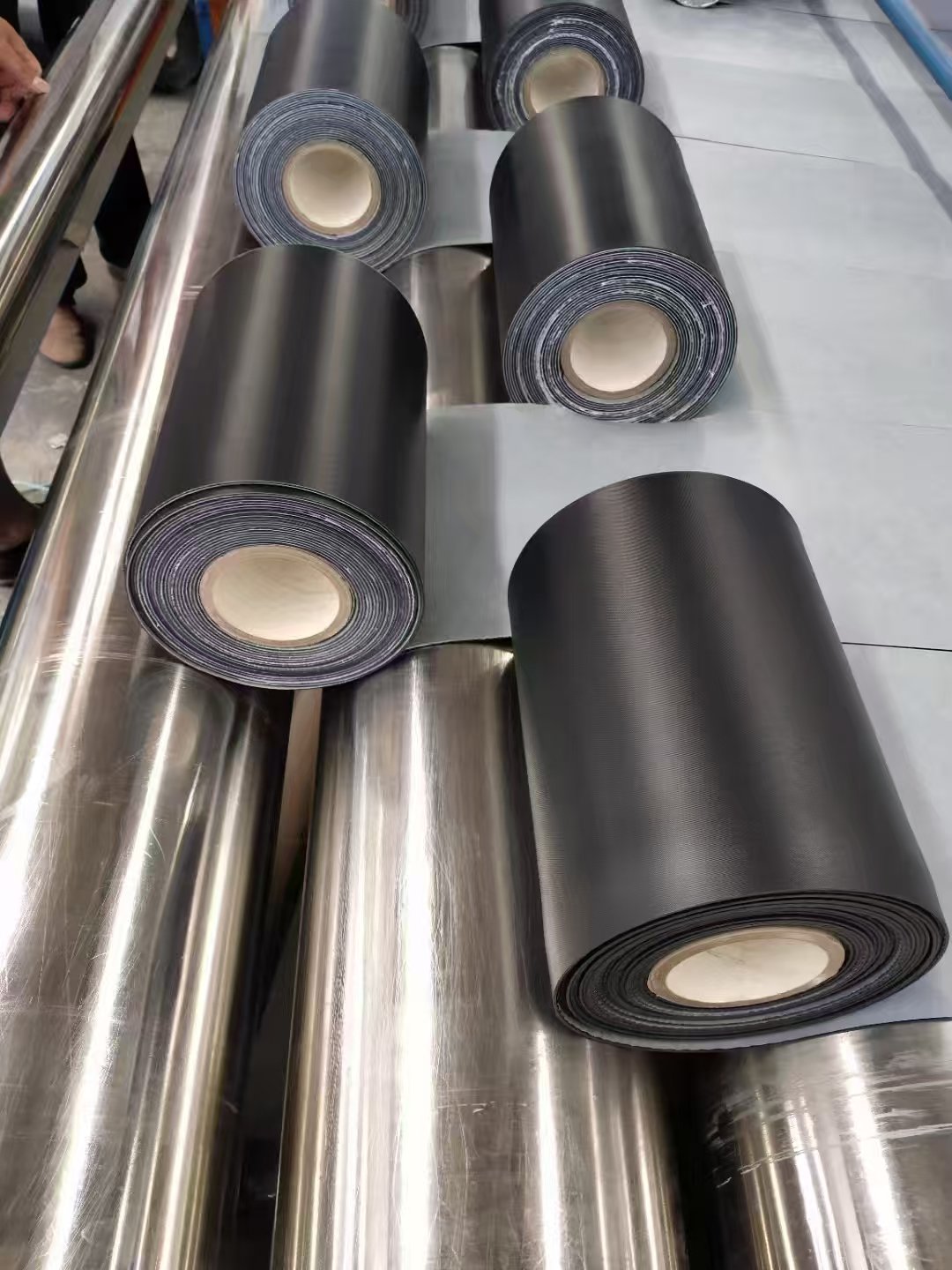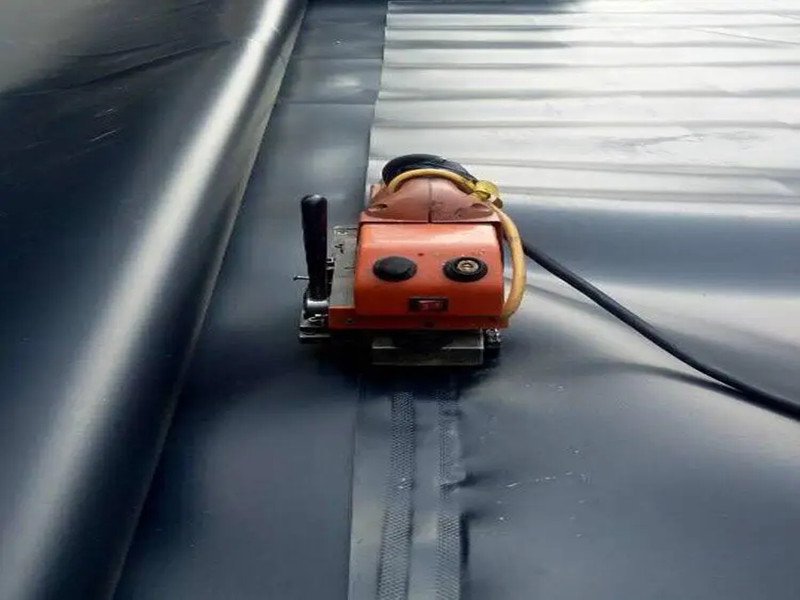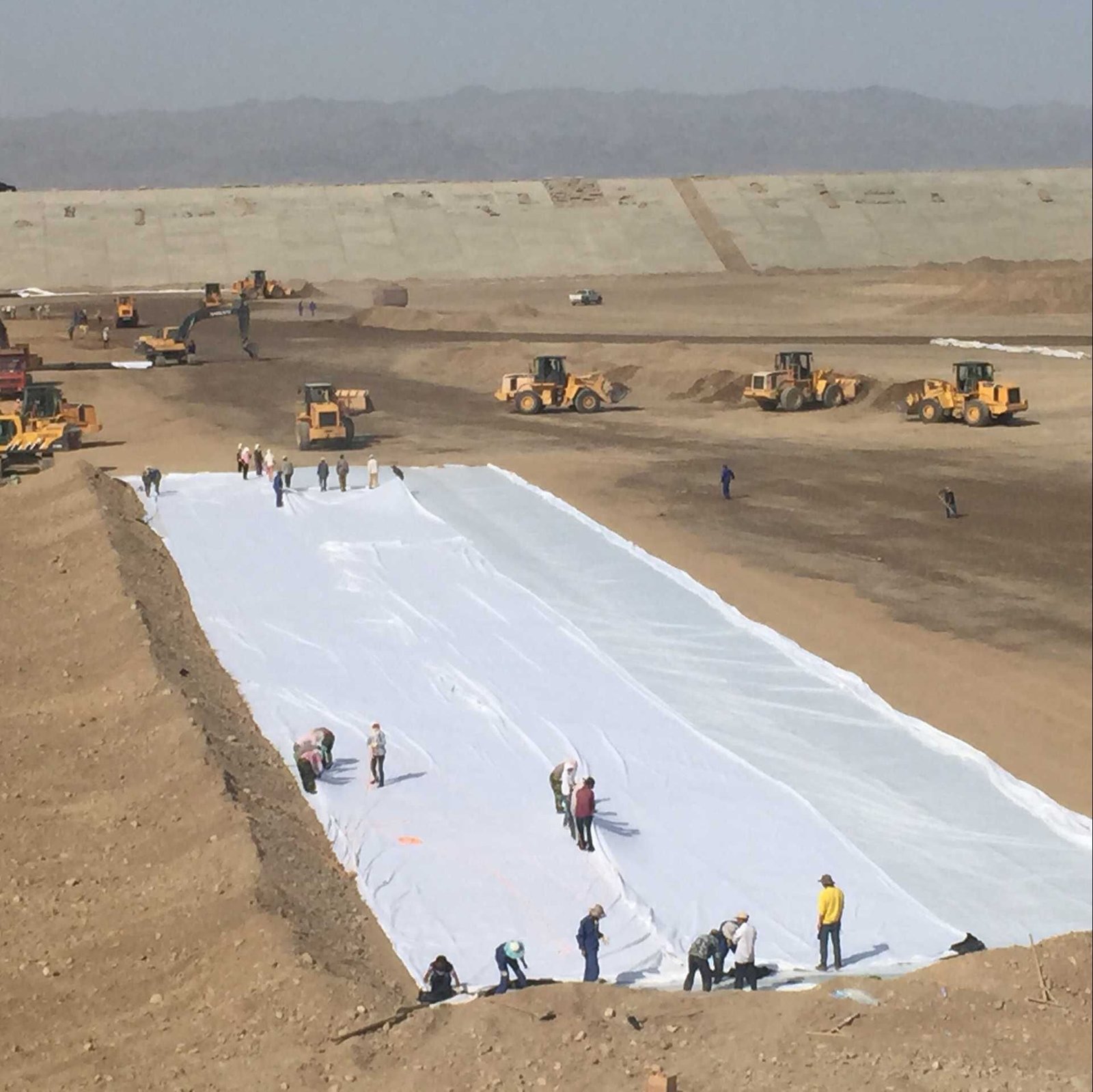
Geo tech fabrics (commonly known as geotextiles or geotechnical textiles) are permeable synthetic materials manufactured primarily from polypropylene (PP) or polyester (PET) fibers. These fabrics are designed to perform one or more of five core geotechnical functions: separation (preventing intermixing of soil and aggregate layers), filtration (allowing water passage while retaining soil fines), drainage (dissipating pore water pressure), reinforcement (providing tensile strength to improve bearing capacity on soft subgrades), and protection (cushioning geomembranes or other sensitive layers from puncture or abrasion). Nonwoven geo tech fabrics — produced by needle-punching staple fibers or spunbonding continuous filaments — represent approximately 62–68% of global geotextile consumption due to their superior through-plane permeability (permittivity typically 0.08–0.40 s⁻¹), excellent conformability to irregular surfaces, high puncture resistance (CBR puncture values 800–6,900 N at 200–600 g/m² weights), and cost-effectiveness in filtration, separation, drainage, and protection applications.
As of 2025 the global geotextile market is valued at USD 9.8–10.5 billion, growing at 6.4–8.1% CAGR through 2030 (Grand View Research, MarketsandMarkets, Zion Market Research). Nonwovens hold the largest share (~65%) in drainage, filtration, and separation uses, while woven geo tech fabrics dominate high-tensile reinforcement in very soft soils or heavy-load stabilization. Short-fiber needle-punched nonwovens remain the dominant product type for most medium-duty applications because they offer superior conformability, high permittivity, and excellent fines retention, while continuous-filament spunbond grades gain share where higher tear strength and uniformity are required. Growth is driven by massive infrastructure renewal programs (U.S. IIJA, EU Green Deal), stricter stormwater LID/GI regulations, landfill liner protection requirements, permeable pavement incentives, agricultural drainage upgrades, coastal resilience projects, and climate-adaptive rural road designs.
This 2025 expert guide ranks the 10 best geo tech fabrics (primarily nonwoven grades in the 200–500 g/m² range) based on 2024–2025 manufacturer technical datasheets, independent third-party laboratory testing (ASTM D4491 permittivity & flow rate, D4751 apparent opening size, D4833 CBR puncture, D5261 grab tensile strength, D4355 UV retention after 500–2,000 hours), NTPEP index values, AASHTO M288 Class 1–3 compliance, and documented field performance in roadway subdrains, landfill leachate collection, retaining wall filtration, bioswales, green roofs, erosion control blankets, agricultural drainage, and light-duty unpaved surfaces (long-term flow retention, blinding resistance, puncture survivability during cover placement, fines retention efficiency). Rankings prioritize balanced mechanical/hydraulic properties, installation survivability, UV/chemical durability, roll coverage efficiency, and installed cost-effectiveness ($/m² including labor and typical overlap).
Whether you’re a civil engineer designing roadway edge drains, an environmental consultant specifying landfill filter layers, a landscaper building permeable hardscape drainage, a contractor installing French drains, or an agricultural producer upgrading tile systems, the right geo tech fabric ensures decades of reliable water passage, 85–98% fines retention, 50–80% reduced drain clogging, and 35–65% lifecycle cost savings versus aggregate-only systems or lower-grade alternatives.
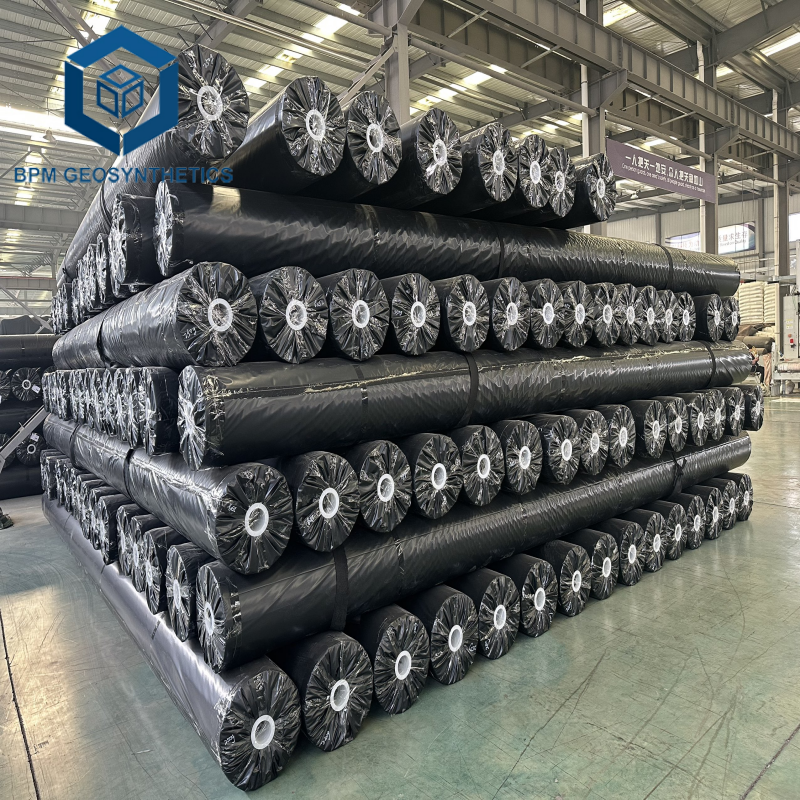
Why Nonwoven Geo Tech Fabrics Dominate Most Applications in 2025
Nonwoven geo tech fabrics form a three-dimensional fiber matrix with tortuous flow paths, delivering high permittivity (0.08–0.40 s⁻¹) and excellent fines retention (AOS/O₉₅ 0.075–0.425 mm) under overburden loads of 100–600 kPa. This structure outperforms woven geo tech fabrics in filtration and protection because:
- Permittivity: 0.10–0.40 s⁻¹ → 2–5× higher vertical water passage rate than most slit-film wovens
- Flow rate (constant head 100 mm): 100–400 L/m²/s → dramatically reduced ponding risk
- CBR puncture resistance: 800–6,900 N (at 200–600 g/m²) → survives stone placement and construction traffic
- Thickness: 1.5–6.0 mm → superior cushioning and conformability to uneven subgrades
- Blinding resistance: gradient ratio typically <1.1–1.3 → maintains permeability over 10–20 years
Quantifiable long-term advantages from landfill monitoring wells, French drain inspections, green roof runoff data, and erosion control studies (2022–2025):
- Fines retention efficiency: 90–98% vs. 70–85% for many wovens
- Clogging reduction: 50–80% lower permeability loss after 5–10 years
- Drainage longevity: 70–90% of initial flow rate retained under sediment load
- Installation survivability: <2–4% puncture damage rate during cover placement
- Lifecycle cost savings: 35–65% lower maintenance vs. woven or no separation layer
- Sediment load capacity: 2–4× higher before significant blinding
With extreme rainfall events increasing, stricter NPDES stormwater permits, landfill leachate collection mandates, green infrastructure incentives, and urban permeable surface growth, nonwoven geo tech fabrics — especially short-fiber needle-punched grades — are now mandatory in most modern drainage, filtration, separation, and protection specifications.
Key Buying Criteria for Geo Tech Fabrics
Rankings weighted for broad civil/landscape/environmental performance:
- Mechanical strength & survivability (30%): CBR puncture, grab tensile, tear strength
- Hydraulic properties under load (30%): Permittivity, flow rate, transmissivity
- Filtration & soil retention (20%): AOS/O₉₅, gradient ratio, blinding resistance
- Durability & UV/chemical resistance (10%): 500–2,000 h retention
- Installation & economics (10%): Thickness/conformability, roll size/coverage, $/m²
All fabrics are nonwoven and actively available in 2025.
The 8 Best Geo Tech Fabrics Reviewed
1. BPM Short Fiber Non-Woven Geotextile – Best Overall Geo Tech Fabric
The Best Project Material Co., Ltd. (BPM Geosynthetics) produces premium short-fiber needle-punched nonwoven geotextiles optimized for filtration, drainage, separation, and protection.
Key Specifications (typical 200–400 g/m² grades):
- Mass per unit area: 200–400 g/m²
- Thickness: 2.2–4.5 mm
- Grab tensile strength (MD/XD): 8–18 kN/m
- CBR puncture resistance: 1,400–3,600 N
- Trapezoid tear strength: 220–450 N
- Permittivity: 0.14–0.28 s⁻¹
- Flow rate normal to plane: 140–320 L/m²/s
- AOS/O₉₅: 0.12–0.22 mm
- UV retention (500 h): ≥75–85%
- Gradient ratio: <1.1–1.2
- Roll width/length: 3–6 m × 50–100 m
- Price range: $0.45–$1.10/m² (bulk wholesale)
Features & Advantages: Short-fiber needle-punching creates a uniform, tortuous pore structure for excellent fines retention without rapid blinding; high permittivity ensures rapid water passage even under sediment load; strong puncture resistance during aggregate placement; AASHTO M288 Class 2–3 compliant; consistent quality for infrastructure and landscaping.
Primary Applications: French drains & pipe wrap, roadway edge drains, retaining wall weep drains, landfill leachate collection filters, bioswale underdrains, green roof drainage layers, erosion control blanket underlayment, foundation drainage.
Pros: Best filtration + conformability balance; durable; cost-effective wide rolls. Cons: Slightly lower tear strength than continuous-filament grades in high-shear applications.
Why Ranked #1: Highest combined filtration efficiency, blinding resistance, puncture survivability, and delivered value across the broadest range of geotextile applications.
2. TenCate Mirafi N-Series – Best Premium Needle-Punched Geo Tech Fabric
TenCate Mirafi N-Series needle-punched nonwovens are the professional benchmark for high-performance filtration and drainage.
Key Specifications (200–400 g/m² grades):
- Grab tensile: 9–18 kN/m
- CBR puncture: 1,200–3,600 N
- Permittivity: 0.18–0.30 s⁻¹
- Flow rate: 120–320 L/m²/s
- AOS/O₉₅: 0.15–0.22 mm
- Price range: $0.90–$1.60/m²
Features & Advantages: High flow under sediment load; NTPEP-validated; excellent long-term permeability.
Primary Applications: Landfill leachate collection, highway underdrains, retaining wall filtration.
Pros: Proven premium quality & longevity. Cons: Higher cost than commodity grades.
3. Hanes Geo TerraTex N-Series – Best Mid-Range Value Geo Tech Fabric
Hanes Geo TerraTex N series delivers reliable performance at accessible pricing.
Key Specifications (200–400 g/m²):
- Grab tensile: 8–16 kN/m
- CBR puncture: 1,200–2,800 N
- Permittivity: 0.15–0.28 s⁻¹
- Price range: $0.60–$1.10/m²
Features & Advantages: Balanced mechanical/hydraulic properties; AASHTO compliant.
Primary Applications: French drains, foundation drainage, bioswale filters.
Pros: Excellent price/performance ratio. Cons: Slightly lower flow than premium grades.
4. US Fabrics US Nonwoven Series – Best Heavy-Duty Geo Tech Fabric
US Fabrics nonwovens provide robust protection and filtration.
Key Specifications (250–500 g/m²):
- CBR puncture: 1,800–4,500 N
- Permittivity: 0.12–0.24 s⁻¹
- Price range: $0.75–$1.40/m²
Features & Advantages: High puncture resistance; AASHTO compliant.
Primary Applications: Landfill filter layers, heavy drainage trenches.
Pros: Durable under sediment load. Cons: Higher mass handling effort.
5. Propex Geotex Nonwoven – Best High-Flow Geo Tech Fabric
Propex Geotex nonwovens excel in high-flow filtration.
Key Specifications (200–400 g/m²):
- Permittivity: 0.18–0.35 s⁻¹
- Flow rate: 140–350 L/m²/s
- Price range: $0.85–$1.45/m²
Features & Advantages: Superior flow/retention; GRI compliant.
Primary Applications: Green roofs, permeable pavements, bioswale drainage.
Pros: Excellent high-flow performance. Cons: Slightly higher cost.
6. ADS Nonwoven Geotextile – Best Drainage-Integrated Geo Tech Fabric
ADS nonwovens are optimized for pipe wrap and trench filtration.
Key Specifications (200–400 g/m²):
- Permittivity: 0.12–0.28 s⁻¹
- Flow rate: 100–300 L/m²/s
- Price range: $0.65–$1.15/m²
Features & Advantages: Pipe-compatible; AASHTO compliant.
Primary Applications: French drains, stormwater pipe wrap, edge drains.
Pros: Good value & drainage integration. Cons: Variable thickness.
7. Thrace Nonwoven Geotextile – Best European-Standard Geo Tech Fabric
Thrace supplies high-quality European-compliant nonwovens.
Key Specifications (200–400 g/m²):
- Grab tensile: 10–18 kN/m
- CBR puncture: 1,600–3,200 N
- Permittivity: 0.15–0.24 s⁻¹
- Price range: $0.80–$1.30/m²
Features & Advantages: Consistent quality; EN compliance.
Primary Applications: European infrastructure & landscaping.
Pros: Reliable standard. Cons: Higher import cost in some regions.
8. Belton Nonwoven Geotextile – Best Emerging Value Geo Tech Fabric
Belton offers reliable nonwovens at competitive pricing.
Key Specifications (200–400 g/m²):
- Grab tensile: 9–16 kN/m
- CBR puncture: 1,500–2,800 N
- Permittivity: 0.14–0.22 s⁻¹
- Price range: $0.60–$1.00/m²
Features & Advantages: Good balance; cost-effective.
Primary Applications: General drainage & separation.
Pros: Strong emerging value. Cons: Less brand recognition.
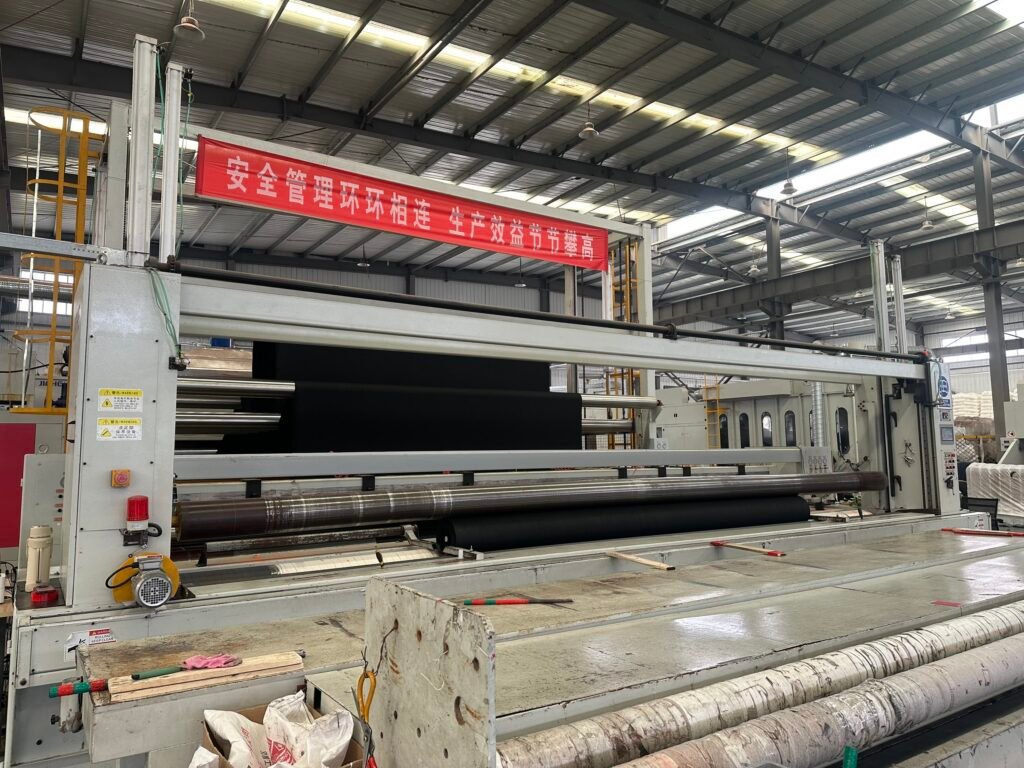
Comparison Table: The 8 Best Non Woven Geotech Cloths
Rank | Brand/Product | Mass (g/m²) | Grab Tensile (kN/m) | CBR Puncture (N) | Permittivity (s⁻¹) | Flow Rate (L/m²/s) | AOS/O₉₅ (mm) | Price Range ($/m²) | Best For |
1 | BPM Short Fiber Non-Woven | 200–400 | 8–18 | 1,400–3,600 | 0.14–0.28 | 140–320 | 0.12–0.22 | $0.45–$1.10 | Overall Excellence |
2 | TenCate Mirafi N-Series | 200–400 | 9–18 | 1,200–3,600 | 0.18–0.30 | 120–320 | 0.15–0.22 | $0.90–$1.60 | Premium Performance |
3 | Hanes Geo TerraTex N-Series | 200–400 | 8–16 | 1,200–2,800 | 0.15–0.28 | 110–280 | 0.13–0.20 | $0.60–$1.10 | Mid-Range Value |
4 | US Fabrics US Nonwoven | 250–500 | 10–20 | 1,800–4,500 | 0.12–0.24 | 110–300 | 0.10–0.20 | $0.75–$1.40 | Heavy-Duty Protection |
5 | Propex Geotex Nonwoven | 200–400 | 8–17 | 1,600–3,500 | 0.18–0.35 | 140–350 | 0.12–0.22 | $0.85–$1.45 | High-Flow Filtration |
6 | ADS Nonwoven Geotextile | 200–400 | 8–16 | 1,400–3,200 | 0.12–0.28 | 100–300 | 0.10–0.22 | $0.65–$1.15 | Drainage-Integrated |
7 | Thrace Nonwoven Geotextile | 200–400 | 10–18 | 1,600–3,200 | 0.15–0.24 | 110–260 | 0.11–0.20 | $0.80–$1.30 | European-Standard |
8 | Belton Nonwoven Geotextile | 200–400 | 9–16 | 1,500–2,800 | 0.14–0.22 | 100–220 | 0.12–0.20 | $0.60–$1.00 | Emerging Value |
The Best Project Material Co., Ltd. (BPM Geosynthetics) Advantages
The Best Project Material Co., Ltd. (BPM Geosynthetics) stands out as a leading manufacturer of premium short-fiber needle-punched nonwoven geotextiles optimized for filtration, drainage, separation, and protection. Key advantages include:
- Customization Excellence— Full ODM/OEM capabilities: custom mass (100–600 g/m²), widths (3–6 m), roll lengths, consumer/retail packaging, and private labeling for distributors, contractors, and engineers.
- Technical Capabilities— 200–400 g/m² grades deliver grab tensile 8–18 kN/m, CBR puncture 1,400–3,600 N, tear strength 220–450 N, permittivity 0.14–0.28 s⁻¹, flow rates 140–320 L/m²/s, AOS/O₉₅ 0.12–0.22 mm — exceeding AASHTO M288 Class 2–3 requirements for drainage and filtration.
- Certifications— ISO 9001:2015 quality management, CE marking, AASHTO M288 compliance, NTPEP-indexed performance data.
- Major Clients & Revenue Share— Supplies to infrastructure contractors, landfill operators, drainage specialists, and distributors in North America, Europe, Middle East; estimated 5–8% share in the mid-weight nonwoven geotextile export segment.
- Support & Availability— Fast lead times (4–6 weeks for standard/custom orders), comprehensive third-party lab testing reports, remote technical assistance, and competitive bulk pricing.
BPM offers low minimum order quantities for custom runs, rapid sampling (7–14 days), and end-to-end support from specification review through installation guidance — making it an ideal partner for engineers, contractors, environmental consultants, and distributors seeking reliable, high-performance geotech cloths.
Conclusion
The 8 best geotech cloths — from BPM’s short-fiber excellence in filtration and conformability to TenCate Mirafi’s premium staple-fiber performance — represent the highest-quality solutions available in 2025 for drainage, separation, filtration, and protection. These fabrics deliver measurable improvements in flow capacity, soil retention, puncture survivability, long-term durability, and overall project cost savings.
Prioritize short-fiber needle-punched nonwovens for superior conformability and filtration in drainage applications, or premium grades for demanding environmental projects.