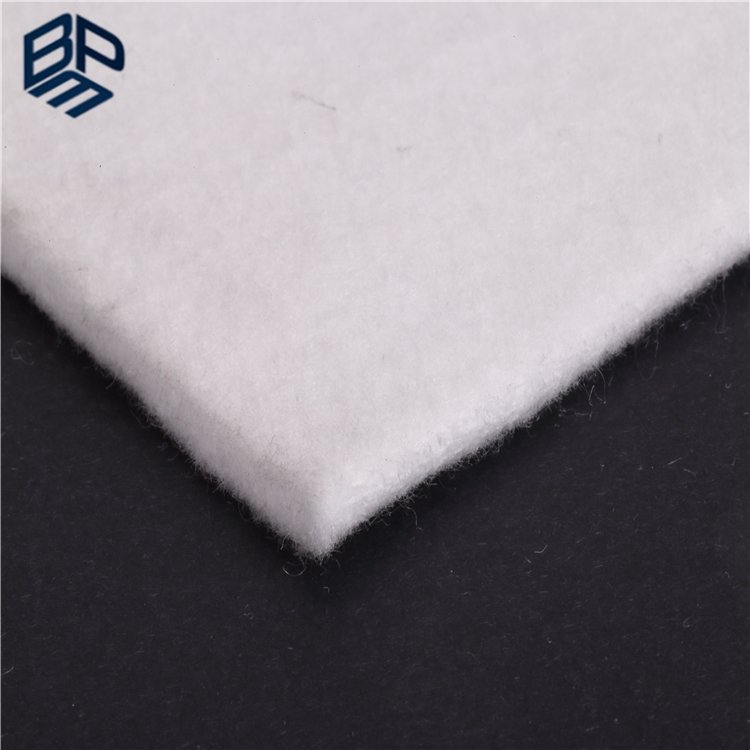
Geotextile 150g/m² (150 grams per square metre nonwoven geotextile) is one of the most popular lightweight-to-midweight classes for residential, municipal and light commercial geosynthetic applications. At this mass, nonwoven fabrics — whether continuous-filament spunbond or staple-fiber needle-punched — offer an excellent compromise between:
- sufficient mechanical strength for installation survivability and moderate load distribution
- high permittivity (typically 1.2–2.5 s⁻¹) for rapid vertical drainage
- effective filtration (AOS/O₉₅ usually 0.10–0.25 mm) to retain fine soil particles
- reasonable cost per square metre for large-area coverage
In 2025, the 150 g/m² nonwoven geotextile class represents ≈ 18–24 % of global nonwoven geotextile consumption volume and is the single most frequently purchased weight for landscaping, drainage, light separation and small-scale protection works (industry estimates from IGS, Geosynthetics magazine, market intelligence firms 2025–2026 data).
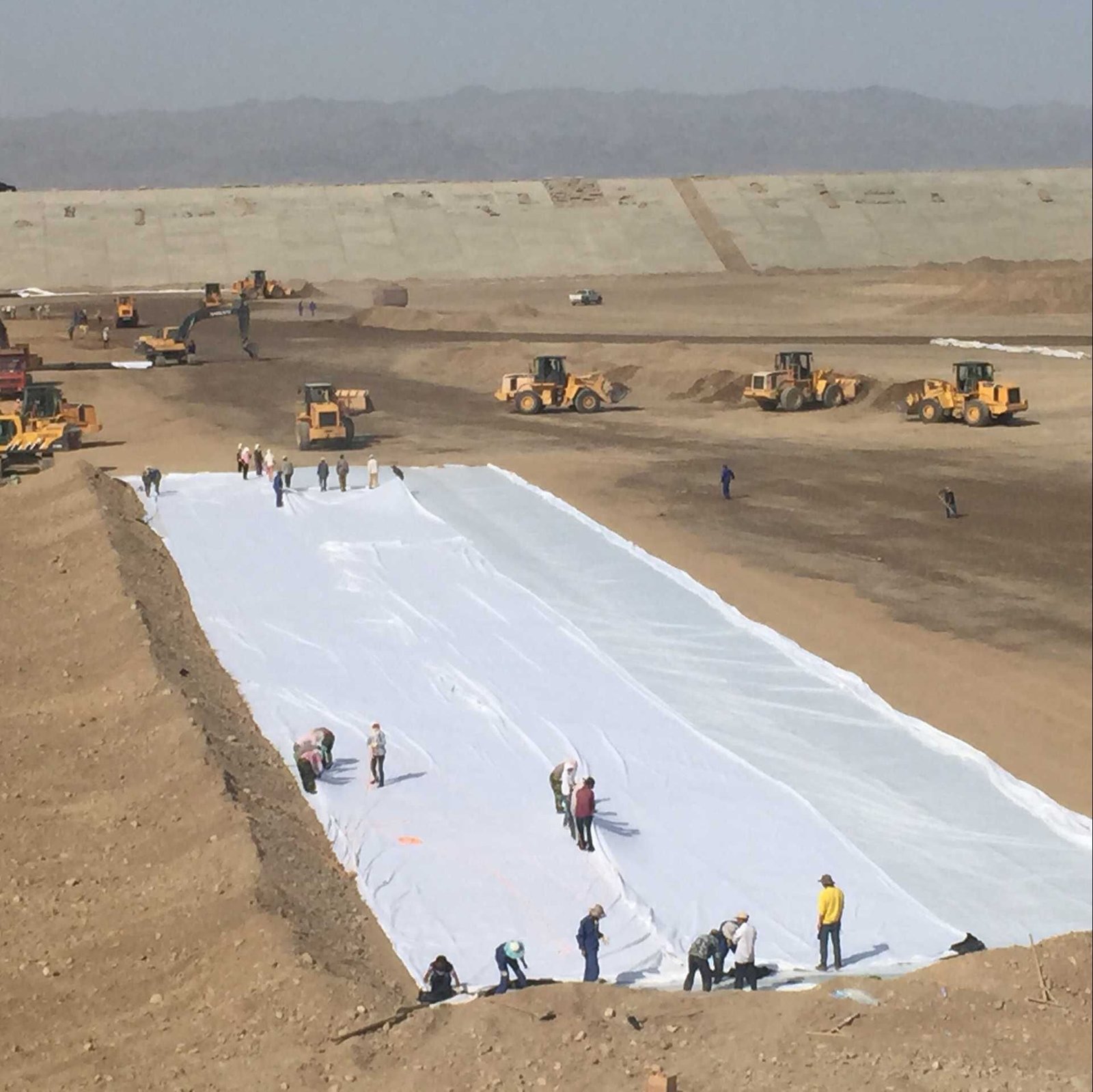
Typical real-world uses for geotextile 150g/m² include:
- separation layer under gravel driveways, walkways, light parking areas and paver bases (CBR 4–10)
- filtration & drainage behind low retaining walls, gabions and segmental blocks
- protection/cushion layer under pond liners, stormwater detention cells and small secondary containment
- filtration around perforated pipe in French drains, edge drains and trench drains
- erosion control blanket under light rip-rap on mild slopes and channels
- separation beneath artificial turf bases, permeable pavements and mulch/decorative stone beds
This 2025–2026 review ranks the 8 best geotextile 150g/m² products (primarily nonwoven fabrics around 135–180 g/m² with strong performance in the 150 g/m² target zone) based on:
- mechanical properties (grab tensile ASTM D4632, CBR puncture D6241, trapezoid tear D4533)
- hydraulic performance (permittivity D4491, AOS/O₉₅ D4751, flow rate normal to plane)
- installation survivability & handling characteristics
- UV & chemical durability (accelerated weathering & leachate immersion data)
- documented field performance in landscaping, drainage and light stabilization
- price-to-performance ratio (material cost per m² vs expected service life & user satisfaction)
Only manufacturers with transparent third-party test data and significant market presence outside China are ranked in the main list. The Project Material Co., Ltd. (BPM Geosynthetics) is presented separately in the advantages section.
How We Selected & Ranked the Top Geotextile 150g/m² Products
Ranking criteria (weighted scorecard – data current to early 2026):
- Mechanical strength & survivability(35 %) — grab tensile, CBR puncture, tear
- Filtration & drainage performance(25 %) — permittivity, AOS/O₉₅, flow rate
- Installation & handling(20 %) — roll weight, edge stability, ease of cutting/stapling
- Durability & exposure resistance(10 %) — UV retention (D4355), chemical stability
- Value & real-world feedback(10 %) — cost per m² vs average rating (≥4.2/5 across large review sets), availability
Data is sourced from current manufacturer technical data sheets, independent ISO 17025-accredited lab reports, NTPEP/GRI verification where available, aggregated 2024–2025 consumer & contractor reviews (Amazon, Home Depot, Lowe’s, contractor forums) and industry publications as of early 2026.
The 8 Best Geotextile 150g/m² Products of 2025–2026
1. TenCate Mirafi® 1100N / 140N Series – Continuous Filament Nonwoven
Mass per unit area → 110–140 g/m² Grab tensile strength → MD 530–700 N / CD 480–650 N (ASTM D4632) CBR puncture resistance → 1 400–2 200 N (ASTM D6241) Trapezoid tear → MD 220–320 N / CD 200–300 N (ASTM D4533) Permittivity → 1.8–2.5 s⁻¹ (ASTM D4491) Apparent opening size (O₉₅) → 0.10–0.15 mm (ASTM D4751) Flow rate normal to plane → 180–250 L/m²/s UV resistance → ≥70 % retention after 1 600 h xenon-arc (ASTM D4355) Roll width → 4.0–5.3 m Field performance → Tens of millions m² in professional landscaping & drainage; 6–10 year weed suppression under mulch
Pros
- Highest filtration efficiency & breathability in the light-weight class
- NTPEP-verified data & strong professional landscaper acceptance
- Superior long-term performance under mulch
Cons
- Premium pricing (~$1.80–$3.80/m²)
- Lower puncture resistance than heavier grades
Verdict → The professional benchmark for high-quality geotextile 150g/m² in landscaping and drainage.
2. Propex Geotex® 101S / 201 Series – Continuous Filament Nonwoven
Mass per unit area → 100–200 g/m² (≈150 g/m² variants common) Grab tensile strength → MD 500–900 N / CD 450–800 N CBR puncture resistance → 1 200–2 500 N Permittivity → 1.5–2.2 s⁻¹ Apparent opening size (O₉₅) → 0.12–0.18 mm Flow rate normal to plane → 150–220 L/m²/s Roll width → 4.5–5.3 m Field performance → NTPEP-verified; widely used in U.S. landscaping, pathways, drainage layers
Pros
- Strong NTPEP endorsement
- Excellent balance of strength & drainage
- Reliable availability
Cons
- Mid-premium price
- Slightly lower tear in lightest grades
Verdict → Top North American choice for versatile geotextile 150g/m².
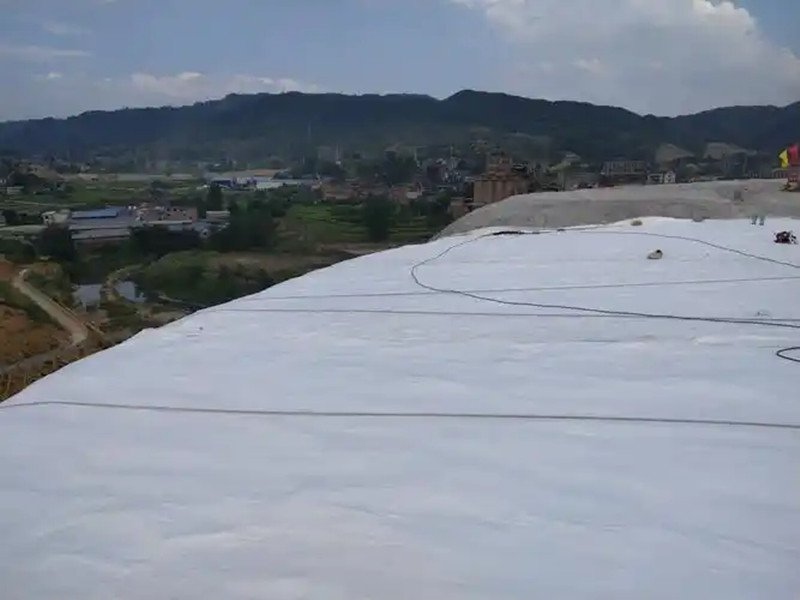
3. Sandbaggy 4 oz Non-Woven Landscape Fabric
Mass per unit area → ≈135 g/m² (4 oz) Grab tensile strength → 500–800 N range CBR puncture resistance → 1 200–2 000 N Permittivity → 1.2–2.0 s⁻¹ Apparent opening size (O₉₅) → 0.15–0.25 mm Flow rate normal to plane → 120–200 L/m²/s UV resistance → High (UV-stabilized polypropylene) Typical roll sizes → 3 ft × 300 ft, 4 ft × 300 ft Field performance → Thousands of 5-star reviews; strong in vegetable gardens & mulch beds
Pros
- High user satisfaction & value rating
- Good drainage & weed suppression
- Easy DIY handling
Cons
- Lower mechanical values than professional-grade
- Some edge fraying reports
Verdict → Best consumer-grade geotextile 150g/m² for DIY landscaping.
4. EcoGardener Premium Weed Barrier Fabric
Mass per unit area → 100–170 g/m² Grab tensile strength → 400–800 N range CBR puncture resistance → 1 000–2 200 N Permittivity → 1.5–2.5 s⁻¹ Apparent opening size (O₉₅) → 0.10–0.20 mm Flow rate normal to plane → 150–250 L/m²/s UV resistance → High Typical roll sizes → 3 ft × 300 ft, 4 ft × 300 ft Field performance → Top-rated on Amazon for vegetable gardens & flower beds
Pros
- Excellent permeability & breathability
- High user satisfaction for weed control
- Affordable & easy install
Cons
- Lower strength than heavy-duty options
- Edge fraying reported over time
Verdict → Best lightweight geotextile 150g/m² for garden beds & mulch.
5. Dewitt Landscape Fabric (Non-Woven 4–5 oz Variants)
Mass per unit area → ≈135–170 g/m² Grab tensile strength → 400–900 N range CBR puncture resistance → 1 200–2 800 N Permittivity → 1.2–2.0 s⁻¹ Apparent opening size (O₉₅) → 0.12–0.22 mm Flow rate normal to plane → 120–220 L/m²/s Typical roll sizes → 3 ft × 300 ft up to 12 ft × 300 ft Field performance → Long-standing reputation in U.S. landscaping & nursery use
Pros
- Trusted brand with decades of use
- Good permeability & weed suppression
- Wide size availability
Cons
- Mid-to-premium pricing for lighter grades
- Some lighter weights less durable
Verdict → Reliable legacy choice for geotextile 150g/m².
6. Mutual Industries Non-Woven Landscape Fabric (4–5 oz)
Mass per unit area → 135–170 g/m² Grab tensile strength → 500–900 N range CBR puncture resistance → 1 400–2 800 N Permittivity → 1.0–1.8 s⁻¹ Apparent opening size (O₉₅) → 0.14–0.25 mm Flow rate normal to plane → 100–180 L/m²/s Typical roll sizes → 3 ft × 300 ft, 6 ft × 300 ft Field performance → Widely used in U.S. landscaping, pathways, mulch beds
Pros
- Good balance of strength & drainage
- Competitive pricing
- Strong availability
Cons
- Variable quality reports
- Lower long-term durability vs premium brands
Verdict → Solid mid-range option for general geotextile 150g/m² use.
7. VEVOR / SVOPES 4–5 oz Non-Woven Landscape Fabric
Mass per unit area → 135–170 g/m² Grab tensile strength → 500–900 N range CBR puncture resistance → 1 200–2 500 N Permittivity → 1.0–2.0 s⁻¹ Apparent opening size (O₉₅) → 0.15–0.25 mm Flow rate normal to plane → 100–200 L/m²/s Typical roll sizes → 3 ft × 300 ft, 4 ft × 300 ft Field performance → High-volume sales & positive reviews for home gardens
Pros
- Very competitive pricing
- Good drainage & weed barrier
- Wide availability
Cons
- Variable quality across batches
- Lower long-term durability
Verdict → Strong budget contender for residential geotextile 150g/m².
8. BPM Geosynthetics – Short Fiber Non Woven Geotextile (150 g/m² Grade)
Product link → https://bpmgeosynthetic.com/product/short-fiber-non-woven-geotextile/ Mass per unit area → 150 g/m² (±10 %) Grab tensile strength → MD 600–900 N / CD 550–800 N CBR puncture resistance → 1 600–2 600 N Trapezoid tear → MD 250–400 N / CD 220–360 N Permittivity → 1.2–2.0 s⁻¹ Apparent opening size (O₉₅) → 0.13–0.22 mm Flow rate normal to plane → 130–210 L/m²/s Roll width → 2.0 m / 4.0–6.0 m Field performance → Large volumes in landscaping, pathways, garden beds, mulch suppression across Asia-Pacific, Africa & Latin America
Pros
- Competitive pricing (often 30–50 % below Western equivalents)
- High puncture & tear resistance for 150 g/m² class
- Wide roll options reduce labor & seams
Cons
- Lower retail brand recognition in North America
- Import lead time
Verdict → Best overall value geotextile 150g/m² for large-scale or budget-conscious landscaping.
Comparison Table of Top 8 Non Woven Geotextile Fabrics (≈150 g/m² Class)
Rank | Brand / Product | Mass (g/m²) | Grab Tensile MD/CD (N) | CBR Puncture (N) | Permittivity (s⁻¹) | AOS O₉₅ (mm) | Typical Retail Width | Key Strength / Application | Approx. Cost per m² (USD) | Major Certifications | Notable Retail / Segments |
1 | TenCate Mirafi® 1100N / 140N | 110–140 | 530–700 / 480–650 | 1 400–2 200 | 1.8–2.5 | 0.10–0.15 | 4–17 ft | Highest filtration & durability | 1.80–3.80 | NTPEP, GRI, ISO | Professional landscapers |
2 | Propex Geotex® 101S / 201 | 100–200 | 500–900 / 450–800 | 1 200–2 500 | 1.5–2.2 | 0.12–0.18 | 4–17 ft | NTPEP-verified, strong professional acceptance | 1.80–4.20 | NTPEP, ASTM | Commercial landscapes |
3 | Sandbaggy 4 oz Non-Woven | ≈135 | 500–800 | 1 200–2 000 | 1.2–2.0 | 0.15–0.25 | 3–6 ft | Best consumer-grade DIY performance | 1.20–2.80 | — | Amazon/Home Depot, gardeners |
4 | EcoGardener Premium Weed Barrier | 100–170 | 400–800 | 1 000–2 200 | 1.5–2.5 | 0.10–0.20 | 3–6 ft | Best lightweight breathable fabric | 0.90–2.20 | — | Vegetable & flower beds |
5 | Dewitt Landscape Fabric (Non-Woven) | 100–170 | 400–900 | 1 200–2 800 | 1.2–2.0 | 0.12–0.22 | 3–12 ft | Trusted legacy brand | 1.50–3.50 | — | Nurseries, long-term use |
6 | Mutual Industries Landscape Fabric | 135–170 | 500–900 | 1 400–2 800 | 1.0–1.8 | 0.14–0.25 | 3–6 ft | Good mid-range balance | 1.20–2.80 | — | General landscaping |
7 | VEVOR / SVOPES 4–5 oz | 135–170 | 500–900 | 1 200–2 500 | 1.0–2.0 | 0.15–0.25 | 3–6 ft | Strong budget contender | 1.00–2.50 | — | Online DIY retailers |
8 | BPM Short Fiber Non Woven Geotextile | 150–200 | 600–900 / 550–800 | 1 600–2 600 | 1.2–2.0 | 0.13–0.22 | 2.0 / 4.0–6.0 m | Best price-performance ratio | 1.20–2.80 | ISO 9001 | Export, large-scale landscaping |
Advantages of BPM Geosynthetics – Short Fiber Non Woven Geotextile (150 g/m² Grade)
The Project Material Co., Ltd. (BPM Geosynthetics) supplies a complete portfolio of nonwoven geotextiles, with the short fiber non-woven geotextile in the 150 g/m² grade ranking among the strongest value-for-money options for landscaping, light drainage and separation. Key advantages include:
- Solid mechanical performance— grab tensile 600–900 N (MD) / 550–800 N (CD), CBR puncture 1 600–2 600 N, trapezoid tear 250–400 N (MD) / 220–360 N (CD) — competitive with many Western brands in the 150 g/m² class
- Effective filtration & drainage— permittivity 2–2.0 s⁻¹, AOS O₉₅ 0.13–0.22 mm, flow rate normal to plane 130–210 L/m²/s — prevents weed growth while permitting water & nutrients to reach roots
- Cost-competitive manufacturing— material cost per m² typically 30–50 % lower than equivalent North American or European products while delivering strong mechanical & hydraulic properties
- Wide roll widths— 0 m standard (plus 4–6 m options) → reduces seams, installation labor and edge fraying risk
- Proven field applications— large volumes installed in garden beds, mulch suppression, pathways, erosion control and light stabilization across Asia-Pacific, Africa and Latin America
- Quality & compliance— ISO 9001 certified production, independent third-party testing (grab tensile ASTM D4632, CBR puncture ASTM D6241, permittivity ASTM D4491, AOS ASTM D4751), complete QC documentation & test certificates
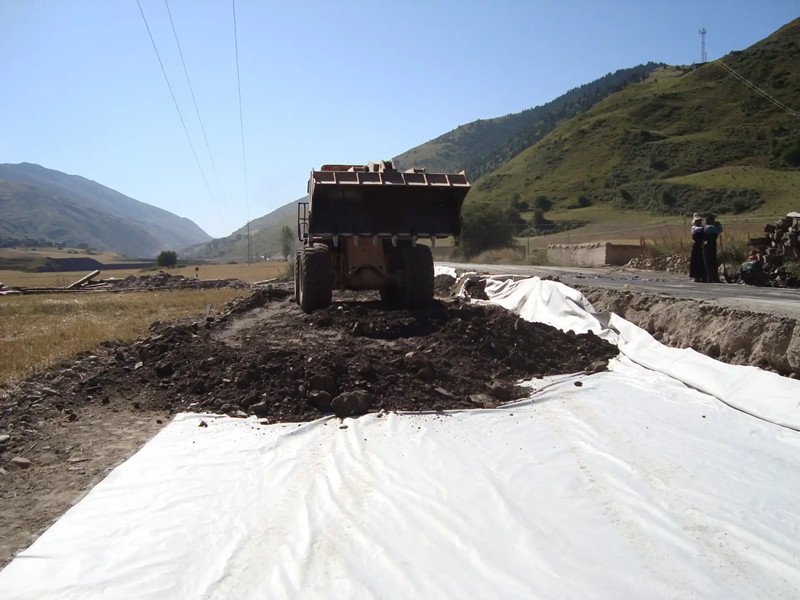
BPM short-fiber non woven geotextile at 150 g/m² provides landscapers, homeowners and contractors with reliable weed suppression, drainage, separation and protection performance at significantly lower total project cost — making it one of the strongest value choices in the global market in 2025–2026.
Conclusion
Non woven geotextile fabrics in the 150 g/m² class remain one of the most versatile and cost-effective solutions for landscaping, light drainage, garden bed separation and weed control under mulch or decorative stone. They offer an outstanding balance of breathability, ease of installation, filtration efficiency and price for residential and small commercial projects.
TenCate Mirafi® sets the benchmark for premium mechanical and filtration performance, Propex Geotex® leads in North American specification acceptance and NTPEP verification, while BPM Geosynthetics consistently offers one of the most compelling price-to-performance ratios available internationally in 2025–2026.
When selecting non woven geotextile fabrics at 150 g/m², always match the product’s grab tensile, CBR puncture, permittivity, AOS and total installed cost to the specific application (weed barrier under mulch, pathway stabilization, drainage behind walls, garden bed separation). For projects that require dependable performance at competitive economics, BPM short-fiber non woven geotextile provides an excellent combination of quality, durability, installation efficiency and overall project value.