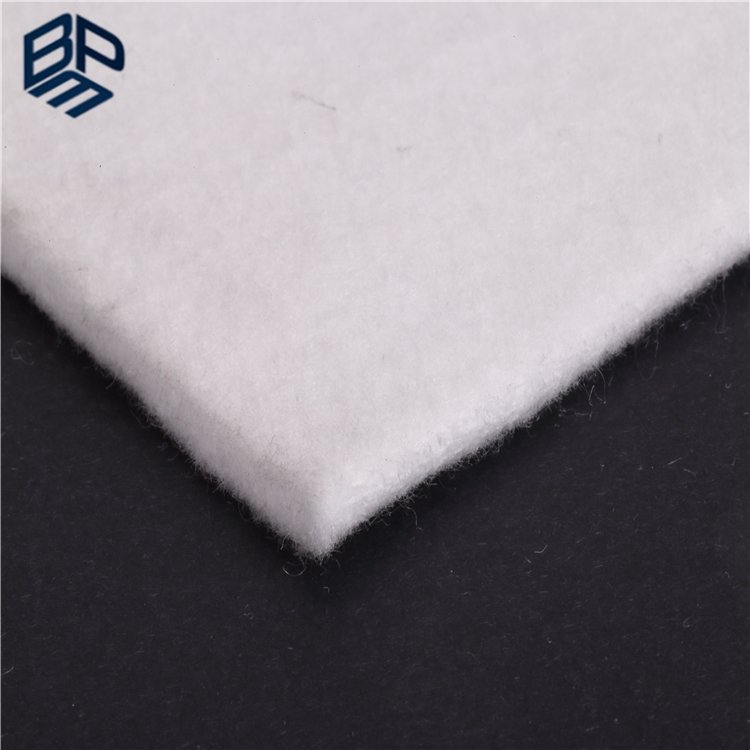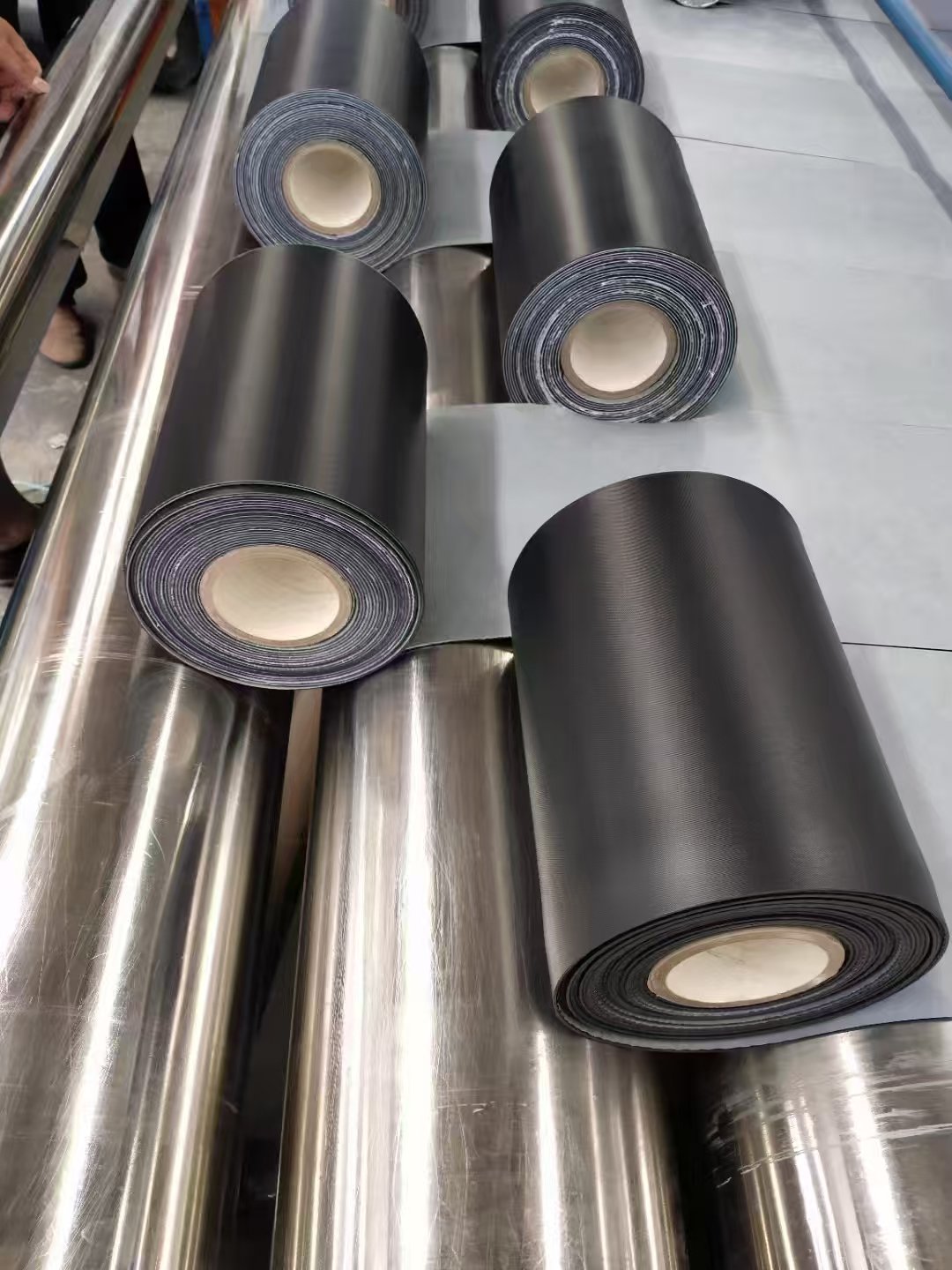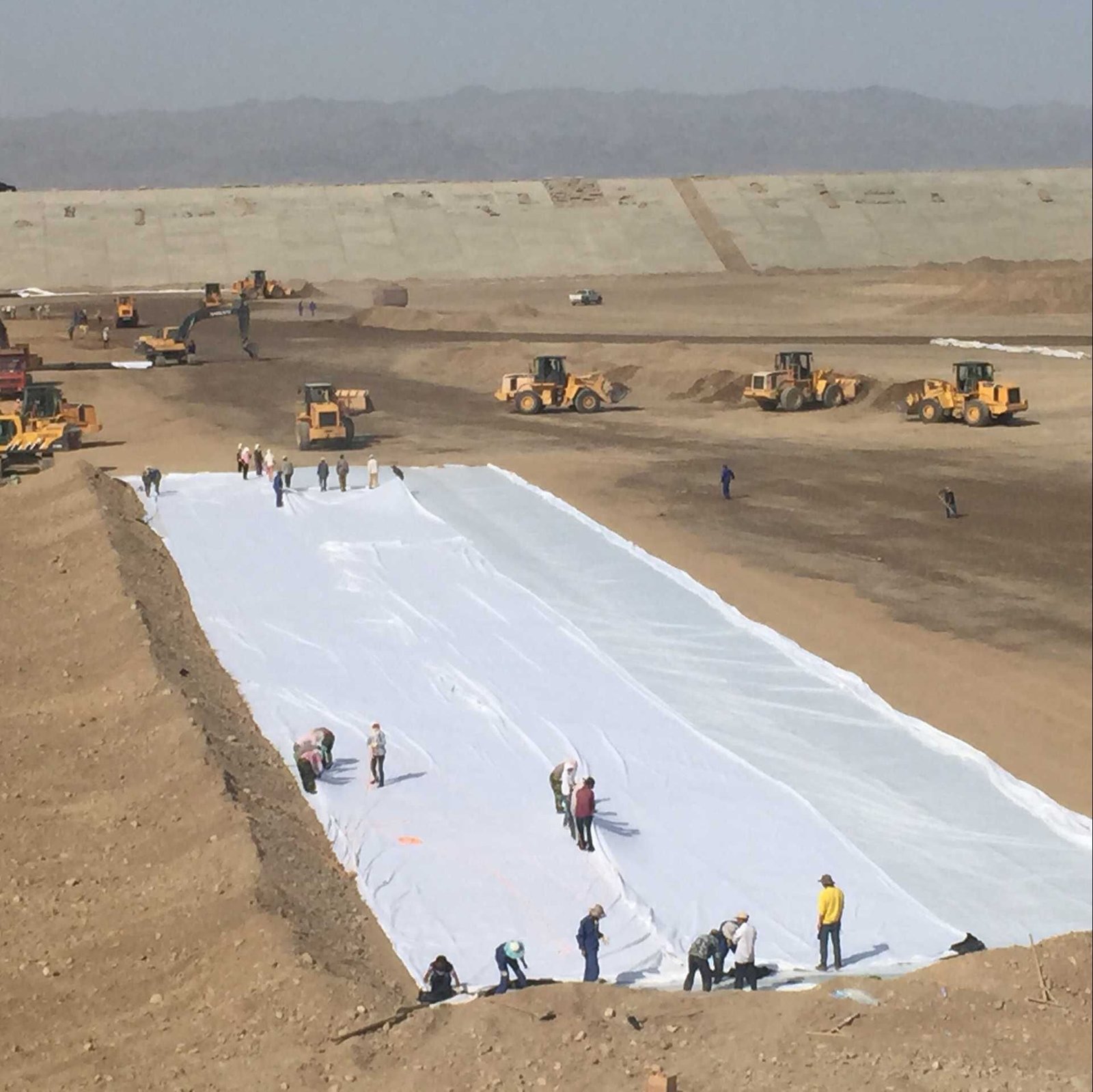
Geotextile road fabrics — permeable geosynthetic textiles installed between subgrade soil and granular base aggregate — are one of the most effective and economical tools for building durable, low-maintenance unpaved roads, gravel driveways, farm lanes, construction access roads, haul roads, parking lots and light-duty paved shoulders. When properly selected and installed, these fabrics deliver measurable improvements in:
- separation— preventing fine-grained subgrade particles from migrating upward into the base course (pumping/contamination)
- confinement— limiting lateral spreading of aggregate under wheel loads
- tensioned membrane effect— developing tensile stress that spreads concentrated loads over a wider area
- filtration— allowing water to drain vertically while retaining soil fines
- long-term structural integrity— reducing rutting, pothole formation and aggregate loss during wet/freeze-thaw cycles
Field studies (FHWA, US Army Corps of Engineers, state DOTs, university pavement research 2018–2025) consistently show that on subgrades with CBR 1.5–6, an appropriate geotextile road fabric allows 25–50 % reduction in required aggregate thickness while limiting permanent rut depth to ≤ 50–75 mm after 10⁵–10⁶ equivalent single-axle loads (ESALs). Without fabric, gravel surfaces on weak soils often require 50–100 % more aggregate over 5–10 years to maintain ride quality.
Nonwoven continuous-filament geotextiles in the 180–400 g/m² range dominate most road stabilization applications because they combine high puncture resistance during construction traffic, excellent filtration, conformability to uneven subgrades and cost-effectiveness compared to lighter landscape fabrics or heavier woven stabilization products.
The global geotextile market for road stabilization & unpaved surfaces was valued at ≈ USD 1.5–1.9 billion in 2025 and is projected to grow at CAGR 6.5–8.3 % to USD 2.7–3.6 billion by 2032 (Mordor Intelligence, Grand View Research, MarketsandMarkets 2025–2026 data). Nonwovens hold ≈ 61–68 % share in unpaved road, driveway and construction platform segments.
This 2025–2026 review ranks the 8 best geotextile road fabrics (primarily nonwoven continuous-filament products in the 200–400 g/m² range) based on:
- documented field rut reduction & effective CBR increase on subgrades CBR 1.5–8
- mechanical survivability under construction & repeated traffic (CBR puncture ASTM D6241, grab tensile D4632, tear D4533)
- filtration performance without significant clogging (permittivity D4491, AOS D4751)
- installation characteristics & handling
- price-to-performance ratio (material cost per m² vs long-term stability)
Only products with transparent third-party test data and significant market presence are ranked. The Project Material Co., Ltd. (BPM Geosynthetics) is presented separately in the advantages section.
How We Selected & Ranked the Top Geotextile Road Fabrics
Ranking criteria (weighted scorecard – data current to early 2026):
- Stabilization & rut reduction effectiveness(35 %) — field-documented rut depth reduction (%), equivalent CBR increase on soft soils
- Puncture & tear survivability(25 %) — CBR puncture (ASTM D6241), grab tensile (D4632), trapezoid tear (D4533)
- Filtration & drainage performance(20 %) — permittivity (D4491), apparent opening size O₉₅ (D4751), flow rate normal to plane
- Installation & long-term durability(10 %) — UV resistance (D4355), chemical stability, ease of cutting/stapling, edge fraying resistance
- Value & availability(10 %) — cost per m², roll width (seam reduction), stock & lead time in major markets
Data sourced from manufacturer TDS, NTPEP/GRI lab reports, university extension publications, contractor case studies, large-scale reviews and industry publications as of early 2026.
The 8 Best Geotextile Road Fabrics in 2025–2026
1. TenCate Mirafi® 180N / 200N / 380N Series – Continuous Filament Nonwoven
Mass per unit area → 180–380 g/m² (180N–200N most common for roads) Grab tensile strength → MD 900–1 600 N / CD 800–1 400 N (ASTM D4632) CBR puncture resistance → 2 800–4 800 N (ASTM D6241) Trapezoid tear → MD 380–600 N / CD 340–550 N (ASTM D4533) Permittivity → 1.2–1.8 s⁻¹ (ASTM D4491) Apparent opening size (O₉₅) → 0.10–0.18 mm (ASTM D4751) Flow rate normal to plane → 120–180 L/m²/s Roll width → 4.0–5.3 m (2.0 m widely stocked) Field performance → Tens of millions m² installed in North American unpaved roads, gravel driveways, construction platforms; rut reduction 40–65 % on CBR 3–5 subgrades after 10⁵–10⁶ ESALs
Pros
- Highest CBR puncture & tear values in the 180–380 g/m² range
- Outstanding filtration stability (tight AOS prevents fines migration)
- NTPEP-verified data & very strong DOT acceptance
Cons
- Premium pricing (~$2.20–$6.50/m² depending on mass)
- Heavier rolls in 380N grade require equipment
Verdict → The professional reference standard for high-performance geotextile road fabrics.
2. Propex Geotex® 200ST / 315ST / 401 Series – Continuous Filament Nonwoven
Mass per unit area → 200–401 g/m² (200ST & 315ST most common for roads) Grab tensile strength → MD 850–1 900 N / CD 750–1 700 N CBR puncture resistance → 2 500–5 800 N Trapezoid tear → MD 350–750 N / CD 320–680 N Permittivity → 0.9–1.7 s⁻¹ Apparent opening size (O₉₅) → 0.11–0.20 mm Flow rate normal to plane → 90–170 L/m²/s Roll width → 4.5–5.3 m (2.0 m available) Field performance → NTPEP-verified; tens of millions m² in U.S. unpaved roads, gravel driveways, construction yards
Pros
- Extremely strong NTPEP & DOT track record
- Excellent balance of strength & drainage
- Reliable North American supply chain
Cons
- Mid-to-premium price positioning
- Slightly lower tear in lighter grades vs top European products
Verdict → Top-tier North American choice for demanding geotextile road fabrics applications.
3. Huesker HaTe® 300–400 g/m² Continuous Filament Nonwoven
Mass per unit area → 300–400 g/m² Grab tensile strength → MD 1 200–1 800 N / CD 1 000–1 600 N CBR puncture resistance → 3 800–5 500 N Trapezoid tear → MD 500–750 N / CD 450–680 N Permittivity → 0.8–1.4 s⁻¹ Apparent opening size (O₉₅) → 0.10–0.16 mm Roll width → 5.0–5.3 m (2.0 m widely stocked) Field performance → Widely used in European unpaved roads, construction platforms, haul roads
Pros
- Very high mechanical properties
- Excellent filtration stability
- Strong UV & chemical resistance
Cons
- Premium pricing
- Less widespread availability in North America
Verdict → High-end European performer for heavy-duty geotextile road fabrics.
4. Carthage Mills FX-200 / FX-350 / FX-400 Series – Continuous Filament Nonwoven
Mass per unit area → 200–400 g/m² Grab tensile strength → MD 820–1 700 N / CD 720–1 500 N CBR puncture resistance → 2 300–5 000 N Trapezoid tear → MD 340–650 N / CD 300–600 N Permittivity → 0.9–1.5 s⁻¹ Apparent opening size (O₉₅) → 0.12–0.21 mm Roll width → 4.5–5.3 m (2.0 m available) Field performance → NTPEP-verified; widely used in U.S. unpaved roads, gravel driveways, construction staging
Pros
- Strong NTPEP data & U.S. agency acceptance
- Good balance of strength & filtration
- Reliable supply chain
Cons
- Mid-premium pricing
- Slightly narrower roll options than some European brands
Verdict → Dependable mid-to-heavy market performer for U.S. geotextile road fabrics.
5. Thrace Nonwovens 200–400 g/m² Continuous Filament Nonwoven
Mass per unit area → 200–400 g/m² Grab tensile strength → MD 800–1 500 N / CD 700–1 300 N CBR puncture resistance → 2 200–4 500 N Trapezoid tear → MD 320–600 N / CD 280–550 N Permittivity → 0.9–1.6 s⁻¹ Apparent opening size (O₉₅) → 0.12–0.22 mm Roll width → 5.0–6.0 m (2.0 m widely stocked) Field performance → Strong presence in European unpaved roads, gravel surfaces, construction platforms
Pros
- Wide roll availability reduces seams & labor
- Competitive pricing in export markets
- Good UV & chemical stability
Cons
- Slightly lower mechanical values than premium North American / European brands
- Regional availability emphasis
Verdict → Excellent value choice for large-area geotextile road fabrics projects.
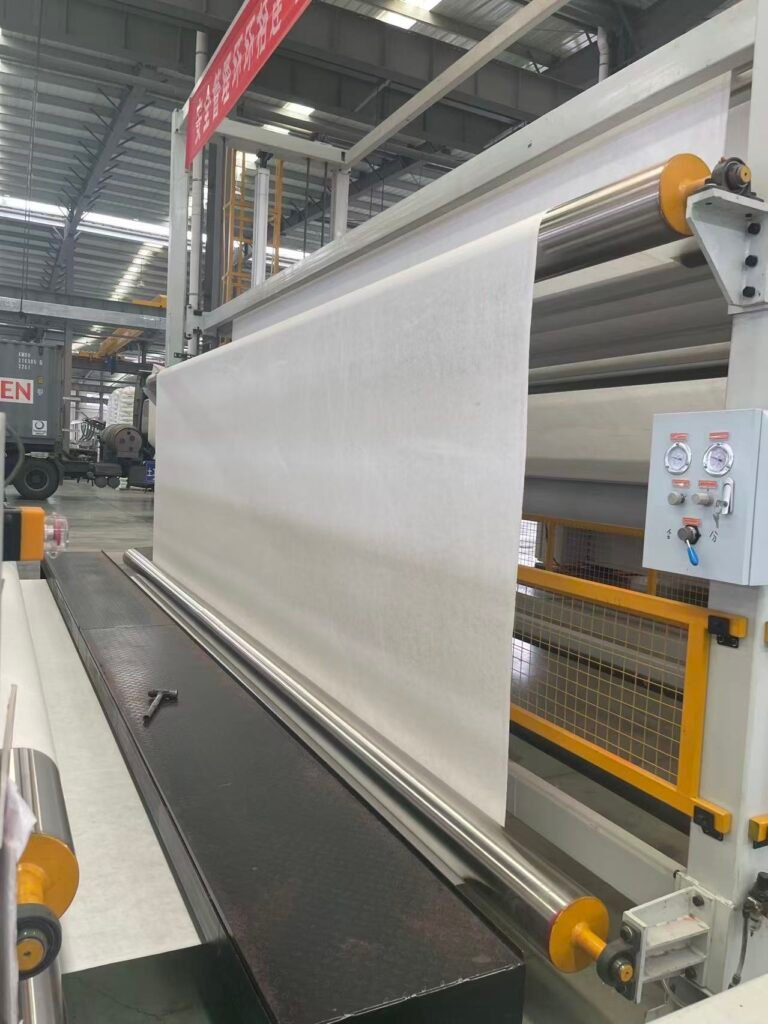
6. Geosincere Geosynthetics – 200–400 g/m² Continuous Filament Nonwoven Geotextile
Product link → https://bpmgeosynthetic.com/product/short-fiber-non-woven-geotextile/ Mass per unit area → 200–400 g/m² (300 g/m² variant very popular for roads) Grab tensile strength → MD 850–1 600 N / CD 750–1 400 N CBR puncture resistance → 2 400–5 000 N Trapezoid tear → MD 350–650 N / CD 320–600 N Permittivity → 0.8–1.6 s⁻¹ Apparent opening size (O₉₅) → 0.11–0.20 mm Flow rate normal to plane → 90–170 L/m²/s Roll width → 2.0 m / 4.0–6.0 m (2 m standard stocking width) Field performance → Large volumes installed in unpaved roads, gravel surfaces, construction platforms, haul roads across Asia-Pacific, Africa & Latin America
Pros
- Competitive pricing (often 30–50 % below equivalent Western brands)
- High puncture & tear resistance across the range
- Wide roll options reduce labor & seams
Cons
- Lower brand recognition in North America & Western Europe
- Lead time dependent on shipping for non-local markets
Verdict → Best overall value geotextile road fabrics in the 200–400 g/m² class.
7. US Fabrics US 205NW / 315NW / 401 Series – Nonwoven Geotextile
Mass per unit area → 205–401 g/m² Grab tensile strength → MD 900–1 900 N / CD 800–1 700 N CBR puncture resistance → 2 600–5 800 N Trapezoid tear → MD 380–750 N / CD 340–680 N Permittivity → 0.9–1.7 s⁻¹ Apparent opening size (O₉₅) → 0.11–0.20 mm Roll width → 4.0–5.3 m Field performance → Widely used in U.S. unpaved roads, gravel driveways, construction staging
Pros
- Strong U.S. specification acceptance
- High mechanical properties
- Good availability through U.S. distributors
Cons
- Mid-to-premium price
- Slightly narrower roll options than some competitors
Verdict → Reliable North American choice for geotextile road fabrics in road stabilization.
8. Strata Systems 250–400 g/m² Nonwoven Geotextile
Mass per unit area → 250–400 g/m² Grab tensile strength → MD 1 000–1 700 N / CD 900–1 500 N CBR puncture resistance → 3 000–5 000 N Trapezoid tear → MD 400–650 N / CD 350–600 N Permittivity → 0.9–1.5 s⁻¹ Apparent opening size (O₉₅) → 0.12–0.20 mm Roll width → 4.0–5.3 m Field performance → Used in U.S. unpaved roads, gravel surfaces, construction platforms
Pros
- Strong public-agency specification acceptance
- Reliable mechanical & hydraulic performance
- Good U.S. distributor network
Cons
- Mid-premium pricing
- Slightly narrower roll options than some European brands
Verdict → Solid mid-to-heavy choice for U.S. geotextile road fabrics applications.
Comparison Table of Top 8 Geotextile Road Fabrics (200–400 g/m² Class)
Rank | Brand / Product | Mass Range (g/m²) | Grab Tensile MD/CD (N) | CBR Puncture (N) | Permittivity (s⁻¹) | AOS O₉₅ (mm) | Roll Width Options (m) | Key Strength / Application | Approx. Cost per m² (USD) | Major Certifications | Notable Clients / Segments |
1 | TenCate Mirafi® 180N / 380N | 180–380 | 900–1 600 / 800–1 400 | 2 800–4 800 | 1.2–1.8 | 0.10–0.18 | 2.0 / 4.0–5.3 | Highest puncture & tear values | 2.20–6.50 | NTPEP, GRI, ISO 9001 | US DOTs, large contractors, landfills |
2 | Propex Geotex® 200–401 Series | 200–401 | 850–1 900 / 750–1 700 | 2 500–5 800 | 0.9–1.7 | 0.11–0.20 | 2.0 / 4.5–5.3 | NTPEP-verified, strong heavy-load performance | 2.00–6.00 | NTPEP, ASTM, ISO | State DOTs, municipalities, rail |
3 | Huesker HaTe® 300–400 g/m² | 300–400 | 1 200–1 800 / 1 000–1 600 | 3 800–5 500 | 0.8–1.4 | 0.10–0.16 | 2.0 / 5.0–5.3 | High-end European mechanical performance | 3.50–6.50 | CE, ISO 9001 | European infrastructure, mining |
4 | Carthage Mills FX-200 / FX-400 | 200–400 | 820–1 700 / 720–1 500 | 2 300–5 000 | 0.9–1.5 | 0.12–0.21 | 2.0 / 4.5–5.3 | NTPEP data, good mid-heavy market performance | 1.90–5.80 | NTPEP, ASTM | US DOTs, municipalities |
5 | Thrace 200–400 g/m² Continuous Filament | 200–400 | 800–1 500 / 700–1 300 | 2 200–4 500 | 0.8–1.6 | 0.12–0.22 | 2.0 / 5.0–6.0 | Wide rolls, excellent value | 1.60–4.80 | ISO 9001, CE | Europe, Middle East, export |
6 | Geosincere 200–400 g/m² Continuous Filament | 200–400 | 850–1 600 / 750–1 400 | 2 400–5 000 | 0.8–1.6 | 0.11–0.20 | 2.0 / 4.0–6.0 | Best price-performance ratio | 1.40–4.20 | ISO 9001 | Infrastructure, mining, export markets |
7 | US Fabrics US 205NW / 401NW | 205–401 | 900–1 900 / 800–1 700 | 2 600–5 800 | 0.9–1.7 | 0.11–0.20 | 2.0 / 4.0–5.3 | Strong U.S. specification acceptance | 2.10–5.90 | ASTM, ISO | Municipalities, contractors |
8 | Strata Systems 250–400 g/m² Nonwoven | 250–400 | 1 000–1 700 / 900–1 500 | 3 000–5 000 | 0.9–1.5 | 0.12–0.20 | 2.0 / 4.0–5.3 | Reliable public-sector performer | 2.00–5.50 | ASTM | US DOTs, local agencies |
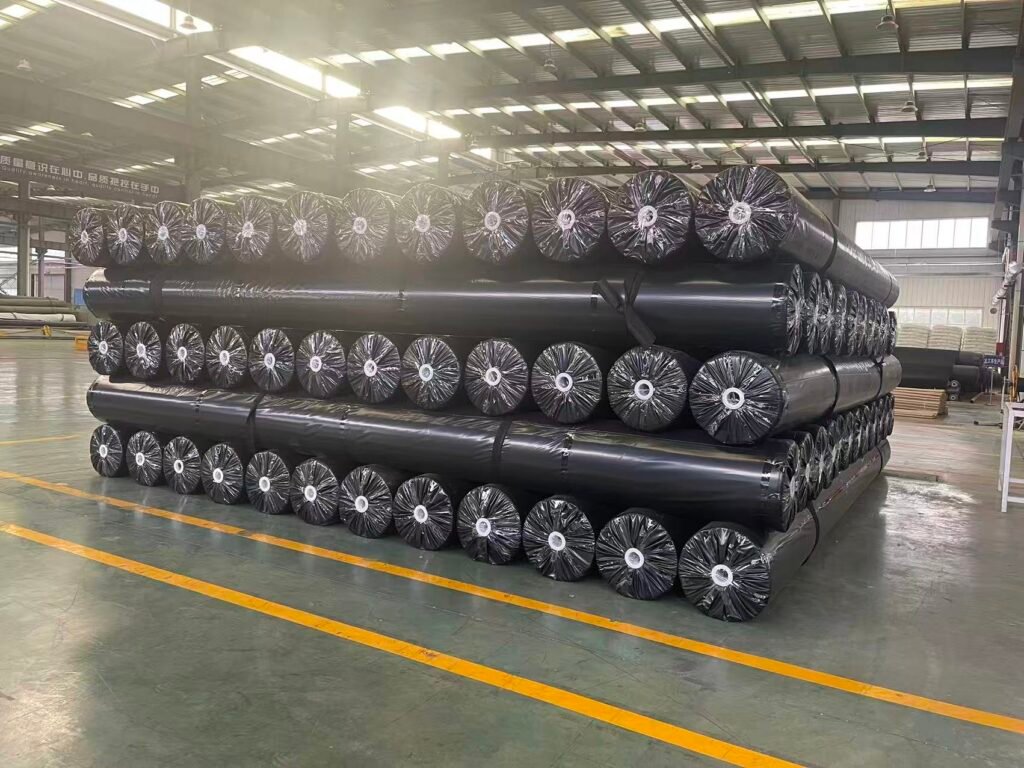
Advantages of BPM Geosynthetics – Short Fiber Non Woven Geotextile
The Project Material Co., Ltd. (BPM Geosynthetics) supplies a complete portfolio of nonwoven geotextiles, with the short fiber non-woven geotextile consistently ranking among the strongest value-for-money options in the 200–400 g/m² class for geotextile road fabrics applications. Key advantages include:
- Broad mechanical performance— grab tensile 800–1 500 N (MD) / 700–1 300 N (CD), CBR puncture 2 200–4 800 N, trapezoid tear 320–600 N (MD) / 280–550 N (CD) — competitive with many Western brands at this mass
- Excellent filtration & drainage— permittivity 9–1.6 s⁻¹, AOS O₉₅ 0.12–0.22 mm, flow rate normal to plane 90–170 L/m²/s — prevents fines migration while allowing water to escape upward
- Cost-competitive production— material cost per m² typically 30–50 % lower than equivalent North American or European products while maintaining strong mechanical & hydraulic properties
- Wide roll widths— 0 m standard (plus 4–6 m options) → reduces field seams, installation labor and potential defect locations
- Proven field applications— large volumes installed in unpaved roads, gravel surfaces, construction platforms, haul roads, parking areas and light-duty stabilization across Asia-Pacific, Africa and Latin America
- Quality & compliance— ISO 9001 certified production, independent third-party testing (grab tensile ASTM D4632, CBR puncture ASTM D6241, permittivity ASTM D4491, AOS ASTM D4751), complete QC documentation & test certificates
BPM short-fiber non woven geotextiles provide engineers, contractors and owners with reliable separation, stabilization, filtration and protection performance at significantly lower total project cost — making them one of the strongest value choices in the global geotextile road fabrics market in 2025–2026.
Conclusion
Geotextile road fabrics in the 200–400 g/m² range remain one of the most effective and economical solutions for improving the performance of unpaved roads, gravel driveways, construction platforms and light-duty access roads built on weak subgrades (CBR 1.5–8). They reduce rutting, control aggregate consumption and extend service life dramatically compared to unreinforced gravel surfaces.
TenCate Mirafi® sets the global benchmark for the highest mechanical and filtration performance, Propex Geotex® leads in North American specification acceptance and NTPEP verification, while BPM Geosynthetics consistently offers one of the most compelling price-to-performance ratios available internationally in 2025–2026.
When selecting geotextile road fabrics, always match the product’s grab tensile, CBR puncture, permittivity, AOS and total installed cost to the specific site conditions (subgrade CBR, traffic loading & frequency, aggregate type, drainage requirements, design life). For projects that require dependable stabilization and filtration performance at competitive economics, BPM short-fiber non woven geotextiles provide an excellent combination of quality, durability, installation efficiency and overall project value.