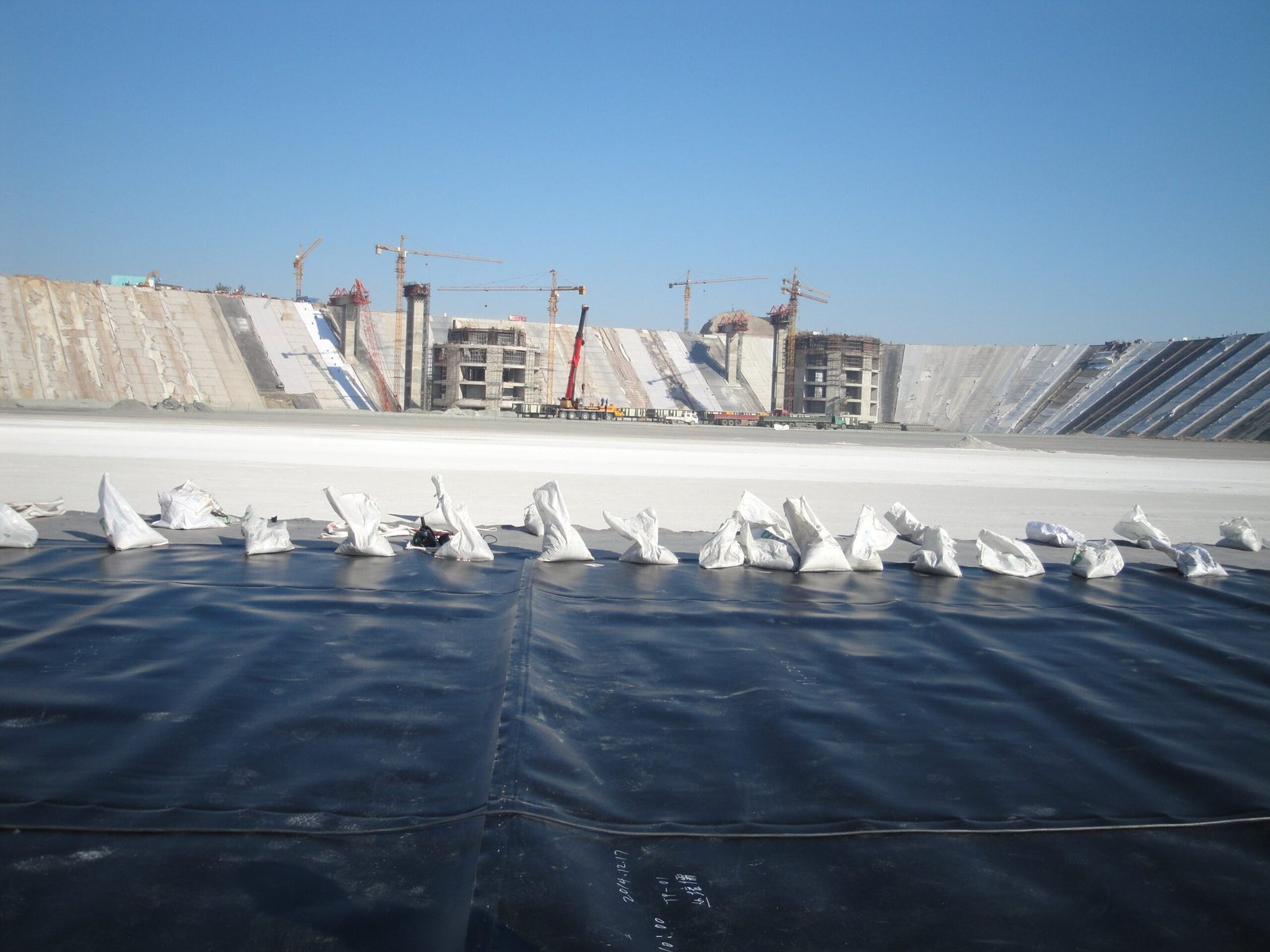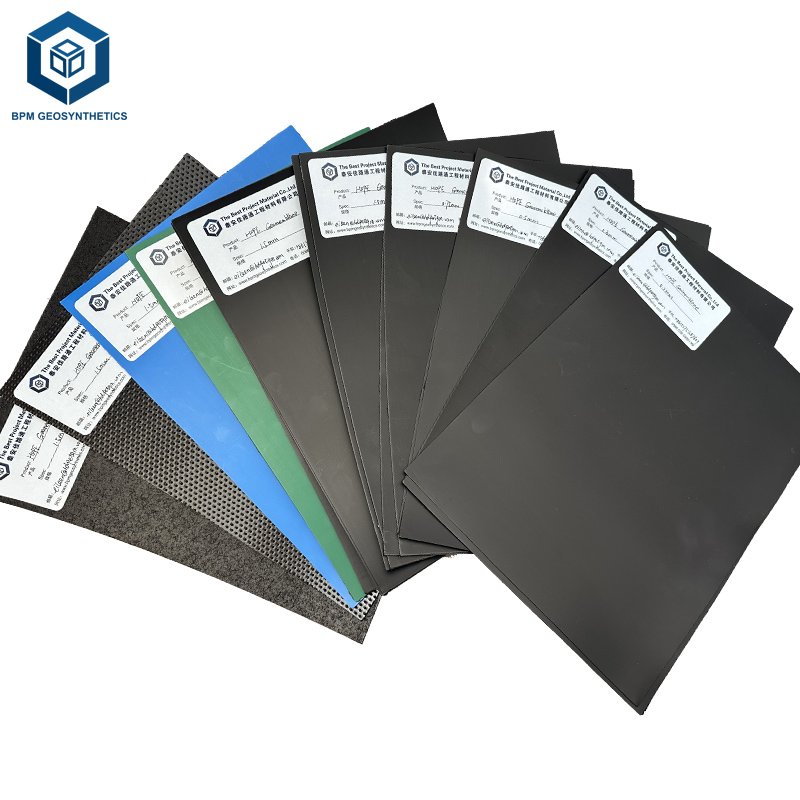
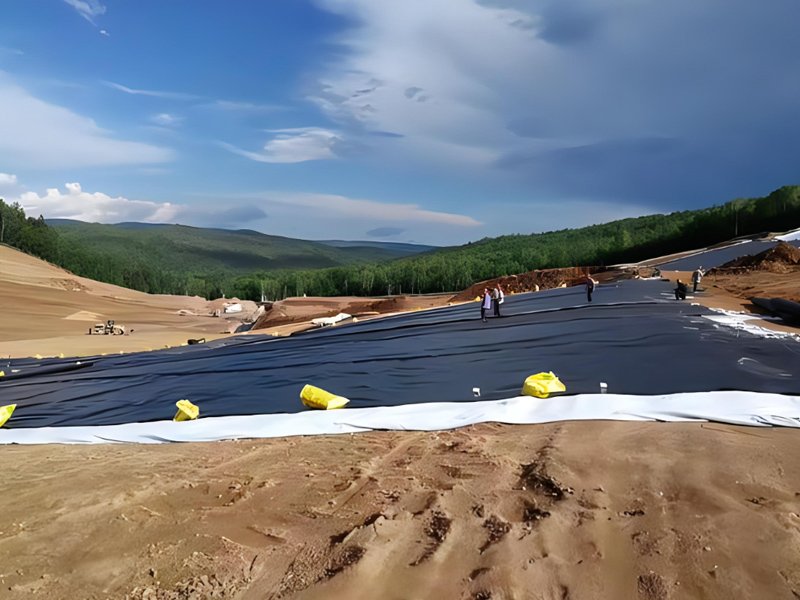
Geotech membranes (more precisely termed geomembranes in modern civil engineering and environmental applications) are low-permeability synthetic barriers used to contain liquids, gases, or contaminants and to protect soil and groundwater. Common polymer types include HDPE (high-density polyethylene), LLDPE (linear low-density polyethylene), PVC (polyvinyl chloride), EPDM (ethylene propylene diene monomer), fPP (flexible polypropylene), and CSPE (chlorosulfonated polyethylene). They are deployed in landfills (liner and cap systems), mining (heap leach pads, tailings dams), water containment (ponds, canals, reservoirs), secondary containment (fuel tanks, chemical storage), coastal protection, and wastewater treatment.
In 2025 the global geomembrane market is valued at approximately USD 2.8–3.1 billion and is projected to grow at a CAGR of 7.2–8.1% through 2030–2032 (MarketsandMarkets, Grand View Research, Fortune Business Insights, Polaris Market Research, and Transparency Market Research 2024–2025 reports). HDPE geomembranes hold 55–62% share due to superior chemical resistance, UV stability, and long design life (50–100+ years in covered applications). Thicknesses range from 0.5 mm (20 mil) for light-duty ponds to 2.0–3.0 mm (80–120 mil) for critical landfill and mining liners.
The most important performance metrics for geotech membranes include:
- Thickness (mm or mil)
- Tensile strength at break & yield (MPa or psi)
- Elongation at break (%)
- Tear resistance (N or lb)
- Puncture resistance (N or lb)
- Carbon black content & dispersion (for UV resistance in HDPE)
- Oxidative induction time (OIT, minutes) – standard & high-pressure
- Seam peel & shear strength (N/50 mm or lb/in)
- Permeability to water vapor & hydrocarbons (g/m²/day or L·mil/m²·day·atm)
- Chemical resistance (pH 2–13, hydrocarbons, leachate)
This review ranks the 8 best geotech membranes (geomembranes) commercially available in 2025. Rankings are based on published technical data sheets, third-party certifications (GRI-GM13/GM17/GM18/GM19, ISO 9863, ASTM D5199, D6693, D1004, D4833, D746, D3895, D5885, CE marking EN 13362), NTPEP geomembrane audit results, and field performance in landfills, mining, and water containment projects. Special focus is placed on BPM Geosynthetics short-fiber needle-punched non-woven geotextile which, while not a geomembrane, is the industry-preferred protection layer placed above or below geomembranes in composite liner systems to prevent puncture and enhance drainage/filtration.
Detailed Review of the 8 Best Geotech Membranes
1. Solmax / GSE HDPE Textured Geomembrane (Best Overall Geotech Membrane)
Solmax (formerly GSE) textured HDPE geomembrane remains the global reference for landfill liners, mining heap leach pads, and secondary containment.
Key Technical Parameters (1.5 mm / 60 mil)
- Thickness: 1.5 mm ± 10%
- Tensile strength at break: ≥27 MPa (ASTM D6693)
- Elongation at break: ≥700%
- Tear resistance: ≥250 N (ASTM D1004)
- Puncture resistance: ≥580 N (ASTM D4833)
- Carbon black content: 2–3%
- Standard OIT: ≥100 min; HP-OIT: ≥400 min (ASTM D3895/D5885)
- Permeability: ≤5 × 10⁻¹¹ cm/s
Project References Used in over 1,000 major landfill sites worldwide (including US Subtitle D, EU and Asian mega-landfills), copper/gold heap leach pads (Chile, Peru, Nevada), and coal ash ponds. Textured surface increases interface friction angle to 28–38° with non-woven geotextiles.
Advantages
- Industry-leading long-term OIT retention
- Consistent thickness and carbon dispersion
- Global manufacturing footprint reduces shipping costs
2–8. Other Leading Geotech Membranes (Summary)
- Agru HDPE Smooth & TexturedHighest OIT values (≥500 min HP-OIT); preferred in European landfills and water reservoirs; slightly higher cost.
- EPI / Raven HDPEStrong NSF/ANSI 61 certification for potable water; widely used in aquaculture and secondary containment.
- Carlisle MiraDRI / MiraPLY HDPEExcellent seam strength; popular in environmental caps and floating covers.
- Firestone GeoGard EPDMHighest flexibility and elongation; dominant in decorative ponds and exposed applications.
- CETCO XR-5 CSPESuperior chemical resistance to hydrocarbons and leachate; used in oil & gas containment.
- BPM Short-Fiber Needle-Punched Non-Woven Geotextile (Protection Layer)While not a geomembrane, BPM 400–600 g/m² non-woven is the industry-preferred cushion/protection layer placed above or below geomembranes to prevent puncture from rocks or aggregate. Key parameters: CBR puncture ≥1,500–1,900 N, permittivity 1.1–1.6 s⁻¹, flow rate >180 L/m²/s, AOS 0.10–0.16 mm. Widely used in composite liner systems (geomembrane + non-woven) in landfills and mining.
- Thrane HDPE / LLDPEBalanced price-performance; strong in Scandinavian and Baltic water containment projects.
BPM Geosynthetics Advantages
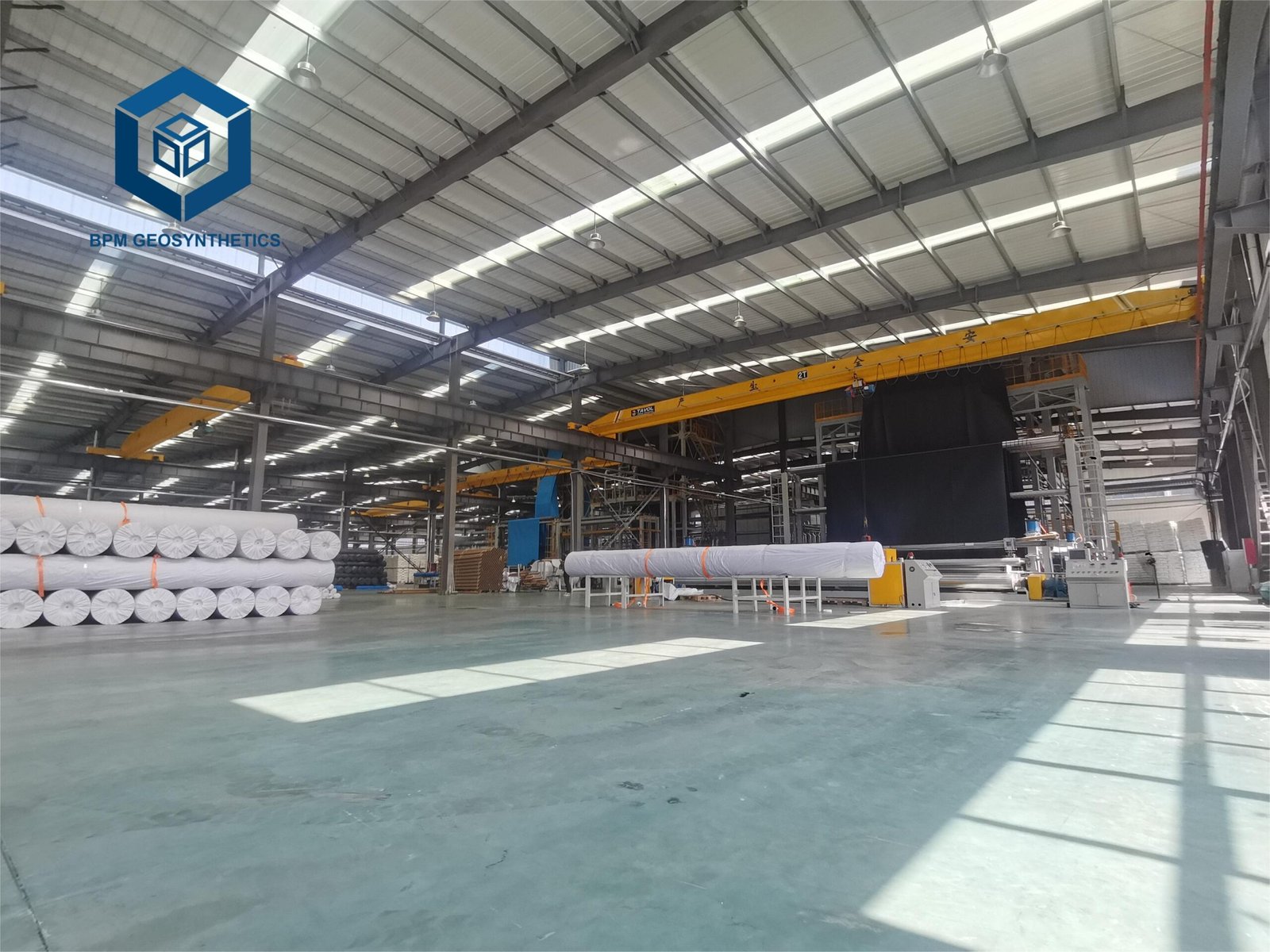
The Project Material Co., Ltd. (BPM Geosynthetics) has built a strong reputation as a leading exporter of short-fiber needle-punched non-woven geotextiles that serve as the critical protection and filtration layer in geomembrane composite systems.
Key competitive advantages include:
- Exceptional Puncture & Hydraulic PerformanceBPM 400–600 g/m² grades deliver CBR puncture 1,500–1,900 N and permittivity 1.1–1.6 s⁻¹, matching or exceeding many premium Western products at 20–35% lower price per m².
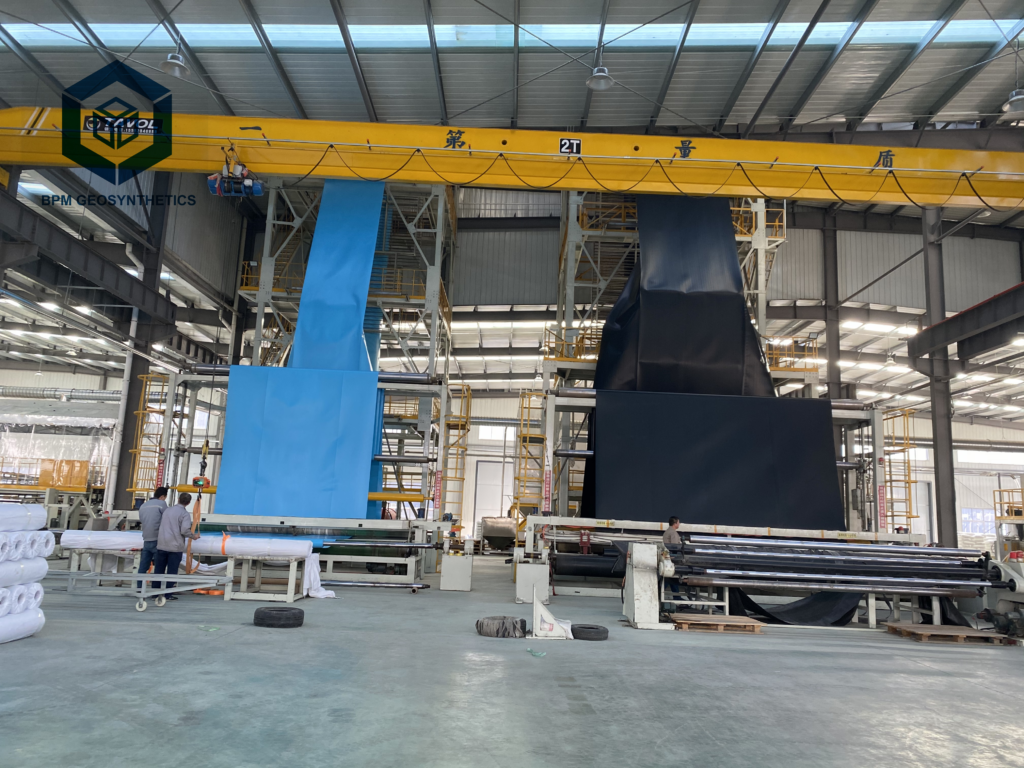
- Manufacturing ConsistencyAnnual capacity >120 million m², modern high-speed needle-punch lines with real-time mass/thickness scanners → mass CV <8%, thickness CV <10%.
- Comprehensive Certification PortfolioISO 9001:2015, ISO 14001:2015, CE marking (EN 13249–13257), SASO, third-party testing (SGS, Intertek, TUV), NTPEP-equivalent audits.
- Export Logistics AdvantageProximity to Qingdao/Tianjin ports → 15–25 day lead times for full container orders; LCL options for trial shipments.
- Customization & Technical SupportRoll widths 1–8 m, lengths 50–300 m, mass range 100–800 g/m², UV stabilizer dosage, color options, private labeling, and project-specific tensile/flow adjustments.
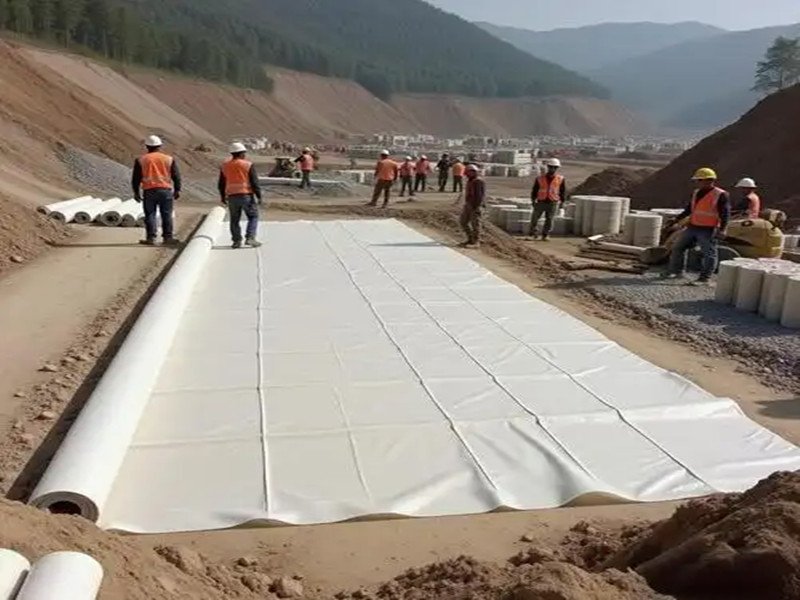
BPM non-woven geotextiles are routinely specified as the upper protection layer (cushion geotextile) above HDPE geomembranes in landfills and mining projects, significantly reducing puncture risk from cover soil or waste placement.
Conclusion
The geotech membrane market continues to expand rapidly, driven by stricter environmental regulations, mining growth in South America and Africa, landfill expansions in Asia-Pacific, and water security projects worldwide. HDPE geomembranes remain the dominant choice for long-term containment, while non-woven geotextiles (especially short-fiber needle-punched) are indispensable as protection, filtration, and separation layers in composite liner systems.
Among the eight strongest contenders in 2025, BPM Geosynthetics short-fiber non-woven geotextile stands out as the most cost-effective, high-performance protection layer to pair with any premium geomembrane. Its combination of puncture strength, hydraulic properties, quality consistency, certifications, and supply-chain reliability makes it the preferred choice for international contractors and engineers working on landfills, mining, reservoirs, and coastal projects.
Project owners, EPC contractors, and engineering consultants seeking reliable, certified, and competitively priced geosynthetic solutions should evaluate BPM 400–600 g/m² short-fiber non-woven geotextile as the upper cushion and filtration layer above geomembranes. Requesting third-party test reports, NTPEP-equivalent data, and small trial quantities is recommended to verify conformance with project specifications.