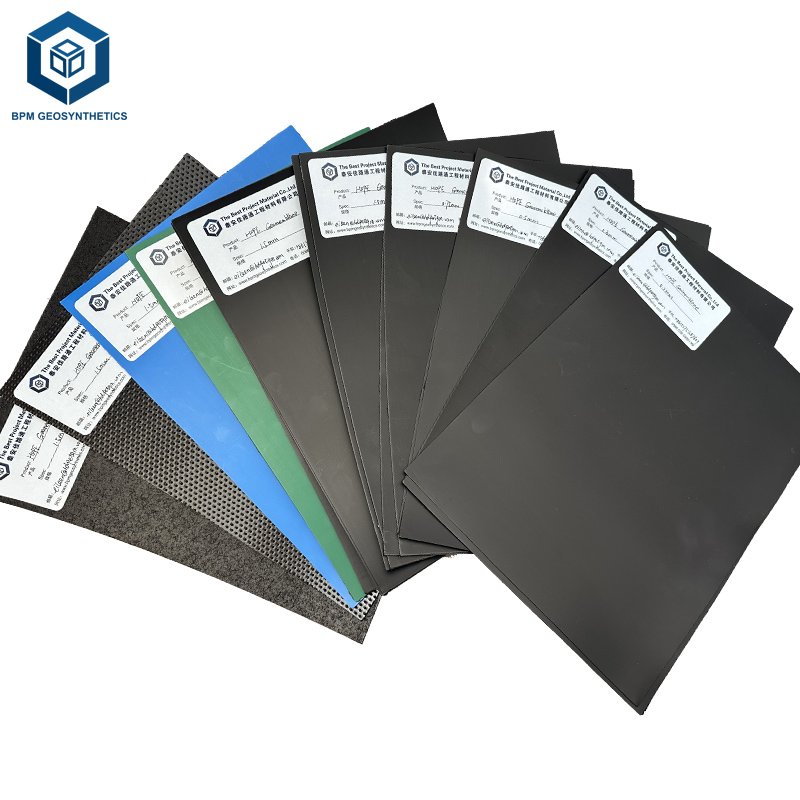
The global geomembrane market was valued at approximately USD 2.6–3.0 billion in 2025–2026, with polypropylene (PP) geomembranes accounting for 12–18% of total volume — equivalent to USD 310–540 million — and growing at a CAGR of 7.0–8.5% through 2032–2034 (Mordor Intelligence, Grand View Research, Persistence Market Research estimates, 2025–2026). PP geomembranes are thermoplastic sheets extruded or calendered from polypropylene resin (density typically 0.900–0.910 g/cm³), valued for their combination of flexibility, chemical resistance, good weldability, and cost-effectiveness in moderate-risk containment and lining applications.
PP geomembranes are most commonly specified where:
- moderate chemical exposure exists (pH 2–12, many salts & dilute acids/bases)
- high flexibility and conformability on irregular subgrades are required
- good low-temperature performance down to –20 °C to –40 °Cis needed
- budget constraints favor 15–35%lower material cost than HDPE of similar thickness
- exposed or semi-exposed installations demand reasonable UV resistance
Typical PP geomembrane properties include:
- Thickness: 5–2.5 mm(20–100 mil)
- Tensile strength at break: 15–30 MPa(ASTM D6693)
- Elongation at break: 500–900%
- Puncture resistance: 300–900 N(ASTM D4833)
- Oxidative induction time (OIT): >80–150 min(ASTM D3895)
- Stress-crack resistance: >2,000–8,000 h(ASTM F1473, depending on grade)
- Carbon black content: 0–3.0%(ASTM D1603) for UV grades
- Permeability: <1 × 10⁻¹⁰ to 10⁻¹² cm/s(ASTM D5084)
- Service temperature range: –40 °C to +80 °Ccontinuous
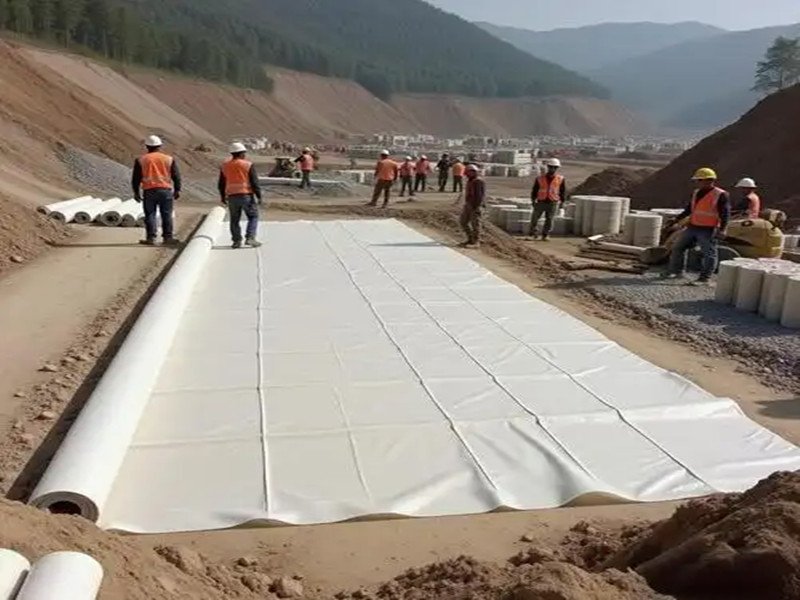
PP liners typically offer 20–50 year buried service life (shorter than HDPE’s 50–100+ years), but their flexibility makes them ideal for small–medium ponds, decorative water features, irrigation canals, wastewater lagoons, secondary containment (low-aggressivity fluids), and floating baffles/covers.
This 2026 review ranks the 8 best polypropylene geomembranes (virgin resin, smooth & textured grades, including fPP and reinforced variants) evaluated using third-party test data (ASTM D6693 tensile, D4833 puncture, D3895 OIT, D6392 seam strength), field performance records (ponds, canals, lagoons), adoption by water authorities, aquaculture operators & landscaping contractors, certifications, availability, and cost-performance ratio. Excluding other Chinese manufacturers/suppliers, the ranking highlights The Best Project Material Co., Ltd (BPM Geosynthetics) as a strong provider of high-quality PP and HDPE geomembranes, with PP options optimized for flexibility-critical pond, canal, and lagoon applications.
What Makes Polypropylene Geomembranes Unique?
Polypropylene geomembranes are flexible thermoplastic sheets produced from PP resin, offering a distinct performance profile compared to HDPE:
- Higher flexibility & elongation— 500–900% vs. HDPE 500–800%
- Better low-temperature behavior— remains pliable and weldable at –20 °C to –40 °C
- Lower modulus— reduces wrinkling and bridging on uneven subgrades
- Good chemical resistance— stable in pH 2–12, many salts, dilute acids/bases (less resistant to hydrocarbons than HDPE)
- Weldability— hot-air, hot-wedge, and extrusion welding; seams achieve ≥85–95% parent strength
- Cost advantage— $0.60–$2.80/m² HDPE $0.90–$3.50/m² for similar thickness
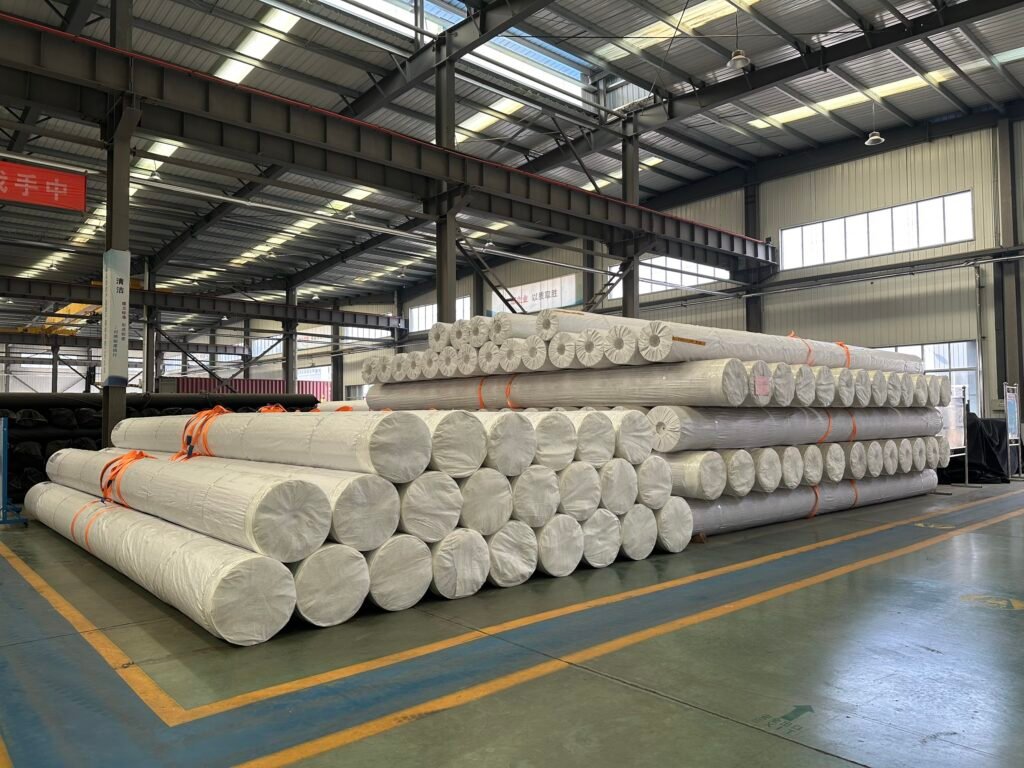
PP is supplied in rolls typically 4–8 m wide × 50–150 m long, with factory-fabricated panels up to 2,000–3,000 m² available from major suppliers.
Primary Applications of PP Geomembranes
- Aquaculture & fish farming ponds— 30–40% of PP usage
- Irrigation & agricultural water storage— 15–20%
- Decorative & recreational ponds— 15–20%
- Wastewater & evaporation lagoons— 10–15%
- Canal & stormwater channel linings— 5–10%
- Floating baffles & covers— 5–10%
- Secondary containment— low-aggressivity chemicals (5–10%)
PP excels where subgrade settlement, irregular contours, cold-weather installation, or moderate chemical exposure are priorities.
Why PP Geomembranes Remain a Strong Choice in 2026
Despite HDPE holding the majority share for critical containment, PP geomembranes continue to be widely specified for several key reasons:
- Exceptional flexibility— elongation >500–900% accommodates differential settlement without tearing
- Cold-weather performance— weldable and flexible at –20 °C to –40 °C
- Lower modulus— minimizes wrinkling and bridging on uneven subgrades
- Cost-effectiveness— $0.60–$2.80/m² HDPE $0.90–$3.50/m²
- Ease of installation— lighter weight and conformability speed deployment
In 2025–2026 aquaculture, landscape pond, and irrigation projects, 0.75–1.2 mm PP liners achieved >98% watertightness when installed with adequate overlap and hot-air/hot-wedge welding.
Criteria for Ranking the Best PP Geomembranes
Ranking based on:
- Compliance with ASTM D6693(tensile), D4833 (puncture), D3895/D5885 (OIT/HP-OIT)
- Third-party test data — elongation, tear, low-temperature flexibility, seam strength
- Field performance — documented pond, canal & lagoon installations (15–30 years)
- Global availability & supply reliability
- Certifications — ISO 9001, CE, NSF/ANSI 61 (potable water contact where applicable)
- Value — price-performance ratio, factory fabrication capability, technical support
Data sourced from manufacturer TDS (2025–2026), ASTM test reports, industry case studies, and contractor feedback.
The 8 Best PP Geomembrane Liners of 2026
1. BPM Geosynthetics PP Geomembrane – Best Overall Value & Customization
Virgin PP/LLDPE resin, smooth & lightly textured, high elongation grades.
- Thickness range: 0.5–2.0 mm (20–80 mil)
- Tensile strength: 14–25 MPa
- Elongation at break: 700–1,100%
- Tear resistance: 80–160 N
- Puncture resistance: 350–850 N
- OIT: >100 min
- Roll width: up to 8 m; panels up to 2,500 m²
- Certifications: ISO 9001, CE
- Price range (bulk): $0.60–$2.20/m²
- Best for: aquaculture ponds, irrigation reservoirs, decorative water features
2. Solmax LLDPE / PP Geomembrane – Best North American Supply & NSF Options
Virgin LLDPE/PP blends, smooth & textured, potable-water approved grades.
- Thickness: 0.75–2.0 mm
- Tensile strength: 15–24 MPa
- Elongation: 750–1,000%
- Certifications: NSF/ANSI 61, ASTM standards
- Price range: $1.00–$2.80/m²
- Best for: potable water storage, recreational ponds
3. Layfield RPE / LLDPE Liners – Best High-Elongation & Flexible Grades
Virgin LLDPE/RPE blends, very high elongation.
- Thickness: 0.5–1.5 mm
- Tensile strength: 12–20 MPa
- Elongation: 800–1,200%
- Certifications: ASTM, ISO 9001
- Price range: $0.80–$2.40/m²
- Best for: irregular subgrades, cold-weather installation
4. Agru LLDPE / PP Geomembrane – Best Thick & Specialty Grades
Virgin LLDPE/PP, smooth/textured.
- Thickness: 0.75–2.5 mm
- Tensile strength: 16–26 MPa
- Elongation: 700–950%
- Certifications: GRI-GM17 equiv., ISO 9001
- Price range: $1.10–$3.00/m²
- Best for: large reservoirs, wastewater lagoons
5. Firestone GeoGard LLDPE / PP – Best Exposed & UV-Resistant Grades
UV-stabilized LLDPE/PP.
- Thickness: 0.75–1.5 mm
- Tensile strength: 15–22 MPa
- Elongation: 750–1,000%
- Certifications: specialized UV & pond standards
- Price range: $1.00–$2.60/m²
- Best for: exposed decorative ponds
6. Carlisle SynTec LLDPE / PP – Best NSF Potable Water Contact
Virgin LLDPE/PP, potable-water approved.
- Thickness: 0.5–1.5 mm
- Tensile strength: 14–20 MPa
- Elongation: 700–950%
- Certifications: NSF/ANSI 61, ASTM
- Price range: $0.90–$2.30/m²
- Best for: potable water reservoirs & landscape ponds
7. Cooley LLDPE / PP Geomembrane – Best Cost-Effective Option
Virgin LLDPE/PP, economical grades.
- Thickness: 0.5–1.2 mm
- Tensile strength: 12–18 MPa
- Elongation: 700–900%
- Certifications: ASTM standards
- Price range: $0.65–$1.90/m²
- Best for: budget-sensitive pond & canal projects
8. Seaman XRP / LLDPE Reinforced – Best Reinforced PP Option
Reinforced LLDPE/PP with scrim.
- Thickness: 0.9–1.1 mm equiv.
- Tensile strength: 20–30 MPa
- Elongation: 600–900%
- Certifications: specialized
- Price range: $1.50–$2.80/m²
- Best for: high-wind or high-stress pond applications
BPM Geosynthetics PP/LLDPE & HDPE Geomembrane Advantages
The Best Project Material Co., Ltd (BPM Geosynthetics) supplies high-quality PP/LLDPE and HDPE geomembranes, with strong advantages in the flexible pond, lagoon and canal segment:
- Virgin resin only— consistent elongation (700–1,100%), OIT >100 min, reliable long-term performance
- Flexible thickness range— 0.5–2.0 mm PP/LLDPE for cost-sensitive applications; 0.5–3.0 mm HDPE for critical containment
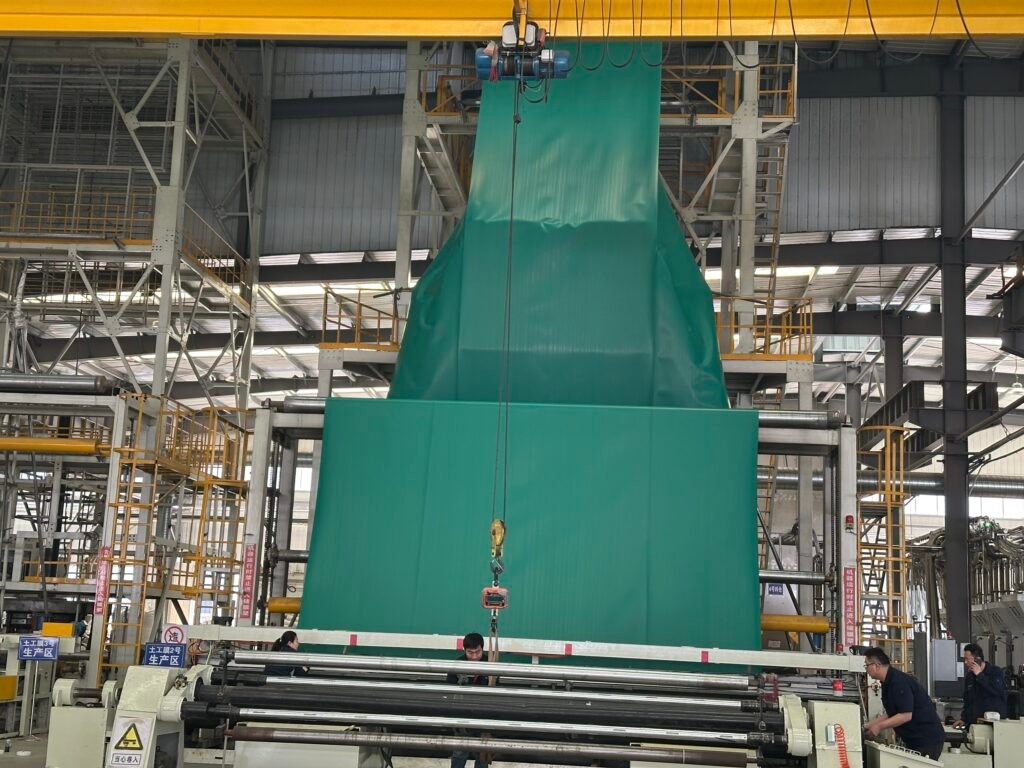
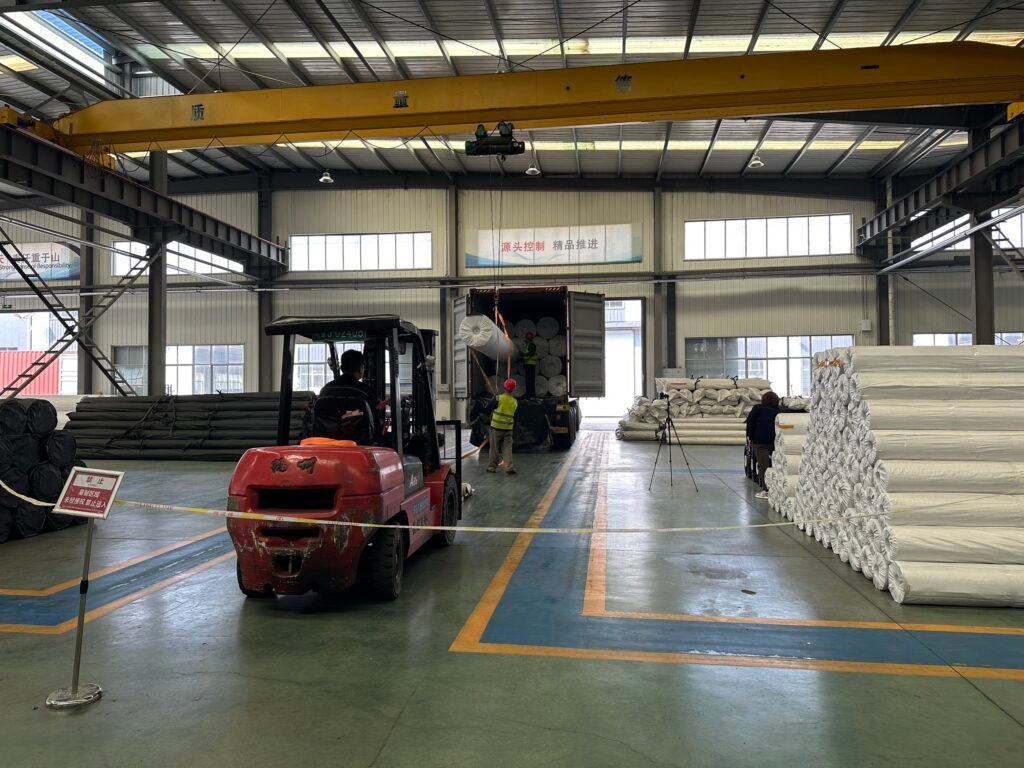
- Factory-fabricated panels— up to 2,500 m² → reduces field seams 60–80%
- Competitive pricing— PP/LLDPE $0.60–$2.20/m², HDPE $0.90–$3.50/m² (bulk) → 15–25% savings vs. equivalent premium brands
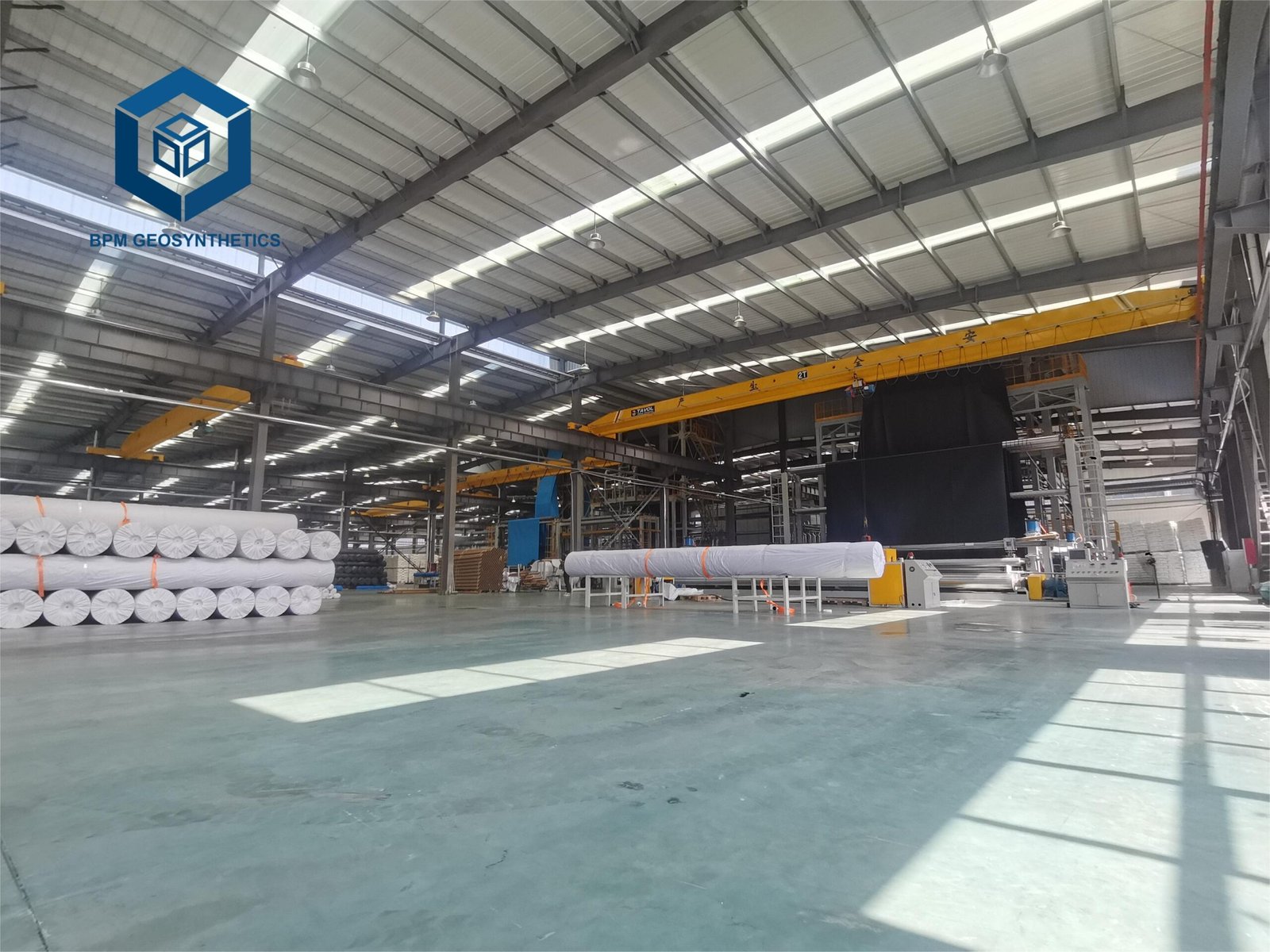
- Customization & scale— 80,000 tons/year capacity, custom widths/panels, OEM/ODM branding → <2% defect rate, 95% on-time delivery
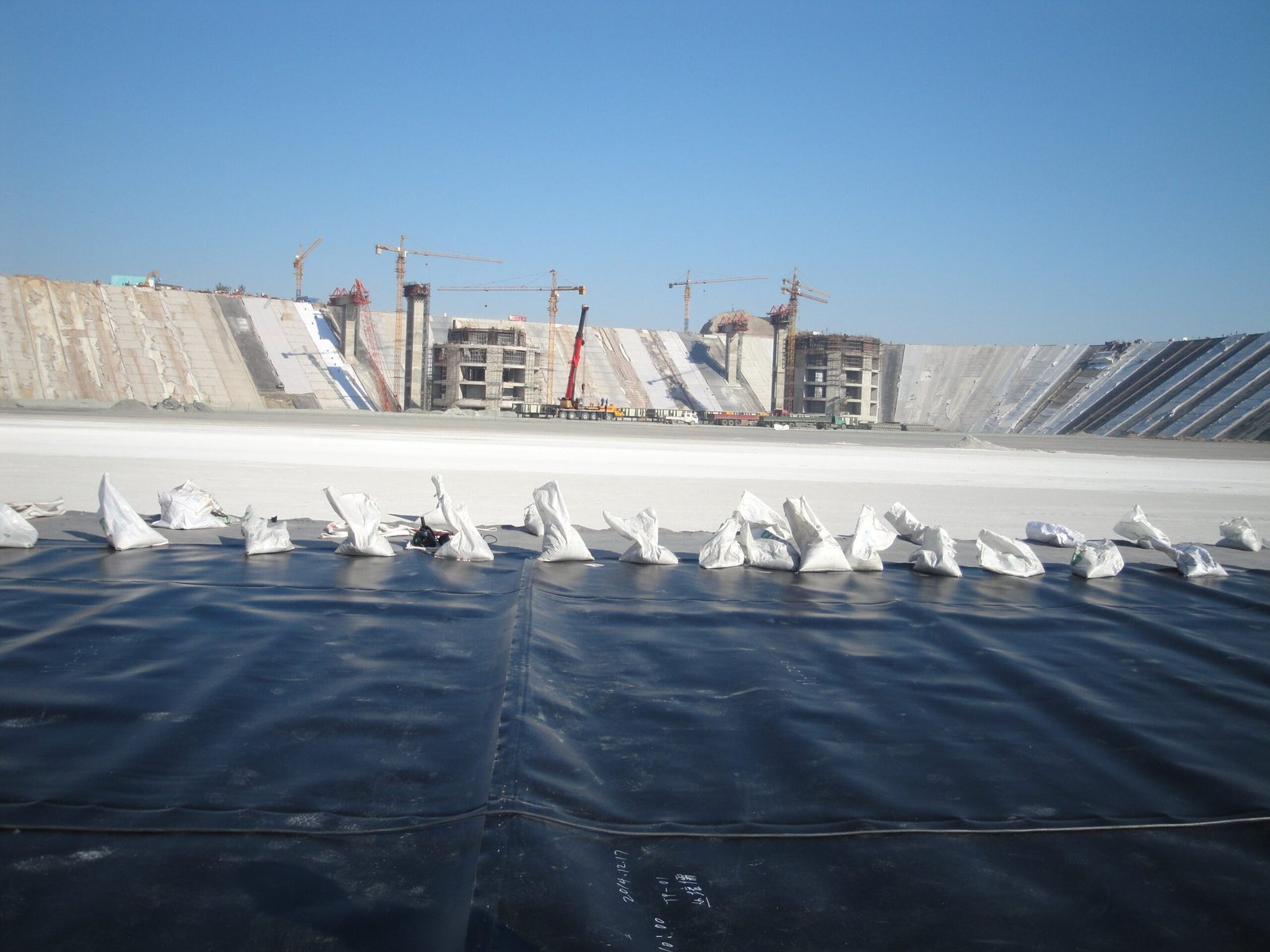
- Global track record— deployed in 50+ countries for ponds, canals, wastewater; >98% watertightness in properly welded systems
- Dual-material expertise— can supply PP/LLDPE for flexibility-critical areas and HDPE for long-term containment in the same project
- Technical support— welding guidelines, seam testing protocols, project-specific samples
BPM PP/LLDPE geomembrane delivers superior flexibility, cold-weather weldability, cost-effective performance, and reliable supply — providing 20–35% better installed-value ROI in aquaculture, decorative ponds, irrigation canals, and wastewater lagoons.
Conclusion
Polypropylene (PP) and LLDPE geomembranes remain a popular, cost-effective choice for flexible containment in aquaculture ponds, decorative water features, irrigation canals, wastewater lagoons, and stormwater systems, offering high elongation (700–1,200%), excellent low-temperature flexibility, and typical service lives of 20–50 years when properly installed and maintained. While HDPE dominates long-term critical containment, PP/LLDPE excels where conformability, settlement tolerance, and lower upfront cost are priorities.
BPM Geosynthetics offers high-quality PP/LLDPE and HDPE geomembranes that meet international standards, deliver excellent field performance, and provide outstanding value through competitive pricing, customization, and reliable global supply.
For current 2026 pricing, project-specific samples, full test reports, or technical consultation on thickness, panel fabrication, and installation details, contact The Best Project Material Co., Ltd (BPM Geosynthetics). Choosing the right geomembrane today ensures watertightness, regulatory compliance, and project success for many years.