Geotextile fabric is one of the most widely used geosynthetic materials in civil engineering, landscaping, drainage, erosion control and infrastructure projects.But one question arises again and again when planning a project: how much does geotextile fabric cost per square foot?
In this complete BPM Geosynthetics team will guide we break down:
- Current geotextile fabric cost per square foot by weight class and type
- Key factors that drive price differences
- Typical pricing examples from major North American & global suppliers
- Cost comparison: nonwoven vs woven vs composite fabrics
- How to calculate total project cost
- Real-world case examples
- Tips to reduce geotextile fabric cost without sacrificing performance
- When paying more actually saves money in the long run
1. Current Geotextile Fabric Cost per Square Foot (2025–2026)
Geotextile prices vary significantly by weight, fiber type (polypropylene vs polyester), manufacturing process (staple vs continuous filament), brand reputation and purchase volume.
1.1 Nonwoven Geotextile Fabric Pricing Overview
Nonwoven fabrics dominate the market (≈60–65% share) and are the most common choice for filtration, drainage and separation.
Weight (g/m²) | Approx. oz/yd² | Typical Use Cases | Price Range per sq ft (bulk) | Price Range per sq yd (bulk) | Common Brands / Equivalents |
100–135 | 3–4 | Weed barrier, light drainage, sediment fences | $0.12 – $0.28 | $1.08 – $2.52 | Propex Geotex 401, TenCate 140N class, ADS NW2 |
150–180 | 4.5–5.5 | Gravel driveways, French drains, light roads | $0.22 – $0.48 | $1.98 – $4.32 | BPM 150–180 g/m², Mirafi 180N, Geotex 501 |
200–250 | 6–7.5 | Road subgrade, MSE wall filtration, trench drains | $0.35 – $0.75 | $3.15 – $6.75 | BPM 200–250 g/m², Geotex 601/701, FX-66 |
300–350 | 9–10 | Heavy drainage, landfill cushion, mining pads | $0.55 – $1.10 | $4.95 – $9.90 | Geotex 801/1001 class, Mirafi 1100N equiv. |
400–450 | 12–13 | Heavy protection, tailings filtration | $0.85 – $1.60 | $7.65 – $14.40 | BPM 400 g/m², heavy Mirafi / Solmax grades |
Notes:
- Prices shown are approximate deliveredcosts (including freight to most US continental locations) for full truckload or container quantities (≈10,000–50,000 sq yd).
- Small-quantity retail rolls (Amazon, Home Depot, local suppliers) usually cost 60–150% more.
- Polyester filament grades typically run 10–25% higher than standard polypropylene staple.
1.2 Woven Geotextile Fabric Pricing (for comparison)
Woven fabrics are used when higher tensile strength and lower elongation are required (stabilization, reinforcement).
Type | Weight (g/m²) | Typical Tensile (kN/m) | Price Range per sq ft | Common Use under gravel |
Slit-film woven | 150–200 | 10–20 | $0.28 – $0.65 | Light stabilization under gravel |
High-strength woven | 200–300 | 20–50 | $0.55 – $1.40 | Heavy-duty unpaved roads, crane pads |
Monofilament woven | 200–400 | 15–35 | $0.45 – $1.10 | Drainage + separation in wet conditions |
Nonwoven fabrics remain the first choice for most gravel driveway and landscape projects due to better filtration and lower cost.
2. Key Factors That Influence Geotextile Fabric Cost per Square Foot
2.1 Weight (Mass per Unit Area)
Weight is the single biggest driver of price.
- Every additional 50 g/m² typically adds $0.08–$0.20 / sq ftin bulk.
- Jumping from 150 g/m² → 200 g/m² → 300 g/m² can increase cost by 50–120%.
Rule of thumb: Cost ≈ Base price + (Weight – 100) × $0.0015–$0.003 per g/m²
2.2 Fiber Type & Polymer
- Polypropylene (PP)staple → lowest cost baseline
- Polyester (PET)staple or filament → 15–35% more expensive (better UV resistance, higher tensile in some grades)
- Continuous-filament spunbond → 20–50% premium over staple-fiber for same weight
2.3 Manufacturing Process
- Needle-punched→ most common, moderate cost
- Spunbond + needle-punched→ higher strength, 20–40% more expensive
- Heat-set / calendered→ smoother surface, usually 10–25% higher
2.4 Roll Width & Quantity
- Standard widths: 12.5 ft, 15 ft, 16 ft (3.8 m, 4.6 m, 4.9 m)
- Wider rolls (18–22 ft) → 5–15% savings per sq ft in large projects
- Small rolls (<500 sq yd) → 40–100% markup vs bulk
Typical bulk break points:
- 5,000–10,000 sq yd → 5–10% discount
- 20,000+ sq yd → 12–20% discount
- Full container (≈40,000–60,000 sq yd) → best pricing
2.5 Freight & Logistics
Freight usually adds $0.05–$0.18 / sq ft depending on distance and volume.
- West Coast vs Midwest → +10–25%
- Residential small delivery → +$0.20–$0.50 / sq ft
2.6 Brand & Certification Premium
- Premium brands (TenCate Mirafi, Propex Geotex, ADS, Carthage Mills) → 20–50% higher than generic or emerging suppliers
- NTPEP / AASHTO certified products → 15–35% premium
- Projects requiring full traceability or third-party QA/QC → higher cost
3. Typical Geotextile Fabric Cost Examples – Real Projects (2025–2026)
3.1 Residential Gravel Driveway (1,500–3,000 sq ft)
- Fabric: 150–200 g/m² nonwoven
- Quantity: 1,800 sq ft (with overlap)
- Delivered price: $0.38–$0.68 / sq ft
- Total fabric cost: $684 – $1,224
- Savings vs no fabric: $800–$2,500over 5 years (less gravel, no regrading)
3.2 Commercial Parking Lot Subgrade Separation (20,000 sq yd)
- Fabric: 200–300 g/m² nonwoven
- Delivered price: $0.42–$0.78 / sq ft(bulk)
- Total fabric cost: $37,800 – $70,200
- Savings: 15–35% reductionin granular base thickness → $45,000–$120,000 aggregate savings
3.3 MSE Retaining Wall Drainage Layer (5,000 sq yd)
- Fabric: 180–250 g/m² nonwoven
- Delivered price: $0.48–$0.85 / sq ft
- Total fabric cost: $21,600 – $38,250
- Benefit: 30–50% reduction in hydrostatic pressure → lower wall design cost
4. How to Calculate Total Geotextile Fabric Cost for Your Project
Step-by-step:
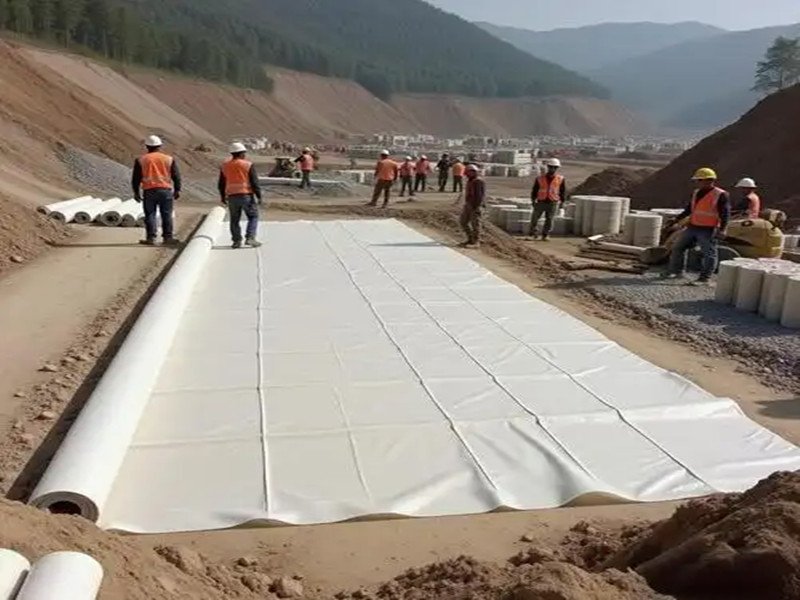
- Measure area— Length × Width (add 10–15% for overlap & waste)
- Choose weight— 150 g/m² for light landscaping/driveways, 200–300 g/m² for roads/walls
- Get bulk pricing— Request quotes from 2–4 suppliers
- Add freight— Usually $0.05–$0.18 / sq ft
- Include accessories— Seam tape, pins, sandbags (~5–10% extra)
- Apply volume discount— 5–20% for >5,000 sq yd
Example calculation (2,000 sq ft gravel driveway):
- Area with overlap/waste: 2,300 sq ft
- Fabric: BPM 200 g/m² short-fiber non-woven @ $0.58 / sq ft delivered
- Total fabric cost: $1,334
- Gravel savings (25% less thickness): $900–$1,600
- Net savings in first 3 years: ≈$1,500–$2,200
5. Nonwoven vs Woven vs Composite – Cost & Performance Comparison
Type | Weight Range (g/m²) | Typical Price / sq ft | Strength | Drainage | Weed Control | Best Use under Gravel | Life Expectancy (covered) |
Nonwoven (short-fiber) | 120–300 | $0.25–$0.85 | Medium | Excellent | Very Good | Most gravel driveways & paths | 15–40 years |
Nonwoven (continuous-filament) | 150–400 | $0.45–$1.20 | High | Excellent | Very Good | Heavy traffic gravel, MSE walls | 25–50+ years |
Slit-film woven | 120–250 | $0.30–$0.75 | High | Poor | Good | Stabilization under heavy gravel | 20–40 years |
Monofilament woven | 200–400 | $0.55–$1.40 | Very High | Good | Good | Wet conditions + high tensile needed | 30–50+ years |
Composite (nonwoven + grid) | 200–500 | $0.90–$2.50 | Very High | Good | Very Good | Very soft subgrade + heavy loads | 30–60+ years |
Conclusion: For most residential and light commercial gravel applications, nonwoven geotextile fabric 150–250 g/m² offers the best balance of cost, drainage, filtration and weed control.
6. How to Save Money on Geotextile Fabric Under Gravel Without Sacrificing Quality
- Buy in bulk— 5,000+ sq yd orders usually save 10–25%.
- Choose correct weight— Avoid over-specifying (200 g/m² is sufficient for most driveways).
- Compare delivered pricing— Freight can vary $0.05–$0.25 / sq ft.
- Use wider rolls— 16 ft width reduces seams and waste.
- Request project quotes— BPM Geosynthetics and major distributors often provide 5–15% better pricing for named projects.
- Avoid retail small rolls— Amazon/Home Depot markups are 50–150%.
- Consider polyester if UV exposure is possible— longer life offsets higher initial cost.
7. When Paying More for Geotextile Fabric Actually Saves Money
- Heavy traffic driveways— 250–300 g/m² fabric prevents rutting → avoids $2,000–$5,000 regrading every 2–3 years.
- Wet/clay subgrades— Higher permittivity fabrics reduce saturation → prevents costly gravel replacement.
- Long design life— Polyester or high-quality PP filament grades last 30+ years → lower replacement cost vs cheap 5–8 year fabrics.
8. Request a Quote from BPM Geosynthetics
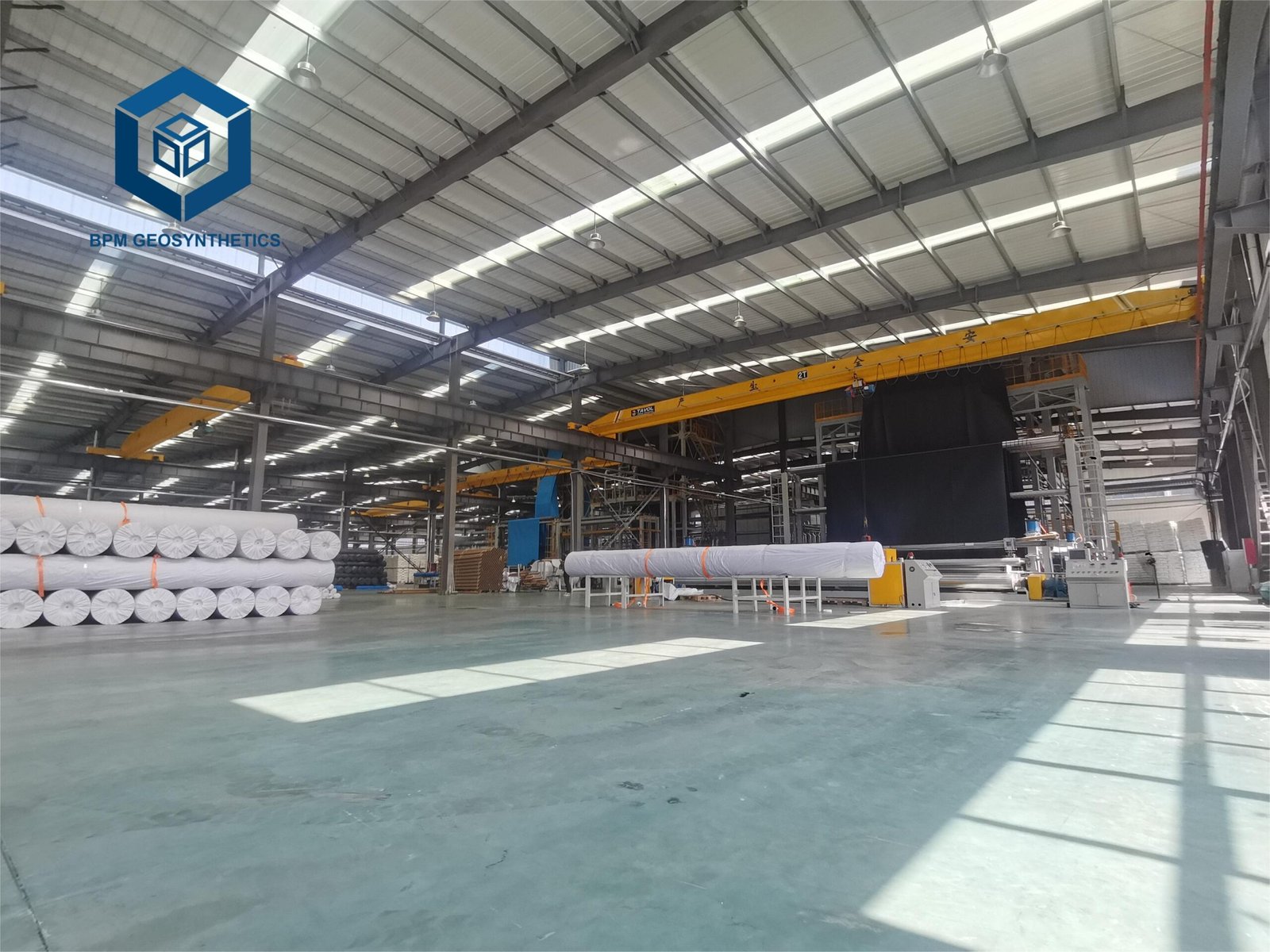
The Best Project Material Co., Ltd (BPM Geosynthetics) manufactures and supplies high-quality nonwoven geotextile fabrics (short-fiber and filament) in weights from 100 g/m² to 600+ g/m², with fast lead times and competitive pricing for North American and international projects.
For a personalized quote on geotextile fabric under gravel (including delivered pricing, roll widths, samples or project-specific recommendations), contact BPM Geosynthetics today:
- Website: https://www.bpmgeosynthetic.com
- Email: sales@bpmgeosynthetic.com
- Phone: Available on website (US & international support)
Whether you’re a homeowner installing a 1,000 sq ft gravel driveway, a contractor building 50,000 sq ft commercial parking areas, or an engineer specifying for municipal roads — BPM can provide the right geotextile fabric at the right price.