Geogrids are revolutionizing road construction by delivering robust solutions for pavement reinforcement, subgrade stabilization, and base course optimization. With the global road infrastructure market exceeding USD 2.5 trillion annually and geogrids capturing an ever-growing share of pavement engineering, these geosynthetic materials have become indispensable for modern highway, rural road, and urban street projects. Used in asphalt overlays, unpaved roads, and rigid pavement systems, geogrids reduce construction costs by 15–30% and extend pavement service life by 10–20 years, per AASHTO and ASTM D6637 standards. This comprehensive guide explores what geogrid is for road projects, its types, key specifications, material comparisons, selection criteria, and real-world applications—providing actionable insights for civil engineers, paving contractors, and transportation agencies aiming for 95% project reliability.
1. What Is Geogrid for Road Projects?
A geogrid is a planar, polymeric geosynthetic material featuring a grid-like structure with open apertures, specifically engineered to reinforce soils, aggregates, and asphalt layers in road construction. Manufactured from high-strength polymers such as polypropylene (PP, 45%), polyester (PET, 15%), or polyethylene (HDPE, 35%), geogrids interlock with road base materials through mechanical bonding, increasing shear strength by 30–50% and improving load distribution efficiency to 90–95% (ASTM D6637). Unlike traditional road reinforcement methods that rely solely on thicker aggregate layers or cement stabilization, geogrids function as a tensile inclusion within the pavement structure, confining aggregate particles and preventing lateral spreading under traffic loads.
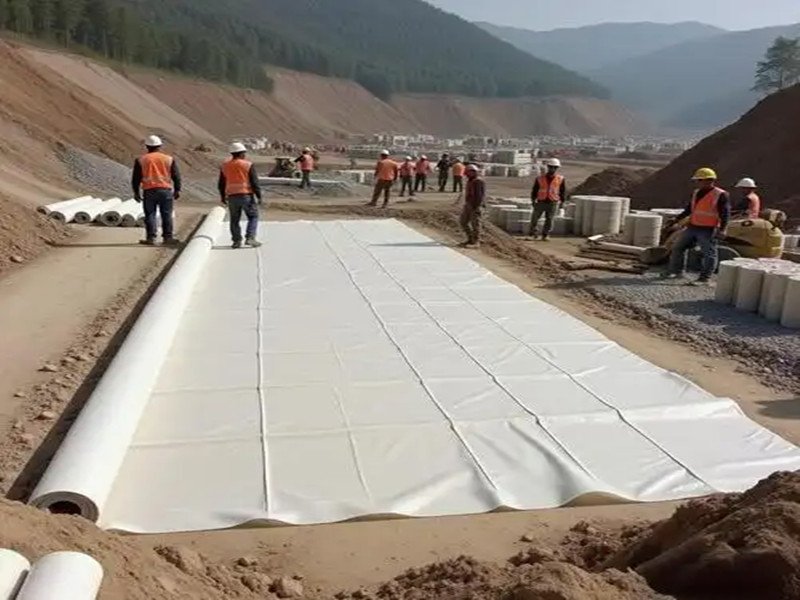
In road projects, geogrids are typically installed at the interface between the subgrade and subbase, within the aggregate base course, or at the bottom of asphalt layers. This strategic placement reduces vertical stress on the subgrade by 25–40%, minimizes rutting by 50%, and decreases reflective cracking in asphalt overlays by up to 90%, per research published in the Journal of Transportation Engineering. First commercialized in the 1980s, geogrid technology for roads has advanced significantly—with innovations like Tensar’s TriAx® and biaxial PP geogrids improving traffic-bearing capacity by 35% while reducing base layer thickness requirements by 20–30%.
What Is Geogrid for Road Projects – Core Functions
Base Reinforcement: Enhances the tensile strength of unbound aggregate layers by 20–200 kN/m, enabling thinner yet stronger pavement sections.
Subgrade Stabilization: Bridges weak or variable subgrade soils (CBR < 3), reducing differential settlement by 30–40% and preventing pumping failures.
Asphalt Reinforcement: Mitigates fatigue cracking and reflective cracking in pavement overlays, extending resurfacing intervals by 8–12 years.
Load Distribution: Spreads wheel loads over a wider subgrade area, reducing vertical stress by 25–35% and improving pavement response to heavy truck traffic (80–120 kN axle loads).
2. Types of Geogrids for Road Projects
Geogrids used in road construction are classified by their manufacturing process, aperture geometry, and directional strength characteristics. Selecting the appropriate type is critical to achieving 95% design performance and maximizing return on investment.
2.1 Biaxial Geogrids for Road Bases
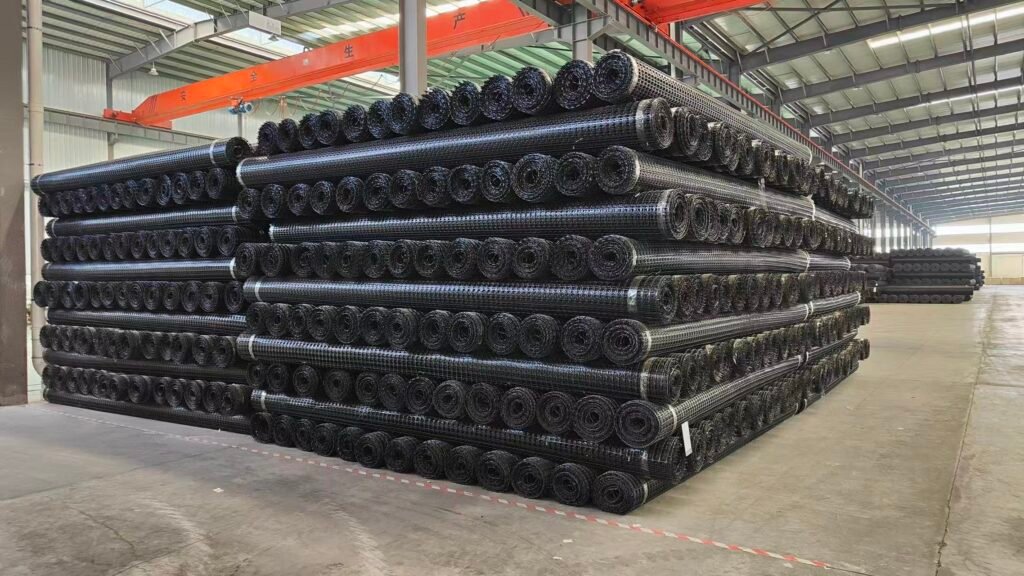
Biaxial geogrids are stretched in both the machine direction (MD) and cross-machine direction (CMD), providing balanced tensile strength (typically 20–100 kN/m) in two perpendicular axes. Manufactured primarily from polypropylene (PP) via extrusion and punching processes, they are the most widely used geogrid type in road construction, accounting for approximately 60% of all road geogrid installations.
Specifications: Tensile strength at 2% strain: 10–30 kN/m (MD/CMD); aperture size: 25–65 mm; junction efficiency: ≥90% (ASTM D6637).
Road Applications: Aggregate base reinforcement (55% usage), subgrade stabilization over soft soils, parking lots, and urban roadways.
Performance: Reduces base course thickness by 20–30% while maintaining equivalent structural capacity (AASHTO SN equivalency).
2.2 Triaxial Geogrids for Heavy-Duty Roads
Triaxial geogrids feature a triangular aperture geometry, providing multidirectional load distribution and superior aggregate interlock compared to conventional biaxial products. Made from polypropylene, they offer tensile strengths of 30–200 kN/m and can reduce aggregate base thickness by 25–50% in heavy-load applications.
Specifications: Rib thickness: 1.0–2.5 mm; junction efficiency: ≥93%; aperture stability: 25–50% better than biaxial equivalents (ASTM D7737).
Road Applications: Interstate highways, port access roads, industrial haul roads, airport taxiways, and bus depots subjected to repetitive heavy axle loads.
Performance: Improves load-bearing capacity by 40% and reduces permanent deformation (rutting) by 50% under Equivalent Single Axle Loads (ESALs) exceeding 10 million.
2.3 Uniaxial Geogrids for Steep Road Embankments
Uniaxial geogrids are manufactured with high tensile strength (100–400 kN/m) oriented in a single direction (typically the machine direction). While primarily associated with retaining wall and slope applications, they play a vital role in road projects involving steep embankments, reinforced soil slopes adjacent to roadways, and bridge approach fills.
Specifications: Tensile strength at 2% strain: 20–80 kN/m; elongation at break: 10–12% (ASTM D6637); creep resistance: <2% strain at design load over 120 years.
Road Applications: Steepened roadside embankments (70° slopes), bridge abutment backfill reinforcement, widening of existing road corridors on constrained right-of-way.
Performance: Enables construction of 1H:1V or steeper embankments, reducing land acquisition by 30–50% compared to conventional 2H:1V slopes.
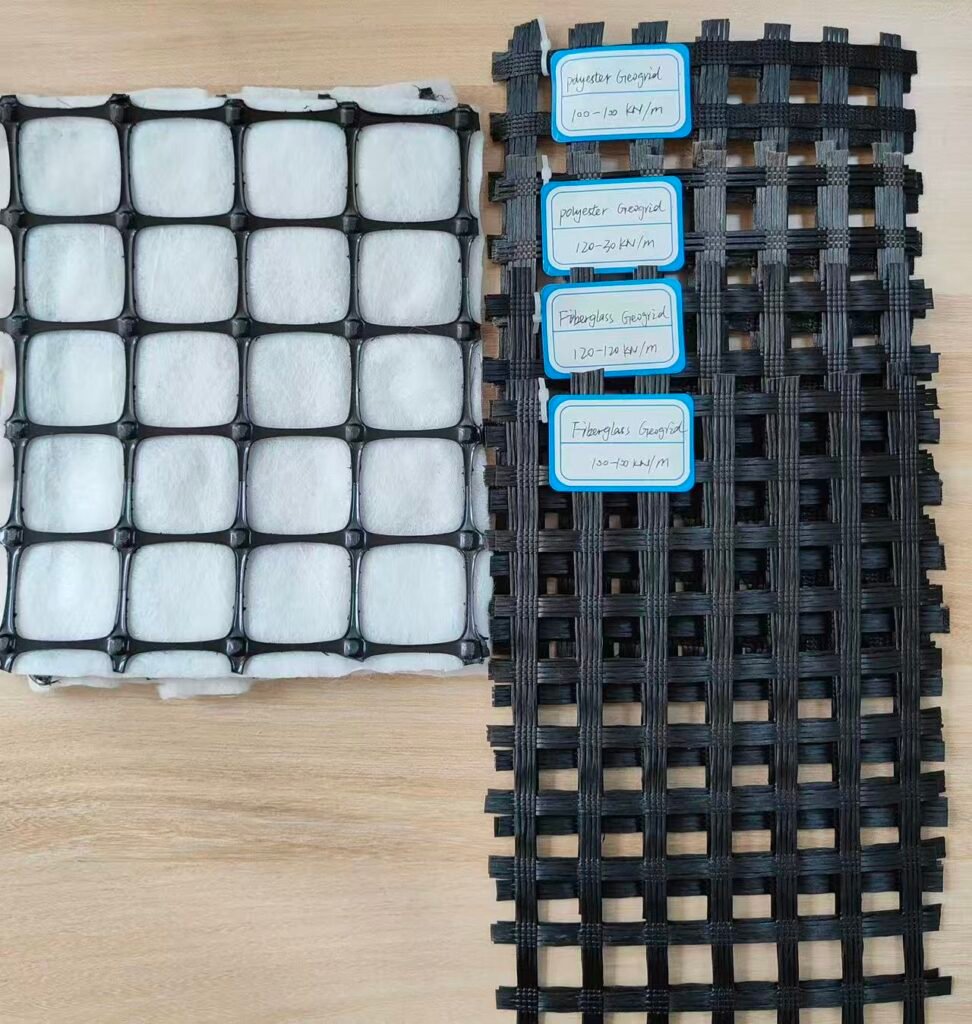
2.4 Composite Geogrids for Asphalt Reinforcement
Composite geogrids integrate a geogrid structure with a geotextile backing, combining reinforcement with separation and filtration functions. In road projects, they are particularly valuable for asphalt pavement overlays and reflective crack control.
Specifications: Tensile strength: 50–200 kN/m; bitumen retention capacity: 0.8–1.2 L/m²; compatibility with tack coat adhesion.
Road Applications: Asphalt overlay reinforcement, crack retardation in concrete pavement rehabilitation, stress-absorbing membrane interlayers (SAMI).
Performance: Delays reflective cracking by 8–15 years and reduces overlay thickness by 15–20% while maintaining fatigue life.
3. Key Specifications of Geogrids for Road Applications
The performance of geogrids in road projects is governed by critical mechanical and physical properties, ensuring 90–98% reliability under design traffic loads (ASTM D5818, AASHTO M288).
Tensile Strength
Road geogrids exhibit tensile strengths ranging from 20 kN/m (light-duty rural roads) to 400 kN/m (heavy industrial haul roads), measured per ASTM D6637. Biaxial geogrids for typical highway applications typically specify 30–60 kN/m, while triaxial products for heavy-duty routes range from 40–100 kN/m.
Aperture Size and Geometry
Aperture dimensions (25–65 mm for biaxial; triangular configurations for triaxial) determine aggregate interlock efficiency. Optimal aperture-to-aggregate size ratios of 0.5–1.0 ensure mechanical bonding, increasing interface shear strength by 30–50% compared to unreinforced sections.
Junction Strength
The integrity of rib intersections is paramount in road applications subjected to dynamic loading. Junctions must sustain ≥90% of rib tensile strength (ASTM D7737) to prevent structural failure under repetitive wheel passes. Welded or integral junctions achieve 93–97% efficiency.
Creep Resistance
Long-term deformation under sustained load is critical for road performance. PET geogrids demonstrate creep strain <2% after 10,000 hours at 60% of ultimate tensile strength (ISO 13431), ensuring 50+ year design life for permanent road infrastructure.
UV and Environmental Resistance
Exposed geogrids during construction must retain 70–90% of initial strength after 500 hours of UV exposure (ASTM D4355). For road projects in aggressive chemical environments (mining haul roads, industrial zones), PP and HDPE geogrids withstand pH ranges of 2–12 and temperatures from -40°C to 80°C.
Final Thoughts
Geogrids have established themselves as essential components in modern road engineering, delivering 30–50% improvements in pavement structural performance and 15–30% reductions in construction and lifecycle costs. Whether reinforcing granular bases with biaxial PP geogrids, controlling reflective cracking with fiberglass composites, stabilizing soft subgrades with high-strength PET products, or supporting extreme loads with steel-plastic systems, the right geogrid selection transforms project economics and durability.
For road project stakeholders—transportation agencies, design engineers, paving contractors, and asset managers—the key to success lies in aligning geogrid type with specific pavement distress mechanisms, subgrade conditions, traffic loading, and environmental factors. Certified products meeting ASTM D6637, AASHTO M288, and ISO 9001 standards, sourced from reputable manufacturers like BPM Geosynthetics, Tensar, and HUESKER, ensure 95%+ reliability and compliance.
As global road infrastructure investment accelerates toward USD 3 trillion annually by 2030, and as sustainability requirements intensify, geogrid technology will continue advancing—offering smarter, greener, and more cost-effective solutions for the roads that connect our world. Contact leading geosynthetic specialists to evaluate geogrid feasibility for your next road project and unlock measurable performance and economic benefits.