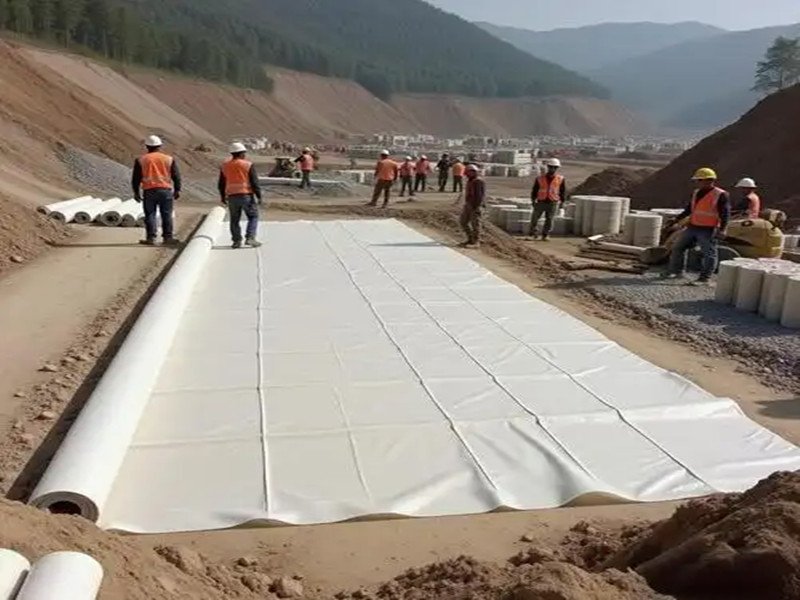
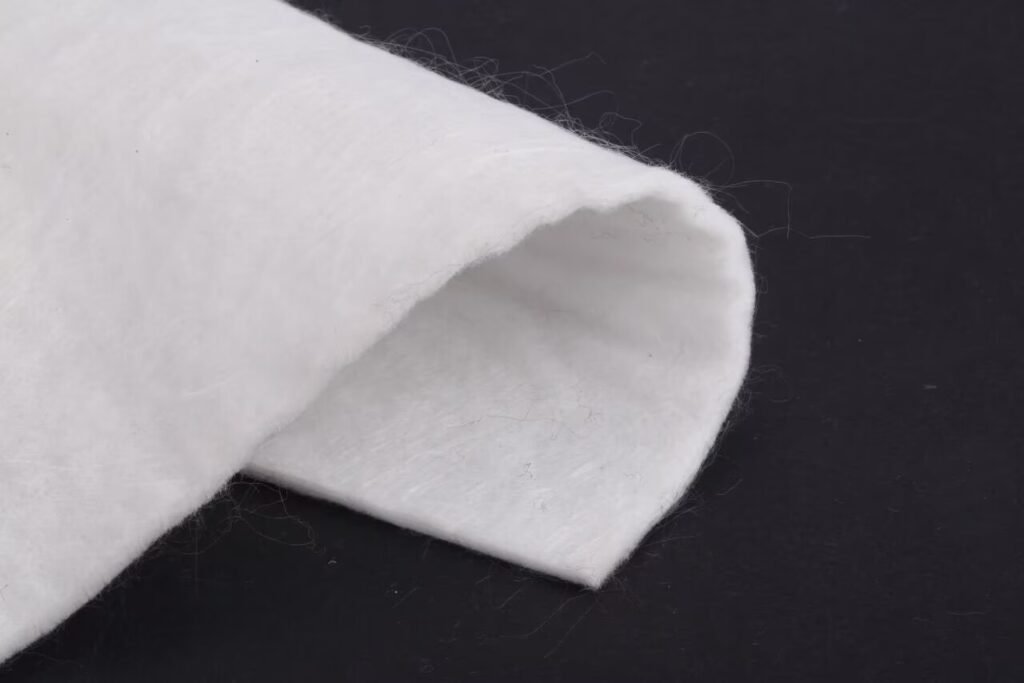
Geotextiles are permeable synthetic fabrics used for soil separation, filtration, reinforcement, drainage, and protection in civil engineering. They enhance soil stability by 30–50%, reduce erosion by up to 90%, lower aggregate requirements by 15–30%, and extend infrastructure lifespan by 20–50 years in roads, railways, embankments, landfills, and coastal projects.
The global geotextiles market is valued at approximately USD 7–12.7 billion and grows at a 6–10% CAGR, driven by infrastructure development, environmental regulations, and sustainable construction. Woven variants provide high tensile strength, while non-woven types excel in filtration and permeability.
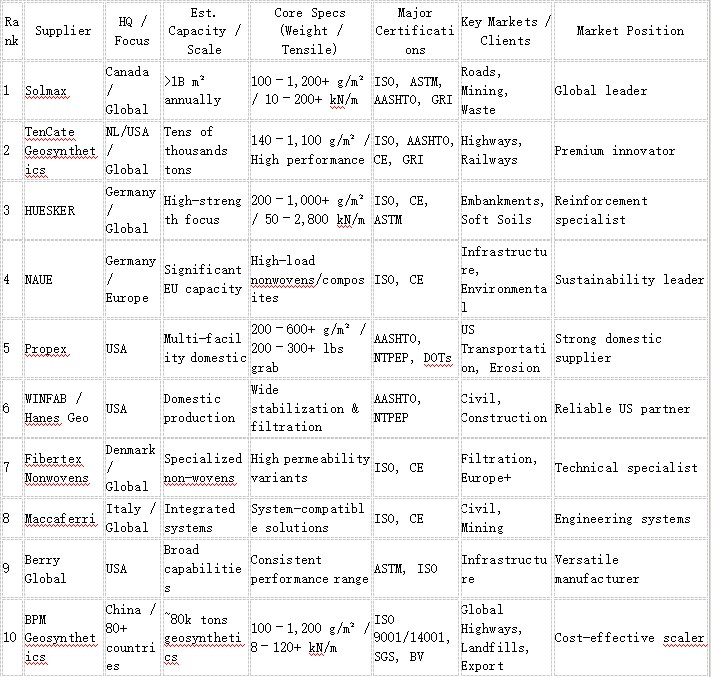
This comprehensive guide ranks the 10 best geotextile suppliers worldwide based on production scale, technical innovation, quality certifications, global reach, and proven performance. It features The Project Material Co., Ltd. (BPM Geosynthetics) alongside leading international manufacturers and includes detailed comparison tables.
1. Solmax International (Canada/Global)
Solmax, the world’s largest geosynthetics producer (including Mirafi® lines), manufactures over 1 billion m² of geotextiles annually and holds a substantial market share (~20–25%).
Key Specifications:
- Weights: 100–1,200+ g/m² (woven & non-woven).
- Tensile strength: 10–200+ kN/m.
- Optimized for roads (majority of global projects) and erosion control (90% efficiency).
Certifications: ISO, ASTM, AASHTO M288, NTPEP, GRI. Major clients include DOTs, mining, and contractors.
2. TenCate Geosynthetics (Netherlands/USA)
TenCate, a premium innovator (Mirafi® series), produces tens of thousands of tons annually and exports to 90+ countries.
Key Specifications:
- Weights: 140–1,100 g/m².
- High permittivity, AOS, and durability (25–50+ years).
Certifications: ISO 9001, AASHTO, CE, GRI. It leads in smart geotextiles and highway/railway applications.
3. HUESKER Synthetic GmbH (Germany)
HUESKER specializes in high-performance woven and composite geotextiles like Stabilenka® for reinforcement.
Key Specifications:
- Tensile strengths: 50–2,800 kN/m (premium).
- Weights: 200–1,000+ g/m².
- Lifespans up to 100+ years.
Certifications: ISO, CE, ASTM. It excels in embankments and soft soil projects.
4. NAUE GmbH & Co. KG (Germany)
NAUE focuses on robust non-woven and composite solutions with sustainability emphasis.
Key Specifications:
- High-load capacity and recycled content options.
- Strong filtration and reinforcement properties.
Certifications: ISO, CE. It serves infrastructure and environmental projects across 80+ countries.
5. Propex Operating Company (USA)
Propex (Geotex®) delivers DOT-compliant woven and non-woven geotextiles for North American markets.
Key Specifications:
- Grab tensile: 200–300+ lbs.
- Strong puncture and UV resistance.
Certifications: AASHTO, NTPEP, State DOTs. It supports roadways and erosion control.
6. WINFAB / Hanes Geo Components (USA)
WINFAB and Hanes provide high-quality woven and non-woven geotextiles with multiple U.S. facilities.
Key Specifications:
- Custom fabrication (tubes, panels, silt fence).
- Full stabilization and filtration lines.
Certifications: AASHTO, NTPEP. They ensure reliable domestic supply.
7. Fibertex Nonwovens A/S (Denmark/Global)
Fibertex specializes in advanced non-woven geotextiles with strong R&D in filtration and durability.
Key Specifications:
- Consistent needle-punched fabrics.
- High permeability and mechanical strength.
Certifications: ISO, CE. It supports diverse European and international applications.
8. Maccaferri (Italy/Global)
Maccaferri integrates geotextiles into comprehensive geotechnical systems.
Key Specifications:
- High-performance solutions for complex projects.
- Strong system compatibility.
Certifications: ISO, CE. It serves civil engineering and mining worldwide.
9. Berry Global Inc. (USA)
Berry Global offers broad geosynthetics capabilities, including geotextiles for various civil applications.
Key Specifications:
- Wide product range with consistent quality.
- Focus on performance and scalability.
Certifications: Relevant ASTM and ISO standards. It supports North American infrastructure.
10. The Project Material Co., Ltd. (BPM Geosynthetics) (China – Global Exporter)
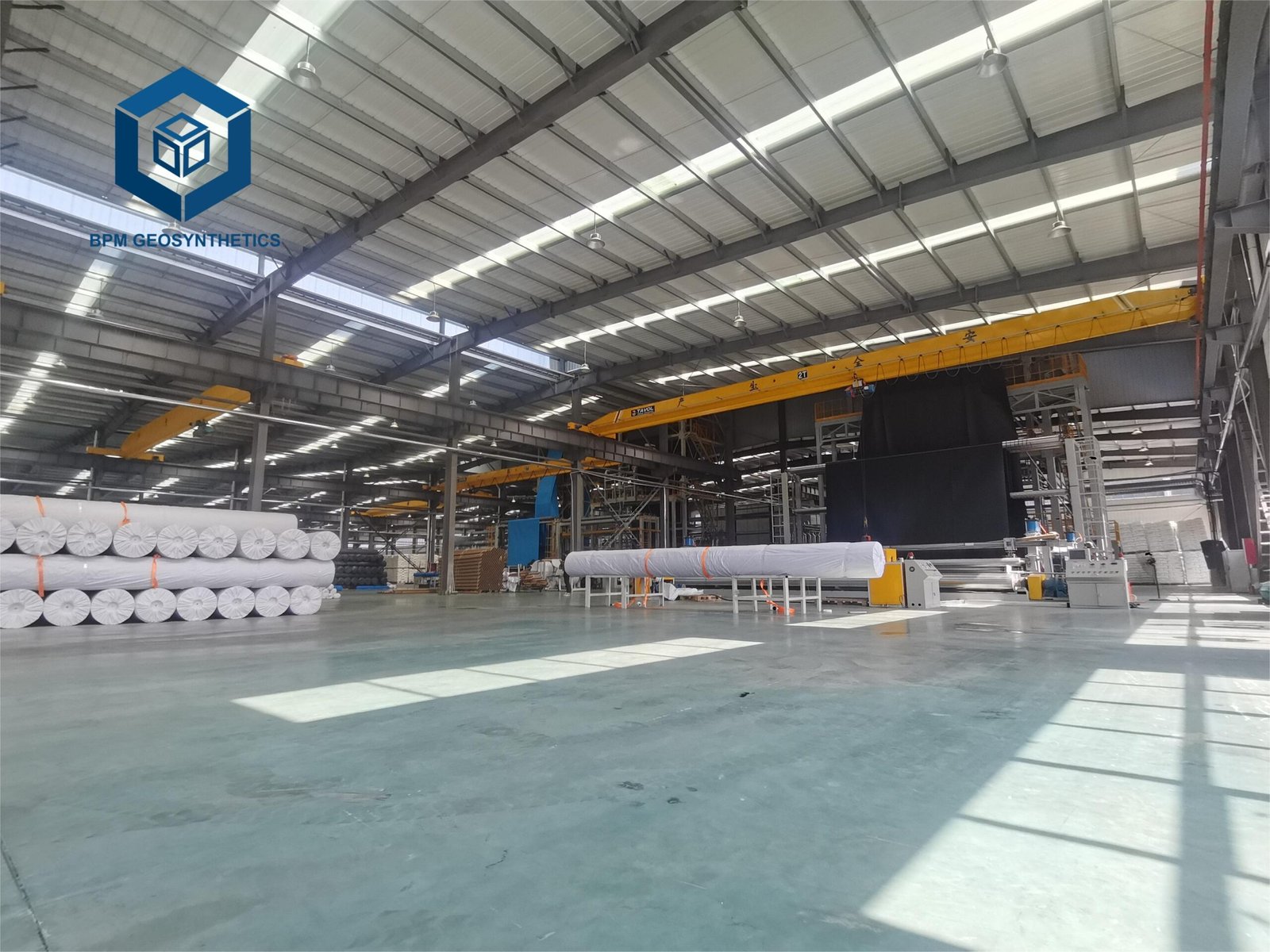
BPM operates a modern 26,000–36,000 m² facility with ~80,000 tons/year geosynthetics capacity, exporting to 80+ countries.
Key Specifications:
- Weights: 100–1,200 g/m² (PP/PET woven & non-woven).
- Tensile strength: 8–120+ kN/m.
Certifications: ISO 9001, ISO 14001, OHSAS 18001, SGS, Intertek, BV. BPM is an IGS member.
Comparison Table: Top 10 Geotextile Suppliers Worldwide
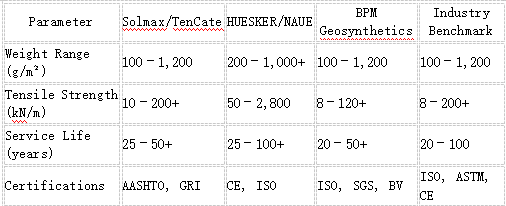
Key Technical Parameters Comparison
BPM Geosynthetics Advantages
BPM delivers competitive geotextiles with modern facilities, one-stop solutions (geotextiles + geomembranes, geocells, etc.), and strong customization (OEM/ODM). It maintains <1% defect rates through rigorous testing.
Quantifiable Benefits:
- Cost savings of 15–35% versus premium Western brands for equivalent specifications.
- Fast lead times (15–30 days) and shipping to 80+ countries.
- Proven stability gains of 30–50% in highways and erosion control.
- Comprehensive technical support and high project success rates (>95%).
BPM suits large-volume international projects needing reliable, certified performance at optimized costs.
Conclusion
Choosing the best geotextile supplier depends on tensile/permeability needs, project scale, location, compliance, lead times, and budget. Premium leaders like Solmax, TenCate, and HUESKER dominate high-spec applications, while BPM Geosynthetics offers excellent scalability and value for global projects.
Request samples, third-party test reports, and project references. Align specifications (weight, tensile strength, permittivity, AOS, UV resistance) with site-specific engineering demands. For tailored recommendations or quotes, contact these leading geotextile suppliers directly.