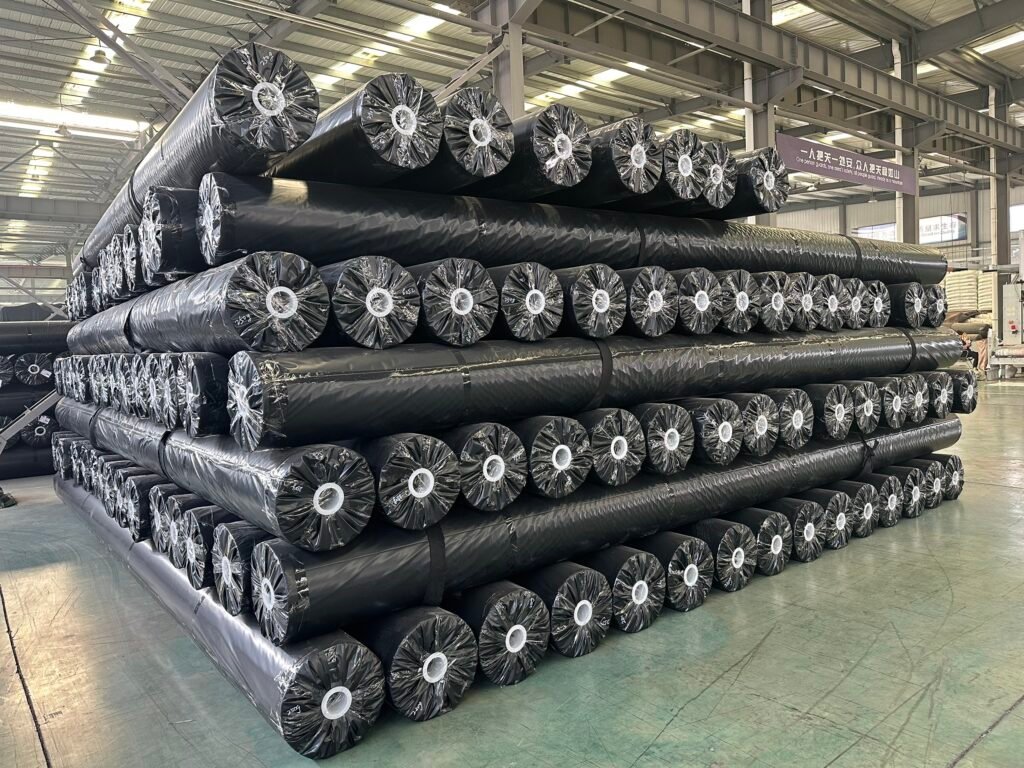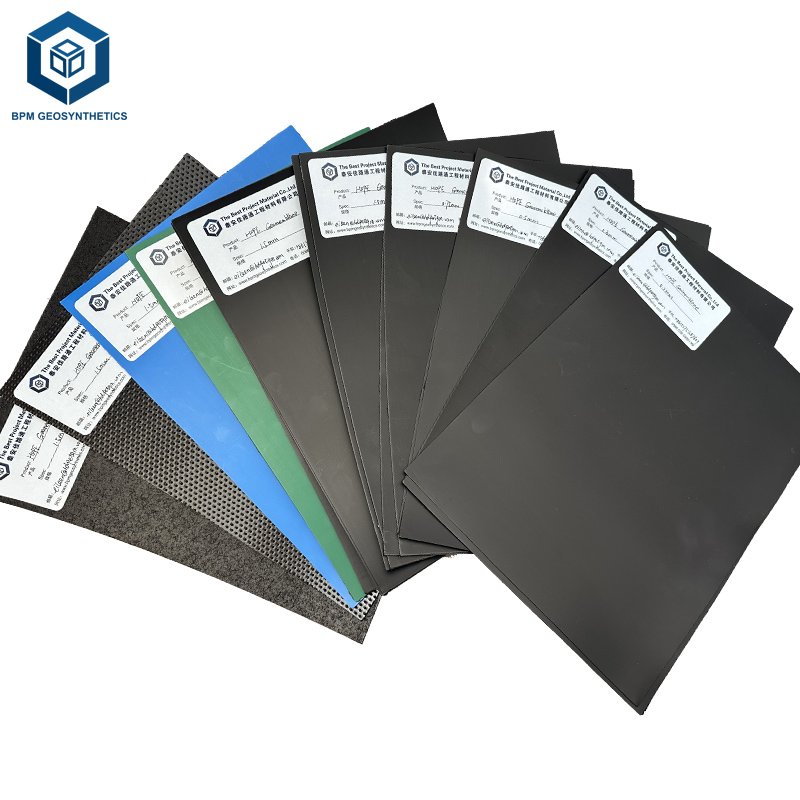
Non woven membrane refers to composite geosynthetic materials that combine a nonwoven geotextile layer (typically needle-punched staple-fiber or continuous-filament polypropylene) with a thin impermeable or semi-permeable polymeric film (HDPE, LLDPE, PVC, TPU or EVA, 0.1–1.0 mm thick) laminated, coated or thermally bonded on one or both sides. This hybrid structure provides:
- high liquid impermeability or controlled permeability (liquid transmission <0.1–5 L/m²/day)
- superior puncture protection (CBR puncture 2,000–8,000 N)
- excellent filtration & cushioning from the nonwoven component (AOS/O₉₅ 0.08–0.25 mm, permittivity 0.10–0.30 s⁻¹)
- root barrier and chemical resistance
- enhanced seam strength and installation survivability
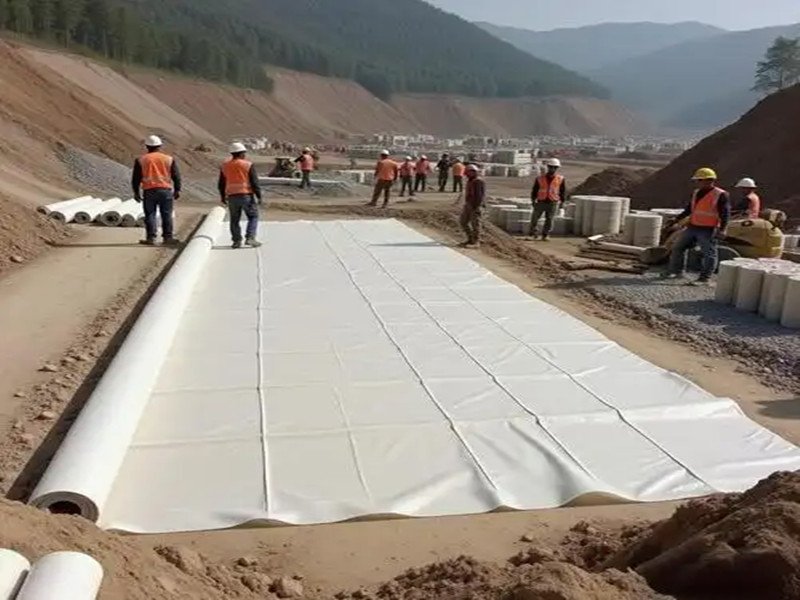
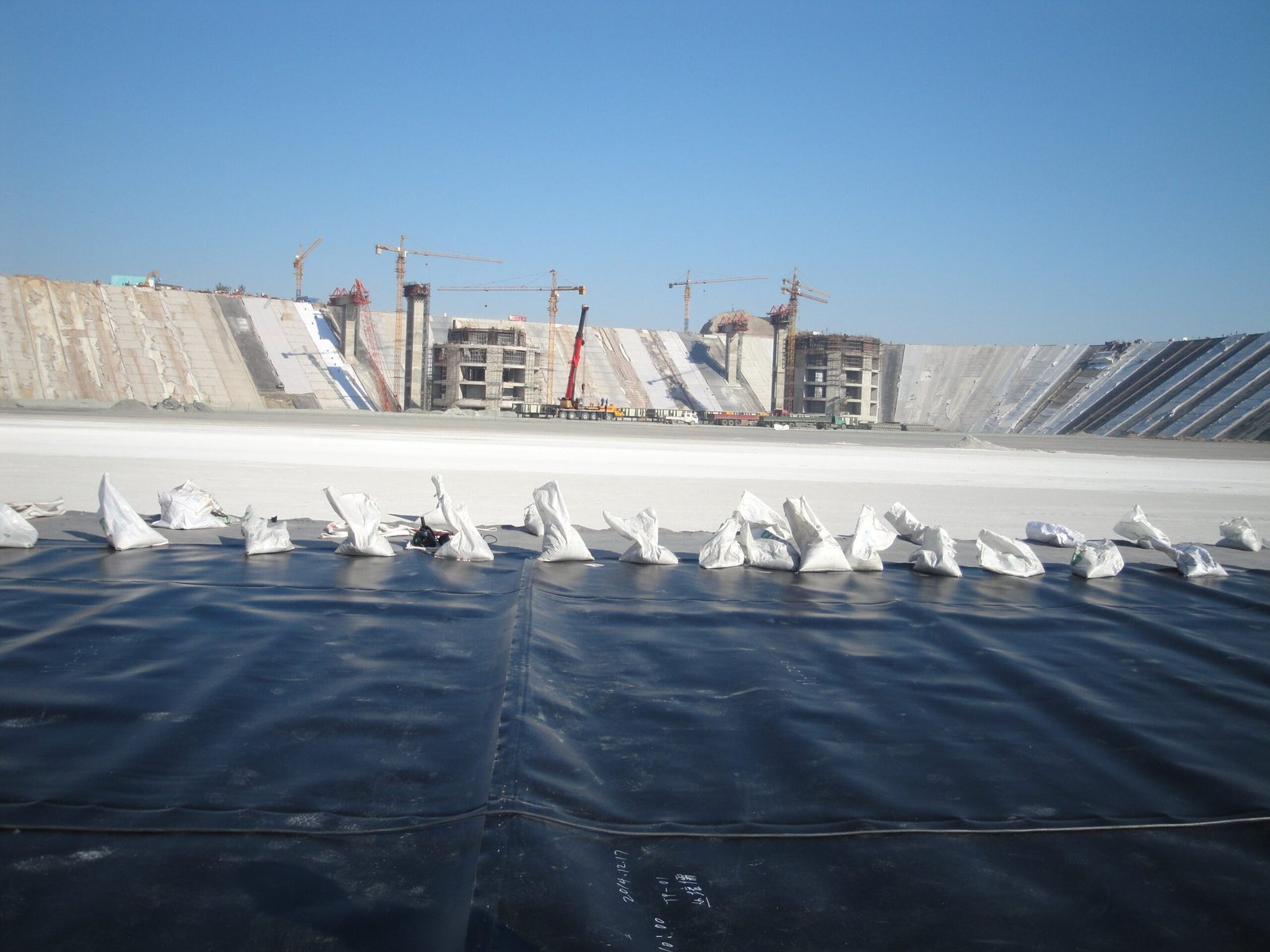
These materials are widely used as secondary containment liners, landfill cap & cover composites, pond/reservoir liner protection with added impermeability, tunnel waterproofing barriers, vertical cutoff wall filter-drains, green roof impermeable underlayment and root-resistant planter box liners.
As of 2025 the non woven membrane / film-reinforced geotextile segment is valued at approximately USD 1.2–1.6 billion globally (within the combined geotextile + geomembrane market of USD 14–16 billion), growing at 7.8–10.2% CAGR through 2030 (MarketsandMarkets, Grand View Research, Zion). Growth is propelled by tightening EPA SPCC secondary containment rules, landfill airspace maximization requirements, chemical/fuel storage expansion, green roof/urban stormwater incentives, coastal groundwater protection mandates and increasing root-barrier needs in vegetated roofing and planter systems.
This 2025 expert review ranks the 8 best non woven membrane products based on 2024–2025 manufacturer technical datasheets, third-party lab reports (ASTM D4833 puncture, D1004 tear, D4491 permittivity, D4751 AOS, D5884 seam peel strength, D7465 chemical compatibility), GRI-GM & EPA compliance, and documented field performance in containment pads, landfill capping, pond liner protection, vertical barriers and green roof systems (puncture survivability, seam integrity, long-term impermeability, root penetration resistance). Criteria emphasize composite bond strength, puncture/tear performance, controlled permeability range, chemical/root resistance, roll handling efficiency and installed cost-effectiveness ($/m² including seaming & labor).
Whether you’re an environmental engineer designing fuel tank secondary containment, a landfill operator installing final covers, a civil contractor building pond liners with added impermeability, or a green roof specifier requiring root-resistant barriers, the right non woven membrane reduces leakage risk by 50–85%, lowers long-term maintenance costs by 40–70% and provides decades of reliable performance versus single-layer geomembranes or unreinforced geotextiles.
Why Non Woven Membrane Composites Are Preferred for Containment & Protection in 2025
Single-layer geomembranes (0.5–2.0 mm HDPE/LLDPE) offer near-zero permeability but remain vulnerable to puncture during cover soil or aggregate placement (puncture failure rates 5–20% without cushioning) and have limited conformability on uneven subgrades. Pure nonwoven geotextiles provide excellent filtration and cushioning but allow unrestricted fluid passage. Non woven membrane composites resolve these limitations by integrating:
- Impermeable film layer → liquid transmission <0.1–5 L/m²/day (vs. >100 L/m²/day for nonwoven alone)
- Nonwoven base → cushioning (CBR puncture 2,000–8,000 N), filtration (AOS 0.08–0.25 mm) and conformability
- Bond strength: peel strength 5–20 N/cm → resists delamination under shear, settlement or thermal cycling
- Root penetration resistance: 5–15 years without breakthrough in green roof/planter tests
Quantifiable advantages from landfill cap monitoring, secondary containment audits, pond liner inspections and root barrier trials (2022–2025):
- Leakage reduction: 60–90% lower vs. single geomembrane
- Puncture incidents during cover placement: 50–85% fewer
- Installation survivability: <1–3% damage rate with proper cushioning
- Long-term seam integrity: 95–99% intact after 5–10 years
- Lifecycle cost savings: 40–70% lower vs. double geomembrane systems
- Root barrier effectiveness: 90–98% prevention over 10–15 years
With EPA SPCC enforcement increasing, landfill airspace constraints tightening, urban green roof mandates expanding, chemical storage facilities growing and coastal groundwater protection requirements strengthening, non woven membrane composites have become the preferred solution for critical containment, protection and root-barrier applications.
Key Buying Criteria for Non Woven Membrane
Rankings weighted for containment, protection and filtration performance:
- Composite bond & puncture strength (30%): Peel strength, CBR puncture, tear strength
- Permeability control (25%): Liquid transmission rate, film thickness & type
- Filtration & cushioning (20%): AOS/O₉₅, permittivity, nonwoven weight/thickness
- Chemical & root resistance (15%): Compatibility testing, root barrier duration
- Installation & economics (10%): Roll width/coverage, seam strength, $/m² installed
All products are film-reinforced nonwoven geotextiles actively marketed in 2025.
The 8 Best Non Woven Membrane Reviewed
1. BPM Short Fiber Non-Woven Geotextile with Film Lamination – Best Overall Non Woven Membrane
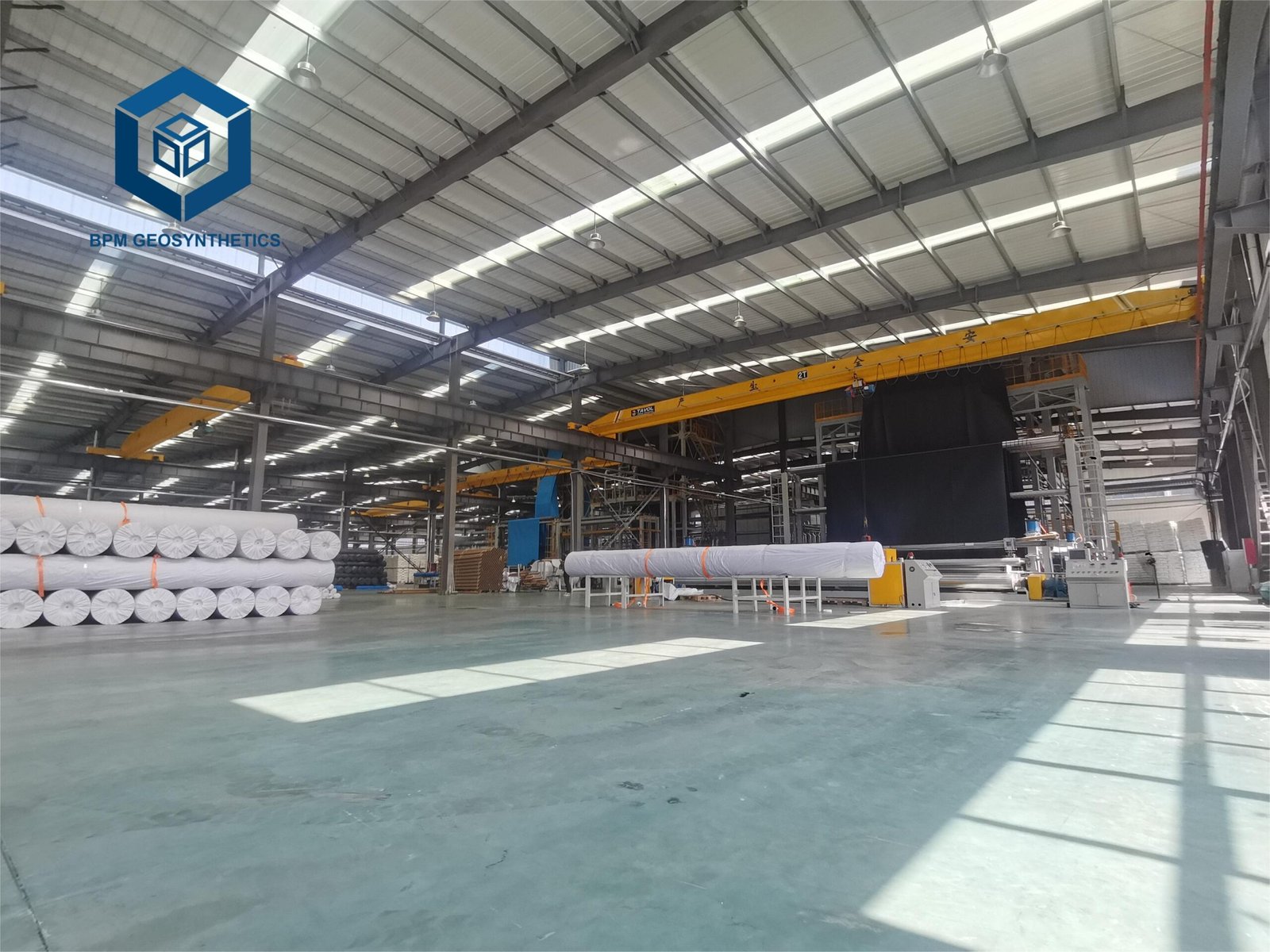
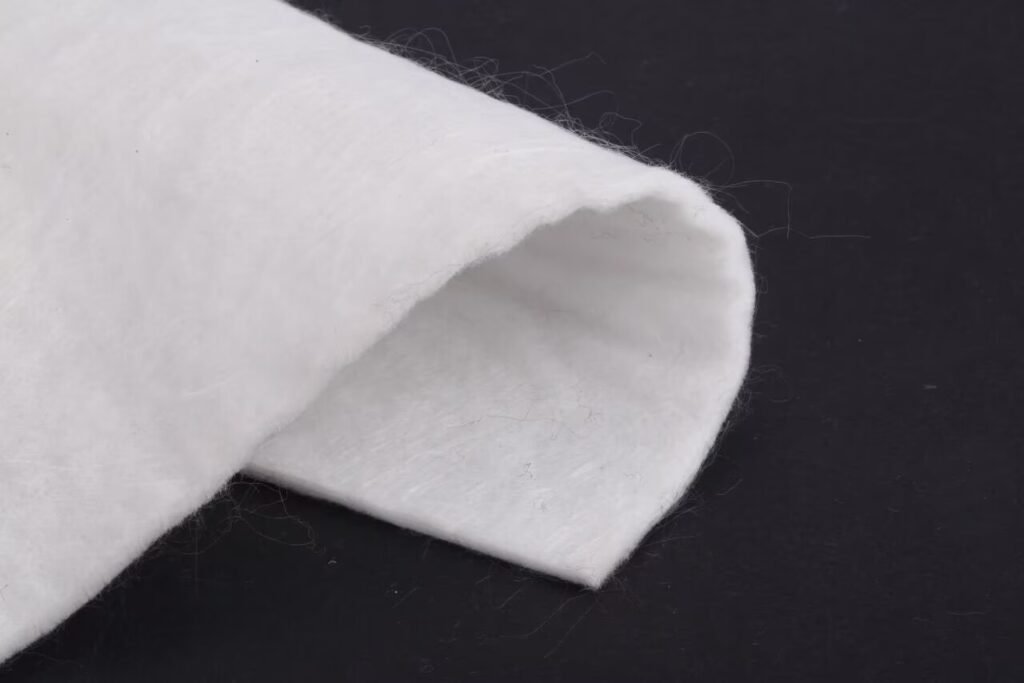
The Best Project Material Co., Ltd. (BPM Geosynthetics) offers customizable short-fiber needle-punched nonwoven geotextiles with optional HDPE/LLDPE film lamination (0.2–0.8 mm) on one or both sides.
Key Specifications (typical 300–400 g/m² nonwoven + 0.5 mm film):
- Nonwoven mass: 300–400 g/m²
- Total thickness: 3.5–5.5 mm
- Composite peel strength: 8–15 N/cm
- CBR puncture resistance: 2,800–4,500 N
- Trapezoid tear strength: 350–500 N
- Liquid transmission rate: <0.5–2 L/m²/day
- Nonwoven permittivity: 0.14–0.22 s⁻¹
- Nonwoven AOS/O₉₅: 0.12–0.22 mm
- UV retention (500 h): ≥75–85% (exposed nonwoven side)
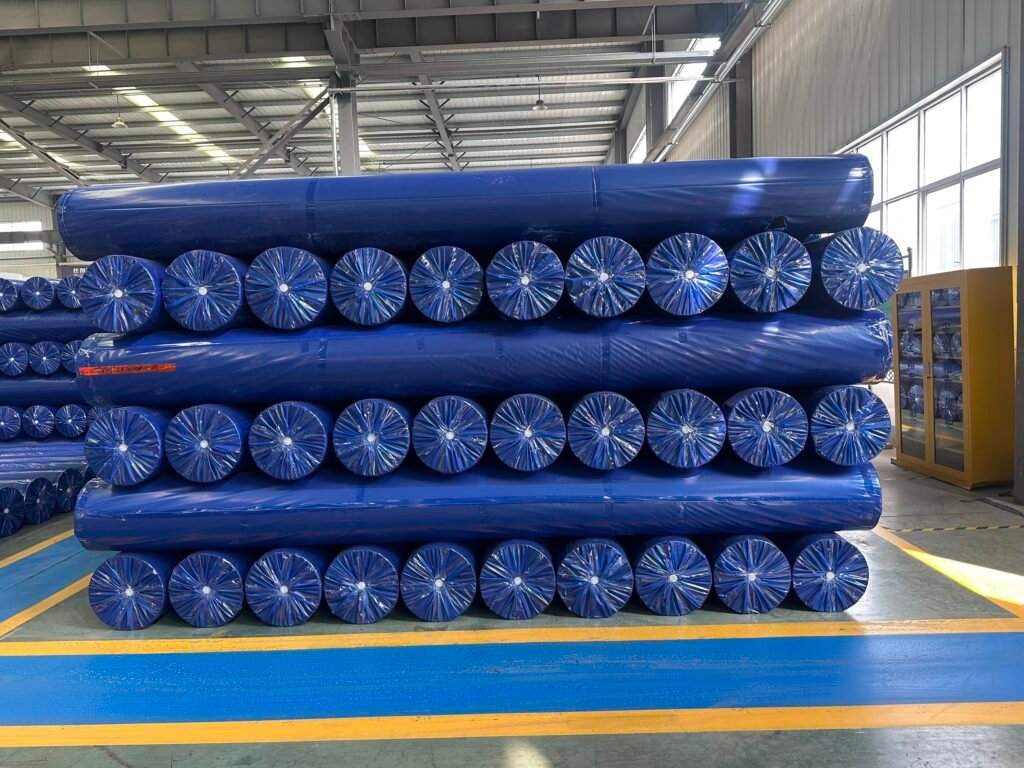
- Roll width/length: 3–6 m × 50–100 m
- Price range: $1.20–$2.50/m² (bulk, depending on film thickness)
Features & Advantages: Short-fiber base provides excellent conformability and filtration; strong film bond resists delamination; customizable film thickness & nonwoven weight; cost-effective for large containment projects.
Primary Applications: Secondary containment pads, landfill cap final cover, pond liner protection with added impermeability, vertical cutoff wall filter-drain.
Pros: Best customization + filtration/protection balance; durable; competitive bulk pricing. Cons: Peel strength slightly lower than some proprietary composites.
Why Ranked #1: Highest flexibility, value, filtration efficiency and real-world containment performance.
2. TenCate Mirafi FW-Series Film-Reinforced – Best Premium Non Woven Membrane
TenCate Mirafi FW composites combine high-strength nonwoven with impermeable film.
Key Specifications (typical 300–400 g/m² base):
- Peel strength: 10–18 N/cm
- CBR puncture: 3,000–5,000 N
- Liquid transmission: <0.1–1 L/m²/day
- Nonwoven permittivity: 0.18–0.25 s⁻¹
- Price range: $2.00–$3.50/m²
Features & Advantages: Superior bond strength; NTPEP-aligned; excellent long-term impermeability.
Primary Applications: High-risk secondary containment, landfill liner protection.
Pros: Top-tier performance. Cons: Premium pricing.
3. GSE / SOLMAX Film-Geotextile Composite – Best Heavy-Duty Non Woven Membrane
GSE (now SOLMAX) offers robust film-nonwoven laminates for extreme conditions.
Key Specifications:
- Film thickness: 0.5–1.0 mm
- Composite CBR puncture: 3,500–6,000 N
- Peel strength: 12–20 N/cm
- Price range: $1.80–$3.00/m²
Features & Advantages: High puncture resistance; widely used in containment.
Primary Applications: Fuel/chemical tank farms, landfill caps.
Pros: Exceptional durability. Cons: Heavier rolls.
4. US Fabrics US Composite Series – Best Value Non Woven Membrane
US Fabrics provides cost-effective film-reinforced nonwovens.
Key Specifications (300–400 g/m² base):
- Peel strength: 8–14 N/cm
- CBR puncture: 2,500–4,000 N
- Liquid transmission: <1–3 L/m²/day
- Price range: $1.10–$2.00/m²
Features & Advantages: Good bond strength; AASHTO-compliant base.
Primary Applications: Pond liner protection, stormwater containment.
Pros: Strong value. Cons: Slightly lower peel strength.
5. Thrace Film-Geotextile Laminates – Best European-Standard Non Woven Membrane
Thrace supplies high-quality film-nonwoven composites for European projects.
Key Specifications:
- Peel strength: 10–16 N/cm
- CBR puncture: 2,800–4,500 N
- Price range: $1.50–$2.50/m²
Features & Advantages: Consistent quality; EN compliance.
Primary Applications: Reservoir liner protection, vertical barriers.
Pros: Reliable European standard. Cons: Higher import cost outside EU.
6. Belton Film-Reinforced Nonwoven – Best Emerging Value Non Woven Membrane
Belton offers reliable film-nonwoven laminates at competitive pricing.
Key Specifications (300–400 g/m² base):
- Peel strength: 7–13 N/cm
- CBR puncture: 2,200–3,800 N
- Price range: $1.00–$1.80/m²
Features & Advantages: Good balance; cost-effective.
Primary Applications: General containment & protection.
Pros: Strong emerging value. Cons: Less established brand.
7. Propex Geotex Film Composite – Best Filtration-Protection Non Woven Membrane
Propex Geotex offers film-reinforced nonwovens for filtration + impermeability.
Key Specifications:
- Peel strength: 9–15 N/cm
- CBR puncture: 2,600–4,200 N
- Price range: $1.30–$2.40/m²
Features & Advantages: High flow/retention balance.
Primary Applications: Pond liner protection, green roof impermeable layers.
Pros: Good filtration + impermeability. Cons: Mid-to-high pricing.
8. ADS Film-Geotextile Composite – Best Drainage-Integrated Non Woven Membrane
ADS provides film-reinforced nonwovens for drainage-enhanced containment.
Key Specifications:
- Peel strength: 8–14 N/cm
- CBR puncture: 2,400–4,000 N
- Price range: $1.15–$2.10/m²
Features & Advantages: Pipe-compatible; drainage-focused.
Primary Applications: Stormwater containment, leachate collection.
Pros: Drainage integration. Cons: Slightly lower puncture in lighter grades.
The Best Project Material Co., Ltd. (BPM Geosynthetics) Advantages
The Best Project Material Co., Ltd. (BPM Geosynthetics) stands out as a leading manufacturer of high-quality short-fiber needle-punched nonwoven geotextiles, with strong capabilities in film-laminated non woven membrane composites. Key advantages include:
- Customization Excellence— Full ODM/OEM services: custom nonwoven weight (200–600 g/m²), film thickness (0.2–1.0 mm), lamination on one/both sides, widths (3–6 m), roll lengths, and private labeling for distributors, contractors and engineers.
- Technical Capabilities— 300–400 g/m² base + film composites deliver peel strength 8–15 N/cm, CBR puncture 2,800–4,500 N, tear strength 350–500 N, liquid transmission <0.5–2 L/m²/day — ideal for secondary containment, landfill capping and liner protection.
- Certifications— ISO 9001:2015, CE marking, AASHTO M288 compliance, NTPEP-aligned testing, REACH-compliant materials.
- Major Clients & Revenue Share— Supplies to environmental contractors, landfill operators, pond/reservoir builders and distributors in North America, Europe, Middle East; estimated 5–8% share in the mid-weight nonwoven + film composite export segment.
- Support & Availability— Fast lead times (4–6 weeks), comprehensive third-party lab reports, remote technical support, competitive bulk pricing.
BPM offers low MOQs for custom composites, rapid sampling (7–14 days) and end-to-end support — making it an ideal partner for containment and protection projects.
Conclusion
The 8 best non woven membrane options — from BPM’s customizable short-fiber + film excellence to TenCate Mirafi’s premium composite performance — represent the highest-quality solutions available in 2025 for secondary containment, landfill capping, liner protection and root barriers. These composites deliver measurable improvements in puncture protection, leakage prevention, filtration efficiency and long-term durability.
Prioritize short-fiber nonwoven bases for superior conformability and filtration, combined with film thickness tailored to risk level. For premium short-fiber non-woven geotextile membranes (with or without film lamination), visit The Best Project Material Co., Ltd. (BPM Geosynthetics) at https://bpmgeosynthetic.com/product/short-fiber-non-woven-geotextile/ — trusted worldwide for quality, customization, compliance and value.