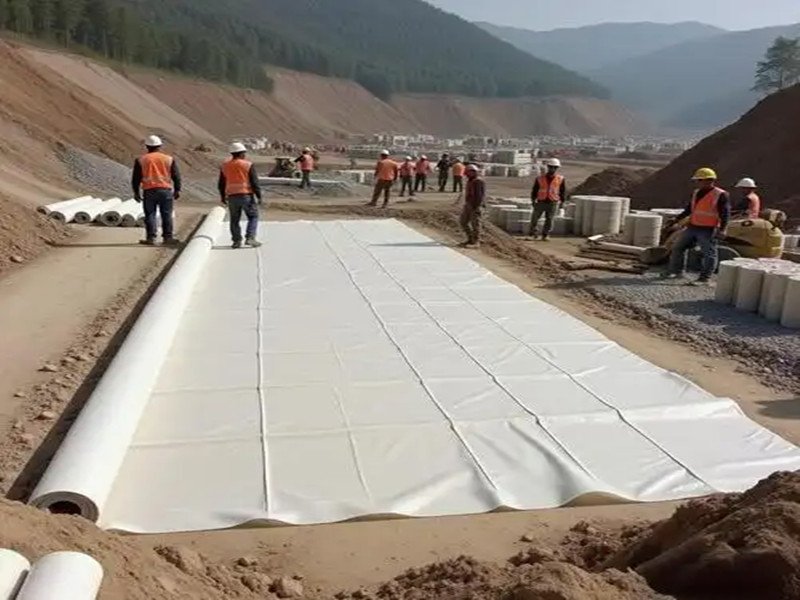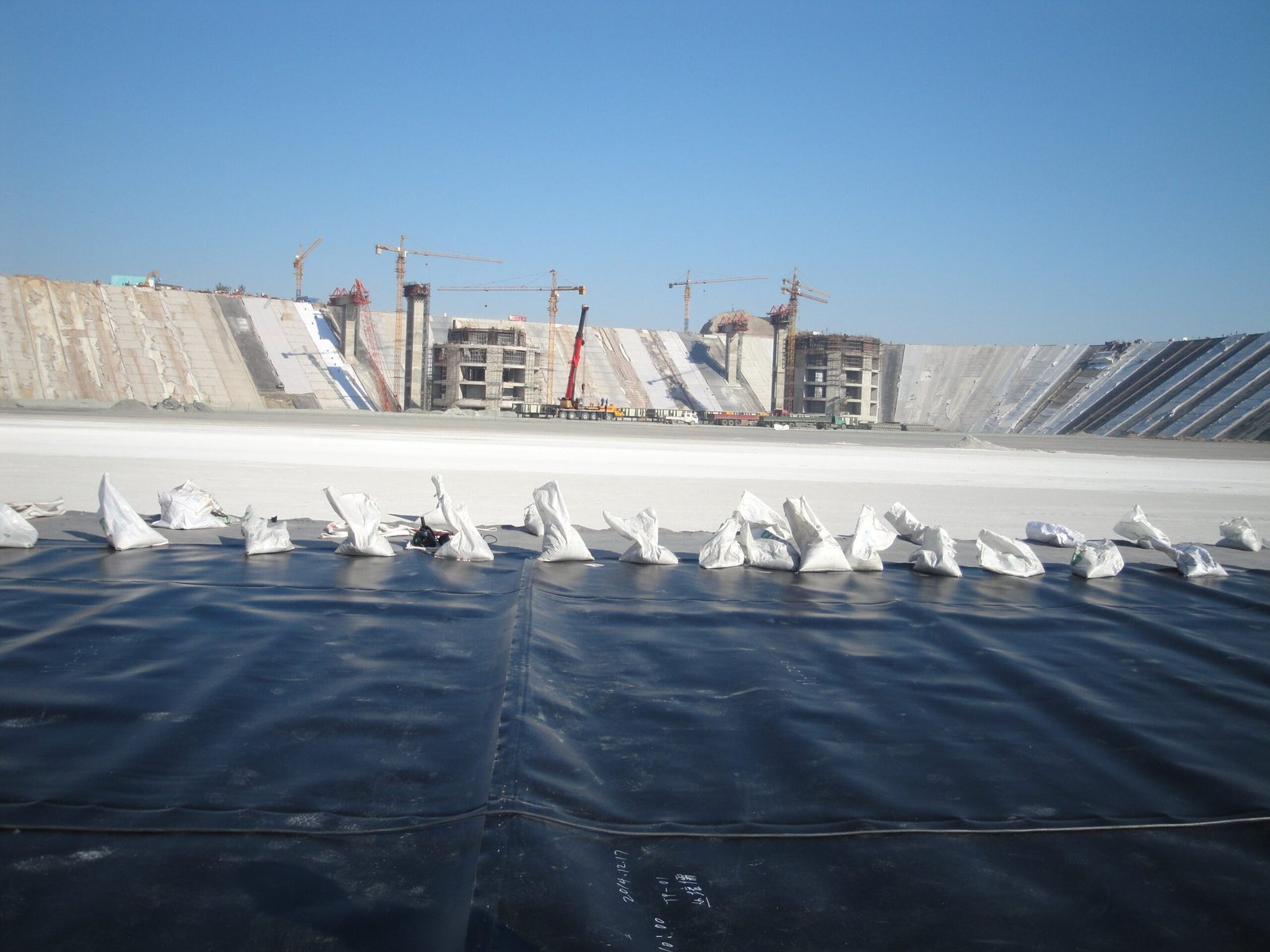
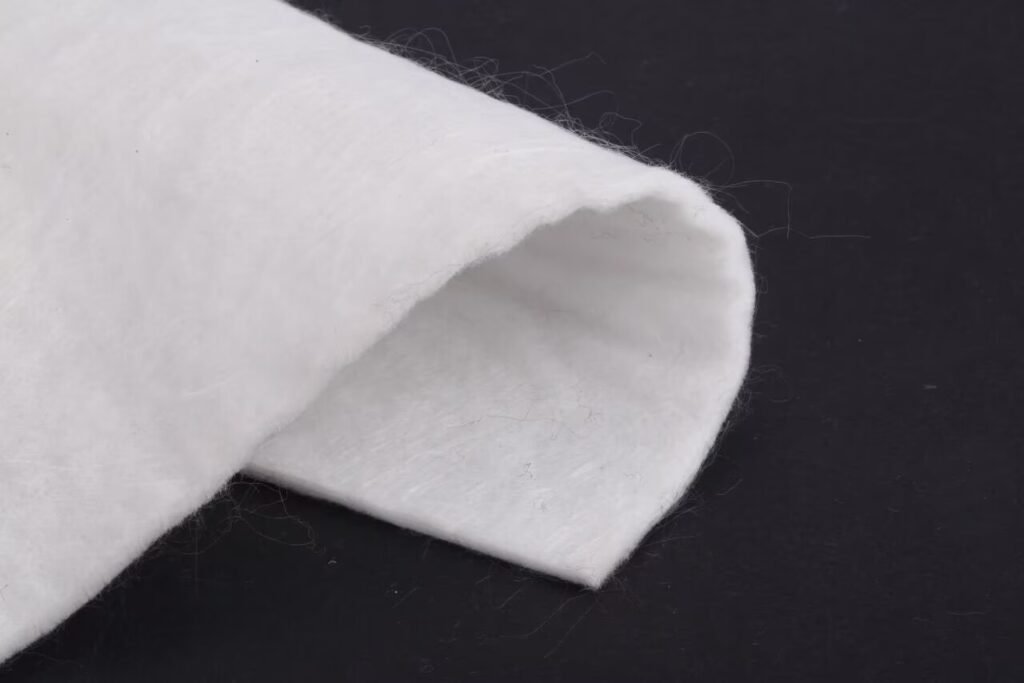
Geo fabric, commonly known as geotextile fabric, consists of permeable synthetic textiles made from polypropylene (PP) or polyester (PET) through woven, non-woven (needle-punched), or composite processes. These materials provide essential functions including separation, filtration, reinforcement, drainage, and erosion control in civil engineering and environmental applications.
The global geotextile market was valued at approximately $7.1–9.5 billion in 2025–2026 and is projected to reach $12.5–15.8 billion by 2030–2033, growing at a CAGR of 6.5–7.4%. Geo fabrics hold a dominant share due to their versatility, with road construction accounting for over 40% of demand, followed by landfills, railways, mining, and coastal protection. High-quality geo fabrics can increase soil stability by 30–50%, improve drainage efficiency by 40–70%, reduce erosion by up to 90%, and extend infrastructure lifespan by 20–50 years, often yielding 15–30% project cost savings.
Selecting reliable geo fabric manufacturers ensures consistent quality (e.g., 100–1,200+ gsm, tensile strengths meeting ASTM standards), certifications, and scalable supply. This article profiles the Top 6 Global Geo Fabric Manufacturers for 2026, including The Project Material Co., Ltd. (BPM Geosynthetics), based on production capacity, technical specifications, certifications, and project performance.
Key Evaluation Criteria for Geo Fabric Manufacturers
Leading manufacturers excel in:
- Core Technical Parameters: Mass per unit area (100–1,200+ gsm), tensile strength (grab 400–2,500+ N or wide-width 10–200+ kN/m), CBR puncture resistance (1,000–7,000+ N), permittivity (0.2–2.0 s⁻¹), Apparent Opening Size (AOS 0.07–0.5 mm), and UV/chemical resistance (ASTM D4355).
- Production Scale: Annual capacity (tons or m²), customization, and roll dimensions.
- Certifications: ISO 9001/14001, CE, GRI, NTPEP, AASHTO M288.
- Applications & Benefits: Proven performance in separation, filtration, and reinforcement with quantifiable ROI.
- Sustainability & Support: Recycled content, technical services, and global logistics.
Top 6 Global Geo Fabric Manufacturers in 2026
1. The Project Material Co., Ltd. (BPM Geosynthetics)
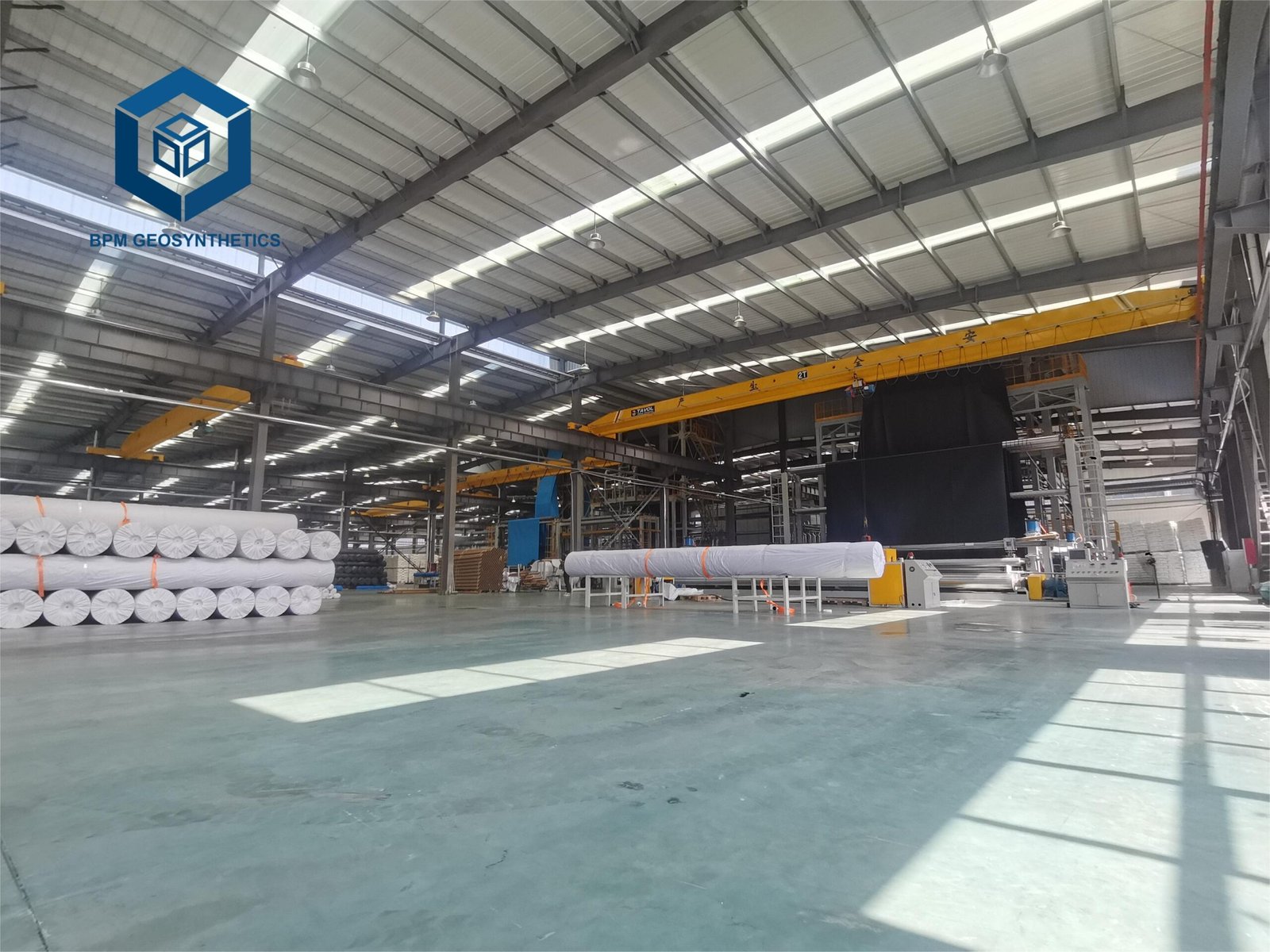
BPM operates a modern facility (26,000–36,000 m²) in Shandong with advanced production lines and over 160 staff. It specializes in woven and non-woven geo fabrics with strong OEM/ODM capabilities and exports to 80–100+ countries.
Key Specs:
- Weights: 100–1,000+ gsm.
- Tensile: Grab 400–2,500+ N; wide-width up to 20–50+ kN/m.
- Puncture: CBR 1,000–6,900+ N; permittivity 0.3–1.6 s⁻¹.
- Certifications: ISO 9001, ISO 14001, CE, TUV, SASO, BV, SGS/Intertek.
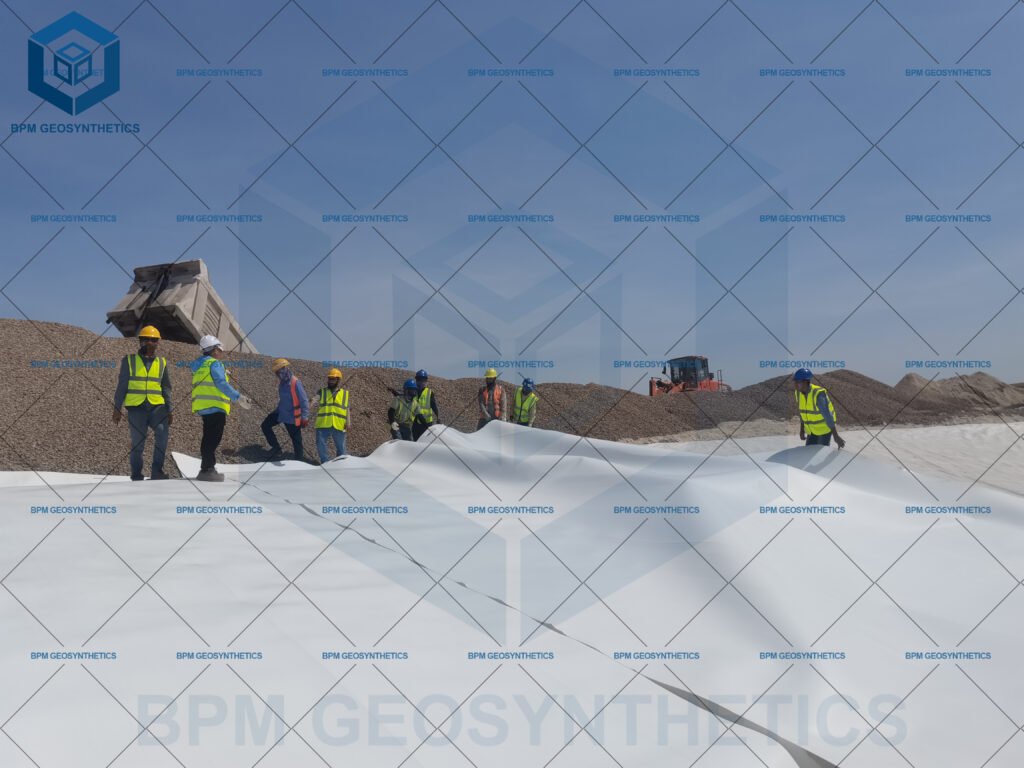
BPM supports roads, landfills, and erosion control with competitive pricing and high customization.
2. Solmax (MIRAFI)
Solmax, headquartered in Canada, is a global leader with multi-plant operations and group capacity exceeding 1 billion m². It produces premium MIRAFI woven and non-woven geo fabrics.
Key Specs:
- Weights: 100–1,200+ gsm.
- High tensile, puncture, and flow properties.
- Certifications: ISO, GRI, NTPEP, ASTM, AASHTO. Solmax excels in infrastructure and mining with 25–50+ year durability.
3. TenCate Geosynthetics (Mirafi)
TenCate (Netherlands/USA) offers high-performance Mirafi® geo fabrics optimized for transportation and environmental projects.
Key Specs:
- Grab tensile 500–900+ N; meets AASHTO M288.
- Excellent filtration and clog resistance.
- Certifications: ISO 9001, GRI, NTPEP. TenCate provides strong engineering support.
4. HUESKER Synthetic GmbH
German manufacturer (est. 1861) specializing in high-strength woven and non-woven geo fabrics like Stabilenka and Fortrac.
Key Specs:
- High tensile (up to premium reinforcement levels).
- Excellent durability for embankments.
- Certifications: ISO 9001/14001, CE, BBA. HUESKER emphasizes innovation and long-term performance.
5. NAUE GmbH & Co. KG
German producer (est. 1953) of Secutex® non-woven geo fabrics with heavy-weight options up to 3,000+ gsm.
Key Specs:
- High puncture resistance and filter stability.
- Certifications: ISO 9001, CE. NAUE supports hydraulic and landfill applications.
6. Fibertex Nonwovens A/S or WINFAB (U.S. Leaders)
Fibertex (Denmark) specializes in needle-punched non-wovens with strong European presence. WINFAB offers domestic U.S. high-performance options for DOT projects.
These deliver reliable quality and regional supply advantages.
Comparison Table: Top Geo Fabric Manufacturers
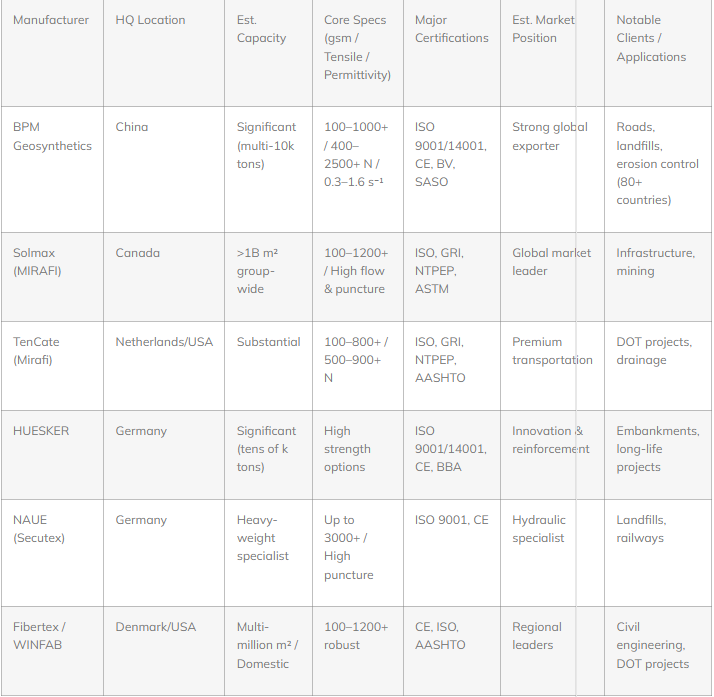
Notes: Data represents typical ranges. Verify with current datasheets.
BPM Geosynthetics Advantages
The Project Material Co., Ltd. (BPM Geosynthetics) stands out for its combination of scale, customization, and value. Its woven and non-woven geo fabrics (100–1,000+ gsm) meet international standards while offering 15–25% cost advantages. Strengths include rigorous quality control (95%+ compliance), flexible OEM/ODM services, reliable lead times, technical support, and sustainability options. With exports to 80–100+ countries and proven performance in diverse projects, BPM delivers excellent ROI for contractors and engineers.
Conclusion
The Top 6 Global Geo Fabric Manufacturers set benchmarks for quality, innovation, and reliability in geotechnical solutions. European precision (HUESKER, NAUE, Fibertex), North American scale (Solmax, TenCate), and high-value global production (BPM Geosynthetics) each address specific project needs.
Matching manufacturer capabilities—such as high permittivity for drainage or heavy puncture resistance for protection—to requirements ensures compliance, durability, and optimal performance. High-quality geo fabrics from trusted manufacturers minimize risks and maximize long-term project success.
Request samples, datasheets, and consultations for your projects. Partner with leaders like BPM Geosynthetics for tailored, cost-effective geo fabric solutions.