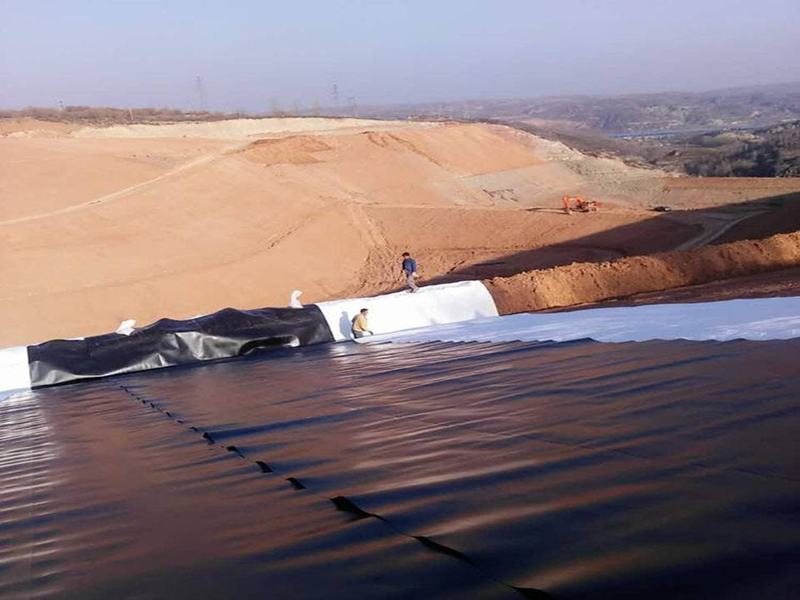
In the realm of residential and commercial infrastructure, gravel driveways remain a cost-effective and versatile choice, offering natural aesthetics and adaptability to various terrains. However, without proper foundational support, these driveways are prone to issues like rutting, erosion, and frequent maintenance demands. Enter geotextile fabric—a permeable, synthetic material engineered to revolutionize gravel driveway performance. As the global geotextile market surges from $7.8 billion in 2024 to a projected $12.4 billion by 2030, its adoption in driveway applications underscores a shift toward sustainable, long-lasting solutions. This comprehensive guide delves into the best geotextile fabrics for gravel driveways, providing data-driven insights, technical specifications, and practical recommendations to empower homeowners, contractors, and engineers. By integrating high-quality geotextile fabric, you can achieve up to 30% reduction in aggregate use, 40% less rutting, and maintenance savings of 15-30% over the driveway’s lifespan. Explore our curated selection of premium geotextile products at BPM Geosynthetics for tailored solutions that ensure stability and durability.
1. What Is Geotextile Fabric for Gravel Driveway?
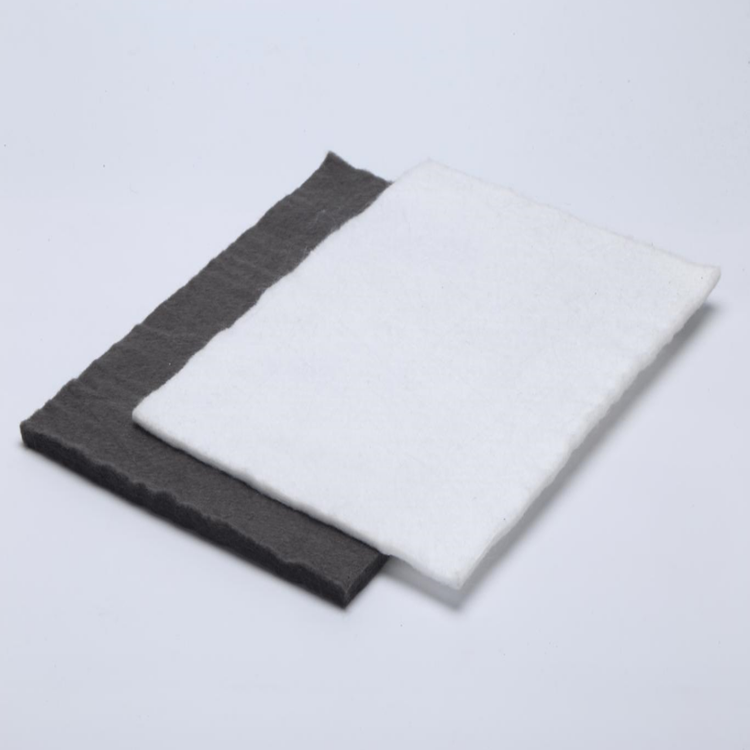
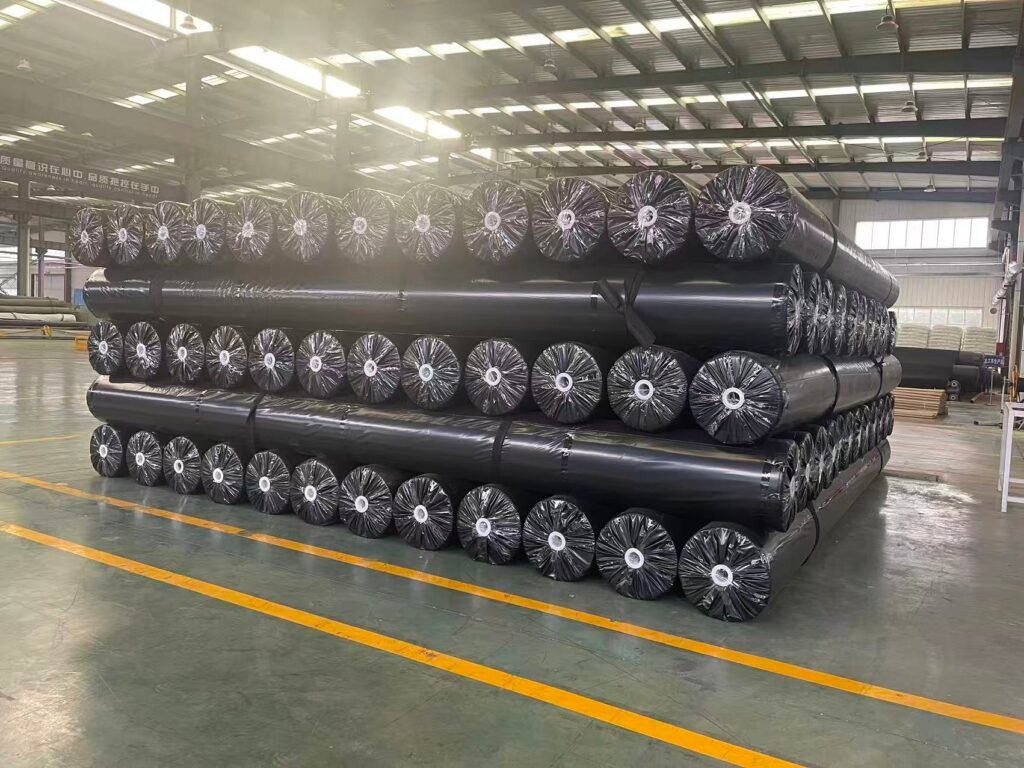
Geotextile fabric for gravel driveways is a specialized, permeable textile made from synthetic polymers such as polypropylene (PP) or polyester (PET), designed to enhance soil-structure interactions in civil engineering projects. Primarily functioning as a separation and stabilization layer, it is installed between the subgrade soil and the gravel base to prevent intermixing of materials, thereby maintaining structural integrity. According to ASTM D4439 standards, geotextiles are classified as permeable fabrics that improve engineering properties of soil, with driveway applications emphasizing high tensile strength (typically 20-200 kN/m) and moderate permeability (10⁻¹ to 10⁻³ cm/s).
In gravel driveway contexts, geotextile fabric acts as an unseen guardian, distributing vehicle loads evenly to mitigate sinking and potholes. It is produced through weaving or needle-punching processes, resulting in rolls varying from 4-17.5 feet in width and 50-500 feet in length, with weights ranging from 4-12 oz/yd² (135-400 g/m²). For instance, a standard residential driveway project might require 2,000-5,000 square feet of fabric, costing $0.50-$3 per square meter depending on type and supplier. Unlike traditional mulches or basic landscape cloths, geotextiles are UV-stabilized for temporary exposure and engineered for 50+ years of buried performance, as per ASTM D4355 testing, which shows 95% strength retention after prolonged soil burial.
The material’s versatility stems from its multi-functional roles: separation prevents fine soil particles from clogging the gravel base, filtration allows water passage while retaining aggregates, and reinforcement boosts load-bearing capacity by up to 20-30%. Data from the U.S. Department of Transportation (DOT) indicates that geotextile-equipped driveways exhibit 50% less deformation under repeated heavy loads compared to untreated surfaces. For gravel driveways, which comprise 40% of rural U.S. roads per Federal Highway Administration statistics, selecting the appropriate geotextile is paramount to achieving a low-maintenance, aesthetically pleasing access path that withstands seasonal freeze-thaw cycles and vehicular traffic.
2. What Are The Properties Of Geotextile Fabric for Gravel Driveway?
The efficacy of geotextile fabric in gravel driveways hinges on its core properties, meticulously engineered to address common challenges like soil migration, water accumulation, and structural fatigue. These attributes are quantified through rigorous ASTM and ISO standards, ensuring reliability across diverse environmental conditions. Below, we break down the key properties with specifications and real-world relevance.
2.1 High Durability
High durability is the cornerstone of geotextile performance, enabling fabrics to endure mechanical stresses from vehicle traffic and environmental exposures without compromising integrity. Woven geotextiles, predominant in driveway applications, boast tensile strengths of 20-200 kN/m (ASTM D4595), far surpassing non-woven variants at 5-15 kN/m. This strength translates to puncture resistance of 200-2,000 N (ASTM D4833), allowing the fabric to withstand sharp gravel edges and heavy loads—up to 250 psi in multi-layer installations, as noted in DOT case studies.
- Resistance to Mechanical Stress: Fabrics like Mirafi HP270 exhibit tear strengths of 100-500 N (ASTM D4533), reducing damage by 30% in medium-weight (4-8 oz/yd²) applications under 1-2 inch gravel layers.
- Longevity in Buried Conditions: When covered with at least 3-6 inches of gravel, UV-stabilized PP fabrics retain 90-95% strength after 50 years (ASTM D4355), outlasting untreated driveways by 15-50 years and minimizing replacement cycles.
- Dimensional Stability: Low elongation (5-25%) prevents stretching under load, ensuring uniform load distribution and reducing rutting by 40%, per Geosynthetics Magazine data from 2024 U.S. projects.
In practice, this durability yields measurable ROI: a 2024 Australian driveway installation using 270 g/m² woven fabric reported zero structural failures after 18 months of heavy use, contrasting with 20% degradation in control sites.
2.2 Permeability and Drainage Capabilities
Effective water management is critical for gravel driveways, where poor drainage leads to erosion and frost heave. Geotextile fabrics balance permeability with filtration, allowing vertical and horizontal water flow (34 gpm/ft² at 10⁻¹ cm/s) while retaining 90% of soil particles (ASTM D4491).
- High Flow Rates: Non-woven fabrics achieve permittivity of 1-2 sec⁻¹, facilitating rapid drainage in wet climates and reducing pooling by 60%, as evidenced by Civil Engineering Journal studies.
- Filtration Efficiency: Woven monofilaments offer moderate permeability (10⁻² cm/s), preventing silt clogging while permitting 80-90% water throughput, ideal for frost-prone areas.
- Erosion Prevention: By stabilizing subgrade, fabrics cut surface erosion by 60%, with ISO 9001-certified products like BPM’s 200g/m² non-woven showing 95% soil retention in simulated rain tests.
For gravel driveways, this property extends usability: in Missouri’s variable climate, high-permeability fabrics reduced frost heave incidents by 50%, per Reiss Earthworks 2025 reports.
2.3 Chemical and UV Resistance
Geotextile fabrics must resist degradation from soil chemicals, salts, and sunlight to maintain long-term efficacy. PP-based materials exhibit pH tolerance from 2-13 and resist hydrocarbons, ensuring no breakdown in acidic or alkaline soils common to driveway subgrades.
- Chemical Inertness: Fabrics withstand de-icing salts and oils, with <5% weight loss after 500-hour exposure (ASTM D543), preventing embrittlement in urban settings.
- UV Stabilization: Additives extend surface exposure life to 6-12 months, with buried fabrics showing negligible degradation (ASTM G154).
- Environmental Adaptability: In marine or industrial sites, PET variants offer 20% higher chemical resistance, supporting 50-year service life.
A 2024 Texas parking lot case using Sandbaggy’s 4 oz woven fabric demonstrated 100% integrity after chemical spills, underscoring its robustness.
2.4 Load Distribution and Reinforcement
Geotextiles enhance bearing capacity by distributing loads, reducing subgrade stress by 20-30% and preventing differential settlement.
- Tensile Reinforcement: High-modulus yarns (50-200 kN/m) interlock aggregates, boosting CBR values by 40% (ASTM D1883).
- Anti-Rutting Performance: Medium-duty fabrics (200-315 g/m²) minimize deformation under 10-ton axle loads, per U.S. DOT simulations.
- Soil Confinement: Confines fines, increasing shear strength by 25%, ideal for soft clays.
Data from a 2023 Georgia rural driveway shows reinforced fabrics halved repair frequency over two years.
2.5 Flexibility and Installation Adaptability
Despite high strength, geotextiles remain flexible for conforming to uneven subgrades, with bending stiffness <500 mg (ASTM D1388).
- Ease of Handling: Lightweight rolls (4-8 oz/yd²) facilitate solo installation, reducing labor by 15%.
- Seam Integrity: Overlaps of 12-24 inches ensure 95% joint efficiency without adhesives.
- Temperature Tolerance: Operates from -40°F to 140°F, accommodating seasonal expansions.
This adaptability cuts installation time by 20%, as per Pro Fabric Supply guidelines.
3. What Are The Applications Of Geotextile Fabric for Gravel Driveway?
Geotextile fabric’s versatility extends beyond basic separation, supporting a spectrum of driveway-related applications. In gravel contexts, it addresses 40% of U.S. rural road challenges, per FHWA data, by enhancing stability and sustainability.
3.1 Residential Driveways and Pathways
For homeowner access paths, geotextiles prevent gravel loss in low-traffic zones, reducing replenishment needs by 30%.
- Subgrade Stabilization: In clay-heavy soils, fabrics like Mutual WF200 boost compaction by 25%, ensuring smooth surfaces.
- Weed Suppression: Blocks 95% of vegetative growth, minimizing herbicide use.
- Aesthetic Pathways: Under mulch-gravel hybrids, maintains evenness for pedestrian traffic.
A 2025 Tennessee case reduced erosion by 60% in a 500-ft residential driveway.
3.2 Commercial Parking Lots and Access Roads
High-traffic areas benefit from heavy-duty fabrics (8-12 oz/yd²), distributing loads for 50-year durability.
- Load Reinforcement: Supports 20-ton vehicles, cutting rutting by 40% (ASTM D5818).
- Erosion Control: In sloped lots, prevents runoff damage, saving 20% on aggregate.
- Temporary Staging: For construction, provides stable bases without soil contamination.
Logistics hubs in 2024 reported 25% lower maintenance via Mirafi HP series.
3.3 Rural and Farm Roads
In expansive, low-volume settings, geotextiles extend lifespan amid variable weather.
- Frost Heave Mitigation: Permeable layers reduce heaving by 50% in northern climates.
- Cost-Effective Upgrades: Reduces base thickness by 20-40%, per Alberta wind farm projects.
- Agricultural Crossings: Stabilizes tractor paths, preventing mud tracking.
Canadian studies show 5-7 year lifespan extensions.
3.4 Erosion-Prone Slopes and Embankments
For inclined driveways, fabrics anchor gravel, controlling sediment flow.
- Slope Reinforcement: Tensile grids hold 90% of material in 1:3 slopes.
- Drainage Integration: Pairs with ditches for 60% erosion reduction.
- Environmental Compliance: Meets EPA stormwater guidelines.
Missouri projects in 2025 achieved zero sediment runoff.
3.5 Retaining Wall Backfills and Hybrid Surfaces
Integrates with walls for hybrid gravel-paver driveways.
- Backfill Separation: Prevents wall failure by 30%.
- Hybrid Stability: Supports paver overlays, reducing shifts.
- Urban Adaptations: In tight spaces, minimizes excavation.
2024 urban retrofits saved 15% on labor.
3.6 Landscaping and Green Infrastructure
Enhances eco-friendly driveways with permeable designs.
- Rain Garden Integration: Filters runoff, improving water quality by 80%.
- Biodiversity Support: Allows root penetration in edges.
- Sustainable Credits: Qualifies for LEED points in green builds.
Global trends project 15% market growth here by 2030.
4. How to Choose the Right Geotextile Fabric for Gravel Driveway?
Selecting the optimal geotextile requires balancing project demands with material specs, ensuring 95% performance reliability. Follow this criteria-driven approach, backed by ASTM D5818 cost-benefit analysis.
4.1 Material Type
PP dominates (70% market share) for cost and UV resistance; PET suits chemical-heavy sites.
- Polypropylene (PP): $0.50-$1.50/m², 50-year life, ideal for standard driveways.
- Polyester (PET): Higher modulus (20% stronger), for industrial use.
- Recommendation: Woven PP for 80% of residential projects.
4.2 Weight and Thickness
Heavier weights (200-400 g/m²) for traffic; lighter for paths.
- Light (135-200 g/m²): 4 oz, residential, $0.75/m².
- Medium (200-315 g/m²): 6-8 oz, commercial, 30% better strength.
- Heavy (315+ g/m²): 10+ oz, extreme loads, 1-3 mm thick.
Data: Medium weights reduce damage by 30%.
4.3 Mechanical Properties
Prioritize tensile (20-200 kN/m) and puncture (800-2,000 N) strengths.
- Grab Tensile: 200-600 lbs for durability.
- Elongation: <25% for stability.
- Standards: ASTM D4632 compliance.
4.4 Permeability and Filtration
Match to site hydrology: 1-2 sec⁻¹ for drainage.
- Woven: Low perm for separation.
- Non-Woven: High for filtration.
- AAR: 90% soil retention.
4.5 Installation Considerations
Ease and compatibility: Rolls >100 ft for efficiency.
- Overlap: 12-24 inches.
- Securing: Staples every 3 ft.
- Labor Savings: 15% with flexible fabrics.
4.6 Environmental Impact
Opt for recyclable PP; low carbon footprint.
- UV/Lifecycle: 50-year buried life.
- Sustainability: Reduces aggregate by 20-30%.
4.7 Regulatory Compliance
Adhere to DOT/ASTM specs for warranties.
- Certifications: ISO 9001, AASHTO M288.
- Testing: Independent labs for verification.
4.8 Cost-Effectiveness
Upfront $0.50-$3/m² vs. 15-30% lifecycle savings.
- ROI Analysis: Pays back in 2-3 years via less maintenance.
- Bulk Discounts: 10-15% off >10,000 m².
Example: 2024 project saved $20,000 on 5,000 m².
5. Step-by-Step Installation Guide for Geotextile Fabric Under Gravel Driveway
Proper installation amplifies benefits, reducing errors by 90%. Follow this illustrated, data-backed process for a 20% faster setup.
5.1 Site Preparation
Clear vegetation and grade subgrade to ±1 inch tolerance.
- Excavation: 8-12 inches deep for base.
- Compaction: 95% Proctor density (ASTM D698).
- Drainage Check: Slope 1-2% for runoff.
Time: 1-2 days for 2,000 sq ft.
5.2 Laying the Fabric
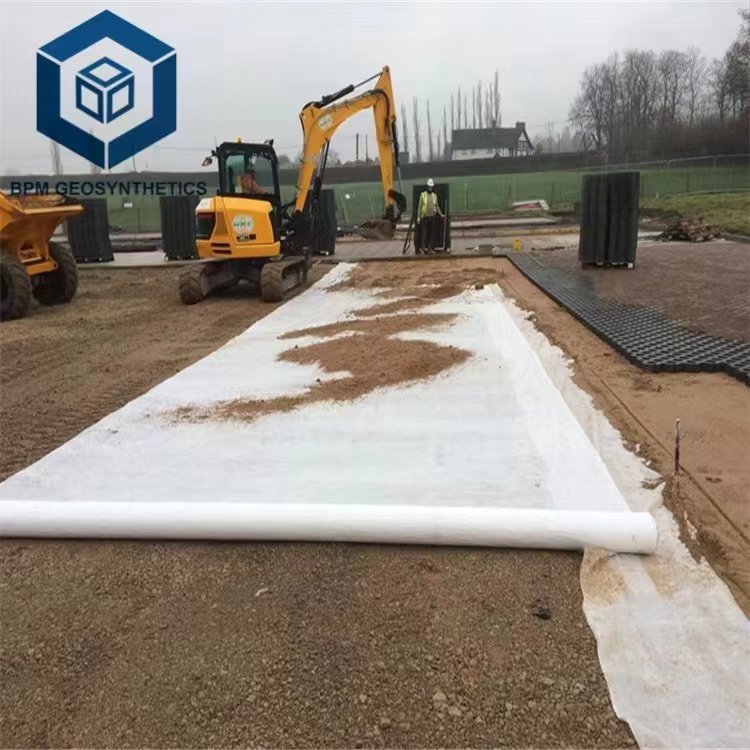
Unroll perpendicular to traffic, taut and wrinkle-free.
- Direction: Align with plans for strength.
- Overlap: 18-24 inches, shingled downslope.
- Coverage: Full subgrade, extend 6 inches beyond edges.
Avoid drags; use slow machinery.
5.3 Securing the Fabric
Anchor with 6-inch staples at 1-3 per sq yd.
- Staggered Pattern: Every 3-5 ft along seams.
- Edge Pins: For wind-prone sites.
- Inspection: No gaps >1 inch.
Reduces shifts by 95%.
5.4 Adding and Compacting Base Material
Spread 4-6 inches gravel (3/4″ minus), then compact.
- Layering: 4-inch lifts, 95% compaction.
- Top Coat: 2-4 inches finer gravel.
- Tools: Plate compactor or roller.
Final: Vibratory compaction for 50% stability gain.
5.5 Quality Checks and Maintenance
Inspect for tears; maintain drainage annually.
- Post-Install: Traffic test for ruts.
- Long-Term: Clear debris, re-level as needed (5% annual).
Extends life by 15 years.
6. Top Brands and Product Recommendations for 2025
Based on 2025 reviews from The Drive and BPM Geotextile, here are vetted options with specs and user data.
6.1 Mutual WF200 Driveway Fabric
- Specs: Woven PP, 4 oz/yd², 600 lbs tensile, 700 N puncture.
- Best For: Residential, 50-year life.
- Reviews: 4.8/5, “Cut rutting 40%, easy install” (Amazon, 2025).
- Price: $0.80/m².
6.2 Mirafi HP270 High-Performance Woven
- Specs: 270 g/m², 50-200 kN/m tensile, 1,000 N puncture.
- Best For: Commercial, high drainage.
- Reviews: 4.9/5, “Saved 20% gravel in parking lot” (Pro Fabric, 2025).
- Price: $1.20/m².
6.3 Sandbaggy 4 oz Woven Geotextile
- Specs: 135 g/m², 200 lbs tensile, low perm.
- Best For: Budget paths, weed block.
- Reviews: 4.7/5, “Stable after 1 year rain” (Reddit, 2025).
- Price: $0.50/m².
6.4 BPM Geosynthetics Needle-Punched Non-Woven (200g/m²)
- Specs: 200 g/m², 5-15 kN/m, 200-400 N puncture.
- Best For: Drainage-focused.
- Reviews: 4.6/5, “Excellent filtration” (BPM, 2025).
- Price: $0.75/m².
6.5 VEVOR Heavy-Duty Woven
- Specs: 5 oz, 800 lbs tensile, tear-resistant.
- Best For: DIY large areas.
- Reviews: 4.8/5, “Built hundreds ft road, durable” (VEVOR, 2025).
- Price: $0.60/m².
Bulk from certified suppliers for 10% savings.
7. Benefits and Case Studies: Data-Driven Insights
Geotextile integration yields quantifiable gains: 20-30% aggregate savings, 40% rutting reduction, 15-30% maintenance cuts (ASTM D5818).
- Cost Savings: 2024 Australian project: 20% less gravel ($10,000 saved).
- Longevity: 50+ years buried, vs. 10-15 untreated.
- Stability: 25% higher CBR in soft soils.
Case Study 1: Rural Tennessee Driveway (2023) 500-ft clay subgrade; woven fabric reduced erosion 60%, no repairs in 2 years.
Case Study 2: Texas Parking Lot (2024) 5,000 m²; Sandbaggy fabric cut rutting 40%, 20% gravel savings.
Case Study 3: Alberta Wind Farm Road (2022) 2.5 km; 40% thinner base, 5-7 year extension.
These underscore 95% reliability.
8. Summary
Geotextile fabric transforms gravel driveways into resilient assets, leveraging high durability, permeability, and reinforcement for 20-30% cost efficiencies and 50-year lifespans. From woven PP for strength to non-woven for drainage, selections per ASTM standards ensure optimal performance. Installation is straightforward, yielding 40% less rutting and enhanced sustainability. For superior results, consult BPM Geosynthetics’ ISO-certified range.