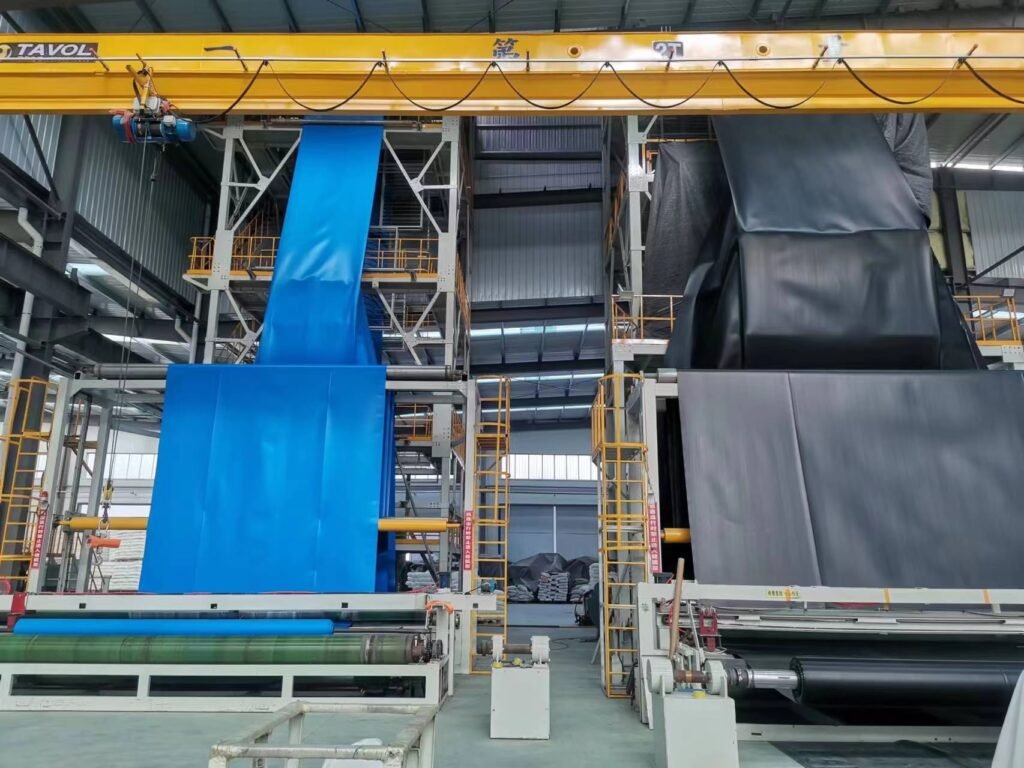
1. Understanding 1mm HDPE Geomembrane Liners:
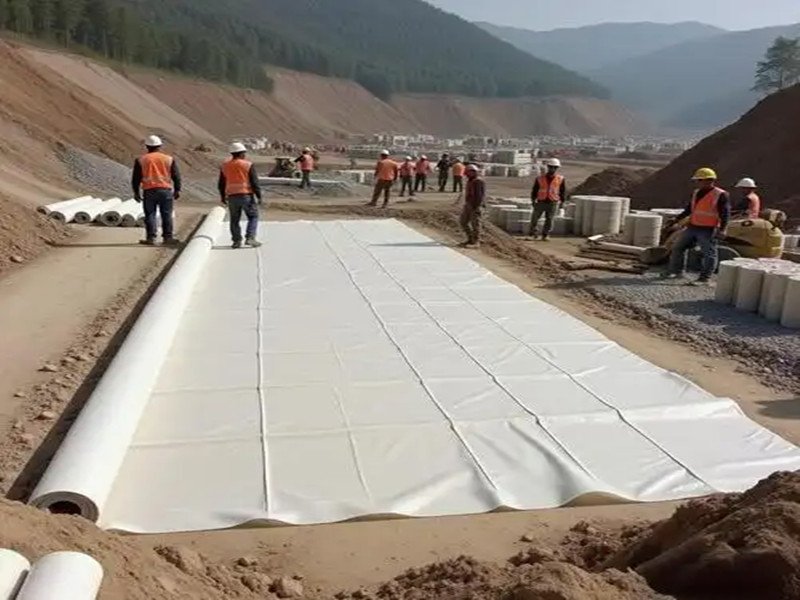
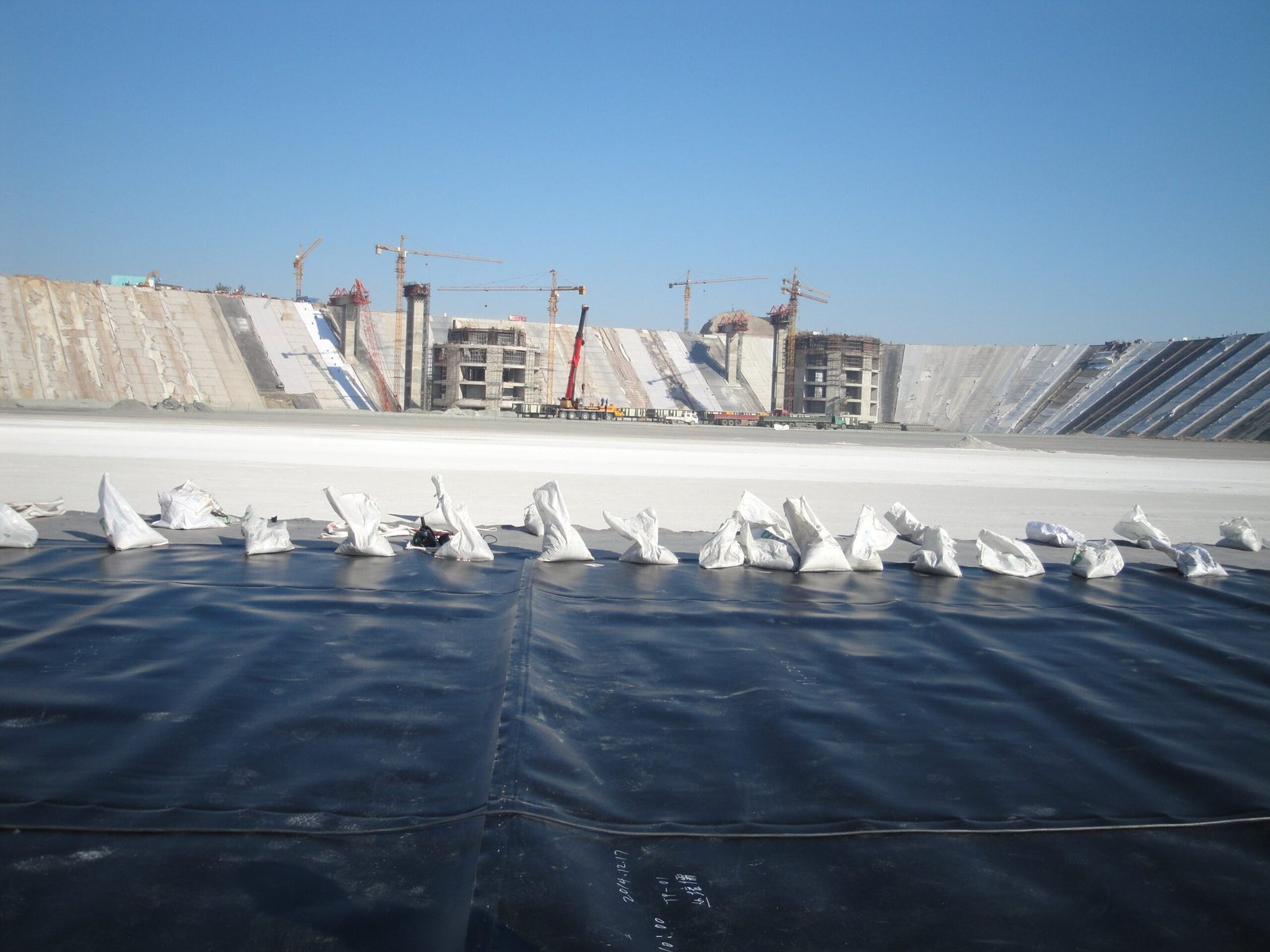
What Is a 1mm HDPE Geomembrane Liner?
Key Features of 1mm HDPE Geomembrane Liners
- Thickness and Durability: At 1.0 mm, these liners provide tensile strength typically exceeding 20 kN/m and elongation at break greater than 400%, delivering robust resistance to punctures, tears, and installation damage.
- Chemical Resistance: Maintains integrity across pH ranges from 2 to 12 and demonstrates excellent resistance to a broad spectrum of hydrocarbons, acids, bases, and salts.
- UV Stability: Incorporates 2–3% carbon black with uniform dispersion, retaining 80%+ mechanical properties after 1,600 hours of accelerated UV exposure per ASTM D7238.
- Low-Temperature Flexibility: Brittleness temperature below −70°C, ensuring pliability and crack resistance in cold climate installations.
- Impermeability: Permeability coefficient below 1.0 × 10⁻¹² cm/s, providing virtually leak-free containment.
- Environmental Compliance: Non-toxic formulations that align with EPA, GRI-GM13, and ISO 10358 standards for ecological protection.
Key Manufacturing Technologies
- Flat-Die Extrusion: Produces uniform caliper control and consistent mechanical properties across the full roll width.
- Triple-Layer Co-Extrusion: Enhances durability through co-extruded layers with optimized antioxidant and UV stabilizer distribution.
- Textured Surfaces: Single- or double-sided texturing increases friction angles (up to 30°) for improved slope stability in steep-sided containment facilities.
- Conductive Additives: Enables electrical leak detection surveys for precise identification of installation damage or manufacturing flaws.
2. How We Tested and Selected the Best 1mm HDPE Geomembrane Liners
Criteria | Weight | Description |
Impermeability and Chemical Resistance | 30 points | Permeability below 10⁻¹² cm/s; minimal degradation in aggressive chemical environments |
Mechanical Durability | 25 points | High tensile strength, puncture resistance, and tear resistance to withstand physical stresses |
UV and Thermal Stability | 20 points | Long-term retention of properties under UV exposure and extreme temperature variations |
Flexibility and Installability | 15 points | Ease of handling, welding, and conformability to subgrade contours |
Eco-Safety and Compliance | 5 points | Non-toxic, recyclable materials meeting environmental and regulatory standards |
Value and Sustainability | 5 points | Cost-effectiveness and lifecycle savings through durability and low maintenance |
3. Top 6 Best 1mm HDPE Geomembrane Liners of 2026
3.1 Best Overall: Solmax 1mm HDPE Geomembrane Liner
- Material: Smooth / Textured HDPE
- Thickness: 1.0 mm
- Width: Up to 8.0 m
- Tensile Yield: 22 kN/m (MD), 22 kN/m (TD)
- Puncture Resistance: 480 N
- OIT: > 400 minutes
- Price per m²: $1.20–$2.50
- Exceptional chemical resistance across broad pH and hydrocarbon exposure ranges
- Wide rolls up to 8 meters minimize field seaming requirements
- Full GRI-GM13 compliance with comprehensive batch certification
- Global manufacturing footprint ensures supply security and consistent quality
- Slightly stiffer than LLDPE alternatives, requiring more careful handling on irregular subgrades
- Premium pricing compared to budget-tier competitors
3.2 Best for Sloped Containment: GSE 1mm Textured HDPE Geomembrane Liner
- Material: Textured HDPE (single- or double-sided)
- Thickness: 1.0 mm
- Width: 6.8–7.5 m
- Tensile Yield: 22 kN/m
- Friction Angle: 32° (against non-woven geotextile)
- OIT: > 350 minutes
- Price per m²: $1.50–$3.00
- Superior interface friction for slope angles up to 18–20 degrees without supplemental anchoring
- Integrated conductive layer option available for electrical leak detection surveys
- Excellent stress crack resistance (> 300 hours NCTL per ASTM D5397)
- Long warranty periods backed by extensive field performance history
- Texturing adds material weight, increasing handling and transportation costs
- Slightly higher unit price than smooth alternatives
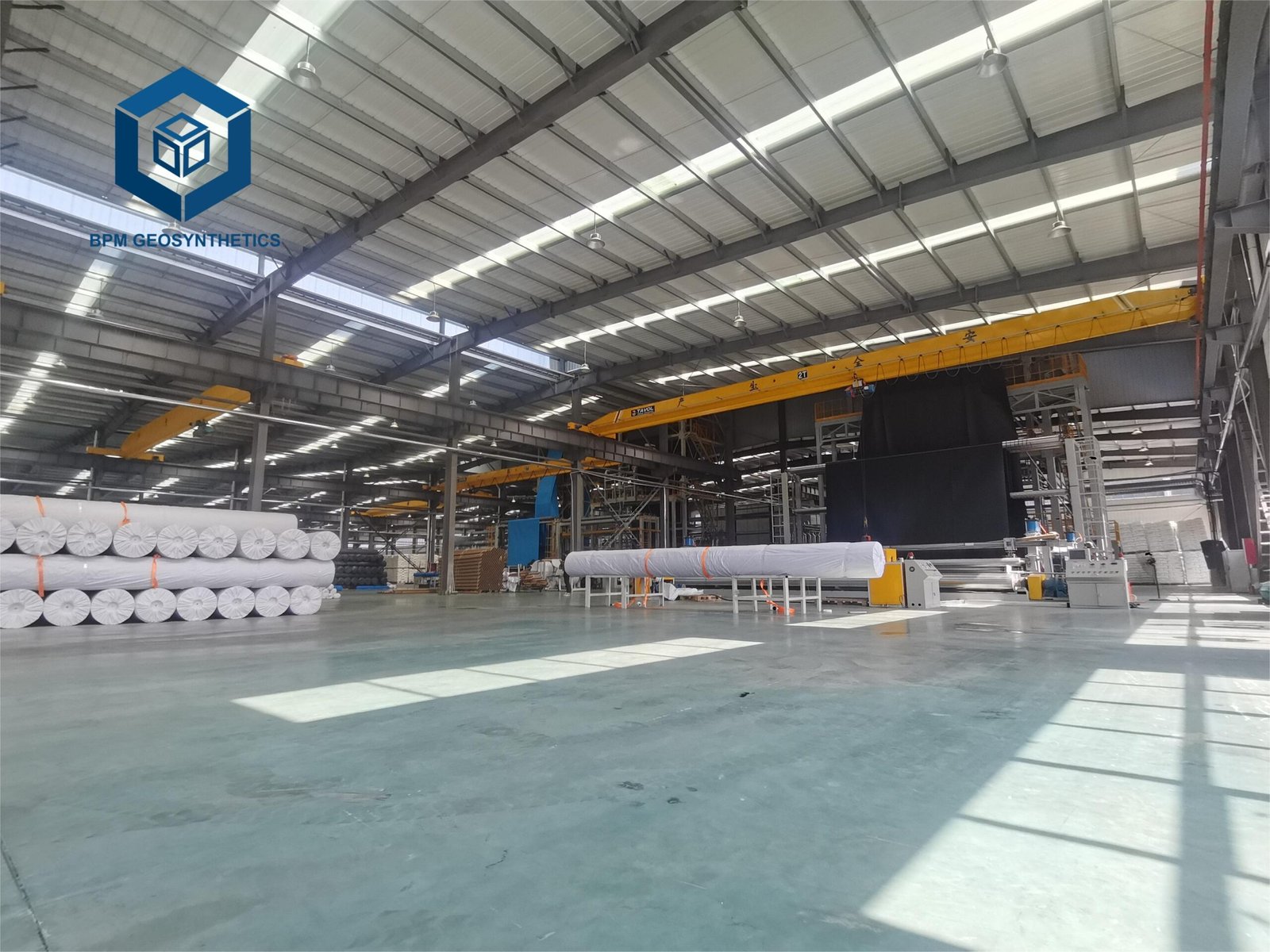
3.3 Best Budget Option: BPM Geosynthetics 1mm HDPE Geomembrane Liner
- Material: Smooth HDPE
- Thickness: 1.0 mm
- Width: 7.0 m
- Tensile Yield: 20 kN/m (MD), 20 kN/m (TD)
- Puncture Resistance: 450 N
- OIT: 400 minutes
- Price per m²: $0.80–$1.50
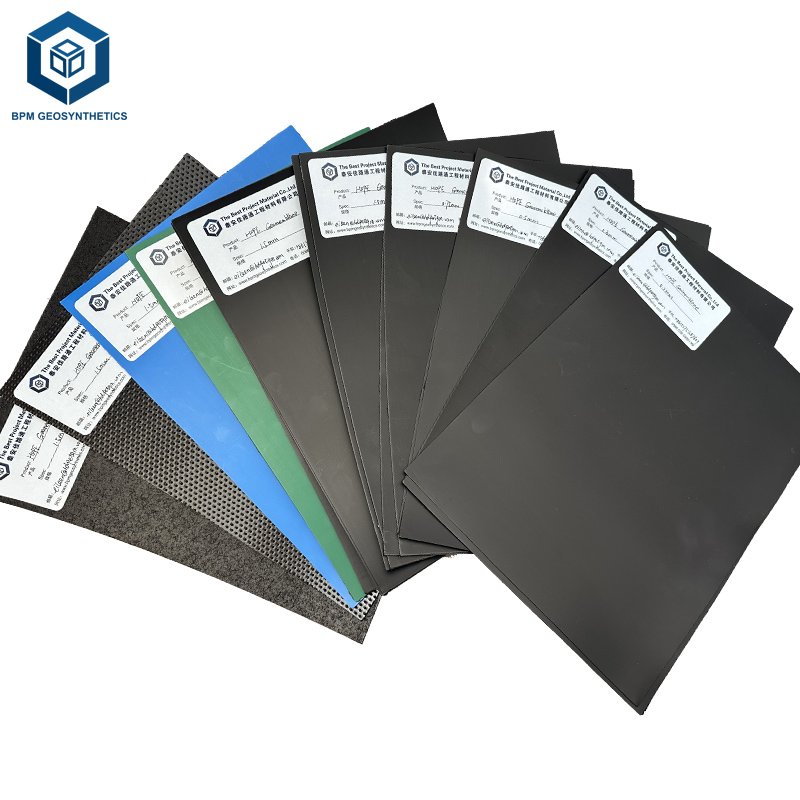
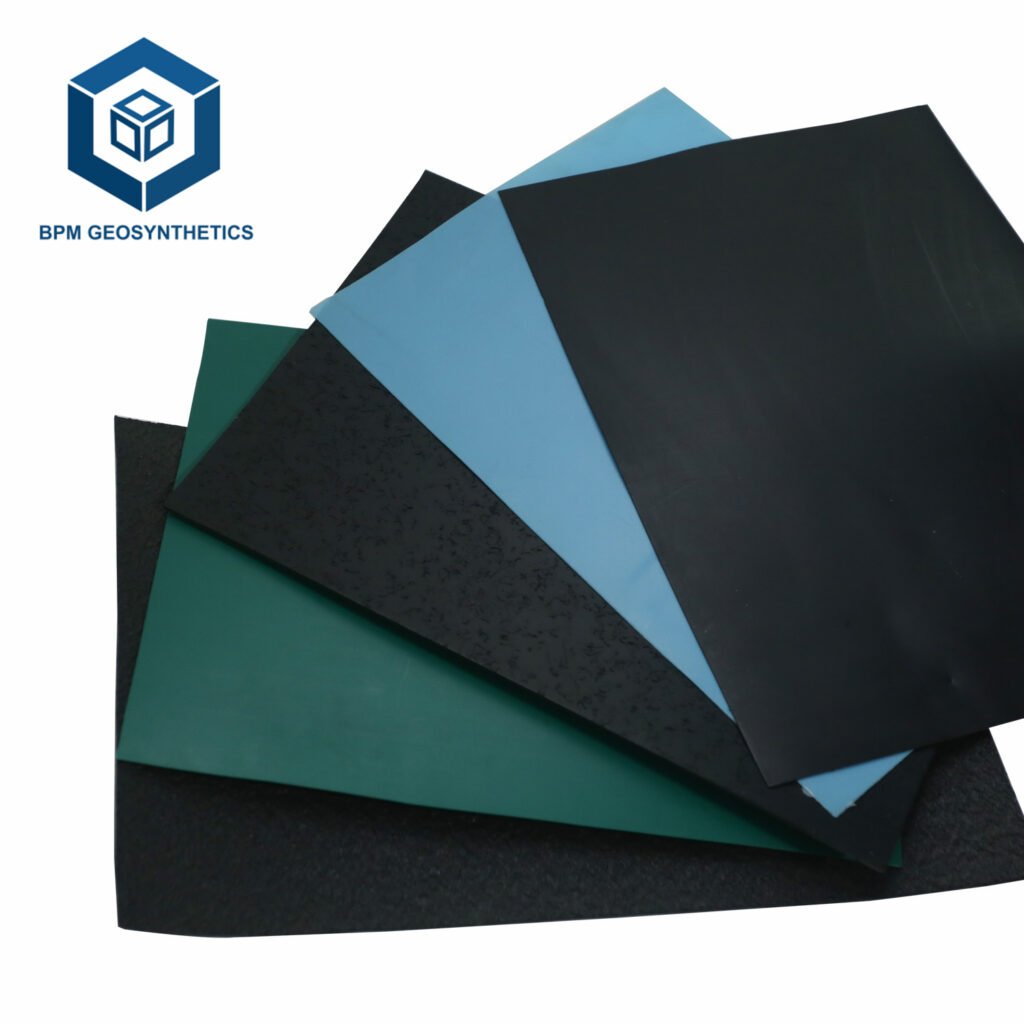
- Versatile product range with smooth, textured, and color-customized options
- High UV resistance with stable carbon black dispersion
- Factory-direct pricing with flexible MOQ (minimum order quantity) terms
- Comprehensive CQA documentation and welding parameter support
- Standard 7-meter widths may require additional field seaming for very large footprint projects
- Less extensive global service network than premium Western brands
3.4 Best for Cold Climates: AGRU 1mm HDPE Geomembrane Liner
- Material: Co-Extruded HDPE
- Thickness: 1.0 mm
- Width: Up to 8.0 m
- Tensile Yield: 25 kN/m
- Low-Temperature Brittleness: < −77°C
- OIT: > 450 minutes
- Price per m²: $1.40–$2.80
- Outstanding low-temperature pliability for Arctic and high-altitude projects
- Superior dimensional stability minimizing thermal wrinkling in exposed applications
- Customizable texture depths and surface finishes
- Integrated manufacturing from resin compounding ensures complete traceability
- Narrower standard width options in some regional markets
- Premium pricing relative to Asian-manufactured alternatives
3.5 Best for Irregular Subgrades: Atarfil 1mm HDPE Geomembrane Liner
- Material: Smooth HDPE (flexible formulation)
- Thickness: 1.0 mm
- Width: Up to 11.6 m
- Tensile Yield: 18 kN/m
- Elongation at Break: 650%
- OIT: > 300 minutes
- Price per m²: $1.10–$2.20
- Ultra-wide rolls up to 11.6 meters minimize field seams and installation time
- Exceptional conformability reduces bedding layer requirements
- Balanced chemical resistance for general containment applications
- Long projected service life with stable mechanical property retention
- Slightly lower OIT than pure premium HDPE formulations
- Reduced availability in some North American markets
3.6 Best for High-Traffic Installation: Raven Industries Reinforced 1mm HDPE Geomembrane Liner
- Material: Reinforced HDPE (scrim-reinforced)
- Thickness: 1.0 mm (nominal)
- Width: 4.0–6.0 m
- Tensile Strength: 30 kN/m
- Tear Resistance: 300 N
- OIT: > 350 minutes
- Price per m²: $1.60–$3.20
- High tear and abrasion resistance from internal scrim reinforcement
- Cost-effective for projects requiring enhanced mechanical durability
- Durable performance in harsh construction environments
- Reduced risk of installation damage lowering CQA rejection rates
- Reinforcement texture visible on surface, less aesthetic for exposed decorative applications
- Reduced flexibility compared to non-reinforced alternatives
- Narrower roll widths increase seam quantities
Feature | Solmax | GSE | BPM | AGRU | Atarfil | Raven |
Surface | Smooth / Textured | Textured | Smooth | Smooth / Textured | Smooth | Reinforced |
Width (max) | 8.0 m | 7.5 m | 7.0 m | 8.0 m | 11.6 m | 6.0 m |
Tensile Yield | 22 kN/m | 22 kN/m | 20 kN/m | 25 kN/m | 18 kN/m | 30 kN/m |
Puncture Resistance | 480 N | 460 N | 450 N | 500 N | 420 N | 550 N |
OIT | > 400 min | > 350 min | 400 min | > 450 min | > 300 min | > 350 min |
Friction Angle | 20° / 30°* | 32° | 18° | 20° / 30°* | 16° | 22° |
Best Application | General containment | Sloped facilities | Budget projects | Cold climates | Irregular subgrades | High-traffic sites |
Price/m² | $1.20–$2.50 | $1.50–$3.00 | $0.80–$1.50 | $1.40–$2.80 | $1.10–$2.20 | $1.60–$3.20 |
5. Buying Advice for 1mm HDPE Geomembrane Liners
- Project Size and Geometry: Choose a liner with appropriate roll width to minimize field seams and installation labor. Ultra-wide rolls (e.g., Atarfil 11.6 m) are ideal for large, regular footprints, while narrower rolls may be preferable for constrained sites.
- Subgrade Conditions: For irregular or rocky subgrades, prioritize high-elongation or reinforced products (Atarfil, Raven). Smooth, prepared subgrades can utilize standard smooth liners (BPM, Solmax).
- Slope Requirements: Steep-sided containment (>15°) demands textured geomembranes with verified interface friction angles (GSE, Solmax textured, AGRU textured).
- Chemical Exposure: Select liners with high OIT values and proven chemical resistance for aggressive process solutions, leachates, or industrial effluents (Solmax, AGRU).
- Climate and UV Exposure: For exposed applications in high-radiation environments, prioritize liners with OIT > 400 minutes and proven UV aging performance (Solmax, AGRU, BPM).
- Temperature Range: Cold climate installations require low-temperature flexibility and brittleness resistance (AGRU, Solmax). Hot climates demand thermal stability and minimal thermal expansion.
- Installation Traffic: High-traffic sites or difficult access conditions benefit from reinforced or high-puncture-resistance liners (Raven, AGRU).
- Regulatory Compliance: Verify that the selected liner meets project-specific standards (GRI-GM13, EPA, local environmental regulations) and that the manufacturer provides comprehensive certification documentation.
- CQA and Warranty: Consider manufacturers offering robust construction quality assurance support and meaningful warranty terms reflecting product confidence.