1. What Is LDPE Geomembrane?
LDPE (Low-Density Polyethylene) geomembrane is a core seepage control material. It requires high performance in seepage control, weather resistance, and construction adaptability, while also considering cost control. Therefore, scientifically selecting a suitable LDPE geomembrane is a crucial aspect of the project.
2.Core Dimensions and Practical Methods for LDPE Geomembrane Selection
2.1 Clarify the Application Scenarios and Core Requirements
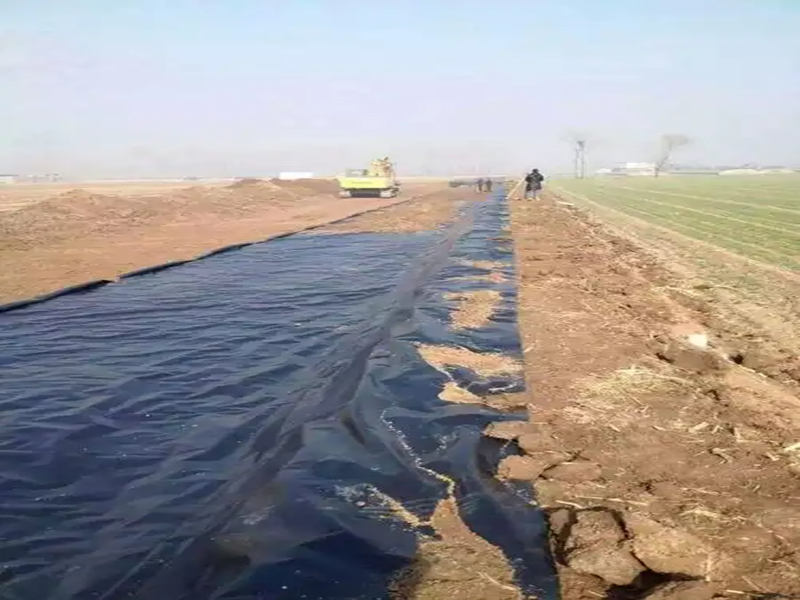
Before selection, it is necessary to accurately identify the key characteristics of the application scenario to avoid blind selection. For example, a reservoir project is an outdoor facility exposed to sunlight, rain, and other natural environments for extended periods, and the stored medium is ordinary irrigation water without strong corrosive or acid/alkali properties. Based on this, the core requirements are: firstly, excellent seepage control performance to reduce leakage rate; secondly, strong weather resistance to withstand ultraviolet radiation and alternating high and low temperature aging; and thirdly, good flexibility to adapt to the curved structure of the reservoir wall and construction splicing requirements.
For applications such as chemical wastewater treatment ponds and landfills, additional requirements are needed for LDPE geomembranes to possess acid and alkali resistance and corrosion resistance. Specialized models with added anti-aging agents and corrosion modifiers can be selected. For underground concealed projects, the weight of weather resistance indicators can be appropriately reduced, focusing on impermeability and compressive strength.
2.2 Key Technical Indicator Selection
The technical indicators of LDPE geomembranes directly determine the impermeability and service life. The following core indicators need to be carefully checked:
2.2.1. Thickness and Weight:
Thickness is a core factor affecting impermeability and mechanical strength. For medium-sized water storage facilities such as reservoirs, a thickness of 0.5-1.0 mm is typically selected for LDPE geomembranes. Considering the depth of the reservoir and the soil bearing capacity, this project ultimately selected a 0.8 mm thick product, corresponding to a weight of approximately 800 g/m². This meets the impermeability requirements while avoiding increased construction difficulty and costs due to excessive thickness. For seepage prevention at the bottom layer of large reservoirs and landfills, products with a thickness of 1.0 mm or more must be selected; for small water storage tanks and drainage ditches, a thickness of 0.5-0.6 mm can be used.
2.2.2. Seepage Prevention Performance:
The core indicator is the permeability coefficient; the lower the permeability coefficient, the better the seepage prevention effect.
2.2.3. Mechanical Properties:
Focus on tensile strength, elongation at break, and tear strength. Tensile strength must be ≥10 MPa, and elongation at break ≥400% to ensure that it can withstand certain tensile forces and deformations during construction and subsequent use, avoiding cracking; tear strength ≥30 N/mm to resist damage caused by gravel, sharp objects, etc. during construction. The product selected for this project has a tensile strength of 12 MPa and an elongation at break of 450%, meeting the requirements of the scenario.
2.2.4. Weather Resistance and Environmental Friendliness:
For outdoor use, products with sufficient ultraviolet stabilizers (UV agents) must be selected to ensure a service life of more than 10 years in natural environments, which can be verified by the anti-aging test data in the test report.
3.Product Quality and Manufacturer Qualification Verification
The quality of LDPE geomembrane products on the market varies greatly. It is necessary to verify the product and manufacturer qualifications through multiple dimensions:
3.1. Verify Manufacturer Production Qualifications:
Choose reputable manufacturers with a geosynthetic materials production license and ISO9001 quality management system certification. Avoid choosing non-standard products produced by small workshops.
3.2. Request and Verify Testing Reports:
Request the manufacturer to provide a recent testing report issued by an authoritative third-party testing institution. Focus on verifying that the thickness, permeability coefficient, tensile strength, and other indicators in the report are consistent with the actual parameters of the product to avoid forged testing reports. At the same time, random sampling and re-testing can be conducted to ensure that the product quality meets standards.
3.3.Inspect Product Appearance and Packaging:
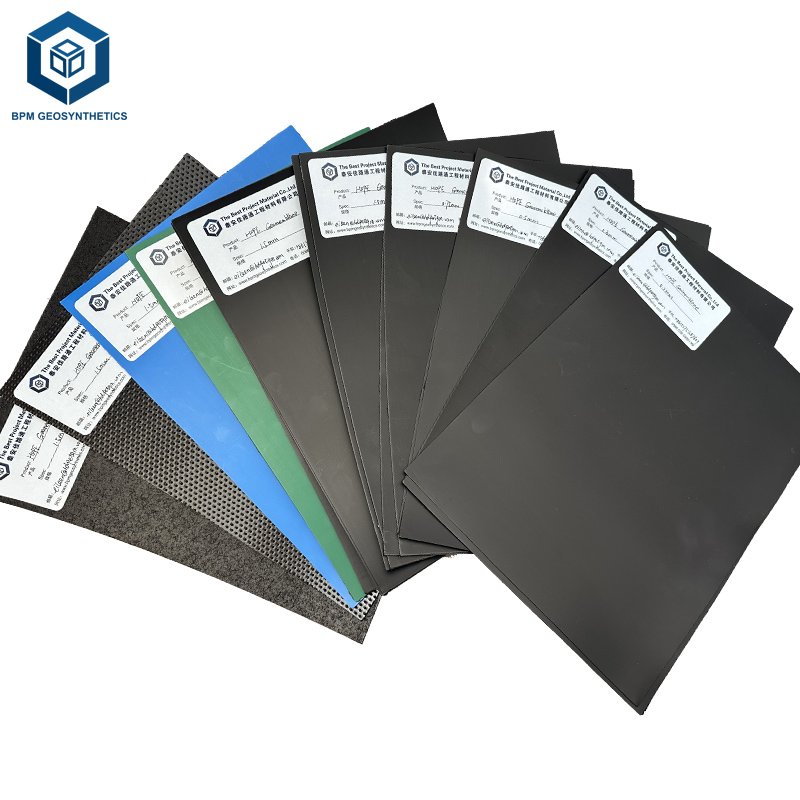
High-quality LDPE geomembrane has a smooth appearance, uniform color, and is free of bubbles, impurities, uneven thickness, and other problems.
4.Balancing Construction Compatibility and Cost
The selection of geomembrane must consider ease of construction to avoid compromised seepage prevention due to incompatibility between product characteristics and construction techniques:
4.1. Flexibility Compatibility:
LDPE geomembrane has superior flexibility compared to HDPE (high-density polyethylene) geomembrane, making it more suitable for curved and irregularly shaped structures. The reservoir wall in this project is curved, and the selected 0.8mm thick LDPE geomembrane easily conforms to the curved surface, ensuring weld strength during splicing, with a weld pass rate exceeding 98%.
4.2. Splicing Process Compatibility:
LDPE geomembrane compatible with hot-air welding processes should be selected to ensure weld strength is not lower than that of the parent material. The ambient temperature must also be considered. LDPE geomembrane can be installed normally within a temperature range of -5℃ to 40℃. If the ambient temperature is low, a modified LDPE product with better low-temperature toughness can be selected.
4.3. Cost Balance:
While meeting performance requirements, avoid blindly pursuing high specifications that lead to wasted costs.
5. Selection Summary and Recommendations
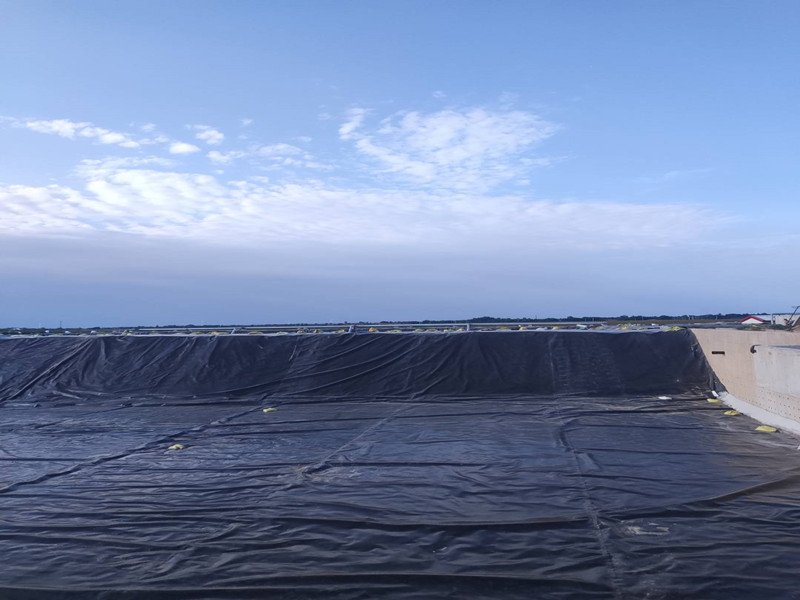
The selection of LDPE geomembrane should adhere to the principles of “demand-oriented, performance-priority, quality-based, and adaptability-balanced.” The core is to accurately match the characteristics of the application scenario, avoiding blindly pursuing high thickness and high performance indicators while also considering key performance parameters. Recommendations during the selection process include: Thoroughly researching the scenario requirements and clarifying core needs such as seepage prevention, weather resistance, and environmental protection; Strictly verifying product technical specifications and test reports, rejecting non-standard products; Prioritizing reputable manufacturers with complete qualifications, technical support, and after-sales service; Optimizing the selection based on construction techniques and environmental conditions, balancing performance and cost. Only through scientific selection can the LDPE geomembrane fully perform its seepage prevention function and extend the service life of the project.