1.Definition of 30 Mil HDPE Liner
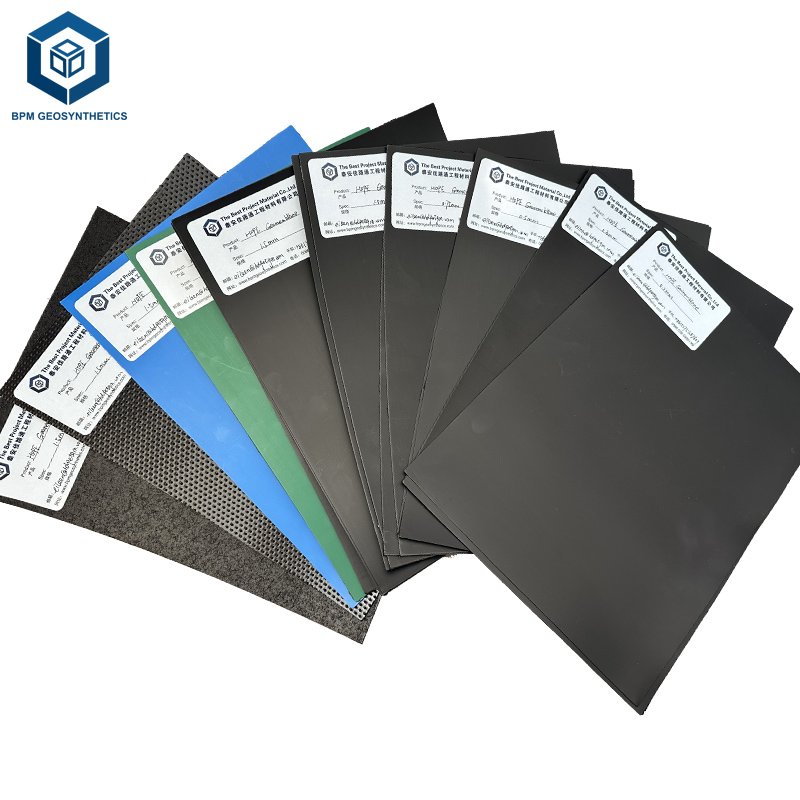
30 Mil HDPE Liner is a high-density polyethylene (HDPE) anti-seepage film with a thickness of 30 Mil (approximately 0.75 millimeters). This material is known for its excellent anti-seepage performance and is used for ponds, water bodies, and water management.
features:
1.1 Excellent impermeability: 30 Mil HDPE Liner can prevent water seepage, ensuring that the pond and water body maintain the required water level and reducing water waste.
1.2Durability and Long Life: The 30 mil HDPE Liner is resistant to UV rays, chemicals, and temperature changes, providing excellent long-term durability.
1.3 Environmentally friendly and sustainable: 30 Mil HDPE Liner is an eco-friendly material that helps maintain the health of pond ecosystems and reduce unnecessary consumption of natural resources.
1.4 Easy to install and maintain: The 30 Mil HDPE Liner is easy to install and maintain, reducing the complexity and cost of management.
1.5 Multifunctionality: 30 Mil HDPE Liner is suitable for various types of ponds, including landscape ponds, irrigated agricultural ponds, ecological ponds, and industrial ponds, making it a versatile choice.
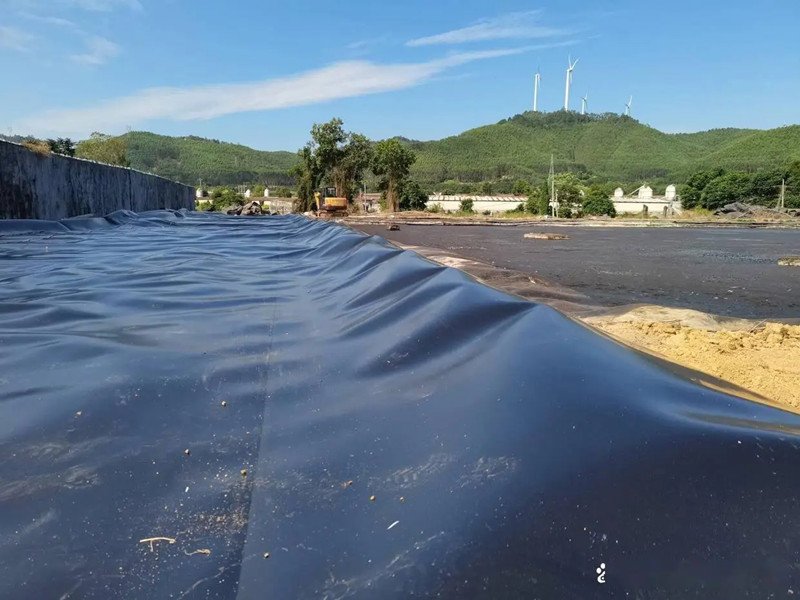
2. Mil HDPE Liner common functions
30 Mil HDPE Liner HDPE geomembrane is a material used in environmental engineering and has many functions. It is a high-strength, high-transparency plastic film that can be used for filtration, isolation, moisturizing and protection. Here are some common functions:
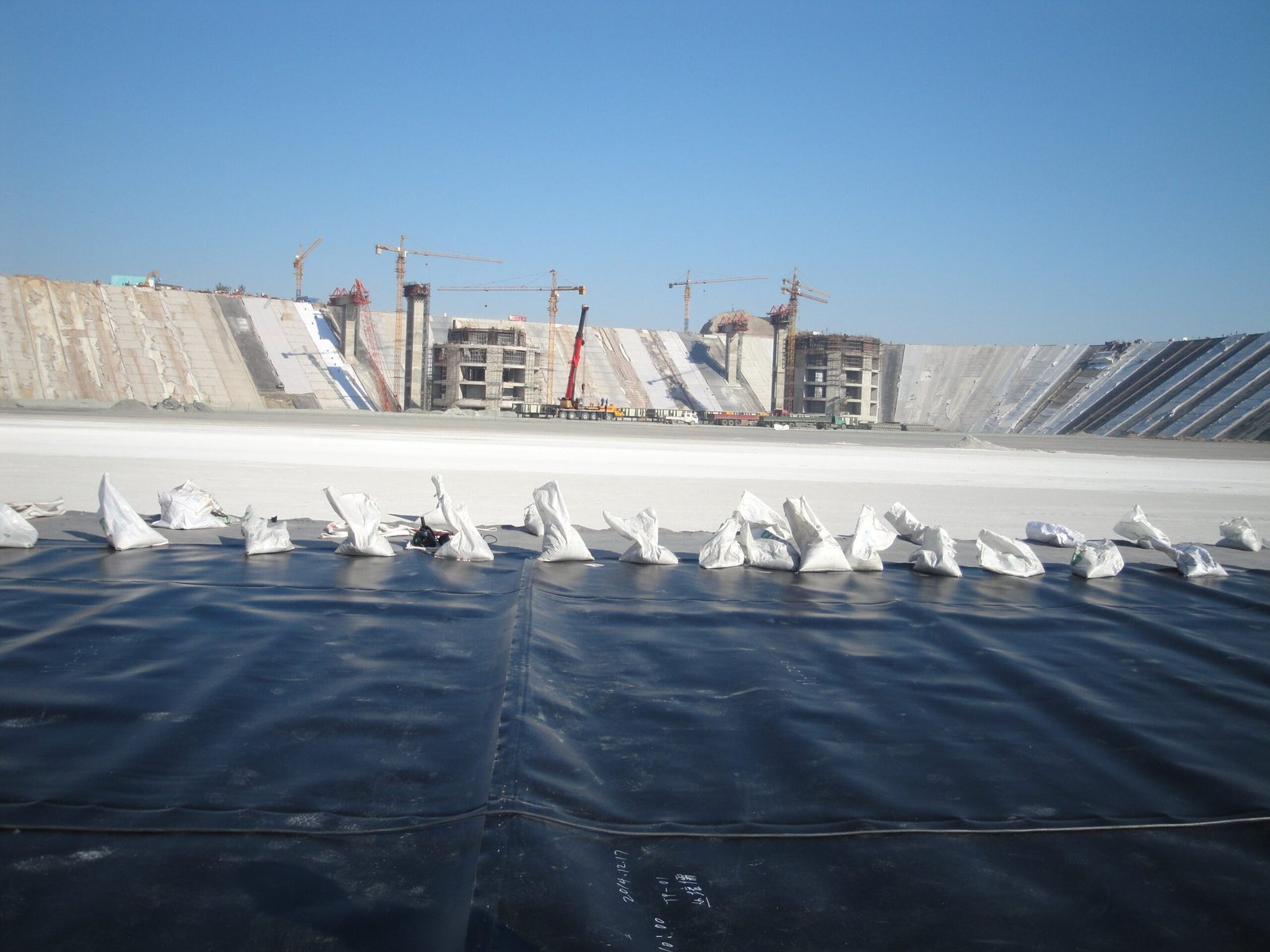
2.1 30 Mil HDPE Liner HDPE geomembrane has excellent tensile strength and impact resistance, can effectively resist the influence of external forces, and is not easy to break or deform. This makes it widely used in civil engineering for waterproofing, anti-seepage and isolation. For example, in water conservancy projects, 30 Mil HDPE Liner HDPE geomembrane can be used for the anti-seepage layer of reservoirs, dams and channels, effectively preventing water leakage and soil erosion.
2.2 Secondly, 30 Mil HDPE Liner HDPE geomembrane has good chemical stability and corrosion resistance. It can resist the erosion of chemicals such as acids, alkalis, and salts, and is not easily corroded and damaged by chemicals. This makes it widely used in chemical, environmental protection and landfill fields. For example, in landfills, 30 Mil HDPE Liner HDPE geomembrane can be used as a garbage isolation layer to prevent garbage leakage and soil pollution.
2.3 In addition, 30 Mil HDPE Liner HDPE geomembrane also exhibits excellent aging and weather resistance. It can be used in outdoor environments for a long time and is not easily affected by factors such as ultraviolet rays, oxygen and moisture. Therefore, it plays an important role in infrastructure construction fields such as roads, railways and airports. For example, in road projects, 30 Mil HDPE Liner HDPE geomembrane can be used as an anti-seepage layer for roadbeds to effectively prevent groundwater leakage and road subsidence.
2.4 Filtration: 30 Mil HDPE Liner HDPE geomembrane can be used to filter water sources, remove impurities and harmful substances in water, and improve water quality.
2.5 Isolation: 30 Mil HDPE Liner HDPE geomembrane can isolate harmful substances such as gases, liquids and solids to prevent them from causing harm to the environment and organisms.
2.6 Moisture retention: 30 Mil HDPE Liner HDPE geomembrane can capture and retain moisture, maintain the humidity of soil and vegetation, and prevent drought and desertification.
2.7 Protection: 30 Mil HDPE Liner HDPE geomembrane can protect structures and the environment from erosion and damage, such as coastal protection embankments, water conservancy projects, etc.
30 Mil HDPE Liner HDPE geomembrane has a wide range of applications in many environmental projects, and its versatility and high reliability make it an indispensable material.
In short, 30 Mil HDPE Liner HDPE geomembrane is a high-quality geotechnical material with many advantages and a wide range of applications. Its high tensile strength, impact resistance, chemical stability and weather resistance make it play an important role in civil engineering, chemical industry, environmental protection and infrastructure construction. In the future development, we can expect the application and innovation of 30 Mil HDPE Liner HDPE geomembrane in more fields.
3.30 Mil HDPE Liner Applications:
3.1 Environment protection and hygienic projects (such as domestic refuse landfill, sewage treatment, toxic material treatment plant, hazardous goods warehouse, industrial waste construction waste explosion waste)
3.2 Water conservancy projects (such as anti-seepage, anti-seepage and reinforcement of river bank, Lake Dike and reservoir dam; anti-seepage of ditch, vertical inner wall and slope protection)
3.3 Urban infrastructure (anti-seepage provision for expressway, subway and underground works, roof water tank and roof garden; lining for sewage pipe)
3.4 Gardening (bottom lining and slope protection for artificial lake, pond and golf course)
3.5 Petrochemical (anti-seepage provision for oil tanks in chemical plant, oil refinery and gas station; lining material for chemical reaction tank and precipitation tank)
3.6 Mining (anti-seepage lining for sorting tank, immersion tank, ash yard, dissolving tank, precipitation tank, stack yard and tailings)
3.7 Transportation facility (reinforcement of road foundation and anti-seepage provision for culvert)
3.8 Agriculture (anti-seepage provision for reservoir, potable water tank, pond and irrigation system)
3.9 Aquaculture (lining, anti-seepage, anti-corrosion, anti-leak, reinforcement, and seepage water collection for fish pond, shrimp pond and other facility)
4.Precautions in the construction of 30 Mil HDPE Liner
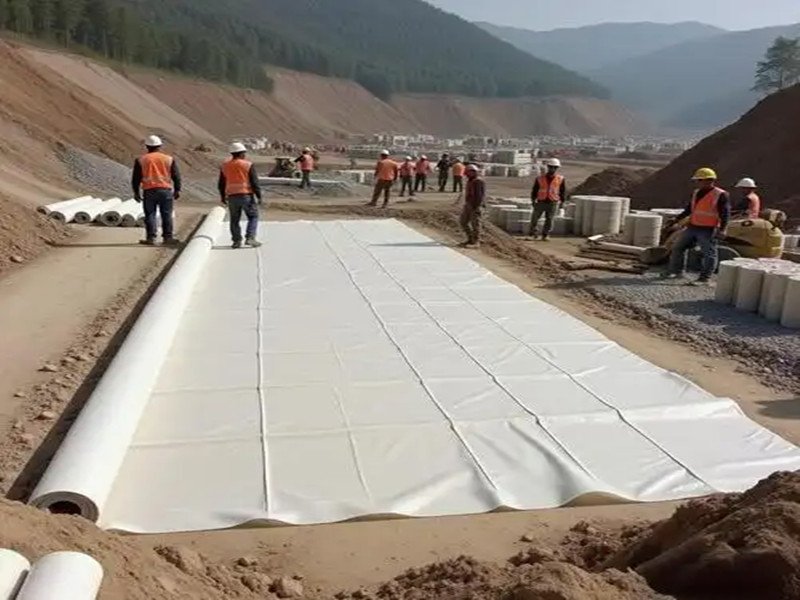
4.1 Before construction, use a hair dryer to blow away the sand, soil and other dirt on the membrane surface to keep the membrane surface clean. Place a long wooden board under the construction part so that the welder can walk on the flat base surface to ensure the construction quality. Before formal construction, test welding is carried out according to the construction temperature, walking speed and welding temperature. Generally, the walking speed is 1.5~2.5m/s and the welding temperature is 220~3000c. Two welds are spliced, 10mm wide, and a 10mm cavity is left between the two welds. This cavity is used to check the quality of the weld. A 10cm sand cushion layer is evenly spread on the top of the geomembrane, and 10cm concrete is spread after leveling and compacting. After the slope composite geomembrane is laid and qualified, the cushion layer should be laid and covered in time to prevent wind and aging of the composite geomembrane due to exposure to the sun. At the same time, concrete protection should be done to strengthen the protection of the geomembrane.
4.2 HDPE geomembrane should be strictly tested in all aspects: the early geomembrane was A single film can be divided into a single film and a multi-layer composite film of different resins. Although this HDPE geomembrane has a high elongation, which is beneficial for waterproofing, it has a low tensile strength and is easily broken. It is easy to be punctured when in contact with gravel. Single geomembranes have high requirements for the support layer and the protective layer. Composite geomembranes are a combination of geomembranes and geotextiles made according to requirements.
4.3 The application characteristics of geomembranes determine that the membrane material must not only have acid resistance, aging resistance, corrosion resistance and other properties, but also have good low-temperature flexibility. Wide geomembranes should be used as much as possible. If the selected width is narrow, it should be spliced into a wide width in the factory or on-site work shed, rolled into long rolls and transported to the laying surface to reduce the workload of on-site joints and bonding (lapping). The laying surface should be cleared of tree roots, weeds, sharp grass and sharp stones to ensure that the gravel cushion surface is flat, and no protruding or concave parts are allowed, and it should be rolled and compacted.
5.About BPM
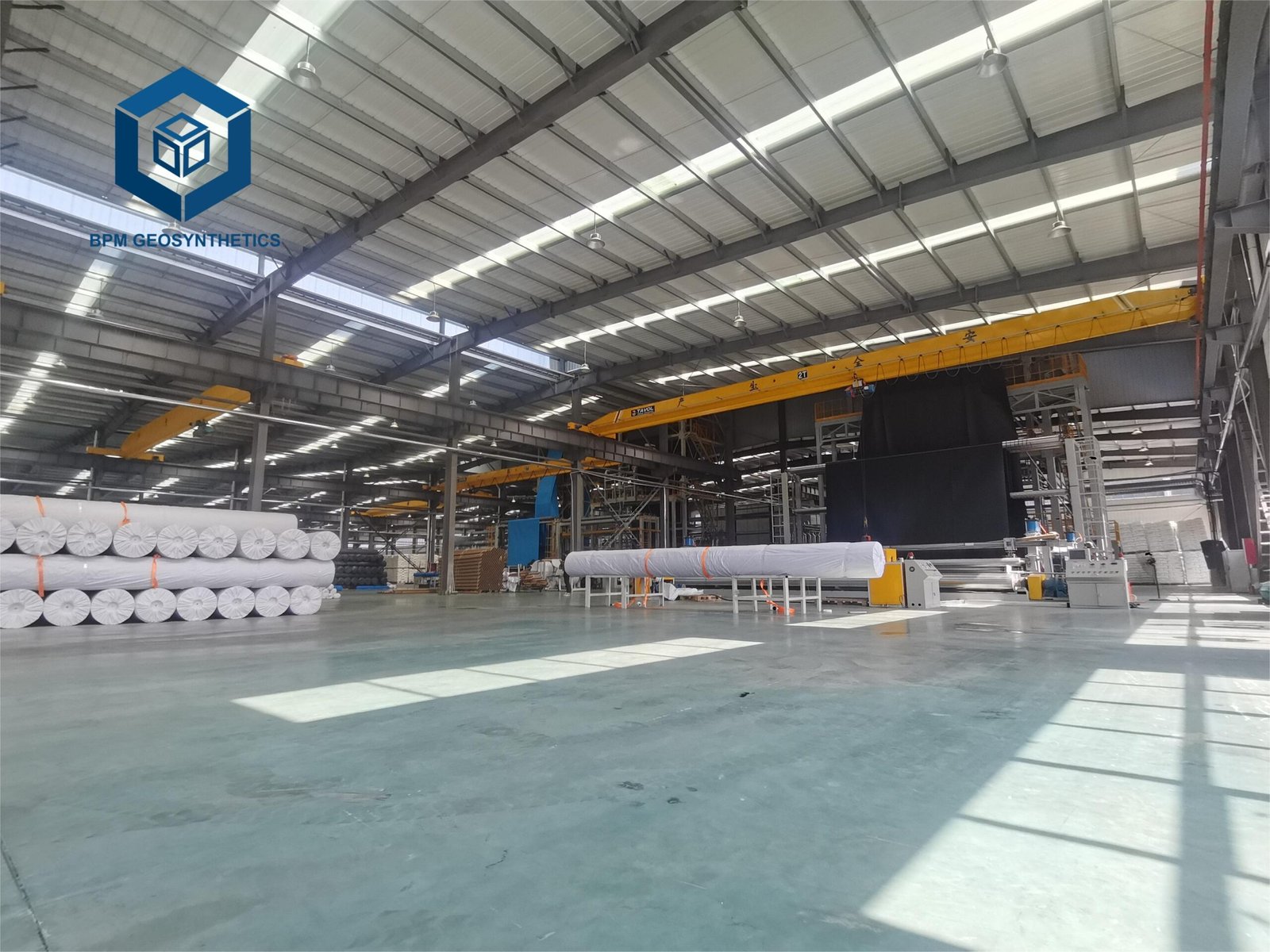
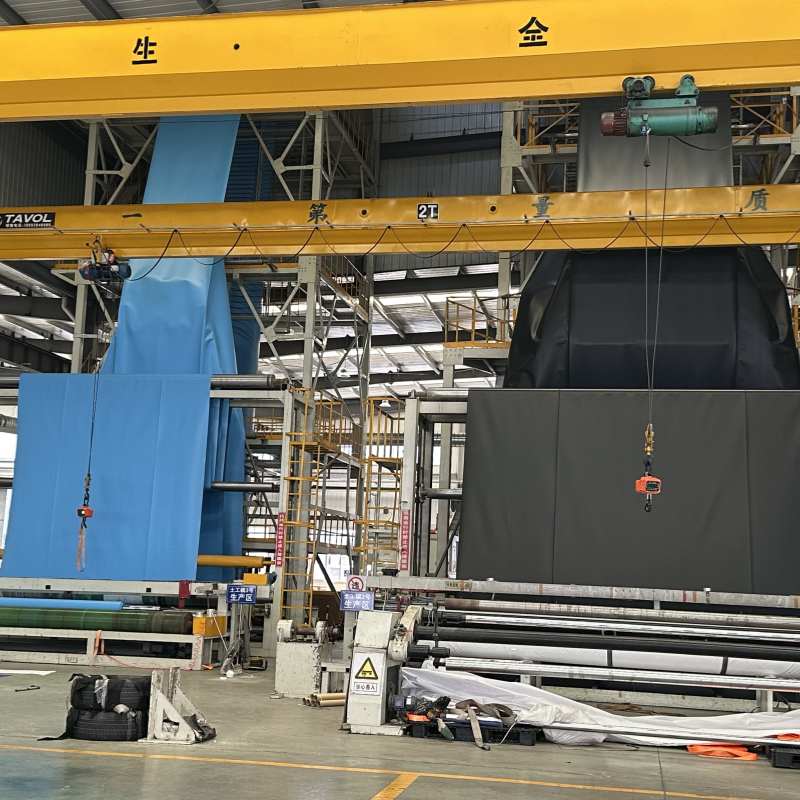
BPM has a state-of-the-art manufacturing plant located in Tai’an, a famous tourist city in Shandong Province, China, close to the Beijing-Shanghai highway. In recent years, we have invested more than 20 million US dollars to improve basic production facilities, working conditions, employee wages and benefits, technology and team training, etc.
Our professional geomembrane factory is equipped with advanced processing machines and production lines, which enables us to maintain high product quality, shorter delivery time and competitive cost to meet the needs of global customers. Most of our products have kept up with international leading counterparts, and some of them are in the leading position, especially smooth HPDE geomembranes. We can also produce according to your special requirements, and can also ODM, OEM, and customize.
BPM Geosynthetics, passionate about all aspects of geosynthetics, from new product development, enhanced test methods, production to after-sales service. The Group specializes in the development and production of high-quality geomembranes, nonwoven geomembranes, woven geomembranes, geonets and drainage geocomposites, geosynthetic clay liners (GCLs) and geogrids. Today, BPM Geosynthetics is a team of more than 100 professionals dedicated to serving customers from all over the world.