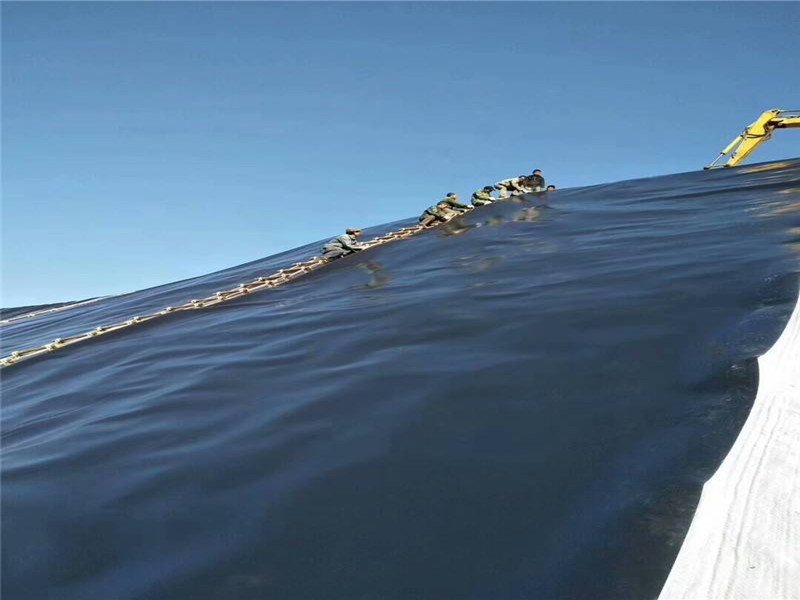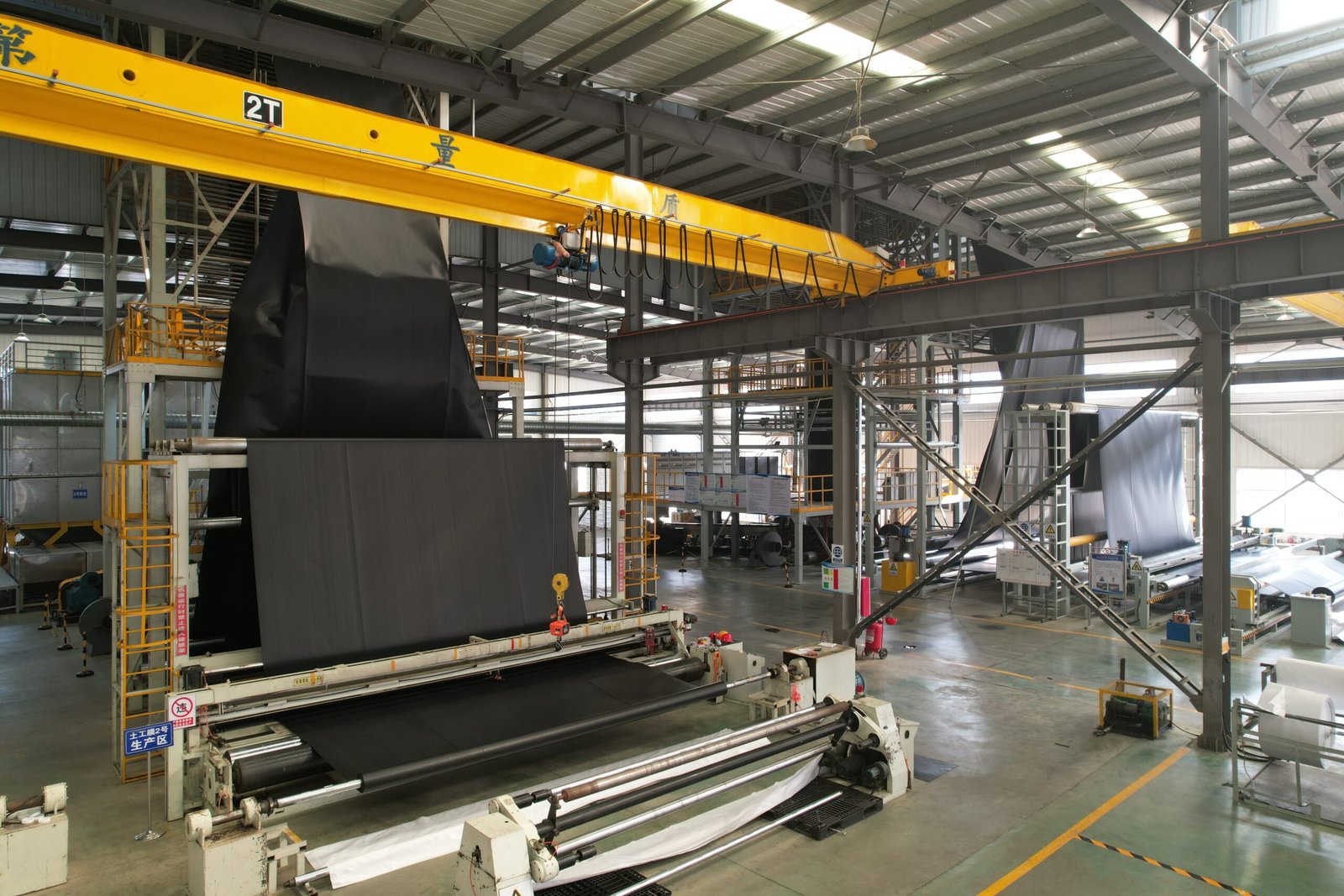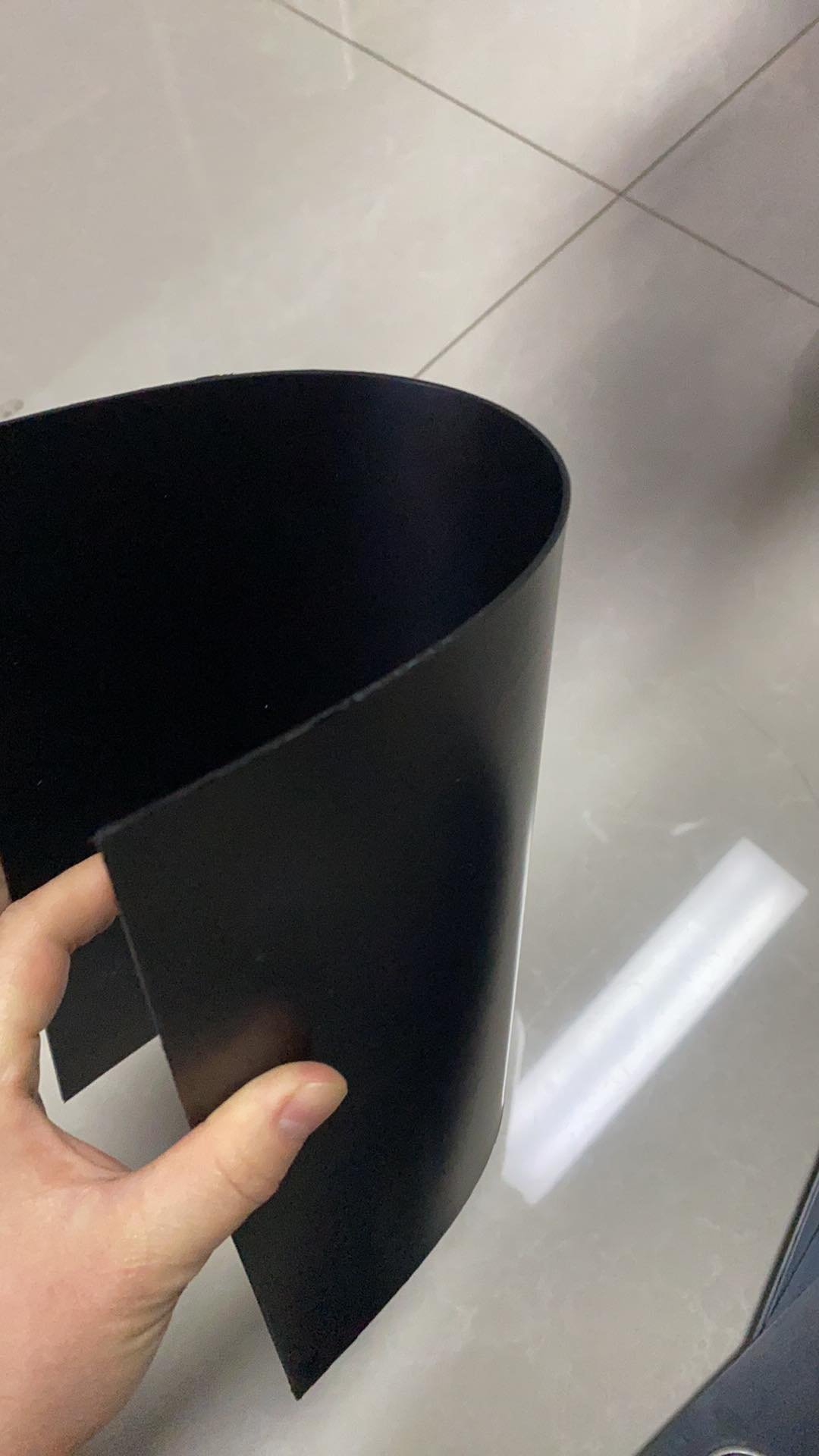
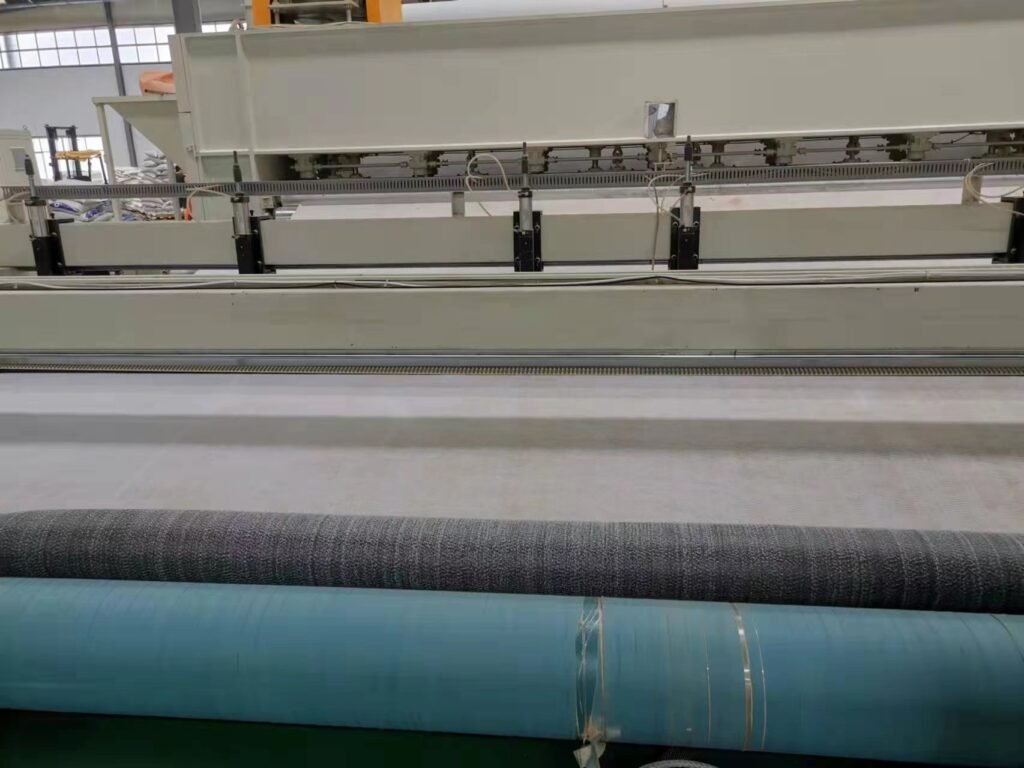
A geosynthetic clay liner (GCL) is comprised of two geotextiles that are needlepunched together, encapsulating a layer of sodium bentonite clay between them. GCLs are known for having consistent, very low permeability. They have the unique ability to seal around penetrations, self-heal punctures, and self-seam at the overlaps. BPM Geosynthetics manufactures and supplies high quality geosynthetic clay liners in bulk in custom sizes and properties at very competitive factory prices. We will discuss geosynthetic clay liner types, properties, applications and how to install them.
1.What is Geosynthetic clay liner
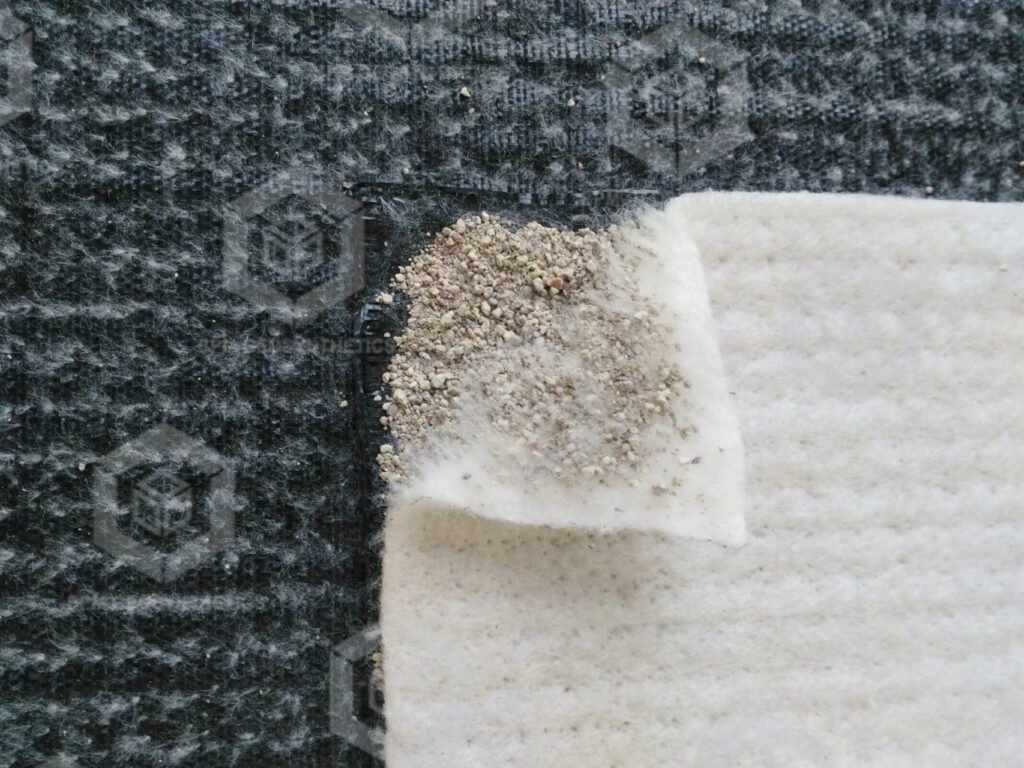
Geosynthetic Clay Liner is a high-performance needle-punched environmentally friendly reinforced composite material that combines two layers of durable geotextile outer layers with a uniform core of natural sodium bentonite to form a hydraulic barrier.Geosynthetic clay liner typically consists of three primary components that work together to provide its functionality:
1.1 Sodium Bentonite Clay
At the core of a Geosynthetic clay liner is a layer of natural sodium bentonite clay. This clay possesses exceptional water absorption and swelling properties. When hydrated, it forms a low-permeability barrier that effectively controls the flow of fluids.
1.2 Geotextiles
Geotextiles, typically crafted from woven or non-woven synthetic fibers, encapsulate the bentonite clay layer. These geotextiles serve multiple purposes within the GCL system. They provide reinforcement, separation, and filtration functions. By distributing loads, they prevent the mixing of clay with adjacent soils, control the movement of fine particles, and allow water to permeate through.
1.3 Bonding Agents
Geosynthetic clay liner include bonding agents like powdered sodium bentonite or polymers to enhance the interaction between the geotextiles and the bentonite clay. These bonding agents contribute to the overall integrity of the GCL during installation and usage, ensuring its effectiveness.
2.What are the Features of Geosynthetic clay liner ?
Better hydraulic performance
Compacted clay liner replacement
Wider temperature spectrum
Consistent quality
Granular bentonite providing consistent hydraulic performance
Durable Needle punched reinforcement and shear strength
Reduced carbon footprint
Simple overlap seams
3.What is the best Geosynthetic clay liner Specifications
Properties | Unit | TestMethod | Frequency | Value |
Geosynthetic clay liner Property | ||||
Bentonite mass/g/m2 | g/m2 | ASTM 5993 | 4000m2 | 3600g/m2 MARV |
Tensile Strength | kN/m | ASTM 6768 | 4000m2 | 6kN/m MARV |
Peel Strength | N | ASTM 4632 | 4000m2 | 65N MARV |
Hydraulic conductivity | cm/s | ASTM 5887 | periodically | 5×102cm/sec MARV |
Shear Strength | kPa | ASTM 6243 | periodically | 24 kPa Typical |
Cap nonwoven geotextile | g/m2 | ASTM 5261 | 20,000m2 | 200 g/m2 MARV |
Bentonite property | ||||
Swell index | Kg | ASTM 5890 | 50,000Kg | 24ml/2g MARV |
Moisture content | % | ASTM 4643 | 50,000Kg | 12% max |
Fluid loss | ml | ASTM 5891 | 50,000Kg | 18ml max |
4.Applications of Geosynthetic clay liner ?
4.1 Landfill Liners and Caps: GCL is commonly used as part of landfill liner systems to contain and prevent the migration of leachate (liquid waste) into the surrounding soil and groundwater.
4.2 Containment Applications: GCL is employed in various containment applications, such as storage ponds, lagoons, and tanks. They provide an impermeable barrier that prevents the seepage of liquids and helps contain hazardous substances.
4.3 Mining Applications: GCL is used in mining operations for applications such as tailings dams, heap leach pads, and other containment structures.
4.4 Water and Wastewater Applications: GCL is used in the construction of reservoirs, ponds, canals, and other water containment structures.
4.5 Erosion Control: GCL is used in erosion control applications to stabilize slopes, embankments, and channels.
4.6 Gas Barrier Systems: GCL is used incorporated into gas barrier systems to prevent the migration of gases, such as methane or radon.
4.7 Remediation Projects: GCL is used in environmental remediation projects to contain and control the spread of contaminants.
4.8 Pond and Reservoir Liners: GCL is utilized for lining ponds, reservoirs, and other water containment structures.

5. What is the application of geosynthetic clay liner?
5.1 Areas with high groundwater levels
In areas with high groundwater levels, the ground is vulnerable to groundwater penetration and erosion. The use of geosynthetic clay liner can effectively prevent groundwater penetration and protect the stability of the ground.
5.2 Areas with soft soil:
In areas with soft soil, the ground is easily affected by soil erosion and settlement. The use of geosynthetic clay liner can effectively prevent soil erosion and foundation settlement and protect the stability of the ground.
5.3 Areas with large slopes:
In areas with large slopes, the ground is easily affected by water erosion, and the use of geosynthetic clay liner can effectively prevent water erosion and protect the stability of the ground.
5.4 Waterproof treatment of underground buildings:
In the waterproof treatment of underground buildings, the use of geosynthetic clay liner can effectively prevent groundwater penetration and leakage, and protect the structure and equipment of buildings.
6. How to Install Geosynthetic clay liner?
6.1 Preparation before laying: Before laying the Geo clay liner, the base layer needs to be cleaned and treated to ensure that the base layer is flat, clean, and free of loose substances and sharp objects. At the same time, it is also necessary to inspect the GCL to ensure that the quality and specifications of the material meet the construction requirements.
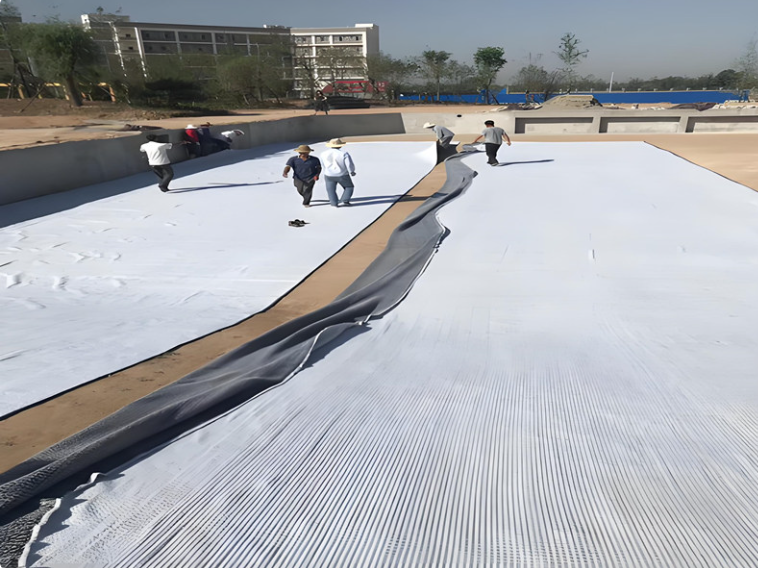
6.2 Laying of Geosynthetic Clay Liner: lay the Geo clay liner on the base layer according to the design requirements, and pay attention to ensure that the Geo clay liner is flat, tight and wrinkle-free. In the laying of the Geo clay liner, the joints of the liner need to be processed by welding or bonding to ensure the waterproof effect of the entire waterproof system.
6.3 Compaction and coverage of Geosynthetic Clay Liner: After the Geo clay liner is laid, it needs to be compacted to tightly combine the Geo clay liner with the base layer. An overlay is then added to protect the Geo clay liner from damage and also improve the compression resistance of the waterproofing system.
6.4 Construction quality control: In the construction process of Geo clay liner, it is necessary to strictly control the construction quality to ensure the waterproof effect and service life. For example, it is necessary to pay attention to the welding quality of the Geo clay liner, the treatment of the seams, the compaction quality, the thickness and quality of the covering layer and other details.
Conclusion:
Geosynthetic Clay Liners (GCLs) are versatile and highly efficient solutions for a wide range of geotechnical and environmental engineering projects. Their unique combination of hydraulic performance and mechanical robustness makes them an invaluable option for projects that require containment, erosion control, and environmental protection. GCLs provide a multifaceted and reliable approach to address the complex challenges faced in various engineering applications, ensuring optimal performance and long-term durability.
Any questions, please contact us.