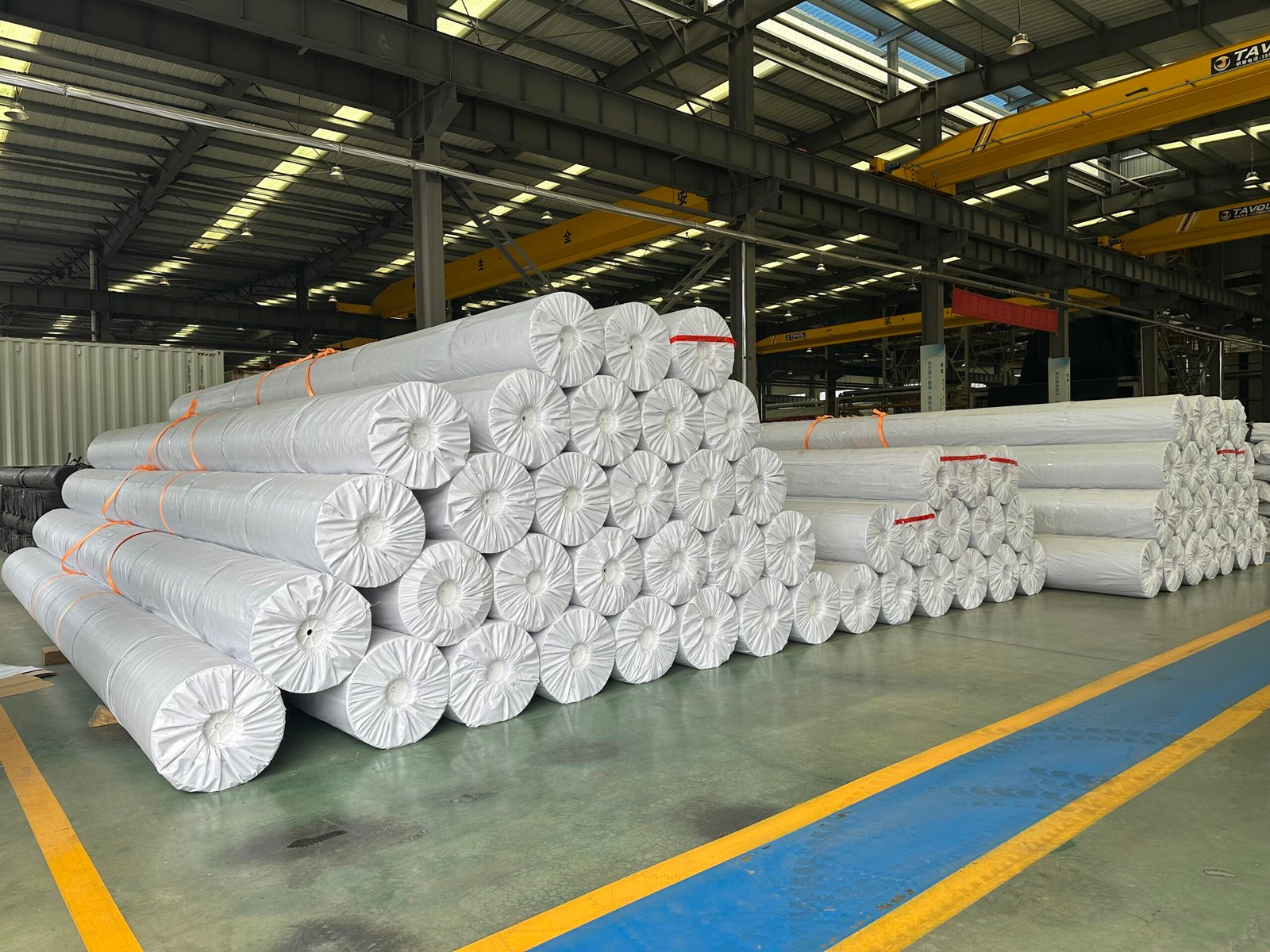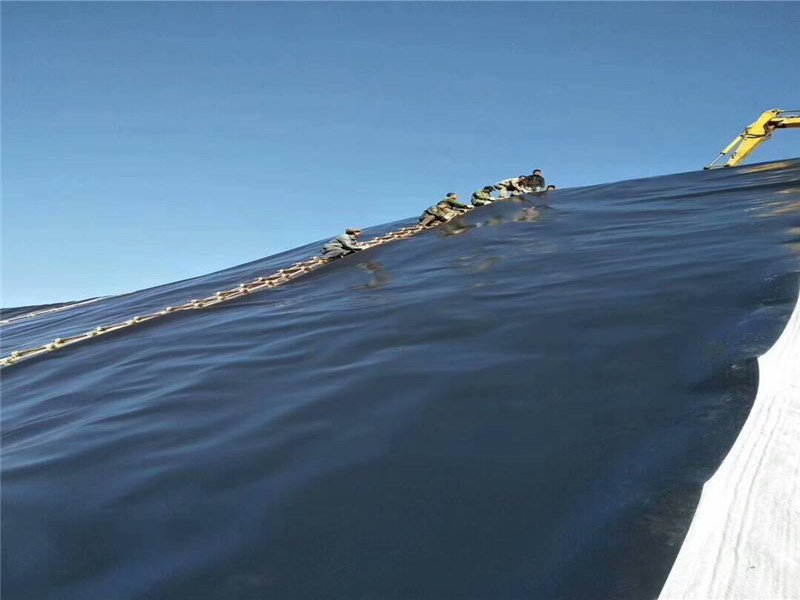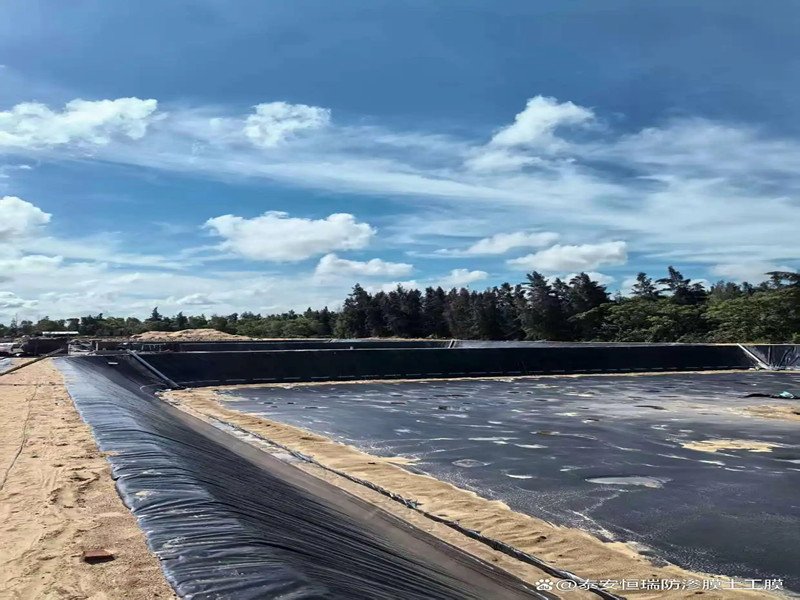
HDPE geomembrane liners are the gold standard in modern containment engineering, offering unmatched durability, chemical resistance, and impermeability for critical environmental protection applications. As industries such as waste management, mining, agriculture, and water conservation face increasingly stringent regulations, understanding the specifications, properties, and proper selection of HDPE geomembrane liners has become essential for engineers, contractors, and project managers worldwide. This comprehensive BPM Geosynthetics team guide explores everything you need to know about HDPE geomembrane liners—from their fundamental characteristics to installation best practices—providing data-driven insights to help you make informed decisions for your containment projects.
1. What Is HDPE Geomembrane Liners?
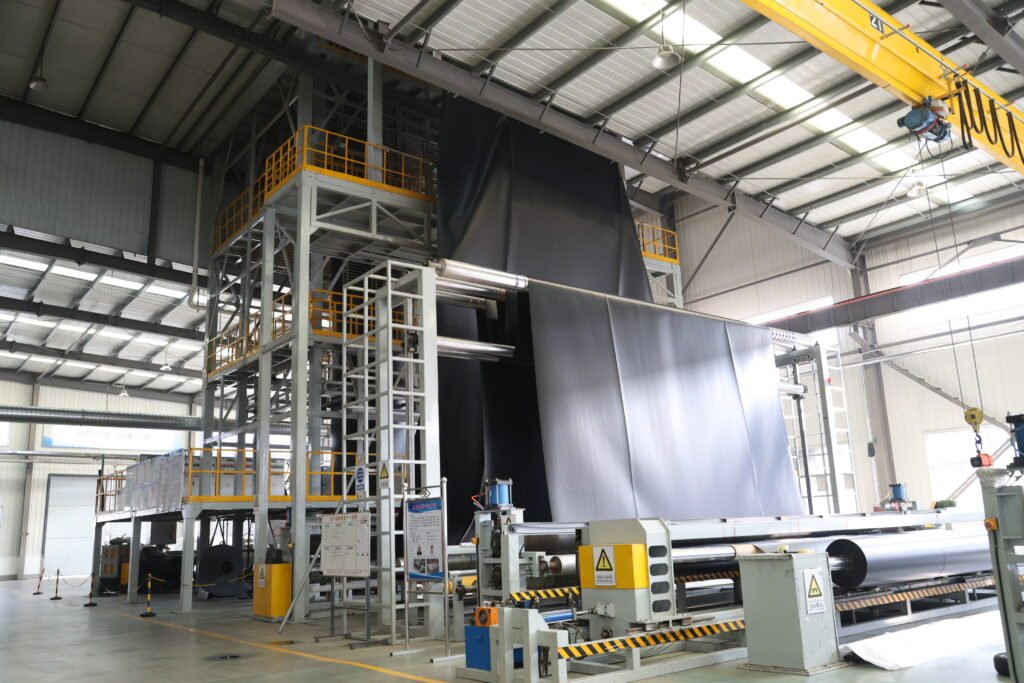
HDPE geomembrane liner is a synthetic, impermeable barrier manufactured from high-density polyethylene resin, designed to prevent the migration of liquids, gases, and contaminants in civil and environmental engineering applications. HDPE geomembranes represent the most widely used category of geomembranes globally, accounting for over 60% of the geomembrane market due to their exceptional performance characteristics and cost-effectiveness.
1.1 Applications of HDPE Geomembrane Liners
HDPE geomembrane liners serve critical functions across diverse industries due to their superior containment capabilities:
Landfill Liners and Caps: Primary and secondary containment systems for municipal solid waste (MSW) and hazardous waste landfills, preventing leachate migration into groundwater
Mining Operations: Heap leach pads, tailings impoundments, and process solution ponds containing acidic or caustic leachates
Water Management: Potable water reservoirs, irrigation canals, wastewater treatment lagoons, and stormwater detention systems
Energy Sector: Frac pits, produced water containment, and coal ash impoundments
Agriculture: Anaerobic digesters, manure storage lagoons, and irrigation pond liners
Industrial Containment: Secondary containment for tank farms, chemical processing facilities, and oil storage terminals
The global HDPE geomembrane market is projected to grow from $1.8 billion in 2023 to $3.2 billion by 2030, driven by increasing environmental regulations, water scarcity concerns, and the expansion of mining and waste management infrastructure in developing economies.
2. Key Properties and Specifications of HDPE Geomembrane Liners
HDPE geomembrane liners are engineered to meet rigorous performance criteria that ensure decades of reliable service. Below are the critical properties that distinguish HDPE geomembranes as the preferred choice for critical containment applications.
Impermeability
The defining characteristic of HDPE geomembrane liners is their exceptional impermeability. With permeability coefficients as low as 1×10⁻¹⁷ cm/s, HDPE liners are virtually impermeable to water and most liquids. This property makes them ideal for applications where zero leakage tolerance is required, such as hazardous waste landfills and mining heap leach operations. The impermeability of HDPE is approximately 1,000 times lower than compacted clay liners, providing superior protection against groundwater contamination.
Chemical Resistance
HDPE geomembrane liners demonstrate outstanding resistance to a broad spectrum of chemicals, including:
- Strong acids (pH 1-2) and bases (pH 12-14)
- Hydrocarbons and petroleum products
- Heavy metals and mining reagents (cyanide, sulfuric acid)
Municipal and industrial wastewater constituents
HDPE liners can withstand exposure to over 80 chemical compounds without significant degradation, making them the material of choice for aggressive chemical environments where other geomembrane types would fail.
Mechanical Strength
HDPE geomembrane liners exhibit superior mechanical properties compared to other geomembrane materials:
| Property | Typical Range | Test Method |
| Tensile Strength | 30–80 kN/m | ASTM D6693 |
| Elongation at Break | 400–700% | ASTM D6693 |
| Tear Resistance | 100–400 N | ASTM D1004 |
| Puncture Resistance | 200–600 N | ASTM D4833 |
| Seam Peel Strength | ≥ 70% of parent material | ASTM D6392 |
UV and Weather Resistance
When formulated with 2-3% carbon black and antioxidant stabilizers, HDPE geomembrane liners can withstand prolonged UV exposure for 50+ years in exposed applications. The carbon black serves as both a UV stabilizer and a free-radical scavenger, preventing polymer chain scission and maintaining material integrity under harsh weather conditions, including extreme temperatures ranging from -60°C to +80°C.
Environmental Stress Crack Resistance (ESCR)
HDPE geomembrane liners manufactured to GRI-GM13 standards must demonstrate excellent resistance to environmental stress cracking—a phenomenon where polymers fail under sustained stress in the presence of surface-active agents. High-quality HDPE geomembranes achieve ESCR values exceeding 3,000 hours in the SP-NCTL (Single Point Notched Constant Tensile Load) test, ensuring long-term durability under stress concentrations at seams, scratches, or geomembrane-textured asperities.
3. HDPE Geomembrane Liner Types and Textures
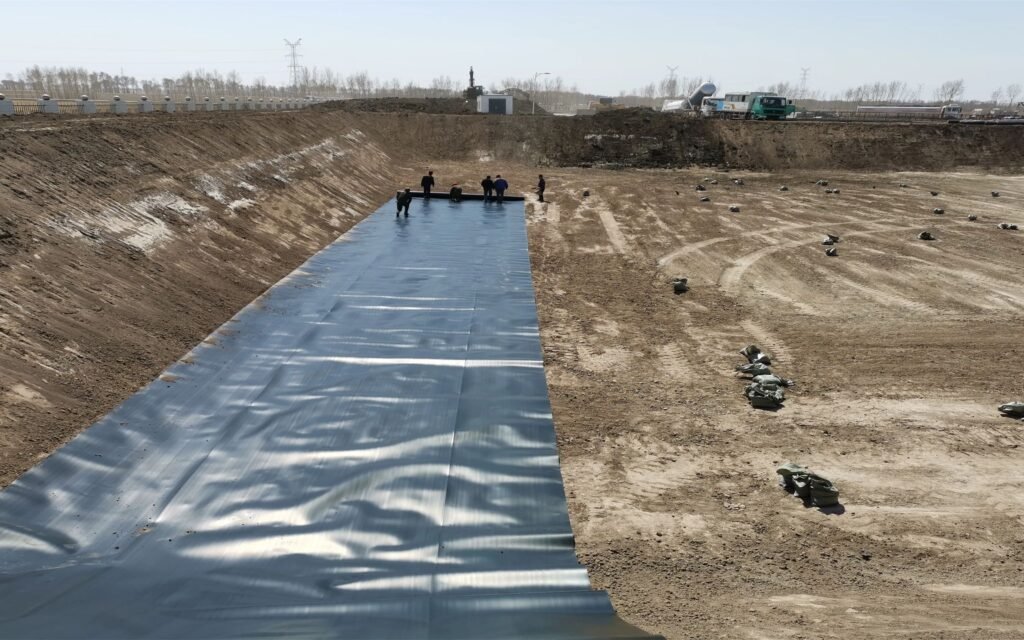
HDPE geomembrane liners are available in various formulations and surface configurations to meet specific project requirements:
Smooth HDPE Geomembrane Liners
Smooth HDPE geomembranes feature flat, glossy surfaces ideal for applications requiring maximum chemical resistance and minimal friction. These liners are commonly used in:
- Landfill bottom liners where maximum chemical containment is prioritized
- Wastewater treatment lagoons
- Potable water reservoirs
- Secondary containment systems on flat surfaces
Textured HDPE Geomembrane Liners
Textured HDPE geomembranes incorporate roughened surfaces (either single-sided or double-sided) to enhance interface friction angles, critical for slope stability applications:
| Texture Type | Friction Angle | Application |
| Smooth | 15–20° | Flat surfaces, maximum chemical resistance |
| Single-Sided Textured | 20–26° | Moderate slopes (up to 3H:1V) |
| Double-Sided Textured | 26–32° | Steep slopes (up to 2H:1V) |
| Co-Extruded Textured | 28–35° | Critical slope applications |
Textured HDPE geomembrane liners are essential for landfill side slopes, mining heap leach pads on steep terrain, and any application where liner slippage on subgrade or cover soil must be prevented.
White HDPE Geomembrane Liners
White-surface HDPE geomembrane liners incorporate a white co-extruded layer that reduces surface temperatures by 30-50% compared to black liners. This temperature reduction minimizes thermal expansion/contraction cycles, reduces wrinkles during installation, and improves visibility for damage inspection. White HDPE liners are particularly valuable for:
- Potable water reservoirs (reducing algae growth)
- Exposed applications in hot climates
- Projects requiring enhanced aesthetic appearance
4. HDPE Geomembrane Liner vs. Other Geomembrane Types
Understanding how HDPE geomembrane liners compare to alternative materials is crucial for proper material selection:
| Property | HDPE | LLDPE | PVC | EPDM |
| Density (g/cm³) | 0.934–0.940 | 0.915–0.925 | 1.2–1.4 | 1.1–1.2 |
| Tensile Strength (kN/m) | 30–80 | 20–50 | 15–30 | 5–15 |
| Elongation (%) | 400–700 | 600–800 | 200–400 | 300–500 |
| Permeability (cm/s) | 1×10⁻¹⁷ | 1×10⁻¹⁶ | 1×10⁻¹² | 1×10⁻¹⁴ |
| Chemical Resistance | Excellent | Good | Moderate | Limited |
| UV Resistance | Excellent | Good | Moderate | Excellent |
| Flexibility | Low | Very High | High | Very High |
| Service Life (years) | 50+ | 20–30 | 20–30 | 25–35 |
| Cost | Moderate | Moderate | Low | High |
HDPE vs. LLDPE Geomembrane Liners
While LLDPE (Linear Low-Density Polyethylene) offers superior flexibility and easier installation over irregular surfaces, HDPE geomembrane liners provide:
-
Higher tensile strength and puncture resistance
-
Better chemical resistance for aggressive environments
-
Longer service life in buried applications
-
Lower coefficient of thermal expansion
HDPE is preferred for critical containment where long-term durability outweighs installation convenience, while LLDPE may be suitable for less demanding applications such as decorative ponds or temporary containment.
HDPE vs. PVC Geomembrane Liners
PVC geomembranes offer easier installation and better conformance to irregular surfaces, but HDPE geomembrane liners outperform PVC in:
Chemical resistance (HDPE resists 3x more chemical compounds)
UV stability without additional stabilizers
Long-term dimensional stability (PVC can experience plasticizer migration)
Regulatory acceptance for hazardous waste containment
PVC remains viable for irrigation canals and decorative water features where chemical exposure is minimal and flexibility is prioritized.
5. Installation Best Practices for HDPE Geomembrane Liners
Proper installation is critical to achieving the design performance of HDPE geomembrane liners. Even the highest-quality liner will fail if improperly installed.
Subgrade Preparation
The subgrade must be properly prepared to prevent puncture and ensure intimate contact with the liner:
- Remove all sharp objects, rocks larger than 1/2 inch, and protruding debris
- Achieve 95% compaction for soil subgrades
- Maintain moisture content within 2% of optimum to prevent desiccation cracking
- Provide minimum 6-inch compacted soil cushion or geotextile protection layer for rough subgrades
Deployment and Panel Layout
HDPE geomembrane liners are typically deployed using spreader bars or mechanical equipment to prevent damage:
- Allow panels to relax for 24 hours before seaming to accommodate thermal expansion
- Minimize wrinkles while avoiding excessive tension that could stress the material
- Overlap panel edges 4–6 inches for welding operations
- Avoid dragging panels across rough surfaces
Welding and Seaming
HDPE geomembrane liners require thermal welding to create continuous, leak-proof barriers:
Hot Wedge Welding: The primary method for joining HDPE panels, creating dual-track seams with an air channel for leak detection. Wedge temperatures typically range from 400–450°F (200–230°C) with welding speeds of 2–4 feet per minute.
Extrusion Welding: Used for repairs, details, and areas inaccessible to wedge welders. Extrusion welding requires skilled technicians to ensure proper fusion between the extrudate and parent material.
Seam Testing: All seams must be tested using:
- Visual inspection for continuity and uniformity
- Air channel pressurization testing (5 psi for 5 minutes minimum)
- Vacuum box testing for extrusion welds
- Destructive peel and shear testing (minimum 1 sample per 500 linear feet of seam)
Quality Assurance
Comprehensive CQA (Construction Quality Assurance) programs for HDPE geomembrane liner installation include:
- Daily calibration of welding equipment
- Documentation of seam locations and test results
- Integrity testing of the completed liner (electronic leak detection for exposed liners)
- Repair protocols for any defects identified
6.Maintenance and Long-Term Performance of HDPE Geomembrane Liners
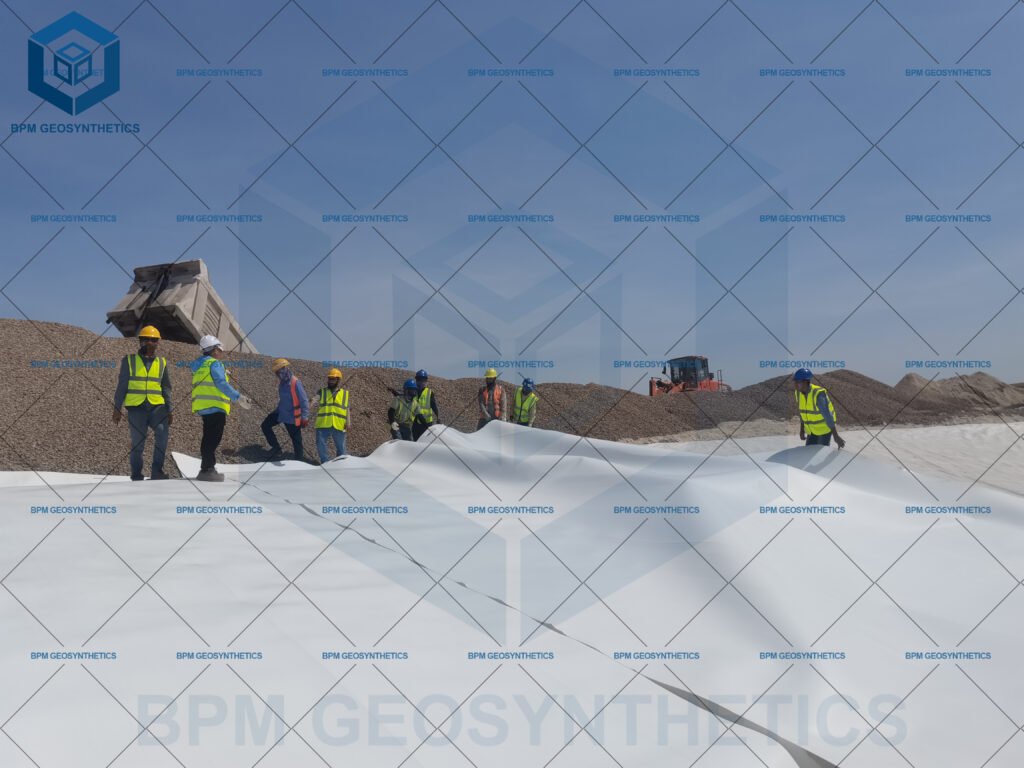
HDPE geomembrane liners are designed for minimal maintenance over their service life, but periodic inspection ensures continued performance:
Routine Inspections
Annual visual inspections for exposed liners to identify UV degradation, physical damage, or vandalism
- Monitoring of leachate collection systems for unexpected flow increases indicating potential liner breach
- Inspection of anchor trenches and perimeter details for erosion or displacement
Repair Procedures
Small damages to HDPE geomembrane liners can be repaired using:
- Patch welding with same-thickness material (for holes < 6 inches)
- Extrusion welding for tears and seam defects
- Boot installations for pipe penetrations requiring modification
Service Life Prediction
HDPE geomembrane liners in buried applications have demonstrated service lives exceeding 50 years with minimal degradation. Accelerated aging studies using Arrhenius extrapolation predict:
- 50+ year service life at 20°C for properly stabilized HDPE
- 30+ year service life for exposed applications in temperate climates
- Chemical exposure may reduce service life depending on specific reagents and concentrations
7. Standards and Specifications for HDPE Geomembrane Liners
Quality HDPE geomembrane liners must comply with recognized industry standards:
GRI-GM13 (High-Density Polyethylene Geomembrane Specification)
The Geosynthetic Institute’s GM13 standard specifies minimum properties for HDPE geomembranes:
- Density: ≥ 0.939 g/cm³
- Tensile properties:
- Minimum yield and break strengths by thickness
- ESCR: ≥ 3,000 hours (SP-NCTL)
- Oxidative induction time (OIT): ≥ 100 minutes (standard), ≥ 400 minutes (high-pressure)
ASTM Standards
- ASTM D5199: Nominal thickness measurement
- ASTM D5391: Surface resistivity (static dissipation applications)
- ASTM D5641: Factory seam strength and peel adhesion
- ASTM D5820: Air channel integrity testing
Project-Specific Specifications
Many owners develop project-specific specifications that may exceed GRI-GM13 requirements for critical applications, including:
- Higher ESCR requirements (5,000+ hours) for aggressive chemical environments
- Enhanced OIT for high-temperature applications
- Stricter dimensional tolerances for automated deployment systems
Final Thoughts
HDPE geomembrane liners represent the pinnacle of containment technology, offering unmatched chemical resistance, mechanical strength, and long-term durability for critical environmental protection applications. Their proven performance in the world’s most demanding projects—from Superfund landfill remediation to massive mining heap leach operations—demonstrates their reliability when properly specified and installed.
By understanding the properties, applications, and installation requirements of HDPE geomembrane liners, you can ensure decades of reliable containment performance while meeting regulatory requirements and protecting environmental resources. For project-specific guidance and technical support, consult with established HDPE geomembrane manufacturers and installation contractors who can provide tailored solutions for your unique containment challenges.