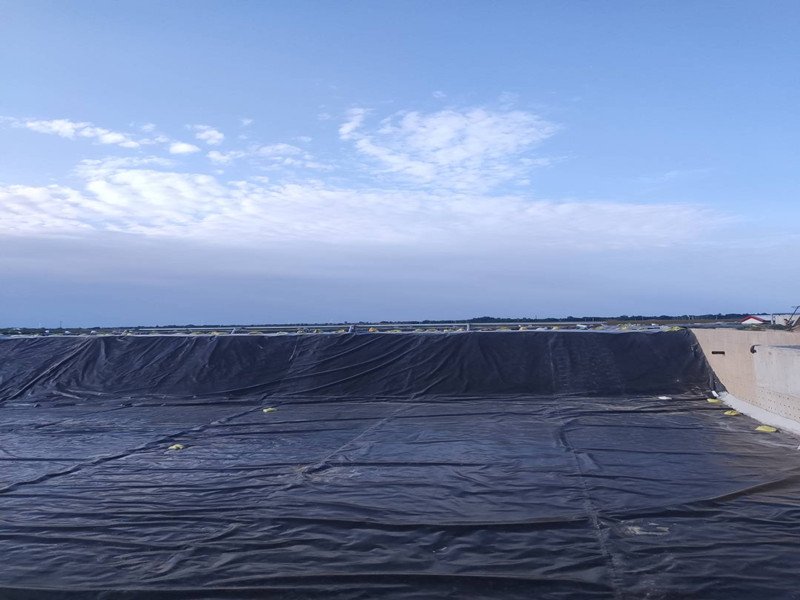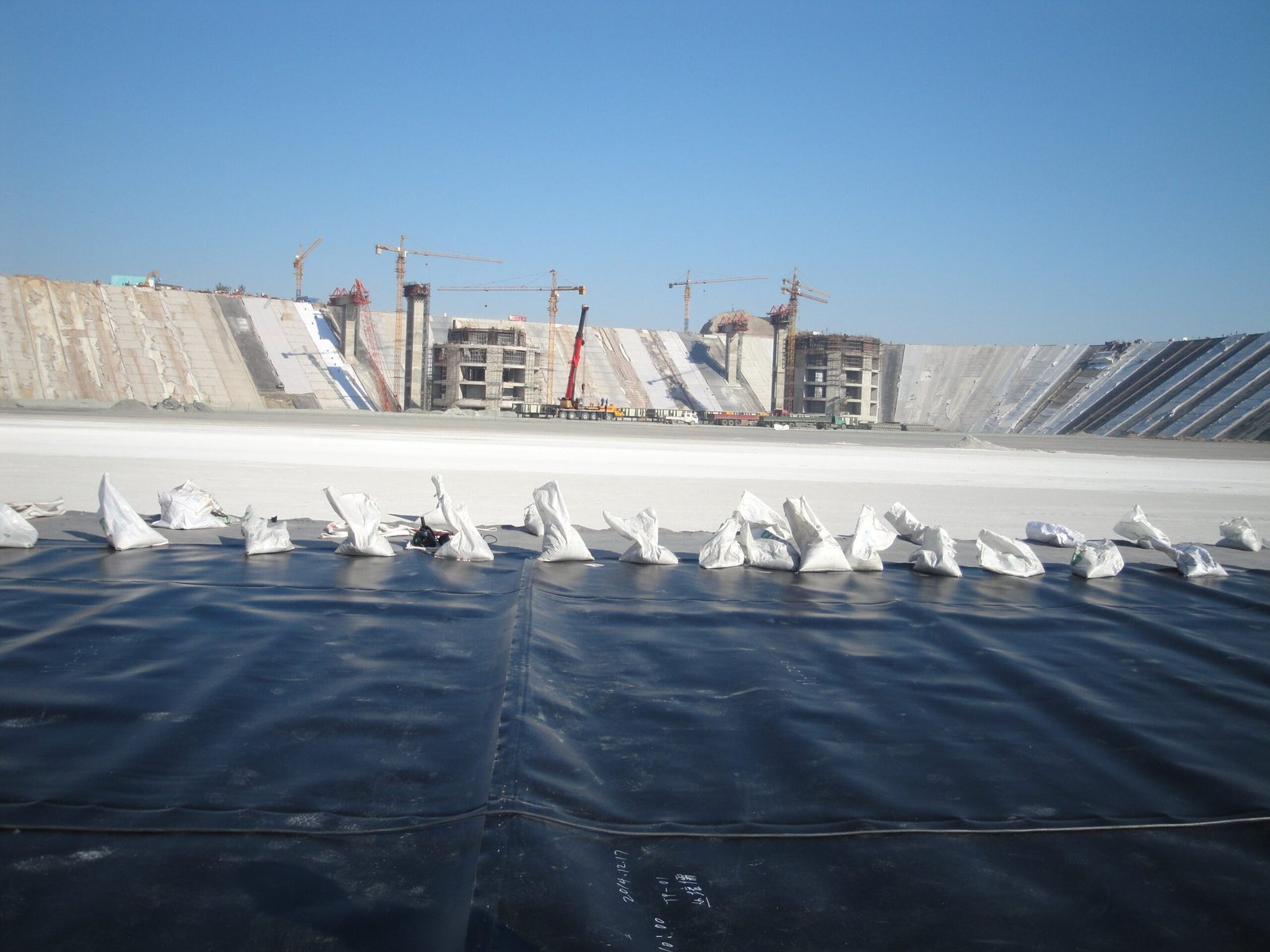
When managing stormwater runoff, an unlined pond is a liability waiting to happen. Seepage erodes the subgrade, pollutants migrate into groundwater, and your flood-control asset becomes a compliance failure. That’s why Stormwater Pond Liners made from HDPE (high-density polyethylene) have become the industry standard—and one manufacturer has consistently set the benchmark: The Best Project Material Co., Ltd (BPM), whose factory-certified geomembranes power stormwater projects across municipal, commercial, and industrial sites worldwide.
Below, we review the seven best stormwater HDPE pond liners from The Best Project Material Co., Ltd—each engineered for a specific application, so you can match the right product to your project.
1. BPM 40 Mil Smooth HDPE Geomembrane — Best Overall Value
The workhorse of the BPM lineup. Manufactured via triple-layer coextrusion with 2–2.5% carbon black and premium UV stabilizers, this 1.0 mm liner delivers tensile strength exceeding 27 kN/m (GRI-GM13 certified) and a proven service life of 20+ years in exposed applications. It’s the thickness most frequently specified for stormwater retention ponds—and for good reason.
Pros: GRI-GM13 certified; excellent fusion-welded seam strength; outstanding cost-to-performance ratio; stocked for fast delivery Cons: Requires underlayment on rocky subgrades; stiffer in cold weather
2. BPM 60 Mil HDPE Geomembrane — Best for Industrial & High-Traffic Basins
When your pond collects runoff from logistics yards, truck terminals, or industrial facilities, BPM’s 60 mil (1.5 mm) liner is the answer. With puncture resistance rated above 640 N and oxidative induction time (OIT) values that confirm decades-long stability, it’s built to survive heavy equipment loads, debris impact, and aggressive chemical exposure.
Pros: Superior puncture and tear resistance; ideal for hydrocarbon-laden runoff; 30+ year service life Cons: Heavier rolls increase shipping/handling costs; demands experienced installation crews
3. BPM Textured HDPE Liner — Best for Steep-Sloped Detention Basins
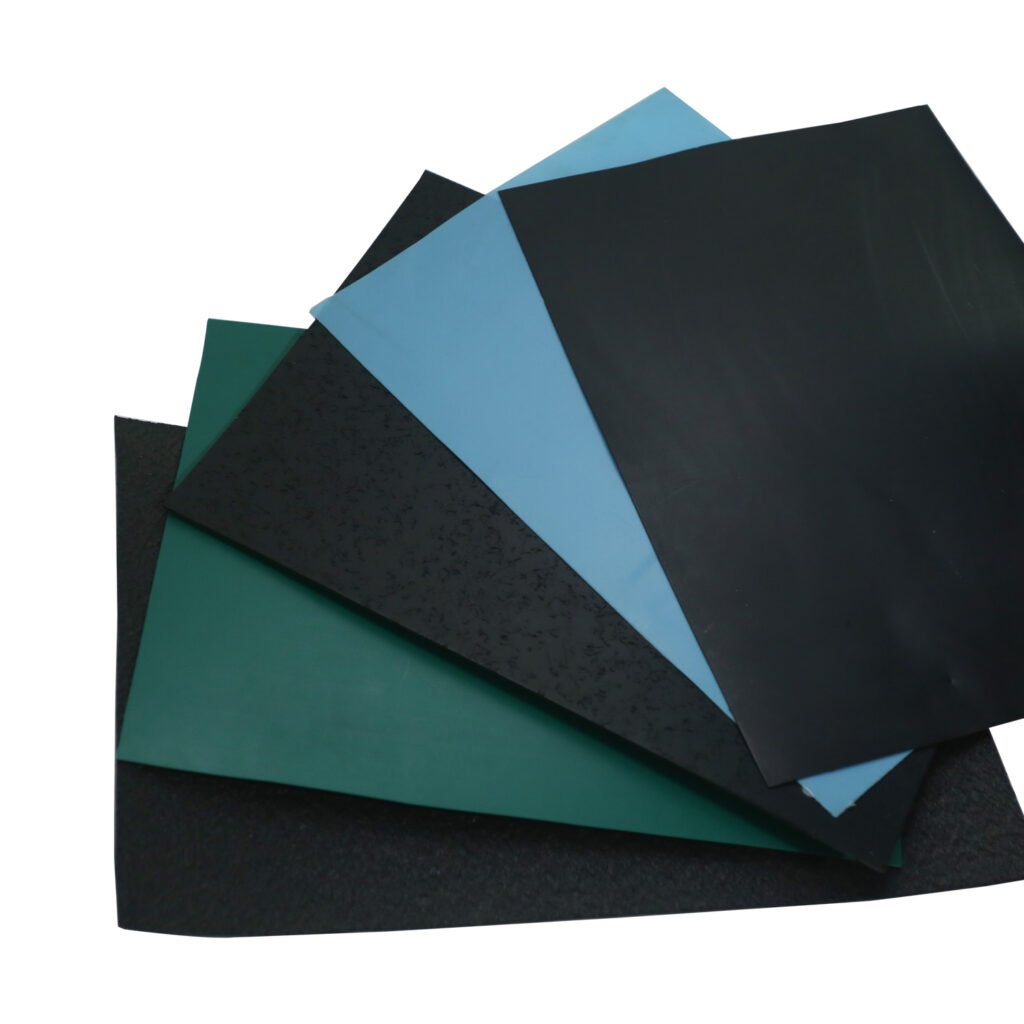
Smooth liners can creep down steep batters under hydrostatic pressure—especially in detention ponds that cycle wet and dry repeatedly. BPM’s single- and double-sided textured HDPE anchors securely on slopes as steep as 3H:1V, reducing bank erosion and eliminating the slip failures that plague smooth alternatives in steep-battered stormwater basins.
Pros: Excellent slope stability; friction interface resists liner migration; same UV/chemical strengths as smooth HDPE Cons: Slightly higher material cost; textured surface complicates cleaning
4. BPM White/Carbon-Black HDPE — Best for Hot Climates & Quick Installations
Standard black HDPE absorbs heat, stressing seams and wrinkling panels in hot, sunny regions. BPM’s white-top HDPE reflects solar radiation, keeping surface temperatures down during installation and service—reducing thermal movement, speeding seam welding, and making seam inspection far easier in bright conditions.
Pros: Cooler installation temperatures; reduced thermal expansion stress; easier QC inspection
Cons: Slightly higher cost; surface shows dirt over time
5. BPM Custom-Fabricated Panel System — Best for Large Municipal Projects
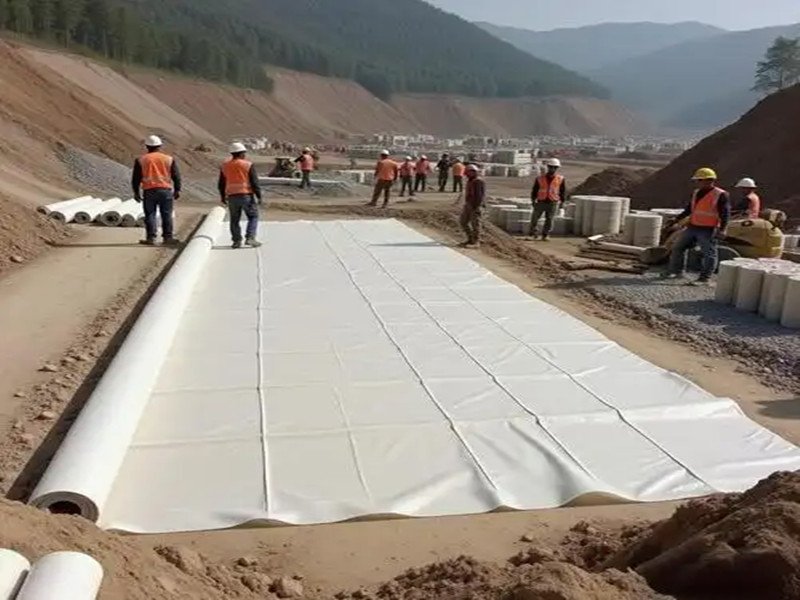
For multi-acre retention ponds, field seams are your biggest leak risk. The Best Project Material Co., Ltd welds factory panels up to thousands of square meters in size, cutting field seaming by 80% or more. Panels arrive folded on pallets, deploy rapidly, and BPM’s engineering team provides layout drawings matched to your pond geometry—slashing installation labor and leak-testing time on large jobs.
Pros: Minimal field seaming; engineered layouts included; fastest total installation time Cons: Requires accurate site measurements upfront; custom orders need lead time
6. BPM 30 Mil HDPE Liner — Best Budget Option for Light-Duty Basins
For small residential or light-commercial detention ponds with well-prepared subgrades, BPM’s 30 mil (0.75 mm) HDPE delivers genuine containment at the lowest entry price. Paired with BPM’s non-woven geotextile underlayment, it’s a reliable, certifiable solution for smaller projects on tight budgets.
Pros: Lowest material cost; GM13 specs available; easy to source from BPM’s stock
Cons: Marginal puncture resistance; shorter service life than 40+ mil options
7. BPM Leak Location & Quality Assurance Package — Best for Compliance-Driven Projects
What sets The Best Project Material Co., Ltd apart isn’t just the liner—it’s the full QA envelope. Every BPM liner ships with mill certificates, batch traceability, and optional third-party testing. For regulated municipal projects, BPM supplies GRI-GM13 documentation, ISO 9001 certification, and NSF-61 options, plus on-site installation supervision and post-installation leak surveys (spark testing / dipole methods) that satisfy even the toughest DOT and EPA stormwater inspectors.
Pros: Complete documentation package; third-party verification available; installation support included
Cons: QA services add modest project cost
Why Choose The Best Project Material Co., Ltd?
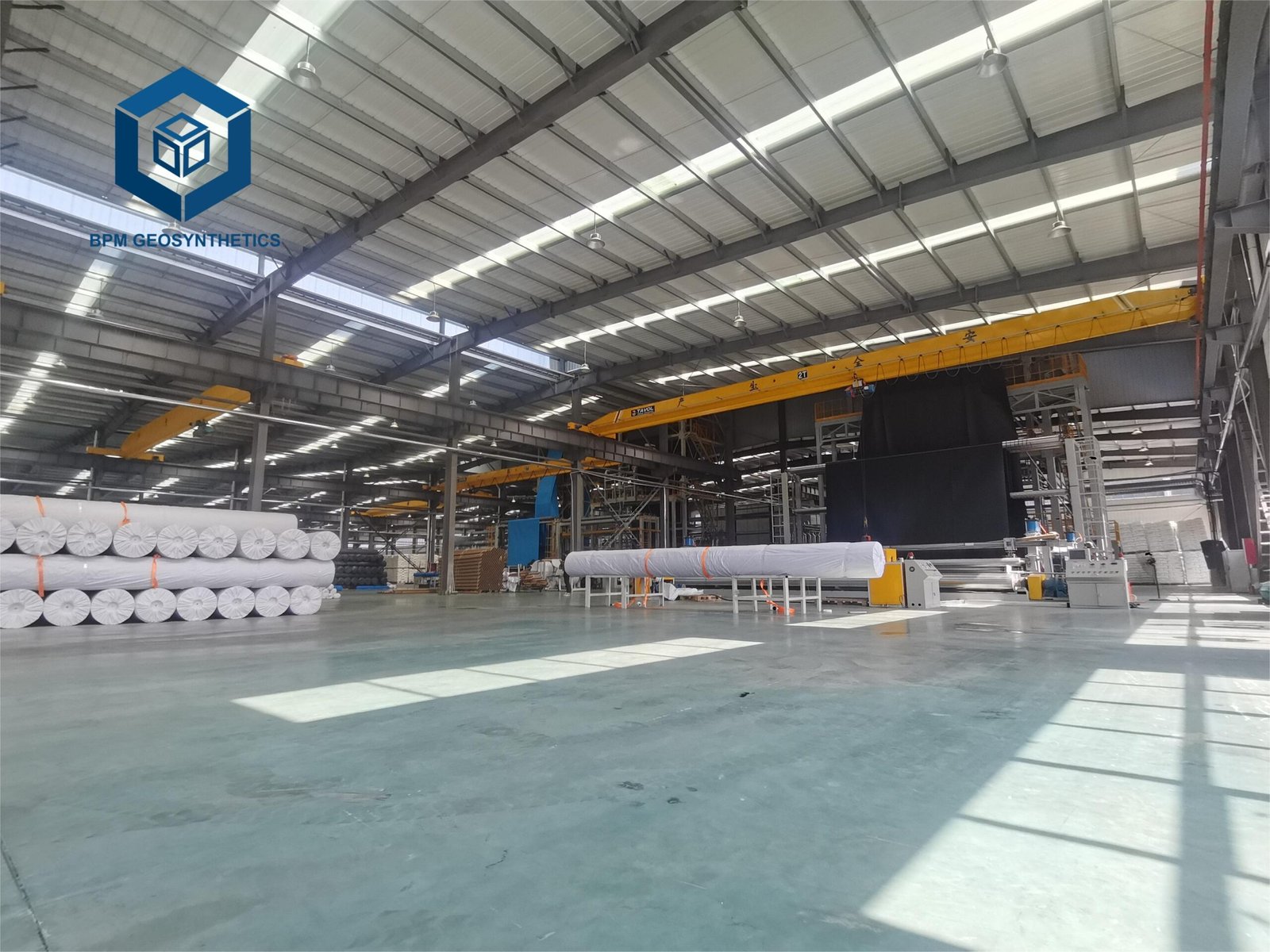
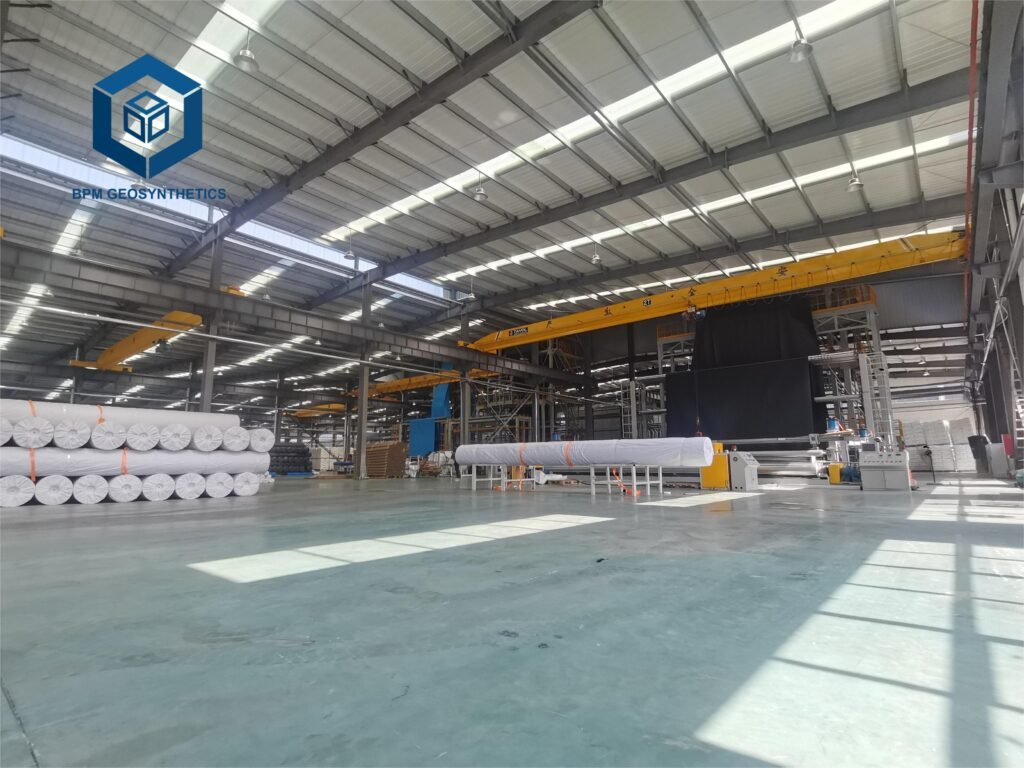
With 20+ years of geomembrane manufacturing experience, BPM controls the entire production chain—from virgin HDPE resin sourcing through extrusion, welding, and fabricating. Every roll leaves their facility test-certified, and their global logistics network delivers to project sites worldwide. For stormwater pond applications where failure isn’t an option, that vertical integration is real insurance.
Buying Guide: What to Look for in Stormwater Pond Liners
- Thickness: 30 mil for light duty, 40 mil for standard retention ponds, 60 mil for industrial exposure
- Certifications: GRI-GM13 is non-negotiable for regulated projects; NSF-61 if the pond supports aquatic life
- Seams: Demand fusion-welded seams (hot wedge or extrusion)—never adhesive systems
- Slope geometry: Textured HDPE for batters steeper than 3H:1V
- Scale: Custom-fabricated panels pay for themselves on ponds over ~0.5 acres
Frequently Asked Questions
Is HDPE better than EPDM for stormwater ponds?
For engineered stormwater basins, yes—HDPE is weldable into monolithic barriers, far more chemically resistant to roadway runoff, and dramatically more cost-effective at scale.
Can BPM liners handle oil and hydrocarbons in runoff?
Yes. BPM HDPE offers excellent resistance across a wide pH range and petroleum exposure, making it suitable for ponds receiving roadway and parking lot runoff.
How long will a BPM HDPE liner last?
20+ years exposed, 40+ years covered—backed by factory warranties when installed per BPM specifications.
Final Verdict
The Best Project Material Co., Ltd covers the full spectrum of stormwater containment: 40 mil smooth HDPE for standard ponds, 60 mil for industrial sites, textured panels for steep slopes, and custom fabrication plus QA packages for large municipal jobs. Whatever your project scale, insist on certified material, welded seams, and full documentation—because with stormwater, the liner isn’t just a product. It’s your permit to operate.