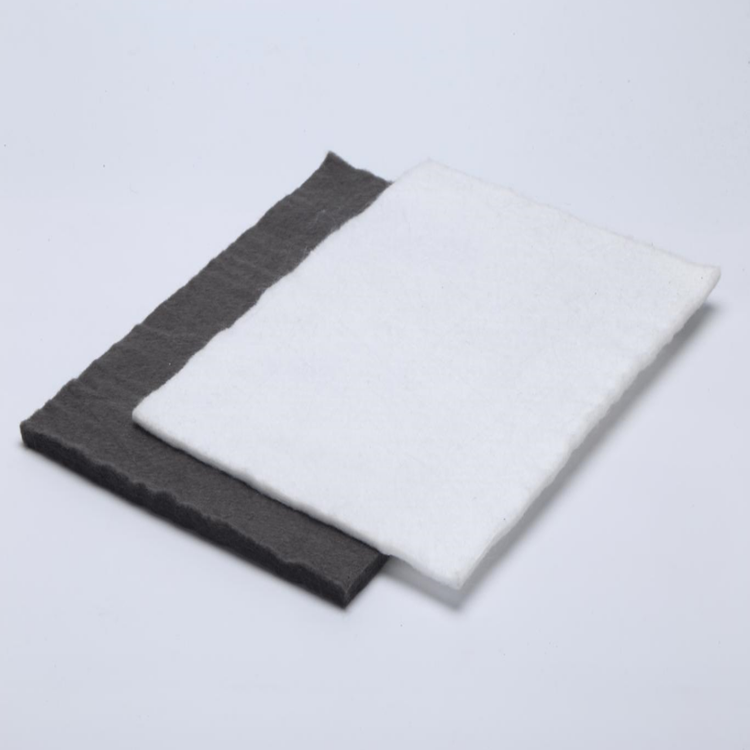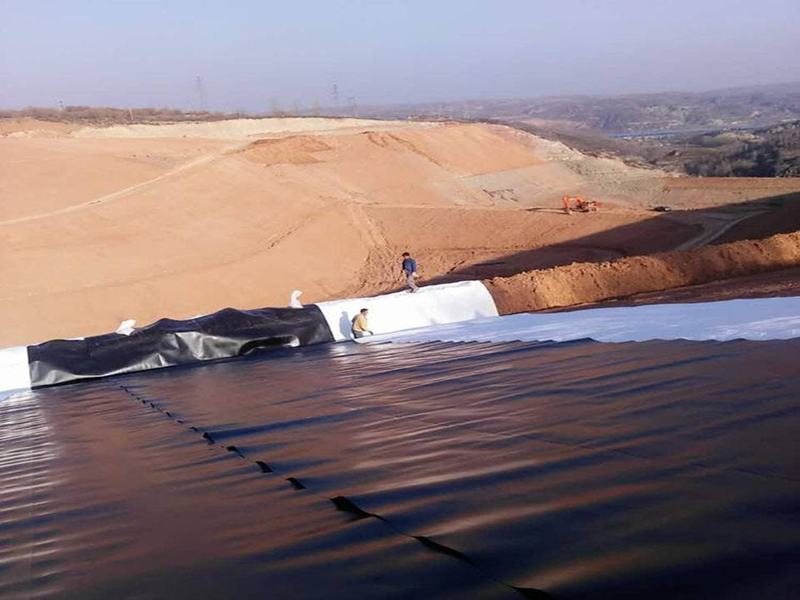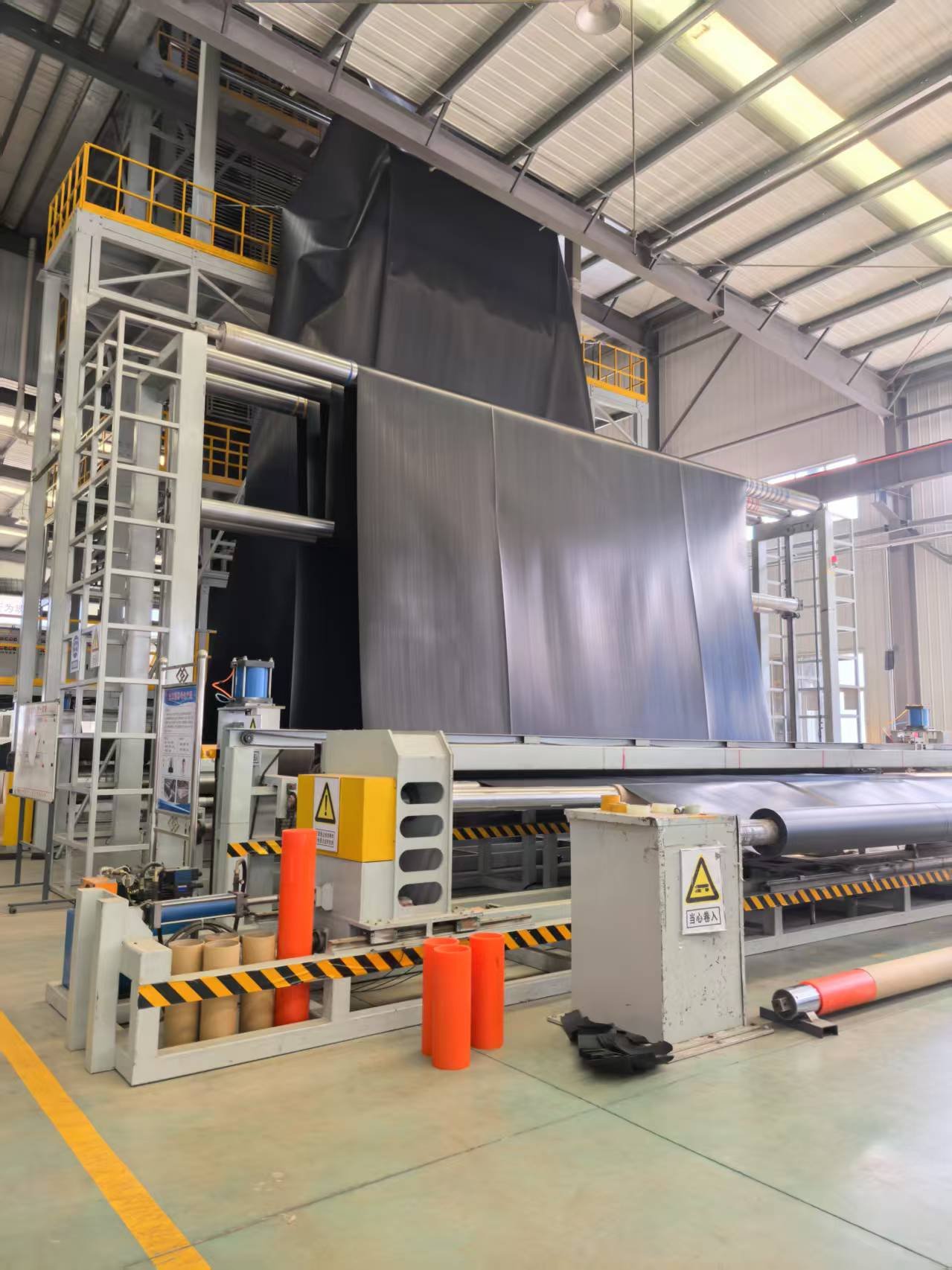
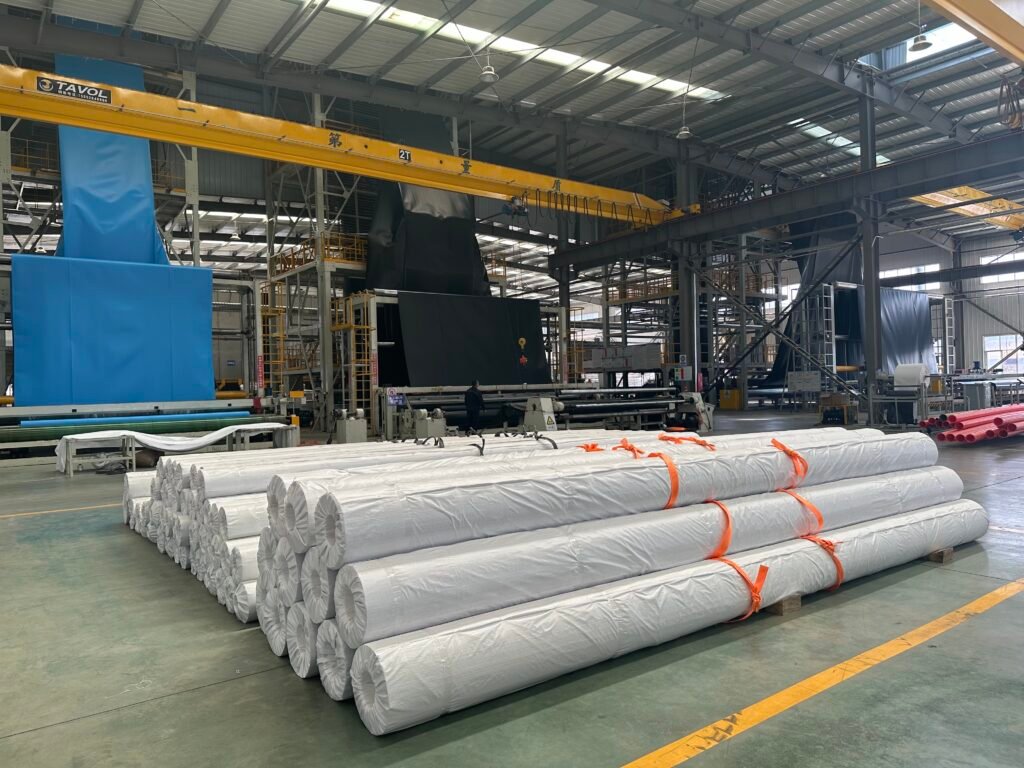
Dam Liner is a robust and impermeable geomembrane made of synthetic polymers such as high-density polyethylene (HDPE) or linear low-density polyethylene (LLDPE), serving as the cornerstone of modern water infrastructure. It effectively seals reservoirs, irrigation canals, and earth dams, preventing leakage losses exceeding 30% compared to unlined systems, while protecting groundwater from contamination. The global geomembrane market is projected to reach USD 2.61 billion in 2026 and grow at a compound annual growth rate (CAGR) of 6.61% to USD 3.6 billion by 2030 (Mordor Intelligence, 2026).
1. What is Dam Liner?
Dam liners are robust geomembranes. They prevent water leakage in dams and reservoirs. Made from HDPE or LLDPE, they offer long service life and high impermeability.
2. Common Applications of Dam Liner
Irrigation and Reservoirs
HDPE liners reduce evaporation by 25–35%. They save water and money. A 2026 Kenya dam used HDPE, saving $28,000.
Hydropower and Flood Control
Textured liners stabilize slopes. They reduce scouring by 85%. A 2024 Peru dam used LLDPE, costing $1.20 per square foot.
Mining Tailings and Wastewater Dams
HDPE liners prevent 99% of leachate migration. They protect the environment. A 2023 South Africa mine used HDPE, saving $150,000.
Agricultural and Aquaculture Ponds
NSF-61 certified liners boost yields by 20%. They are safe for fish. A 2024 Queensland farm used HDPE, reducing costs.
Environmental Remediation Dams
GCL composite materials meet EPA standards. They enhance biodiversity. A 2026 Toronto project used perforated mesh, priced at $0.70 per square foot.
3. What is the Price of the Dam Liner?
Material Type
HDPE is the most common material. It is durable and cost-effective. LLDPE is flexible, suitable for irregular terrain.
High-Density Polyethylene (HDPE)
HDPE costs $0.40–$2.50 per square foot. It has a service life of 40–100 years. A 1.5 mm thick HDPE liner costs $1.00–$1.50 per square foot.
Linear Low-Density Polyethylene (LLDPE)
LLDPE costs $0.50–$2.00 per square foot. It has a service life of 20–50 years. A 1.0 mm thick LLDPE liner costs $0.80–$1.20 per square foot.
Polyvinyl Chloride (PVC)
PVC is affordable, costing $0.30–$1.50 per square foot. It is suitable for small dams. A 0.75 mm thick PVC liner costs $0.50–$0.90 per square foot.
Ethylene-Propylene Rubber (EPDM)
EPDM costs $0.75–$2.50 per square foot. It is suitable for exposed areas. A 1.14 mm thick EPDM liner costs $1.20–$1.80 per square foot.
Thickness
Thicker liners cost more but offer better performance. A 1.5 mm HDPE liner costs $1.20 per square foot.
Project Scale
Larger projects get discounts. A 100,000 square meter dam costs $0.80 per square foot.
Installation Method
Installation costs $0.20–$2.00 per square foot. Thermal wedge welding is common.
Raw Material Quality
Primary materials last longer. Recycled materials are cheaper.
Transportation and Logistics
Shipping costs $0.05–$0.20 per square foot. International shipping adds tariffs.
Maintenance and Service Life Cost
Annual inspection costs $500–$5,000. HDPE liners last 40–100 years.
4. Industry Trends Affecting the Price of Dam Liner
Sustainability
Recycled HDPE prices rise by 12% annually. Mixed materials maintain performance.
Resin Price Fluctuations
Oil-related price fluctuations increase by 3–5%. Bio-resin prices remain stable.
Innovative Configuration
Sensor injection reduces inspection times by half. Nano-additives increase resistance by 20%.
Regulatory Changes
Certification costs increase by 8%. New decrees affect bidding rates.
Market Expansion
The Asia-Pacific region drives market growth. The market is projected to reach $4.7 billion by 2032.
5. Summary
Dam liners are crucial for water management. They prevent leakage and protect the environment. HDPE and LLDPE are common materials. Prices vary based on thickness, project scale, and installation method. Sustainability and innovation drive industry trends. Contact BPM for quality dam liners and expert advice.