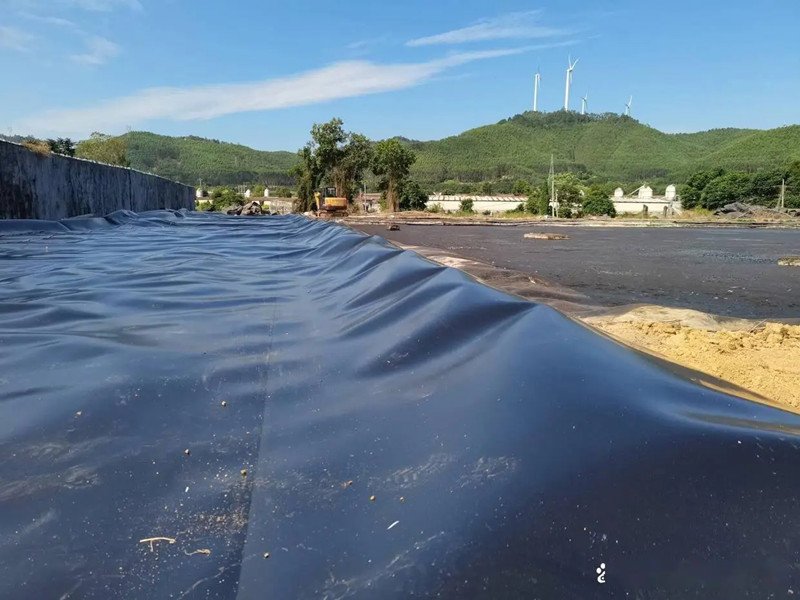
Geotextile cloth, also known as geotextile fabric, consists of permeable synthetic textiles engineered primarily from polypropylene (PP) or polyester (PET). These materials perform essential functions in civil engineering, environmental protection, and infrastructure projects: separation of soil layers, filtration of water while retaining soil particles, drainage of excess moisture, reinforcement of weak soils, and erosion control. Global demand continues to rise with expanding road, railway, landfill, mining, coastal, and hydraulic works. Selecting a reliable supplier requires evaluating production capacity, product range (woven and nonwoven), technical specifications such as unit weight (typically 100–1,200 g/m²), tensile strength (often 5–200 kN/m), permeability, puncture resistance, certifications (ISO, CE, ASTM, GRI), and proven performance in real-world applications.
This guide ranks the Top 6 Global Geotextile Cloth Suppliers based on technical capability, global presence, innovation, product quality, and value for engineers, contractors, and project owners. Detailed specifications, applications, and performance data are provided throughout. The list includes The Project Material Co., Ltd. (BPM Geosynthetics) as a specialized manufacturer and supplier. No other Chinese manufacturers or suppliers are included.
Top 6 Global Geotextile Cloth Suppliers
- Solmax– Best overall for large-scale global geosynthetic solutions
- HUESKER– Best for high-strength engineered reinforcement systems
- NAUE– Best for environmental and filtration applications
- AGRU America– Best for durable containment and civil engineering projects
- Thrace Group– Best for versatile woven and nonwoven European solutions
- The Project Material Co., Ltd. (BPM Geosynthetics)– Best OEM/ODM manufacturer for cost-effective high-volume geotextile cloth
1. Solmax – Best Overall for Large-Scale Global Geosynthetic Solutions
Solmax, headquartered in Canada and founded in 1981, stands as one of the world’s largest geosynthetics manufacturers following strategic acquisitions that expanded its portfolio to include MIRAFI, GSE, and Propex technologies. The company operates extensive production capacity, reported in industry analyses at over 1 billion m² annually across multiple facilities, and serves projects in more than 90 countries.
Solmax supplies a comprehensive range of woven and nonwoven geotextile cloth. Nonwoven MIRAFI products typically cover unit weights from approximately 100–1,200 g/m² with tensile strengths suited to separation, filtration, and drainage. Woven options, including high-modulus PET and PP grades (such as Geolon series), deliver tensile strengths from 100 kN/m upward for reinforcement applications. Many products meet AASHTO M288 survivability classes and feature strong clog resistance and long-term durability. Applications span road construction, pavements, mining, waste containment, hydraulic engineering, and environmental protection.
The company’s scale enables consistent supply for mega-projects, backed by technical design support and global logistics. Independent evaluations frequently highlight Solmax for integrated geosynthetic systems that combine geotextiles with geomembranes and geocomposites.
Pros
- Massive production scale and global distribution network
- Broad portfolio covering woven, nonwoven, and specialty grades
- Strong technical support and project references worldwide
- High clog resistance and proven long-term performance
Cons
- Premium positioning may result in higher unit costs for standard grades
- Focus on large projects can mean higher minimum order considerations for smaller buyers
2. HUESKER – Best for High-Strength Engineered Reinforcement Systems
HUESKER Synthetic GmbH, based in Germany with roots dating to 1861, specializes in high-performance geosynthetic solutions for soil reinforcement, slope stabilization, and hydraulic engineering. The company emphasizes engineered systems and environmentally conscious product lines, including recycled-content options under its ecoLine range.
HUESKER geotextile cloth includes high-strength woven and nonwoven fabrics designed for demanding load-bearing applications. Typical tensile strengths support heavy infrastructure such as retaining walls, embankments, and coastal protection. Products often incorporate advanced polymer formulations for UV resistance, chemical stability, and long design life. Unit weights and mechanical properties are tailored to project-specific requirements, with many solutions certified to European and international standards (ISO, CE).
HUESKER is particularly valued on engineering-led projects where precise performance data, design software support, and technical collaboration are required. Its focus on sustainability and emission reductions aligns with modern infrastructure goals.
Pros
- Exceptional strength and engineered reinforcement capability
- Strong emphasis on sustainability and recycled materials
- Excellent technical design support and European engineering heritage
- Proven performance in hydraulic and heavy civil works
Cons
- Premium pricing relative to commodity geotextiles
- Product range is more specialized toward high-performance applications
3. NAUE – Best for Environmental and Filtration Applications
NAUE GmbH & Co. KG, headquartered in Germany and established in 1967, focuses on environmentally oriented geosynthetics, including advanced filtration and sealing systems. The company is recognized for Secutex nonwoven geotextiles and related products used extensively in landfill, mining, and hydraulic engineering.
NAUE geotextile cloth prioritizes filtration efficiency, chemical resistance, and long-term permeability. Nonwoven grades commonly offer controlled apparent opening sizes (AOS) and high permittivity for drainage layers and protective cushions. Many products support biodegradable or environmentally optimized options for specific applications. Certifications typically include ISO 9001/14001 and CE marking, with performance validated against European and ASTM standards.
NAUE products are frequently specified for sensitive environmental projects where soil retention, leachate management, and ecological compatibility are critical.
Pros
- Outstanding filtration and environmental performance
- Strong chemical resistance and long-term durability
- Specialized solutions for landfills and hydraulic works
- Robust European quality systems and certifications
Cons
- More focused on filtration and environmental niches than general civil works
- Pricing reflects specialized engineering grades
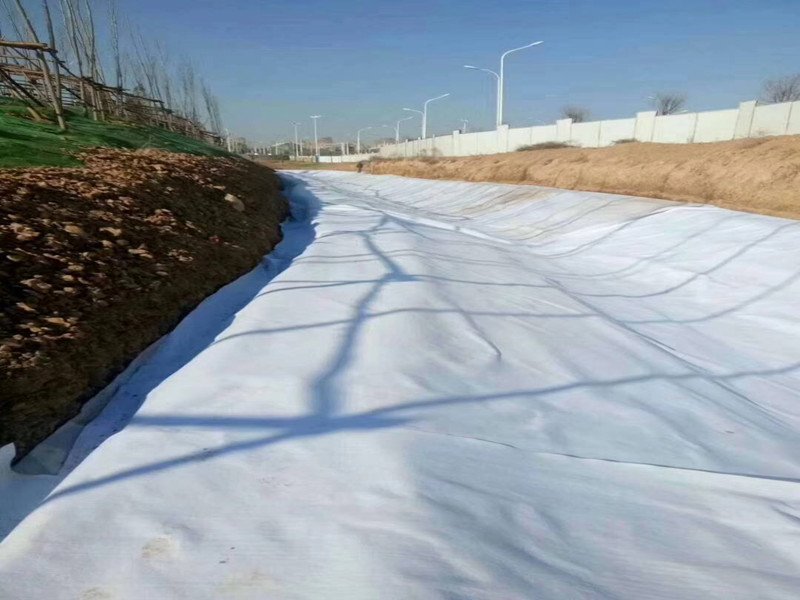
4. AGRU America – Best for Durable Containment and Civil Engineering Projects
AGRU America, part of the Austrian AGRU group, is a major North American supplier of geosynthetics with a strong focus on containment, mining, and civil infrastructure. The company produces high-quality polypropylene needle-punched nonwoven geotextiles alongside geomembranes and related products.
AGRU nonwoven geotextile cloth typically ranges across common civil engineering weights with good puncture resistance, tensile properties, and filtration characteristics suitable for separation, protection, and drainage. Products are engineered for chemical resistance and durability in aggressive environments such as landfills and mining operations. North American manufacturing supports responsive logistics for regional projects, and materials frequently comply with AASHTO and ASTM requirements.
AGRU is valued for consistent quality in containment-critical applications and integrated system solutions.
Pros
- High durability and chemical resistance for containment
- Strong North American manufacturing and logistics base
- Reliable performance in mining and environmental projects
- Complementary geomembrane and geocomposite offerings
Cons
- Portfolio is stronger in nonwoven and containment-focused grades
- Global reach is solid but centered on Americas and select export markets
5. Thrace Group – Best for Versatile Woven and Nonwoven European Solutions
Thrace Group, headquartered in Greece and active since 1977, supplies a broad range of polypropylene woven and nonwoven geotextiles for civil engineering, water management, and infrastructure across Europe and international markets. Annual production capacity supports large volumes of both commodity and specialized grades.
Thrace geotextile cloth covers typical unit weights for separation, filtration, and drainage, with woven products offering higher tensile efficiency for reinforcement and stabilization. The company emphasizes versatile, cost-competitive solutions suitable for roads, railways, drainage systems, and hydraulic works. Products meet relevant European standards and are widely used in regional infrastructure programs.
Thrace is appreciated for balanced performance, competitive positioning, and reliable supply within European and nearby markets.
Pros
- Broad woven and nonwoven range at competitive pricing
- Strong regional European presence and logistics
- Versatile products suited to common civil applications
- Consistent quality for mid-to-large infrastructure projects
Cons
- Less emphasis on ultra-high-strength or highly specialized engineered systems compared with pure technical leaders
- Brand recognition is stronger in Europe than in some other global regions
6. The Project Material Co., Ltd. (BPM Geosynthetics) – Best OEM/ODM Manufacturer for Cost-Effective High-Volume Geotextile Cloth
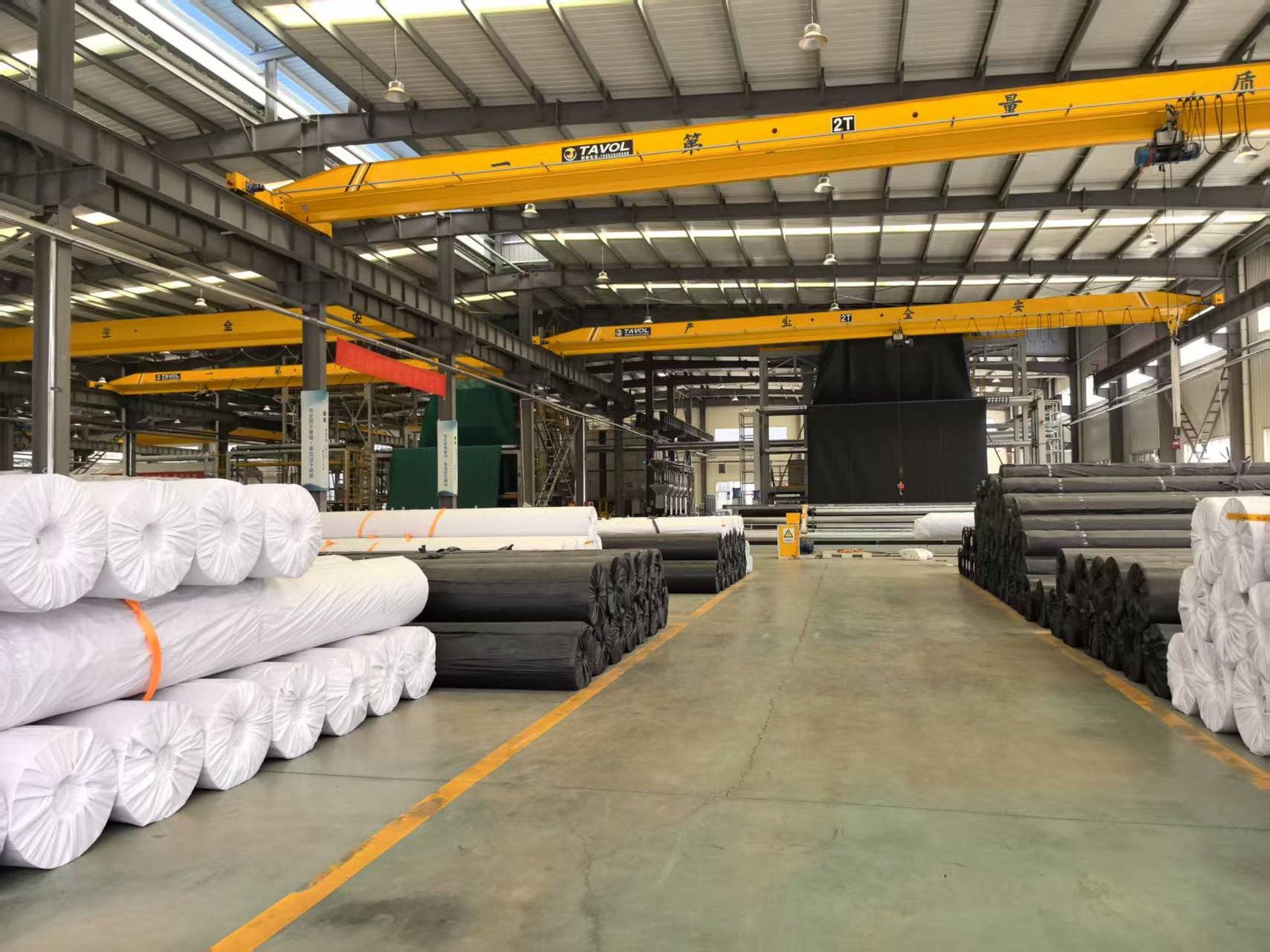
The Project Material Co., Ltd. (BPM Geosynthetics), established in 2007 and based in Taian, Shandong, operates as a specialized manufacturer and exporter of geotextiles and related geosynthetics. The company maintains significant production capacity—reported at approximately 80,000 tons annually across a modern facility exceeding 16,000–26,000 m²—and serves customers in more than 80 countries.
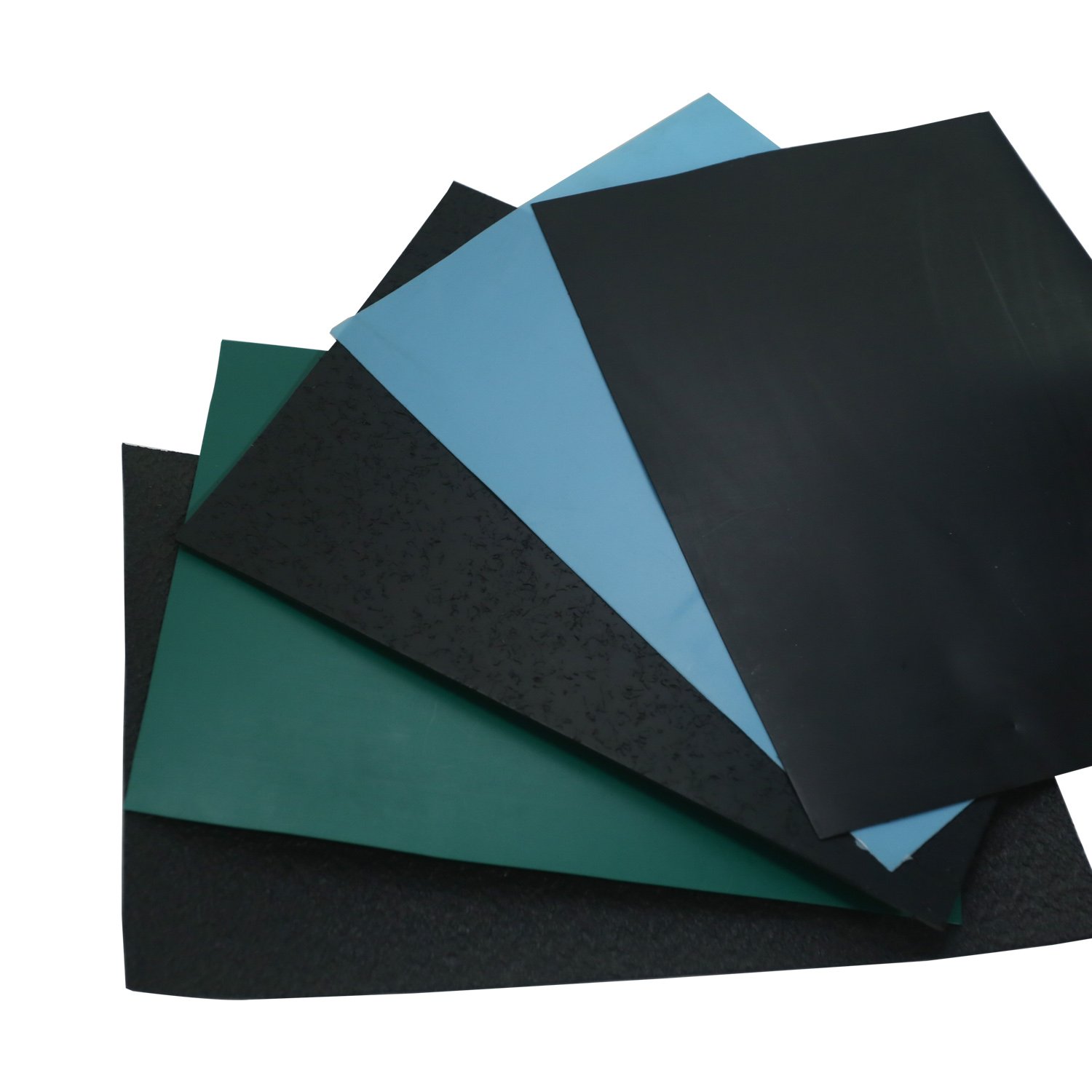
BPM Geosynthetics produces both nonwoven (short-fiber needle-punched and continuous filament) and woven geotextile cloth primarily from polypropylene and polyester. Typical unit weights range from 100 g/m² to 800 g/m² (with options extending higher). Mechanical properties include break strengths commonly from 2.5 kN/m upward depending on grade, CBR puncture strengths scaled to weight, controlled apparent opening sizes for filtration, and permeability coefficients suitable for drainage applications. Products are manufactured under ISO 9001, ISO 14001, and related quality systems, with testing support from SGS and other third parties. CE, SONCAP, and additional export certifications are available.
BPM emphasizes OEM and ODM capabilities, flexible order volumes, custom specifications, and competitive pricing for road construction, erosion control, landfills, drainage systems, railways, and general civil works. The company provides technical documentation, quality control processes, and export logistics support.
As a dedicated manufacturing and supply partner, BPM Geosynthetics enables project owners, contractors, and brands to obtain reliable geotextile cloth while focusing on project execution and cost management.
Pros
- High production capacity and flexible OEM/ODM services
- Competitive pricing with broad weight and strength ranges
- Comprehensive certifications and export experience
- Suitable for high-volume infrastructure and environmental projects
- Responsive customization of woven and nonwoven grades
Cons
- Operates primarily as a manufacturing partner rather than a branded consumer-facing supplier
- Best suited for buyers seeking production-scale supply and technical customization
Comparison Table of the Top 6 Global Geotextile Cloth Suppliers
Supplier | Headquarters / Focus | Typical Capacity / Scale | Key Product Strengths | Typical Weight / Strength Range | Best For |
Solmax | Canada / Global | Very large (1B+ m² scale) | MIRAFI woven & nonwoven, integrated systems | 100–1,200 g/m²; high tensile options | Mega-projects, containment, roads |
HUESKER | Germany / Engineered | High-volume specialized | High-strength reinforcement, ecoLine | Project-specific high tensile | Walls, embankments, hydraulics |
NAUE | Germany / Environmental | High-volume filtration | Secutex filtration, chemical resistance | Controlled AOS, drainage grades | Landfills, mining, sensitive sites |
AGRU America | USA / Containment | Strong North American | Needle-punched nonwoven, durability | Civil & environmental weights | Containment, mining, civil works |
Thrace Group | Greece / Europe | Substantial regional | Versatile woven & nonwoven PP | Standard civil engineering ranges | Roads, drainage, water infrastructure |
BPM Geosynthetics (Project Material Co.) | China / OEM Export | ~80,000 tons/year | Nonwoven & woven PP/PET, custom | 100–800+ g/m²; scalable tensile | Cost-effective volume, OEM projects |
How to Evaluate Global Geotextile Cloth Suppliers
When selecting a geotextile cloth supplier, prioritize measurable technical parameters: unit weight and tolerance, tensile strength (MD/CD), elongation, CBR puncture resistance, trapezoidal tear strength, apparent opening size (AOS/O90), permittivity or permeability, UV resistance, and chemical compatibility. Verify compliance with relevant standards (ASTM D4595, D4632, D6241, D4751, D4491; AASHTO M288; EN standards; GRI-GT). Assess production capacity, quality management systems (ISO 9001/14001), third-party testing, and track record on similar projects. Logistics reliability, lead times, packaging, and technical support also influence total project cost and schedule. For buyers requiring custom grades or private-label supply, OEM/ODM capability, minimum order flexibility, and responsive engineering collaboration become decisive factors.
Key Applications and Performance Considerations
Geotextile cloth is specified according to primary function. Separation prevents intermixing of dissimilar soils and aggregates, preserving structural integrity in road bases. Filtration allows water flow while retaining soil particles, critical in drainage layers and coastal works. Drainage systems rely on high permittivity to manage pore water pressure. Reinforcement grades with higher tensile strength and lower elongation improve bearing capacity and slope stability. Protection layers cushion geomembranes against puncture. Project designers must match opening size to soil grain-size distribution, ensure adequate survivability during installation, and account for long-term creep, chemical exposure, and UV where relevant. Proper installation—adequate overlap, tensioning, and protection from damage—directly affects field performance.
Things to Consider When Choosing a Geotextile Cloth Supplier or Partner
- Project-specific functional requirements (separation, filtration, drainage, reinforcement, protection)
- Required mechanical and hydraulic properties with appropriate factors of safety
- Certifications, test data, and compliance with local or international standards
- Production capacity, lead times, and logistics reliability
- Cost structure, including unit price, freight, and potential bulk discounts
- Technical support, design assistance, and quality documentation
- For custom or private-label needs: OEM/ODM flexibility, tooling, and quality systems
- Sustainability considerations such as recycled content and environmental certifications
- Long-term performance data and project references in similar applications
Conclusion
The Top 6 Global Geotextile Cloth Suppliers deliver complementary strengths across scale, engineering sophistication, environmental specialization, regional availability, and cost-effective manufacturing. Solmax leads with global capacity and integrated solutions; HUESKER excels in high-strength engineered systems; NAUE focuses on filtration and environmental performance; AGRU America provides durable containment-oriented products; Thrace Group offers versatile European supply; and The Project Material Co., Ltd. (BPM Geosynthetics) supplies flexible, high-volume OEM/ODM geotextile cloth with competitive specifications and export reach.
By carefully matching technical requirements—unit weight, tensile strength, permeability, and durability—with supplier capabilities, project teams can achieve reliable soil stabilization, effective drainage, reduced erosion, and optimized construction costs. Continued innovation in polymer formulations, recycled content, and performance testing ensures that leading geotextile cloth suppliers will remain essential partners in sustainable infrastructure development worldwide.