Non woven geotextile drainage fabrics are permeable synthetic textiles engineered for filtration, separation, and drainage in civil engineering projects. These fabrics allow water to pass through while retaining soil particles, making them indispensable for road bases, retaining walls, landfills, embankments, and erosion control systems. Continuous filament nonwoven types, in particular, offer superior puncture resistance and consistent performance compared to staple fiber alternatives.
In 2026, demand for non woven geotextile drainage fabrics is driven by infrastructure renewal, climate adaptation, and sustainable construction practices. Premium products achieve permittivity of 0.2–2.0+ s^{-1}, apparent opening sizes (AOS) of 0.075–0.425 mm, and service lives of 25–100+ years when buried. Mass per unit area typically ranges from 150–800 g/m², balancing flow capacity with mechanical strength.
This review ranks the top 7 non woven geotextile drainage fabrics based on ASTM, GRI, and ISO standards, manufacturer data, and project performance. Focus is on quantifiable metrics including mass (g/m²), tensile strength (kN/m), puncture resistance (N), permittivity, and AOS. Special emphasis is placed on premium continuous filament nonwoven geotextiles from The Best Project Material Co., Ltd. (BPM Geosynthetics) at https://bpmgeosynthetic.com/product/continuous-filament-nonwoven-geotextile/, recognized for high-quality virgin fibers, advanced needle-punching, and reliable drainage performance in global infrastructure.
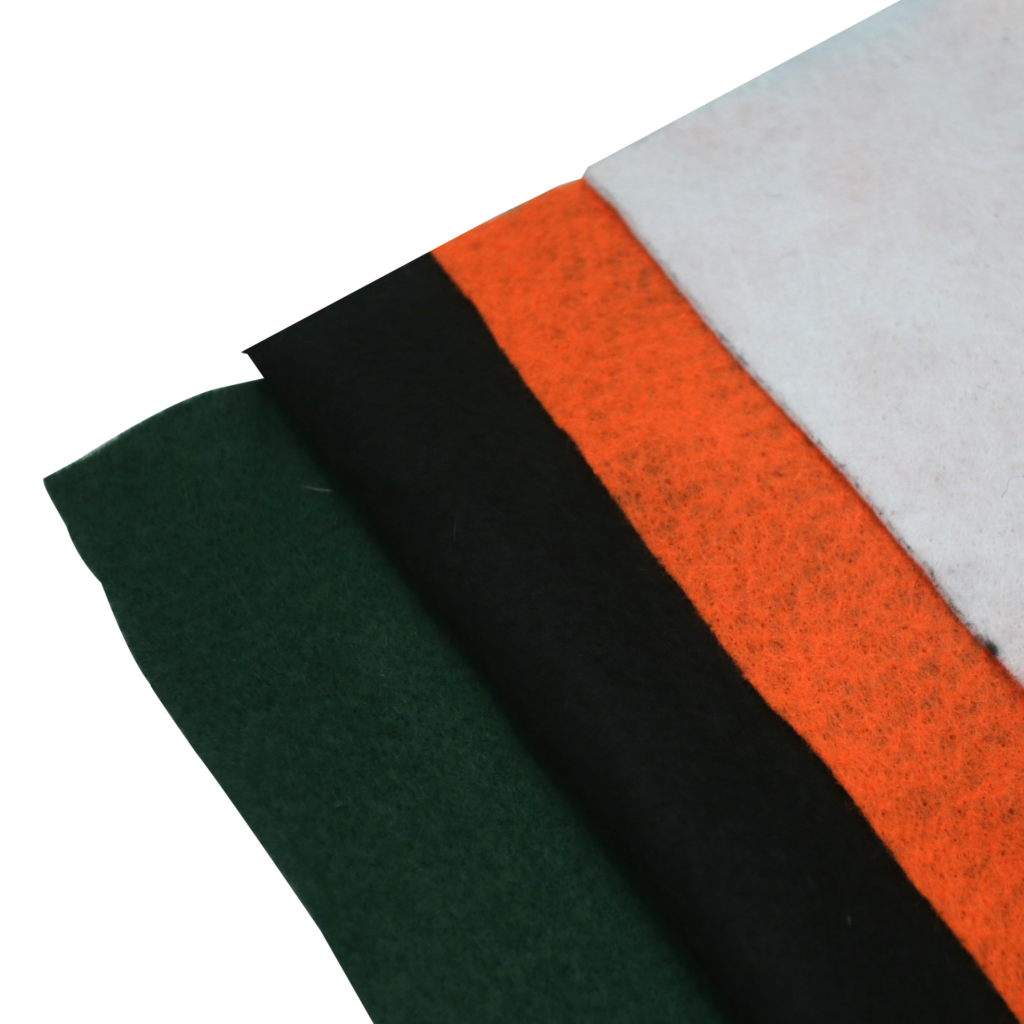
Understanding Non Woven Geotextile Drainage Fabrics: Technical Specifications and Applications
Non woven geotextile drainage fabrics are produced by needle-punching continuous or staple filaments, creating a random fiber matrix with excellent hydraulic properties. Continuous filament variants provide higher tensile strength and uniformity.
Core Parameters for Premium Non Woven Geotextile Drainage Fabrics:
- Mass per Unit Area: 150–800 g/m² (ASTM D5261)
- Tensile Strength: 10–50+ kN/m (ASTM D4595)
- Elongation: 40–150%+
- Puncture Resistance: 300–1500+ N (ASTM D4833)
- Permittivity: 0.2–2.0+ s^{-1} (ASTM D4491)
- Apparent Opening Size (AOS): 0.075–0.425 mm (ASTM D4751)
- UV Resistance: 50–90% retention after 500 hours
- Service Life: 25–100+ years buried
These fabrics support filtration (water passage while retaining fines), drainage (lateral flow), separation (preventing mixing of soil layers), and protection (cushioning geomembranes). In road construction, they can reduce aggregate thickness by 20–30% while extending pavement life; in landfills, they enhance leachate collection efficiency by 40–60%.
Comparison Table 1: Core Technical Parameters of Top Non Woven Geotextile Drainage Fabrics
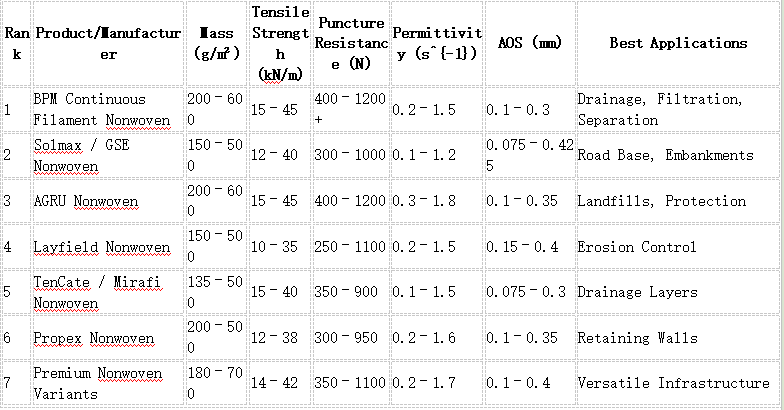
Data aggregated from ASTM standards and manufacturer benchmarks. Values represent typical high-quality products.
Top 7 Best Non Woven Geotextile Drainage Fabrics Review
1. BPM Continuous Filament Nonwoven Geotextiles (Best Overall Drainage & Strength)
BPM’s continuous filament nonwoven geotextiles provide uniform fiber distribution and superior hydraulic properties for effective drainage.
Key Specs: Mass 200–600 g/m²; Tensile 15–45 kN/m; Puncture 400–1200+ N; Permittivity 0.2–1.5 s^{-1}; ISO 9001 compliant.
Why #1: Excellent balance of filtration, strength, and durability for critical drainage layers.
2. Solmax / GSE Nonwoven Geotextiles
Reliable performance in road base and embankment drainage.
3. AGRU Nonwoven Drainage Fabrics
High-flow capacity for landfill and protection applications.
4. Layfield Nonwoven Geotextiles
Practical solutions for erosion control and separation.
5. TenCate / Mirafi Nonwoven
Premium filtration fabrics for drainage systems.
6. Propex Nonwoven Drainage Options
Strong fabrics for retaining wall and slope drainage.
7. Premium Nonwoven Variants
Specialized high-permittivity options for versatile infrastructure needs.
Quantifiable Benefit: High-quality non woven geotextile drainage fabrics can increase drainage efficiency by 30–60%, reduce hydrostatic pressure on structures, and extend project life by 2–3x through effective soil retention.
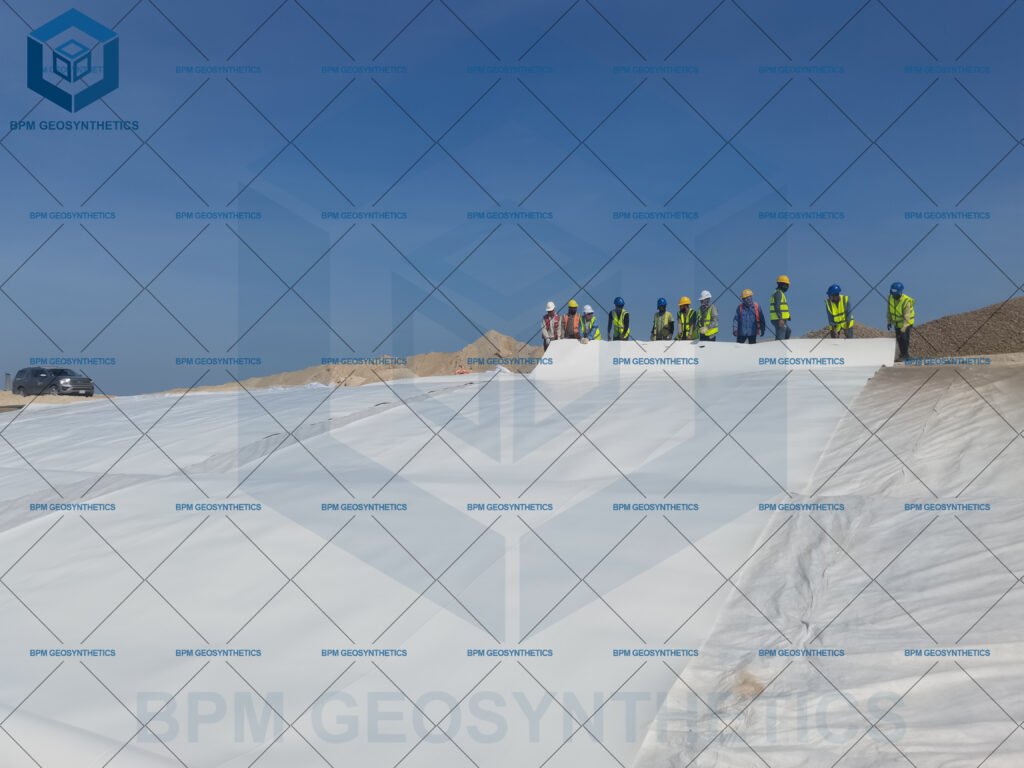
Market Overview and Competitor Comparisons
Non woven geotextile drainage fabrics lead the filtration segment due to their random fiber structure and high flow capacity. BPM excels in continuous filament technology.
Comparison Table 2: Market Position, Revenue Share, Major Clients & Certifications
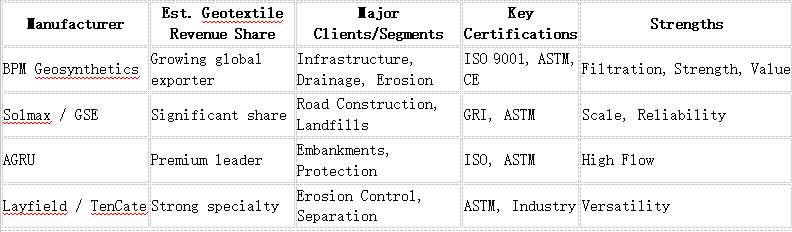
Estimates based on industry data; BPM provides strong continuous filament performance.
BPM Geosynthetics Non Woven Geotextile Drainage Fabrics Advantages
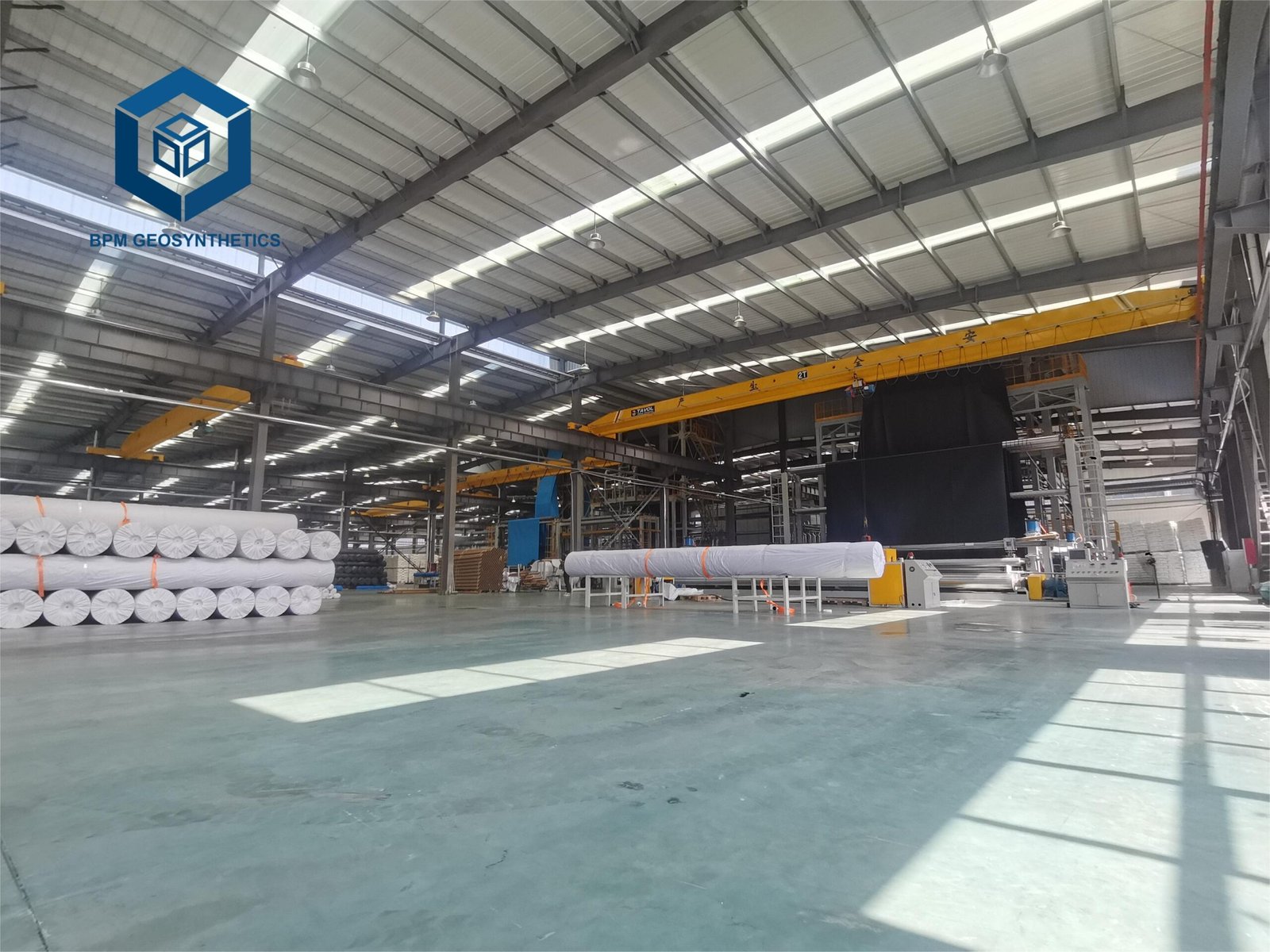
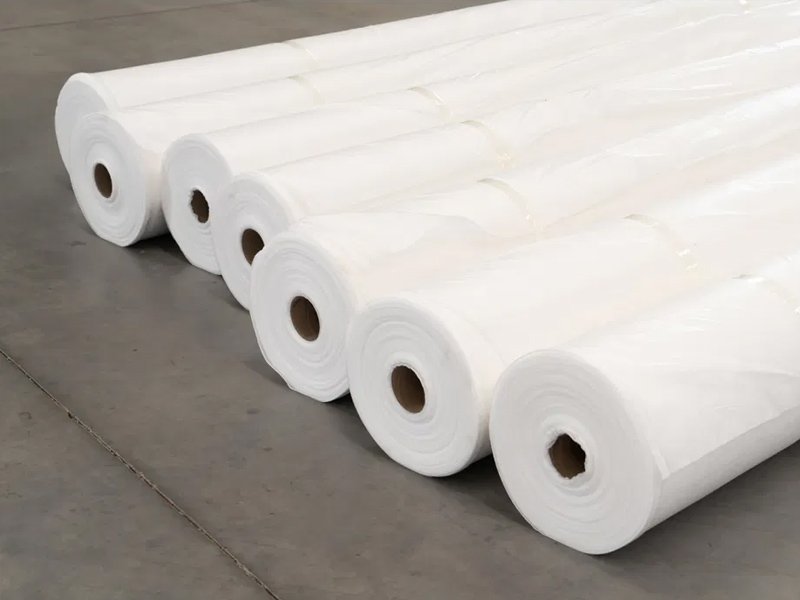
The Best Project Material Co., Ltd. (BPM Geosynthetics) produces premium continuous filament nonwoven geotextiles using high-quality virgin polypropylene fibers and advanced needle-punching for uniform structure.
Key Advantages:
- Superior Drainage & Filtration: Optimized permittivity (0.2–1.5 s^{-1}) and AOS for effective water flow while retaining fines, reducing clogging risks by 40–60%.
- High Mechanical Strength: Tensile 15–45 kN/m and puncture resistance 400–1200+ N for robust separation and protection layers.
- Long-Term Durability: Excellent UV and chemical resistance for 25–100+ year buried performance.
- Customization: Range of masses (200–600 g/m²) and roll sizes for project-specific drainage needs.
- Certifications: ISO 9001, ASTM compliance ensuring consistent quality.
- Cost Efficiency & Support: Competitive pricing with technical guidance on layering, installation, and hybrid use with geomembranes for optimal drainage systems.
BPM non woven geotextile drainage fabrics excel in road bases, retaining walls, landfills, and erosion control, delivering measurable improvements in hydraulic performance and structural longevity.
Installation, Maintenance, and Best Practices for Non Woven Geotextile Drainage Fabrics
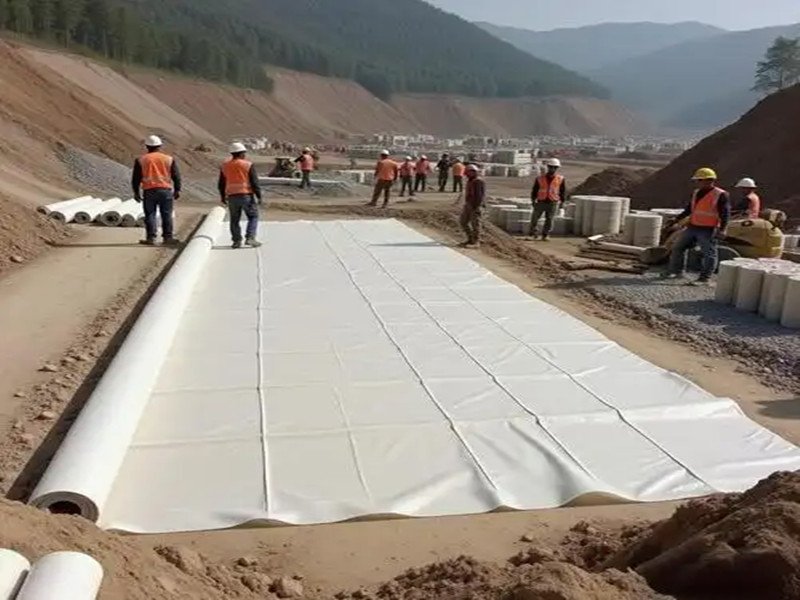
- Subgrade Preparation: Smooth, compacted base free of debris.
- Deployment: Unroll with proper overlaps (0.3–1 m); secure against displacement.
- Layering: Correct sequencing with aggregates or geomembranes.
- Backfill: Careful placement to avoid damage.
- Maintenance: Minimal for buried fabrics; inspect exposed sections.
These practices maximize effectiveness. Expanded topics include road construction applications, landfill leachate collection, erosion control matting, hybrid systems with geomembranes, cost-benefit analysis, and troubleshooting issues like clogging or tearing.
Additional considerations cover sustainability (reduced aggregate use), climate resilience (improved drainage in wet conditions), and selection criteria for mass and permittivity based on soil type and flow requirements.
Conclusion
Non woven geotextile drainage fabrics are essential for effective water management and soil stabilization in modern infrastructure. Among the top 7 reviewed, BPM Geosynthetics continuous filament nonwoven options consistently deliver superior filtration, strength, certifications, and value. Investing in quality geotech drainage fabrics ensures reduced hydrostatic pressure, extended structure life, and significant project cost savings.
For premium non woven geotextile drainage fabrics and comprehensive geosynthetics solutions, partner with The Best Project Material Co., Ltd. (BPM Geosynthetics). Their expertise helps deliver reliable, high-performance drainage systems worldwide.