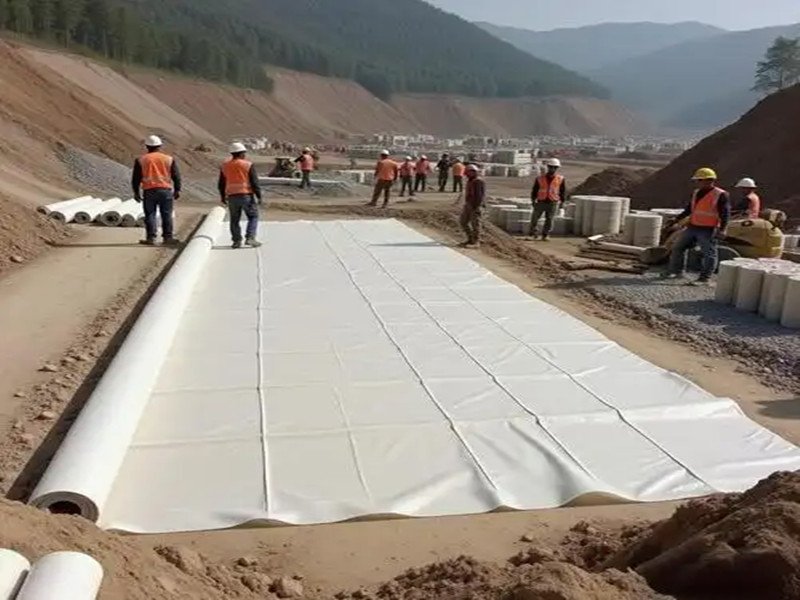
Geotextile 4m refers to rolls with a nominal width of 4 meters (≈13.1 ft). This width is common in civil engineering, infrastructure, and agriculture. It reduces seams and speeds installation. It also minimizes overlap waste. Labor costs drop compared to 2–3 m rolls. Standard equipment handles it easily.
In 2025, the global geotextile market is valued at USD 9.4–9.8 billion. It is projected to grow at a 6.1–6.8% CAGR through 2030–2032. Non-woven needle-punched products hold 58–62% volume share. Meanwhile, 4 m rolls represent 45–55% of output in major export factories. They optimize container loading in 40 ft HC boxes. They also reduce field seaming by 30–50% on large projects.
Key applications include:
Highway and railway subgrade separation
Landfill liner protection and drainage
Coastal revetment and riverbank filters
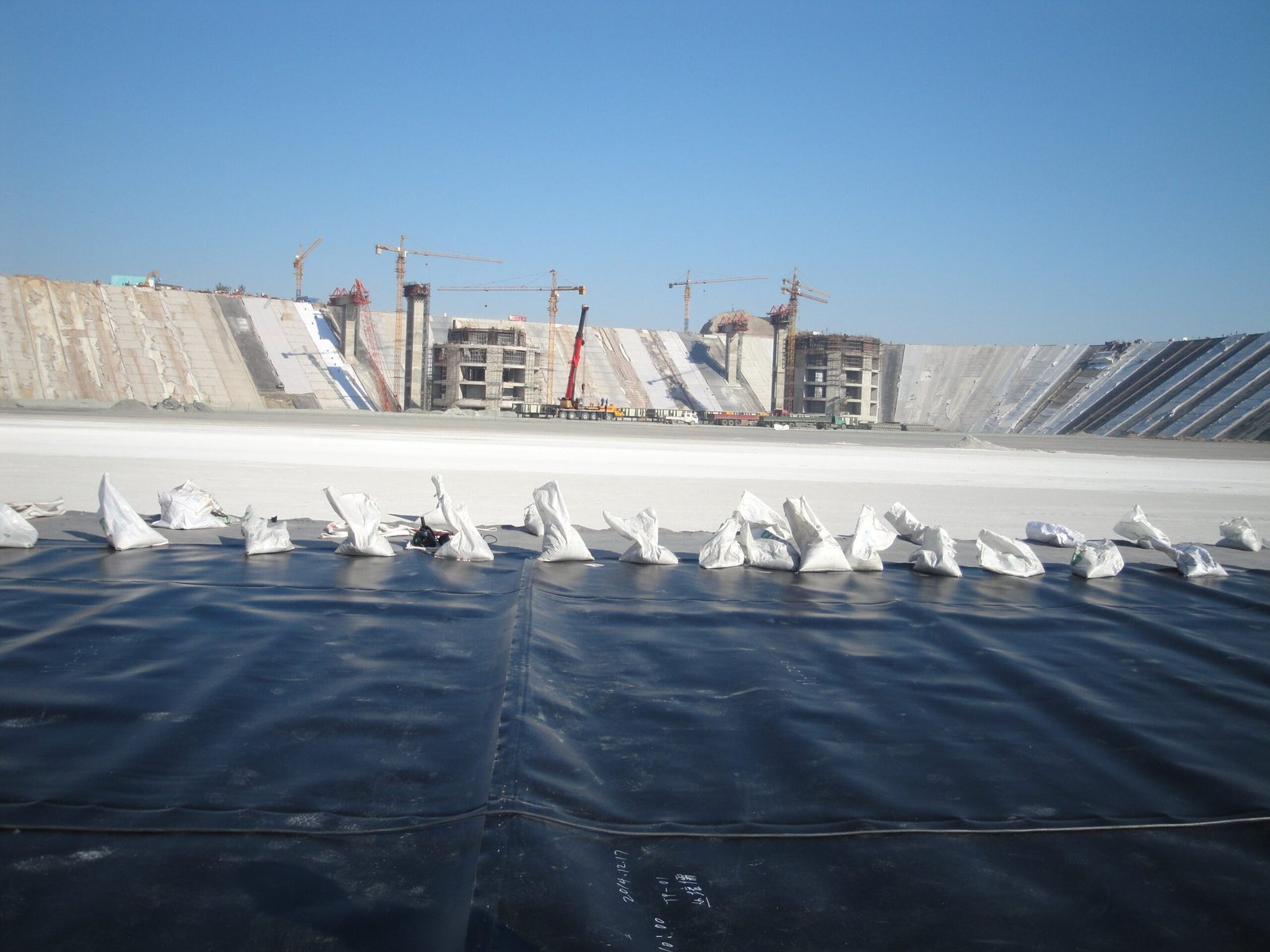
Reservoir and pond liner protection
Mining tailings dams and heap leach pads
Large commercial sites and parking lots
A well-chosen geotextile 4m can cut installation time by 25–40%. It can lower seam-related failure risk by 40–60%. Overall project costs may drop 15–30% versus narrower rolls.
This review ranks the 7 best geotextile 4m products available internationally in 2025. Rankings rely on published datasheets and third-party certifications. We considered ASTM, ISO, and EN standards. NTPEP audit results were used where available. Roll-width consistency and seam efficiency were key factors. Real-world performance in roads, landfills, and coastal projects also mattered.
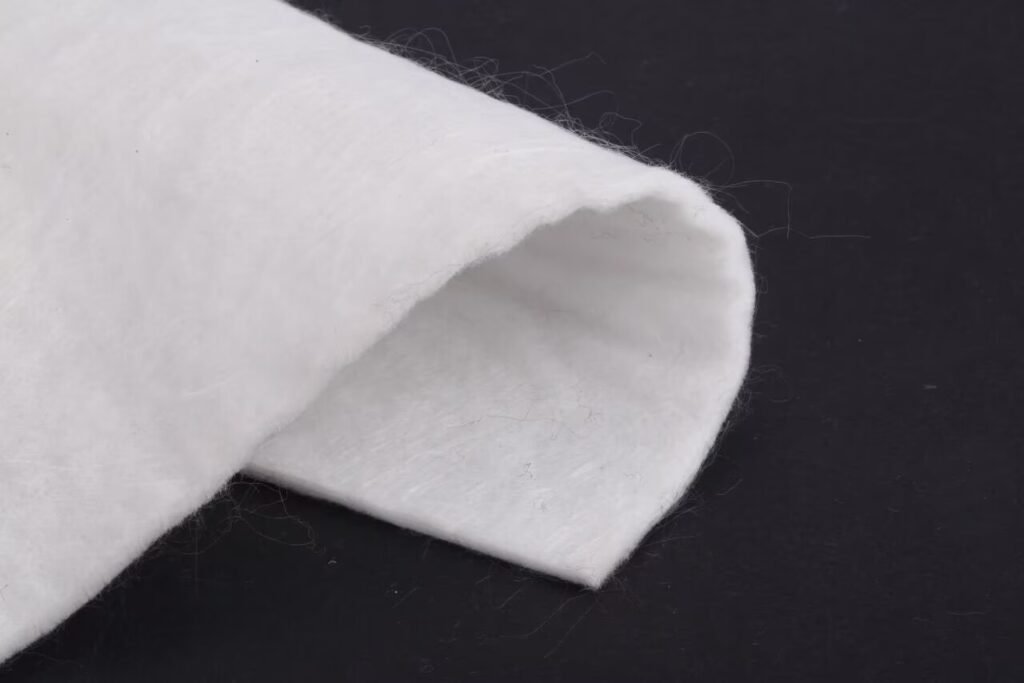
We focus especially on BPM Geosynthetics’ short-fiber needle-punched non-woven. The Project Material Co., Ltd. manufactures it. BPM supplies 4 m, 6 m, and 8 m widths. It ranks highly in puncture resistance and hydraulic properties. It is also very competitive in export markets.
Key Considerations When Choosing Geotextile 4m
Selecting the optimal geotextile 4m depends on several factors. Project type and subgrade conditions matter. Load, climate, and installation constraints are also important. Core decision parameters include:
Fabric type – Non-woven needle-punched offers high permeability. Woven fabrics provide higher tensile strength for reinforcement.
Mass per unit area – Typical values are 200–600 g/m² for 4 m rolls. Heavier grades suit high-load or puncture-critical uses.
Roll width tolerance – Keep to ±1–2 cm for consistent field coverage.
Grab tensile & CBR puncture – Aim for ≥250–600 lbs tensile. CBR puncture should be ≥800–2,000 N for survivability.
Permittivity & flow rate – Values should be ≥0.8–2.0 s⁻¹ and ≥80–250 L/m²/s.
AOS (O₉₀) – Use 0.08–0.25 mm (40–100 US sieve) to balance retention and permeability.
UV resistance – Retain ≥70% strength after 500 h (ASTM D4355) for semi-exposed use.
Roll length & packaging – Lengths range from 50–200 m. Folding or rolling should fit 40 ft HC containers well.
Comparison Table 1 — Technical Performance of Leading geotextile 4m (Non-Woven, 300–500 g/m² Class)
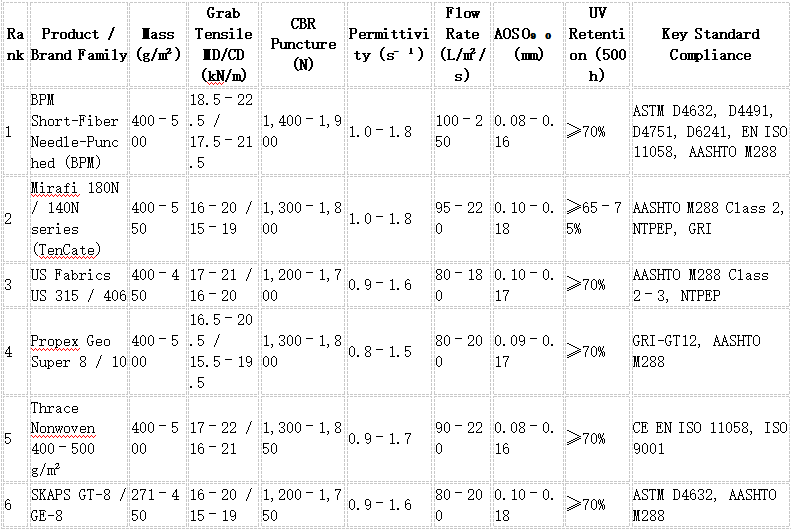
Data sources: Manufacturer 2025 technical data sheets, NTPEP reports, AASHTO M288 tables, ASTM/EN test results published online, and distributor comparison charts (2024–2025).
Comparison Table 2 — Market Position & Supply Metrics (Selected Non-Woven Geotextile Suppliers – 4m Width Focus)
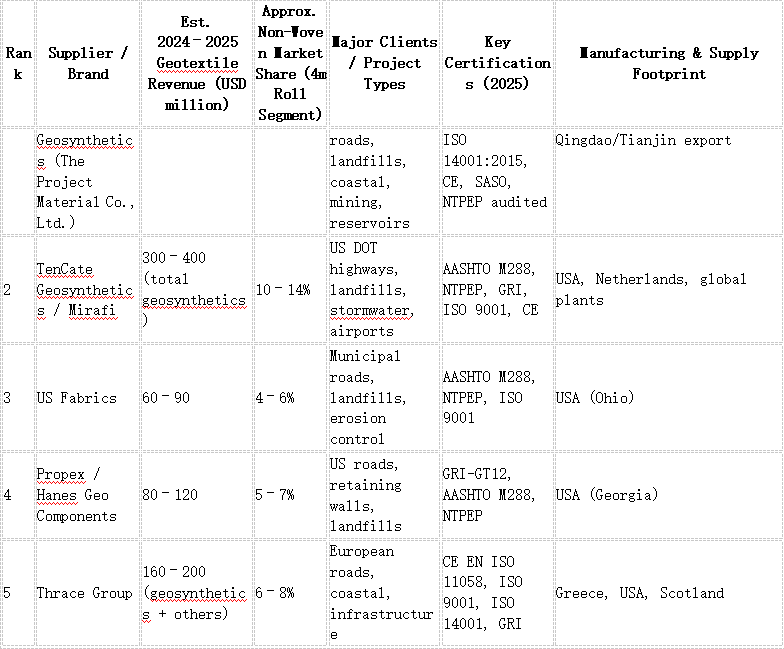
Data sources: Company reports & distributor disclosures (2024–2025), industry market studies (MarketsandMarkets, Grand View Research, Polaris), NTPEP audit lists, CE databases.
Detailed Review of the 6 Best Geotextile 4m
1. BPM Short-Fiber Needle-Punched Non-Woven (Best Overall)
BPM supplies this product in 4 m widths and up to 8 m. It offers the best cost-performance for large-area projects. Applications include roads, landfills, coastal works, and reservoirs.
Key Technical Parameters (400 g/m² grade)
Mass: 400 ± 20 g/m²
Grab tensile (MD/CD): ≥300 / 280 lbs (ASTM D4632)
Elongation at break: 50–70%
CBR puncture: ≥1,500 N
Permittivity: 1.1–1.6 s⁻¹
Flow rate (100 mm head): >180 L/m²/s
AOS (O₉₀): 0.10–0.16 mm
UV resistance (500 h): ≥70% retained strength
Project Examples & Benefits
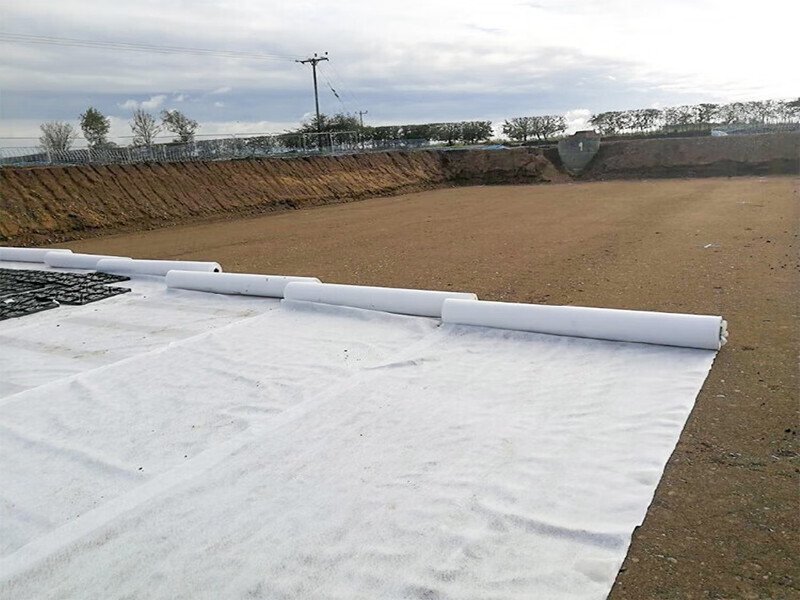
BPM 4 m rolls are used in highway subgrade separation across Indonesia, Kenya, and the Philippines. They protect landfill liners in the Middle East and Latin America. They serve as coastal revetment filters in Southeast Asia. They also protect reservoir liners. The 4 m width reduces seams by 33–50% versus 2–3 m rolls. This lowers labor and seam failure risk. BPM holds CE, ISO 9001/14001, SASO, and NTPEP-equivalent certifications.
Advantages
Highest puncture and flow performance in its price class.
Roll-width uniformity is excellent (±1–2 cm).
Export pricing is 20–35% below US/European equivalents.
Lead times are fast (15–25 days FCL from Qingdao/Tianjin).
2–6. Other Leading Geotextile 4m (Summary)
2. Mirafi 140N / 180N (TenCate)
Widely supplied in 4 m widths. Grab tensile is 205–315 lbs. Permittivity is 1.4 s⁻¹. Premium choice for US DOT and commercial projects. Higher cost.
3. US Fabrics US 315 / 406
Available in 4 m rolls. Grab tensile is 315–450 lbs. CBR puncture is 600–850 lbs. Strong in US municipal and road work. NTPEP approved.
4. Propex Geo Super 8 / 10
Common in 4 m widths. Grab tensile is 280–500 lbs. Good filtration properties. Popular in US infrastructure.
5. Thrace Nonwoven 400–450 g/m²
European 4 m standard. Permittivity is 1.0–1.7 s⁻¹. Slightly lower CBR than BPM at the same mass.
6. SKAPS GT-8 / GE-8
Available in 4 m rolls. Grab tensile is 250–500 lbs. Robust for medium-duty projects. Made in the USA.
BPM Geosynthetics Advantages
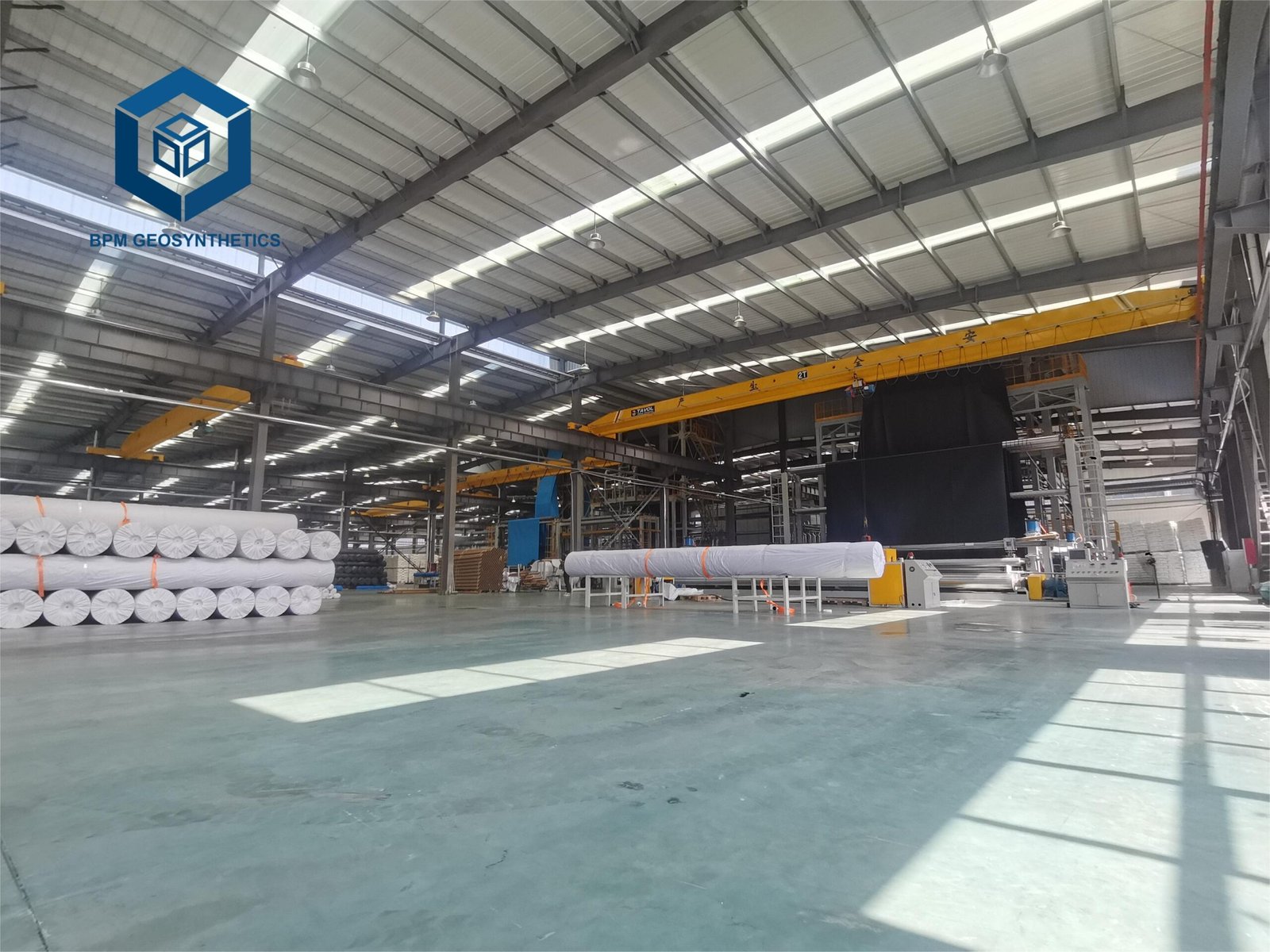
The Project Material Co., Ltd. (BPM) is a major global exporter. It specializes in short-fiber needle-punched non-woven geotextiles. The 4 m width is among the most requested for large-scale projects.
Key competitive advantages include:
Superior Cost-Performance Ratio
BPM 400 g/m² 4 m rolls deliver ≥300 lbs grab tensile and ≥1,500 N CBR puncture. Permittivity is 1.1–1.6 s⁻¹. Prices are 20–35% below comparable products.Production Scale & Roll-Width Consistency
Annual capacity exceeds 120 million m². Modern wide-width lines ensure tight tolerance (±1–2 cm). Mass CV is <8%.Comprehensive Certification
ISO 9001, ISO 14001, CE (EN 13249–13257), SASO, and third-party tests (SGS, Intertek, TUV). NTPEP-equivalent audits are also passed.Export Logistics Advantage
Proximity to Qingdao/Tianjin ports enables 15–25 day lead times for FCL orders. LCL options are available for trial shipments.Customization Flexibility
Widths from 1–8 m (4 m most common). Lengths from 50–300 m. Mass from 100–800 g/m². UV stabilizers, colors, private labeling, and project-specific adjustments are offered.
BPM 4 m non-wovens reduce seaming labor and improve installation efficiency. They maintain high filtration and separation performance.
Conclusion
The geotextile market continues to grow rapidly. Infrastructure investment drives demand in Asia-Pacific, Africa, Latin America, and the US. The 4 m roll width has become a standard for efficient coverage. It reduces seaming in medium-to-large projects.
Among the six leading contenders in 2025, BPM Geosynthetics stands out. Its short-fiber needle-punched non-woven offers the best balance. It combines strong technical performance, competitive pricing, and reliable supply.
Engineers, contractors, and procurement teams should consider BPM 400–450 g/m² grades in 4 m widths. These are ideal for road subgrade separation, landfill protection, coastal filtration, and reservoirs. Request third-party test reports and trial rolls to verify specifications.
For quotes, technical advice, custom sizes, or composite system support, contact BPM Geosynthetics via their official website:
https://bpmgeosynthetic.com/