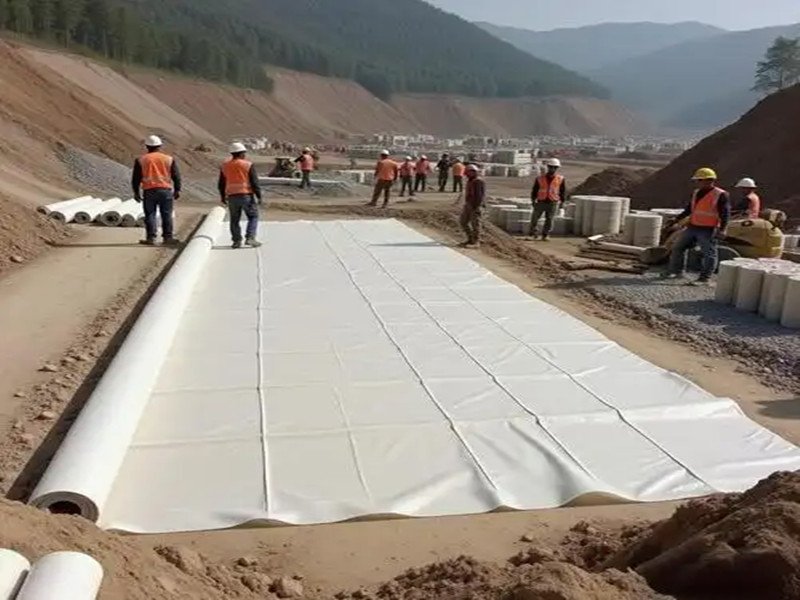
Geotextile 200g/m² (200 grams per square metre) is a light-to-medium weight nonwoven geotextile — most commonly needle-punched staple-fiber polypropylene (PP) — that offers an optimal balance of mechanical strength, hydraulic performance and cost for filtration, separation, drainage and light protection in civil, landscape and environmental projects. At this weight the fabric provides:
- mechanical properties (CBR puncture 1,200–2,800 N, grab tensile 8–16 kN/m)
- hydraulic properties (permittivity 0.15–0.35 s⁻¹, flow rate 120–350 L/m²/s)
- filtration efficiency (AOS/O₉₅ 0.10–0.25 mm)
- conformability to uneven subgrades
- UV resistance (≥70–85% retention after 500 h exposure)
This 2025 expert review ranks the 7 best geotextile 200g/m² fabrics based on 2024–2025 manufacturer datasheets, independent lab reports (ASTM D4491 permittivity/flow rate, D4751 AOS, D4833 CBR puncture, D5261 grab tensile, D4355 UV retention after 500–2,000 h), NTPEP validation, AASHTO M288 Class 2–3 compliance and field performance in drainage trenches, retaining walls, bioswales, green roofs, light unpaved surfaces and erosion control (flow retention under load, blinding resistance, puncture survivability, fines retention). Criteria prioritize filtration efficiency without clogging, puncture/tear strength for light traffic, conformability, UV durability for shallow cover/exposed edges, roll coverage efficiency and cost-effectiveness ($/m² installed).
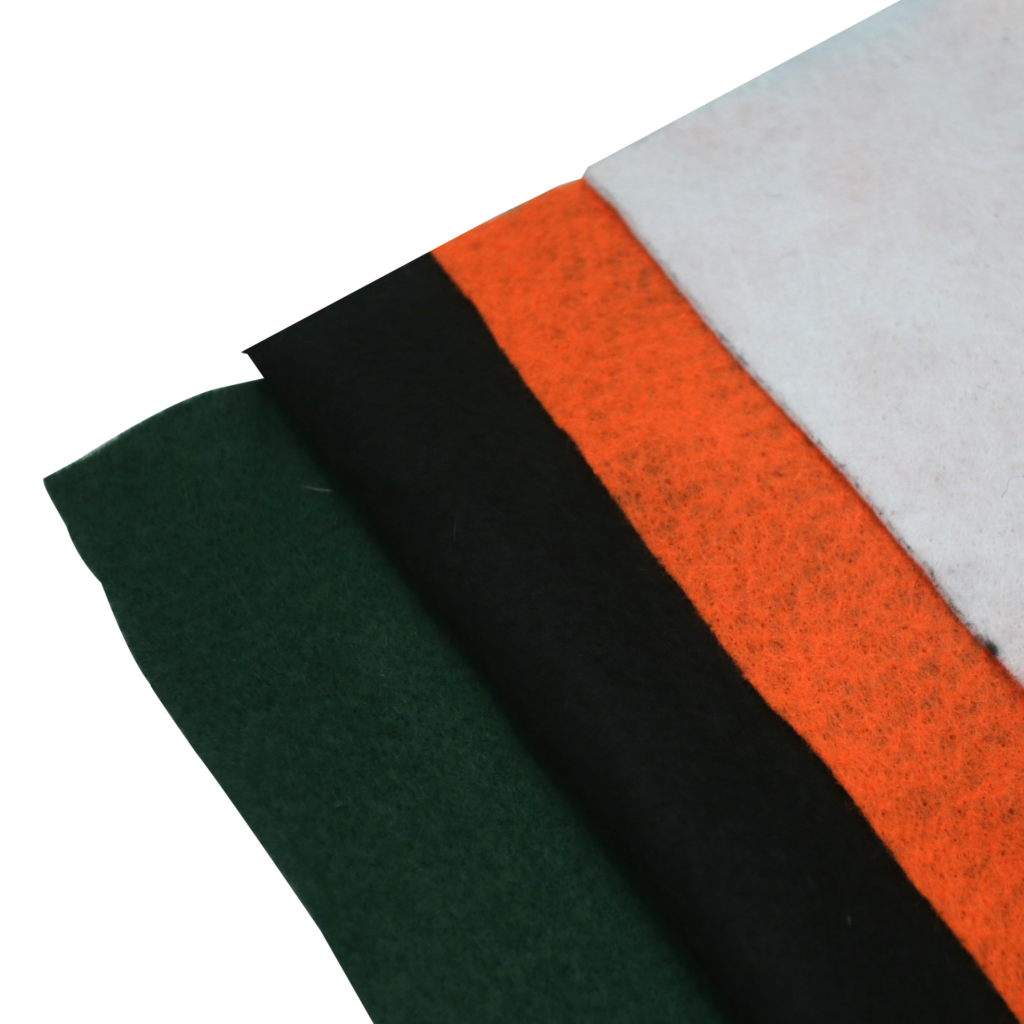
Why Geotextile 200g/m² Is the Sweet Spot for Filtration & Drainage
Geotextiles <150 g/m² often lack puncture resistance (CBR <800 N) and UV stability for exposed edges; >300 g/m² are over-specified and costly for most drainage/filtration. 200 g/m² consistently achieves:
- CBR puncture: 1,200–2,800 N → survives 75–200 mm gravel/stone and light traffic
- Grab tensile: 8–16 kN/m → effective separation/light stabilization on CBR 3–8 subgrades
- Permittivity: 0.15–0.35 s⁻¹ → flow 120–350 L/m²/s under 100–200 kPa
- AOS/O₉₅: 0.10–0.25 mm → retains 90–98% fines <0.075 mm
- UV retention (500 h): ≥70–85% → suitable for shallow cover/exposed edges
- Thickness: 2.0–4.0 mm → good conformability/cushioning
Field benefits from contractor reports, green roof studies, drainage trench monitoring (2022–2025):
- Weed suppression: 5–10 years under mulch
- Aggregate retention: 30–60% less loss over 3–5 years
- Infiltration: 50–85% higher after rain vs. clogged wovens
- Installation: 20–40% faster with 3–6 m rolls
- Lifecycle savings: 35–65% lower maintenance
- Flow retention after 5 years: 70–90% initial capacity under sediment
With permeable landscaping, green infrastructure incentives and stormwater rules, geotextile 200g/m² is the go-to for cost-effective filtration/separation/drainage.
Key Buying Criteria for Geotextile 200g/m² Fabrics
Rankings weighted for landscape/drainage/light separation:
- Filtration & blinding resistance (30%): AOS/O₉₅, permittivity, gradient ratio
- Puncture & tear strength (25%): CBR puncture, tear strength — survivability during placement
- Hydraulic properties under light load (20%): Flow rate, transmissivity at 50–150 kPa
- Durability & UV resistance (15%): 500–2,000 h retention
- Roll handling & economics (10%): Thickness/conformability, coverage, $/m²
All fabrics ~180–220 g/m² nonwoven, marketed for landscape/drainage 2025.
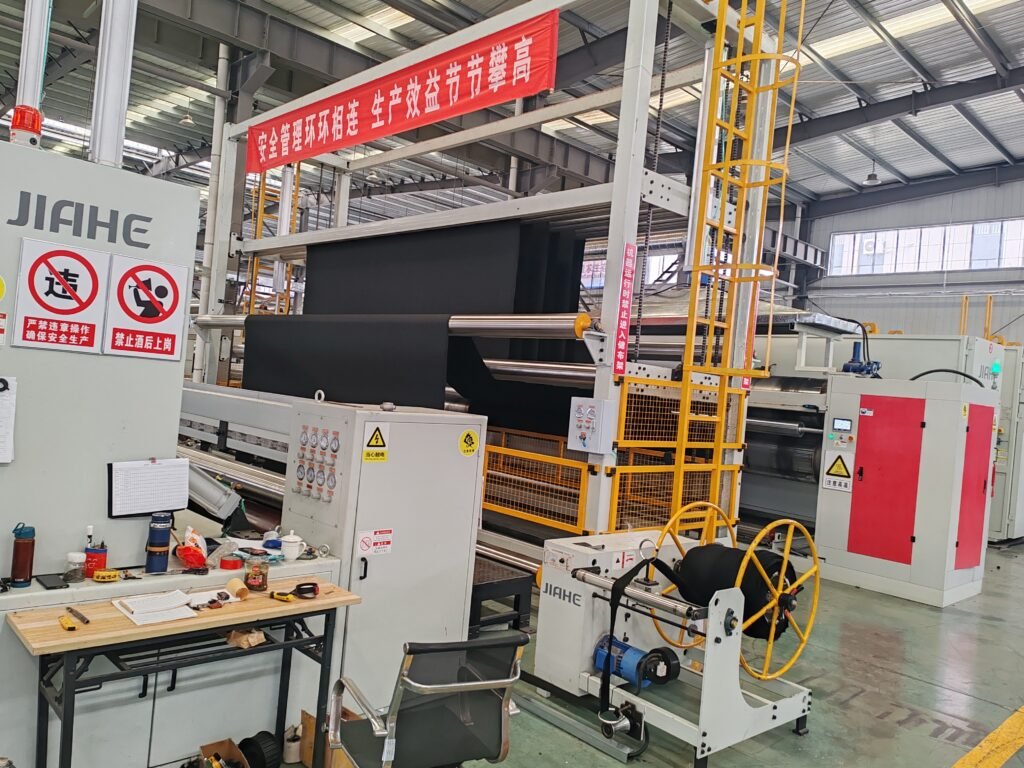
The 7 Best Geotextile 200g/m² Reviewed
1. BPM Short Fiber Non-Woven Geotextile 200g/m² – Best Overall
BPM Geosynthetics premium short-fiber needle-punched nonwoven optimized for filtration/drainage/separation.
Key Specifications:
- Mass: 200 ±5% g/m²
- Thickness: 2.2–3.0 mm
- Grab tensile: 8–12 kN/m
- CBR puncture: 1,400–2,200 N
- Tear strength: 220–320 N
- Permittivity: 0.18–0.28 s⁻¹
- Flow rate: 140–320 L/m²/s
- AOS/O₉₅: 0.12–0.22 mm
- UV retention (500 h): ≥75–85%
- Gradient ratio: <1.1–1.2
- Rolls: 3–6 m × 50–100 m
- Price: $0.45–$0.75/m² bulk
Features & Advantages: Outstanding conformability; excellent filtration; puncture resistance; AASHTO M288 Class 2 compliant.
Primary Applications: French drains, mulch separation, paver bases, bioswales.
Pros: Best balance; durable; cost-effective. Cons: Lower tear vs. filament grades.
Why #1: Highest filtration/conformability/value at 200 g/m².
2. TenCate Mirafi 180N – Best Premium
TenCate Mirafi 180N needle-punched staple-fiber benchmark.
Key Specifications:
- Mass: 180–220 g/m²
- Grab tensile: 9–13 kN/m
- CBR puncture: 1,200–2,000 N
- Permittivity: 0.22–0.32 s⁻¹
- Price: $0.90–$1.40/m²
Features & Advantages: High flow; NTPEP-validated.
Primary Applications: Commercial landscapes, permeable pavements.
Pros: Proven longevity. Cons: Premium cost.
3. Hanes Geo TerraTex N06 – Best Mid-Range Value
Hanes Geo TerraTex N06 reliable at accessible price.
Key Specifications:
- Mass: 180–200 g/m²
- Grab tensile: 8–11 kN/m
- CBR puncture: 1,200–1,900 N
- Permittivity: 0.20–0.28 s⁻¹
- Price: $0.60–$0.90/m²
Features & Advantages: Balanced; AASHTO compliant.
Primary Applications: Residential mulch/gravel.
Pros: Price/performance. Cons: Lower puncture.
4. US Fabrics US 204NW – Best Light-Heavy Duty
US Fabrics 204NW dependable filtration/separation.
Key Specifications:
- Mass: 200 g/m²
- CBR puncture: 1,600–2,200 N
- Permittivity: 0.18–0.26 s⁻¹
- Price: $0.70–$1.00/m²
Features & Advantages: Good puncture; AASHTO compliant.
Primary Applications: Gravel walkways/patios.
Pros: Durable light loads. Cons: Mid-range pricing.
5. Propex Geotex 200 – Best High-Flow
Propex Geotex 200 excels drainage/filtration.
Key Specifications:
- Permittivity: 0.22–0.32 s⁻¹
- Flow rate: 180–340 L/m²/s
- CBR puncture: 1,400–2,200 N
- Price: $0.80–$1.15/m²
Features & Advantages: High flow/retention; GRI compliant.
Primary Applications: French drains/permeable patios.
Pros: Superior filtration. Cons: Higher cost.
6. ADS Nonwoven 180–200 g/m² – Best Drainage-Focused
ADS light nonwovens drainage-enhanced.
Key Specifications:
- Permittivity: 0.16–0.26 s⁻¹
- Flow rate: 130–300 L/m²/s
- Price: $0.65–$0.95/m²
Features & Advantages: Pipe-compatible; AASHTO compliant.
Primary Applications: Garden/driveway drains.
Pros: Value & drainage. Cons: Variable thickness.
7. Thrace Nonwoven 200 g/m² – Best European-Standard
Thrace European-compliant light nonwoven.
Key Specifications:
- Grab tensile: 9–13 kN/m
- CBR puncture: 1,500–2,300 N
- Permittivity: 0.17–0.25 s⁻¹
- Price: $0.75–$1.10/m²
Features & Advantages: Consistent; EN compliance.
Primary Applications: European gardens/hardscapes.
Pros: Reliable standard. Cons: Import cost
Comparison Table: The 7 Best Geotextile 180g/m² Fabrics
Rank | Brand/Product | Mass (g/m²) | Grab Tensile (kN/m) | CBR Puncture (N) | Permittivity (s⁻¹) | Flow Rate (L/m²/s) | AOS/O₉₅ (mm) | Price Range ($/m²) | Best For |
1 | BPM Short Fiber Non-Woven | 180–200 | 8–12 | 1,400–2,200 | 0.20–0.30 | 160–340 | 0.13–0.22 | $0.40–$0.70 | Overall Excellence |
2 | TenCate Mirafi 180N | 180–220 | 9–12 | 1,200–1,900 | 0.22–0.32 | 160–300 | 0.15–0.20 | $0.90–$1.40 | Premium Performance |
3 | Hanes Geo TerraTex N06 | 180–200 | 8–11 | 1,200–1,900 | 0.20–0.28 | 140–280 | 0.14–0.22 | $0.60–$0.90 | Mid-Range Value |
4 | US Fabrics US 204NW | 200 | 9–13 | 1,600–2,200 | 0.18–0.26 | 150–300 | 0.13–0.21 | $0.70–$1.00 | Light-Heavy Duty |
5 | Propex Geotex 200 | 200 | 8–12 | 1,400–2,200 | 0.22–0.32 | 180–340 | 0.12–0.22 | $0.80–$1.15 | High-Flow Filtration |
6 | ADS Nonwoven 180–200 g/m² | 180–200 | 8–11 | 1,400–2,100 | 0.16–0.26 | 130–300 | 0.13–0.22 | $0.65–$0.95 | Drainage-Enhanced |
7 | Thrace Nonwoven 200 g/m² | 200 | 9–13 | 1,500–2,300 | 0.17–0.25 | 140–280 | 0.12–0.21 | $0.75–$1.10 | European-Standard |
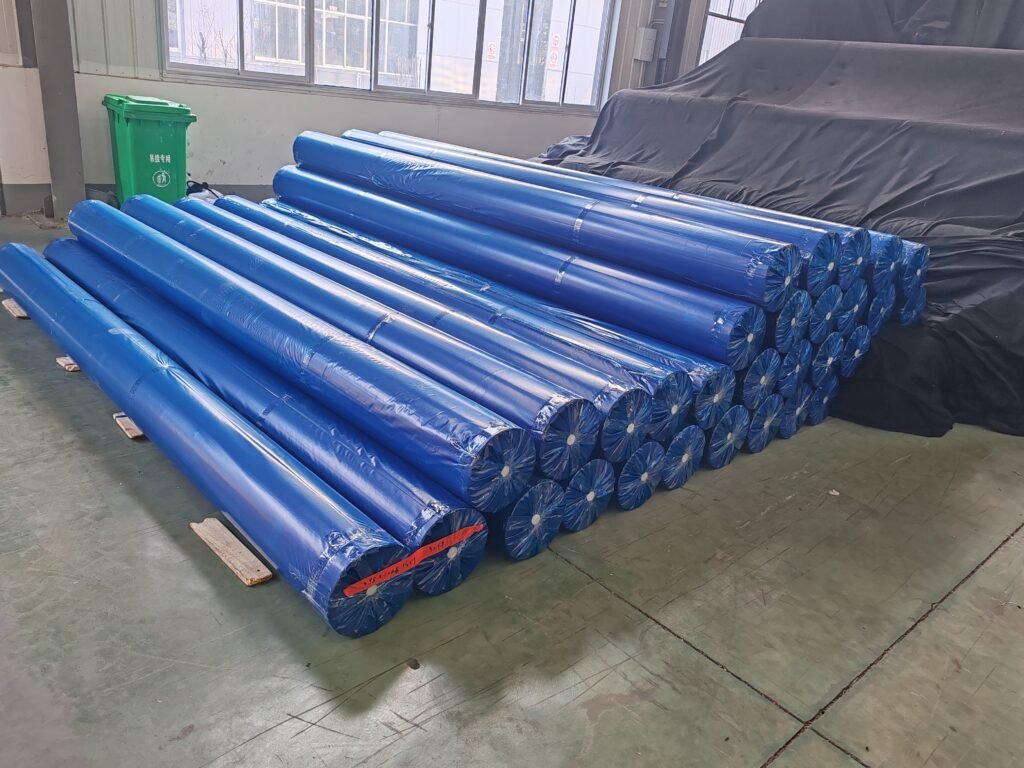
The Best Project Material Co., Ltd. (BPM Geosynthetics) Advantages
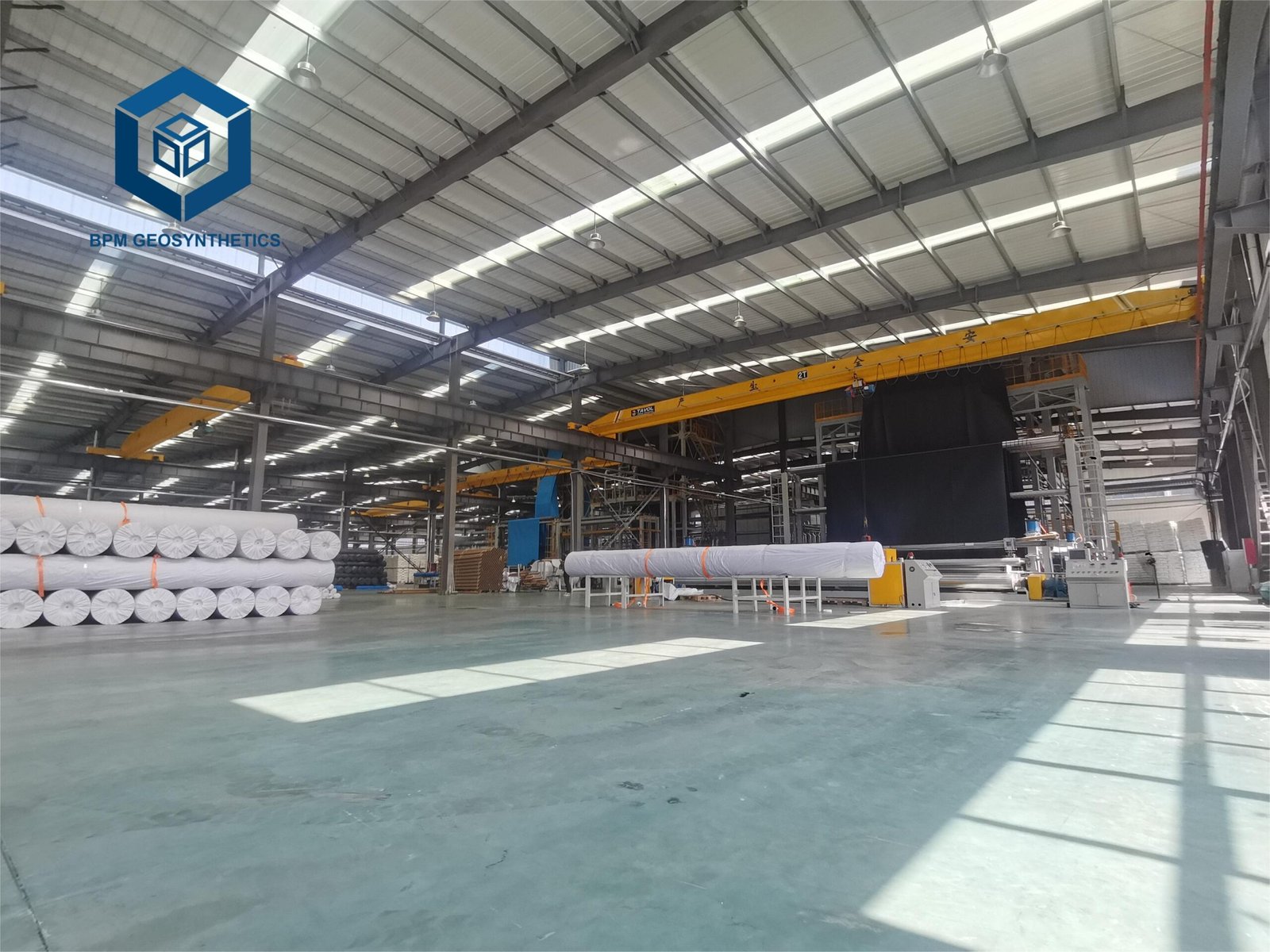
The Best Project Material Co., Ltd. (BPM Geosynthetics) excels as a manufacturer of premium short-fiber needle-punched nonwoven geotextiles optimized for landscape/drainage/filtration at 180–200 g/m². Key advantages:
- Customization Excellence— ODM/OEM: custom mass (100–500 g/m²), widths (3–6 m), retail packaging, private labeling.
- Technical Capabilities— 180–200 g/m² grades: grab tensile 8–12 kN/m, CBR puncture 1,400–2,200 N, permittivity 0.20–0.30 s⁻¹, flow 160–340 L/m²/s, AOS/O₉₅ 0.13–0.22 mm — ideal weed suppression/mulch separation/drainage.
- Certifications— ISO 9001:2015, CE marking, AASHTO M288 Class 2–3, NTPEP-indexed.
- Major Clients & Revenue Share— Supplies landscapers, garden centers, retailers North America/Europe/Middle East; 5–8% share light-mid nonwoven export.
- Support & Availability— Fast lead times, lab reports, technical assistance, competitive pricing.
BPM offers low MOQs, rapid sampling (7–14 days), end-to-end support — ideal for landscapers/retailers/homeowners.
Conclusion
The 7 best geotextile 180g/m² fabrics — from BPM’s short-fiber excellence to TenCate Mirafi premium — offer top solutions for mulch beds, gravel paths, paver bases and drainage. They deliver weed suppression (5–10 years), retention (30–60% less loss), infiltration (40–75% higher) and savings (35–65%).
Prioritize short-fiber needle-punched for conformability/filtration. For premium short-fiber geotextile 180g/m², visit BPM Geosynthetics at