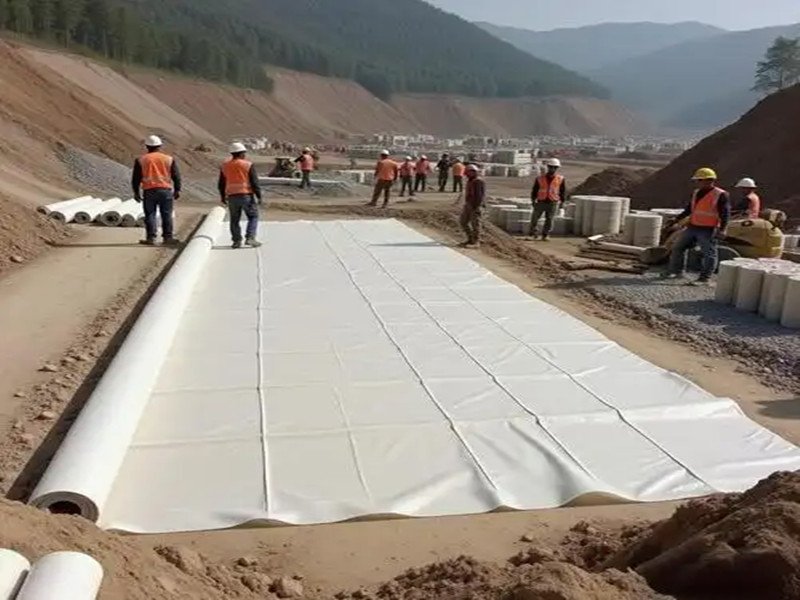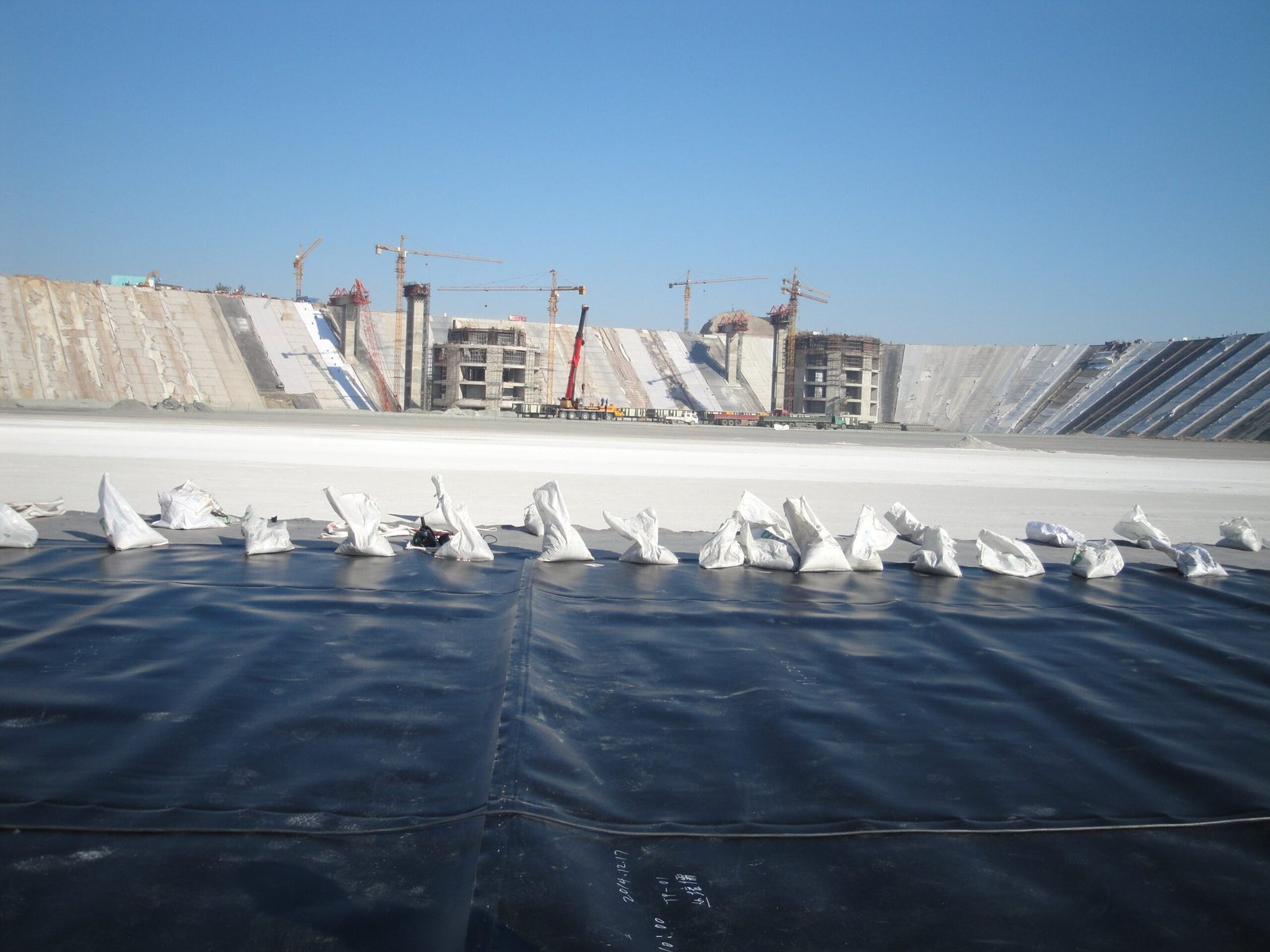
Geotextile road fabrics — predominantly nonwoven needle-punched or continuous-filament polypropylene (PP) geotextiles — are installed between subgrade soil and granular base or sub-base layers to provide separation, stabilization, filtration and limited reinforcement in paved and unpaved roadways, haul roads, access tracks, parking lots and construction platforms. At medium weights (200–500 g/m²), these fabrics prevent aggregate penetration into soft or muddy subgrades (CBR typically <3–8), reduce rutting under repeated traffic, stop fines migration (pumping), improve load distribution and allow 20–50% thinner granular layers while achieving equivalent or superior pavement life.
As of 2025, geotextile road fabrics represent ~30–38% of global geotextile consumption by volume (market valued at USD 9.8–10.5 billion), growing at 6.8–9.0% CAGR through 2030 (MarketsandMarkets, Grand View Research, Zion Market Research). Nonwovens hold 60–70% share in road stabilization/separation due to superior conformability, puncture resistance (CBR 1,200–6,900 N) and cost-effectiveness compared to woven fabrics, which dominate high-tensile reinforcement in very soft soils. Demand is driven by rising aggregate prices ($28–$58/ton), stricter DOT subgrade improvement requirements, public-land infrastructure projects, mining & logging haul road needs, renewable energy site access roads and climate-resilient rural road mandates.
This 2025 expert review ranks the 8 best geotextile road fabrics based on 2024–2025 manufacturer datasheets, independent lab reports (ASTM D4632 grab tensile, D4833 CBR puncture, D5261 Mullen burst, D4491 permittivity, D4751 AOS, D4355 UV retention), NTPEP validation, AASHTO M288 Class 1–3 compliance and documented field performance in unpaved roads, temporary access tracks, paved shoulder reconstruction, parking lots and construction platforms (rut depth reduction, bearing capacity increase, aggregate savings, survivability during compaction, long-term stability). Criteria prioritize puncture & tear strength for heavy construction traffic, separation efficiency on low-CBR subgrades, hydraulic properties under overburden, UV durability for exposed edges and cost-effectiveness ($/m² installed including labor).
Whether you’re a civil engineer specifying temporary haul roads over peat or clay, a contractor building rural gravel roads, a mining company establishing site access or a distributor sourcing reliable road fabric stock, the right geotextile road fabric reduces aggregate volume by 20–50%, cuts rut depths by 40–80% and delivers 30–65% lifecycle cost savings versus unreinforced or under-designed sections.
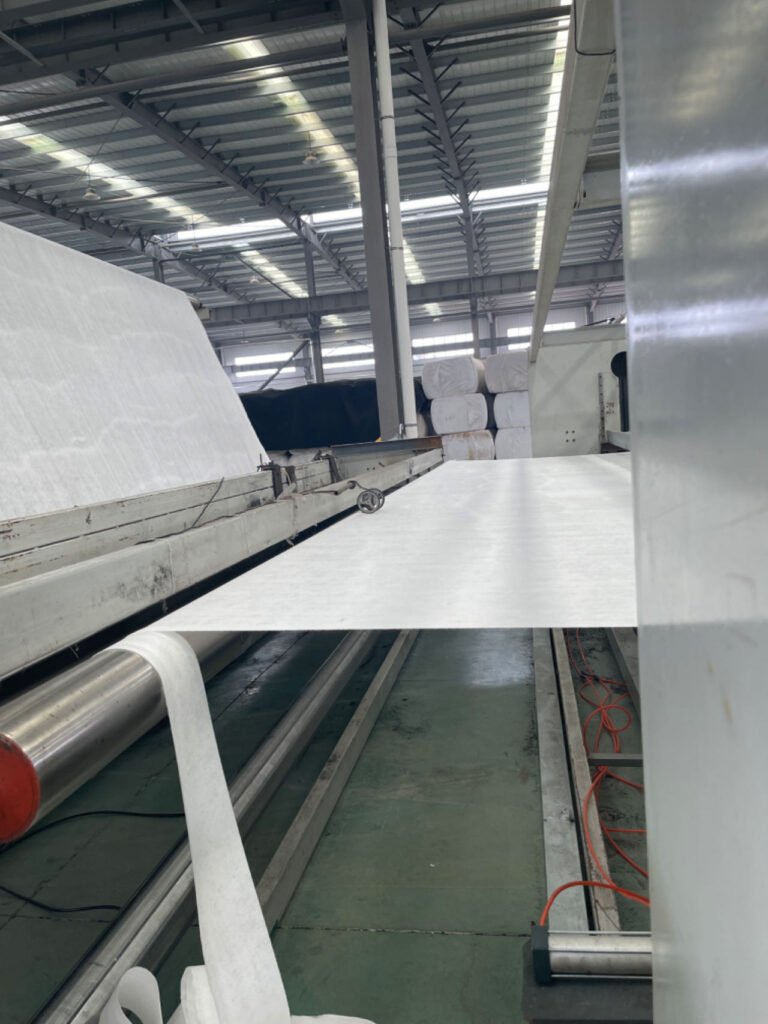
The 8 Best Geotextile Road Fabrics Reviewed
1. BPM Short Fiber Non-Woven Geotextile – Best Overall Geotextile Road Fabric
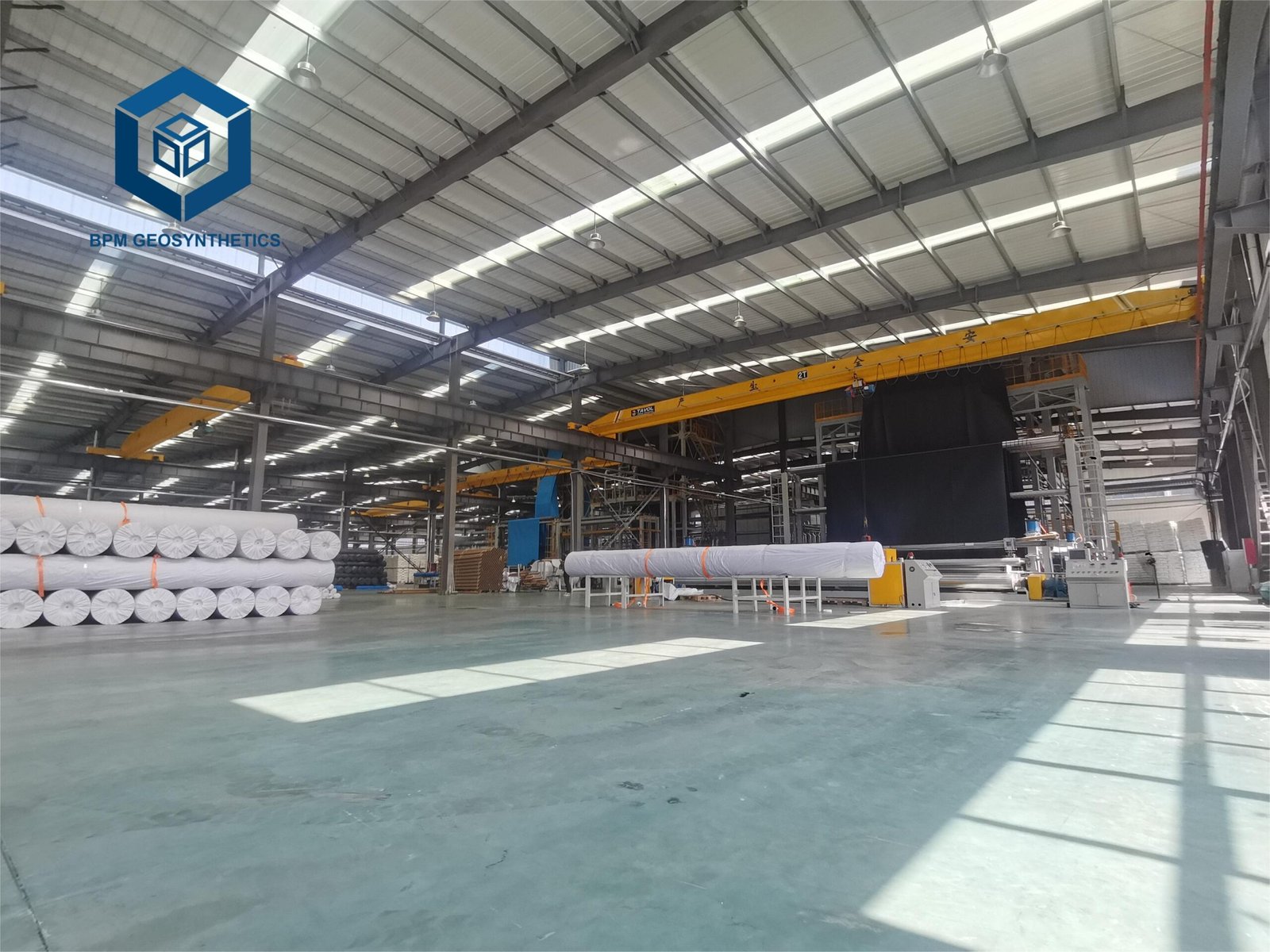
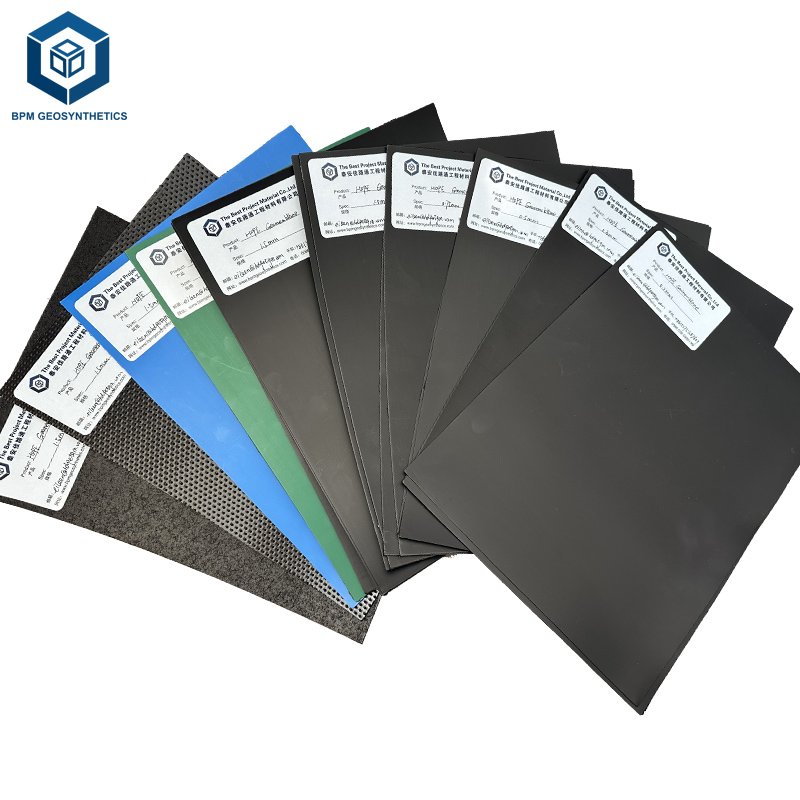
The Best Project Material Co., Ltd. (BPM Geosynthetics) produces premium short-fiber needle-punched nonwoven geotextiles optimized for road stabilization, separation and light reinforcement.
Key Specifications (typical 300–400 g/m² grades):
- Mass per unit area: 300–400 g/m²
- Thickness: 3.2–4.8 mm
- Grab tensile strength (MD/XD): 12–18 kN/m
- CBR puncture resistance: 2,200–3,600 N
- Trapezoid tear strength: 280–420 N
- Permittivity: 0.14–0.22 s⁻¹
- Flow rate normal to plane: 110–240 L/m²/s
- AOS/O₉₅: 0.12–0.22 mm
- UV retention (500 h): ≥75–85%
- Gradient ratio: <1.1–1.2
- Roll width/length: 3–6 m × 50–100 m
- Price range: $0.55–$0.95/m² (bulk wholesale)
Features & Advantages: Short-fiber structure delivers outstanding conformability to soft subgrades; strong puncture resistance under heavy compaction; consistent hydraulic properties; AASHTO M288 Class 1–2 compliant; NTPEP-indexed.
Primary Applications: Unpaved haul roads, construction platforms over soft soils, rural gravel road base reinforcement, parking lot subgrade separation, temporary access tracks.
Pros: Best puncture/tear balance; durable; cost-effective coverage. Cons: Slightly lower tear strength than continuous-filament grades.
Why Ranked #1: Highest combined survivability, separation efficiency and delivered value for road stabilization projects.
2. TenCate Mirafi 600X – Best High-Strength Woven Geotextile Road Fabric
TenCate Mirafi 600X is a premium high-tenacity woven polypropylene geotextile for heavy-duty road stabilization.
Key Specifications:
- Mass: ~280–320 g/m²
- Grab tensile strength (MD/XD): 22–35 kN/m
- CBR puncture resistance: 1,800–2,800 N
- Permittivity: 0.02 s⁻¹
- AOS/O₉₅: 0.43 mm
- Trapezoid tear: 350–500 N
- UV retention: 88% (500 h)
- Price range: $1.20–$2.00/m²
Features & Advantages: High tensile for superior membrane effect; NTPEP-validated; AASHTO M288 Class 1.
Primary Applications: Heavy-traffic gravel roads, commercial parking lots, haul roads over soft soils.
Pros: Exceptional load distribution & rut reduction. Cons: Lower in-plane drainage than nonwovens.
3. HUESKER Fortrac W 40/40 – Best High-Tensile Woven Road Fabric
HUESKER Fortrac W 40/40 woven geotextile is designed for high-load road stabilization.
Key Specifications:
- Mass: ~280–320 g/m²
- Tensile strength (MD/XD): 40 kN/m
- CBR puncture: 2,800–3,500 N
- Permittivity: 0.018 s⁻¹
- Price range: $1.40–$2.20/m²
Features & Advantages: Very high tensile & tear strength; durable; European standards compliance.
Primary Applications: Commercial access roads, heavy construction platforms.
Pros: Superior tensile performance. Cons: Limited drainage; premium pricing.
4. US Fabrics US 400NW – Best Value Heavy-Duty Nonwoven Road Fabric
US Fabrics 400NW provides robust stabilization at competitive pricing.
Key Specifications:
- Mass: 400 g/m²
- Grab tensile: 16–20 kN/m
- CBR puncture: 2,800–3,600 N
- Permittivity: 0.16 s⁻¹
- Price range: $0.85–$1.20/m²
Features & Advantages: High puncture resistance; AASHTO compliant.
Primary Applications: Retaining wall backfill, heavy haul roads.
Pros: Durable under construction stresses. Cons: Higher mass handling.
5. Propex Geotex 401 – Best Filtration-Stabilization Road Fabric
Propex Geotex 401 provides reliable stabilization with strong filtration.
Key Specifications:
- Mass: 400 g/m²
- Grab tensile: 15–19 kN/m
- CBR puncture: 2,600 N
- Permittivity: 0.18 s⁻¹
- Price range: $0.90–$1.30/m²
Features & Advantages: High flow/retention balance.
Primary Applications: Permeable gravel roads, rural roads with drainage needs.
Pros: Excellent filtration. Cons: Lower tensile than high-strength wovens.
6. ADS Nonwoven 400 g/m² – Best Drainage-Integrated Road Fabric
ADS nonwoven 400 g/m² is designed for drainage-enhanced stabilization.
Key Specifications:
- Mass: 400 g/m²
- Permittivity: 0.12–0.20 s⁻¹
- Flow rate: 100–180 L/m²/s
- Price range: $0.70–$1.00/m²
Features & Advantages: Pipe-compatible; AASHTO compliant.
Primary Applications: Trench drains, stormwater platforms.
Pros: Good value & drainage. Cons: Variable thickness.
7. Thrace Nonwoven 400 g/m² – Best European-Standard Road Fabric
Thrace offers high-quality European-compliant nonwoven.
Key Specifications:
- Grab tensile: 15–19 kN/m
- CBR puncture: 2,500–3,300 N
- Permittivity: 0.15 s⁻¹
- Price range: $0.80–$1.15/m²
Features & Advantages: Consistent quality; EN compliance.
Primary Applications: European infrastructure roads.
Pros: Reliable European standard. Cons: Higher import cost in some regions.
8. Belton Nonwoven 400 g/m² – Best Emerging Value Road Fabric
Belton supplies reliable nonwoven at competitive pricing.
Key Specifications:
- Grab tensile: 14–18 kN/m
- CBR puncture: 2,400–3,200 N
- Permittivity: 0.13–0.19 s⁻¹
- Price range: $0.70–$1.00/m²
Features & Advantages: Good balance; cost-effective.
Primary Applications: General road stabilization.
Pros: Strong emerging value. Cons: Less brand recognition.
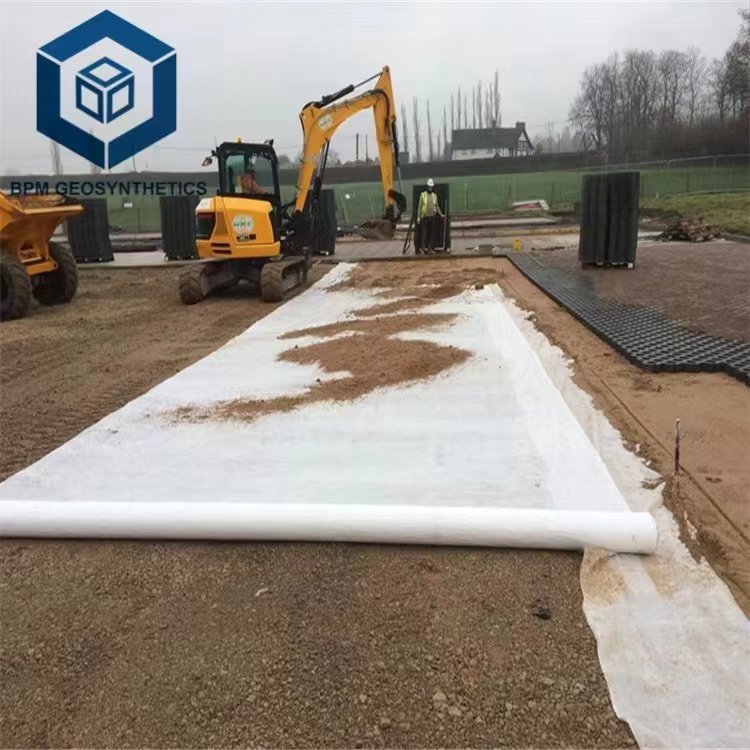
The Best Project Material Co., Ltd. (BPM Geosynthetics) Advantages
The Best Project Material Co., Ltd. (BPM Geosynthetics) excels as a manufacturer of premium short-fiber needle-punched nonwoven geotextiles optimized for road stabilization, separation and light reinforcement. Key advantages include:
- Customization Excellence— Full ODM/OEM capabilities: custom mass (200–600 g/m²), widths (3–6 m), roll lengths, and private labeling for contractors, distributors and engineers.
- Technical Capabilities— 300–400 g/m² grades deliver grab tensile 12–18 kN/m, CBR puncture 2,200–3,600 N, tear strength 280–420 N, permittivity 0.14–0.22 s⁻¹, flow rates 110–240 L/m²/s, AOS/O₉₅ 0.12–0.22 mm — exceeding AASHTO M288 Class 1–2 requirements for medium-duty road stabilization/separation.
- Certifications— ISO 9001:2015 quality management, CE marking, AASHTO M288 compliance, NTPEP-indexed performance data.
- Major Clients & Revenue Share— Supplies to road contractors, mining companies, public works departments and distributors in North America, Europe, Middle East; estimated 5–8% share in the mid-weight nonwoven road geotextile export segment.
- Support & Availability— Fast lead times (4–6 weeks), comprehensive third-party lab testing reports, remote technical assistance, and competitive bulk pricing.
BPM offers low minimum order quantities for custom runs, rapid sampling (7–14 days), and end-to-end support from specification review through installation guidance — making it an ideal partner for contractors and engineers seeking reliable, high-performance geotextile road fabrics.
Conclusion: Choosing the Best Geotextile Road Fabric
The 8 best geotextile road fabrics — from BPM’s short-fiber excellence in puncture resistance and separation to TenCate Mirafi 600X’s high-tensile woven performance — represent the highest-quality solutions available in 2025 for unpaved roads, haul roads, construction platforms and soft subgrade reinforcement. These fabrics deliver measurable gains in load distribution, rut reduction, aggregate savings and long-term durability.