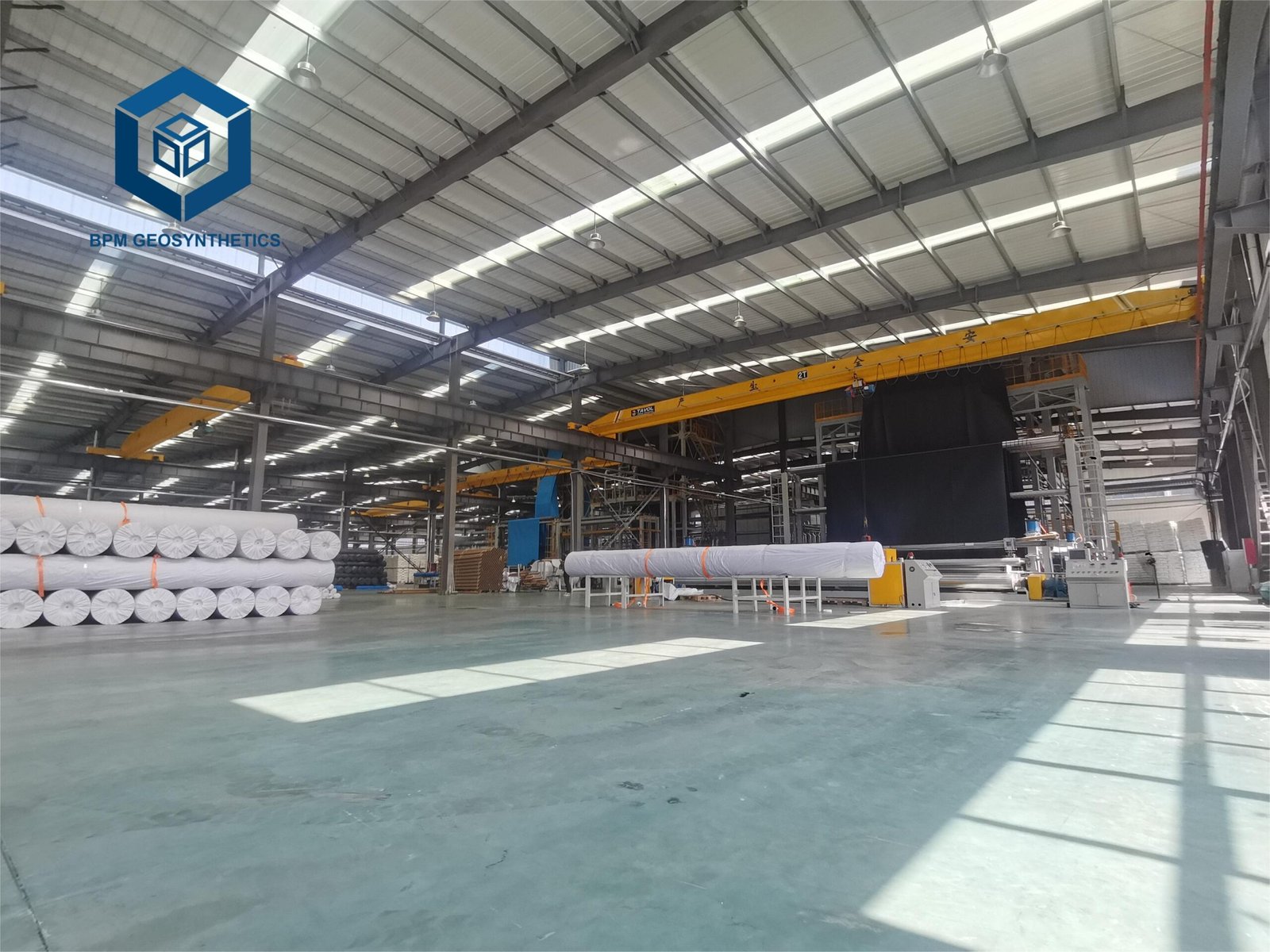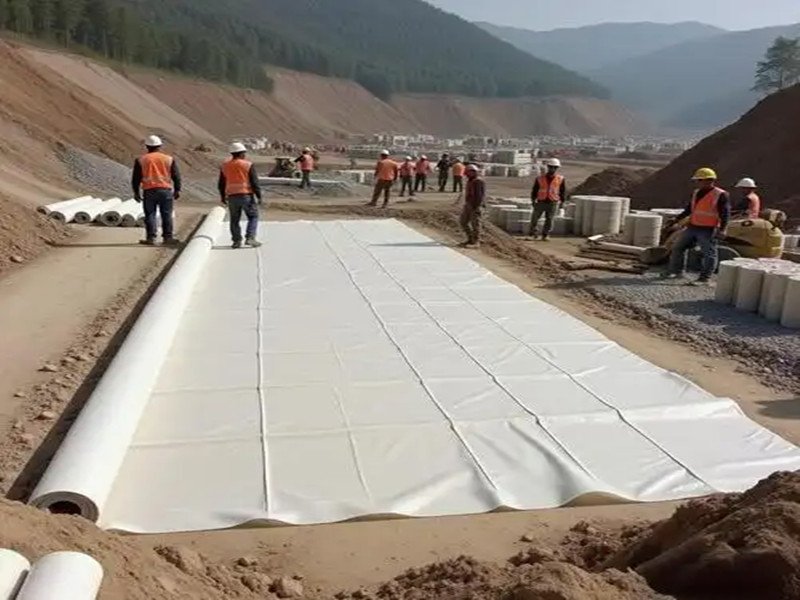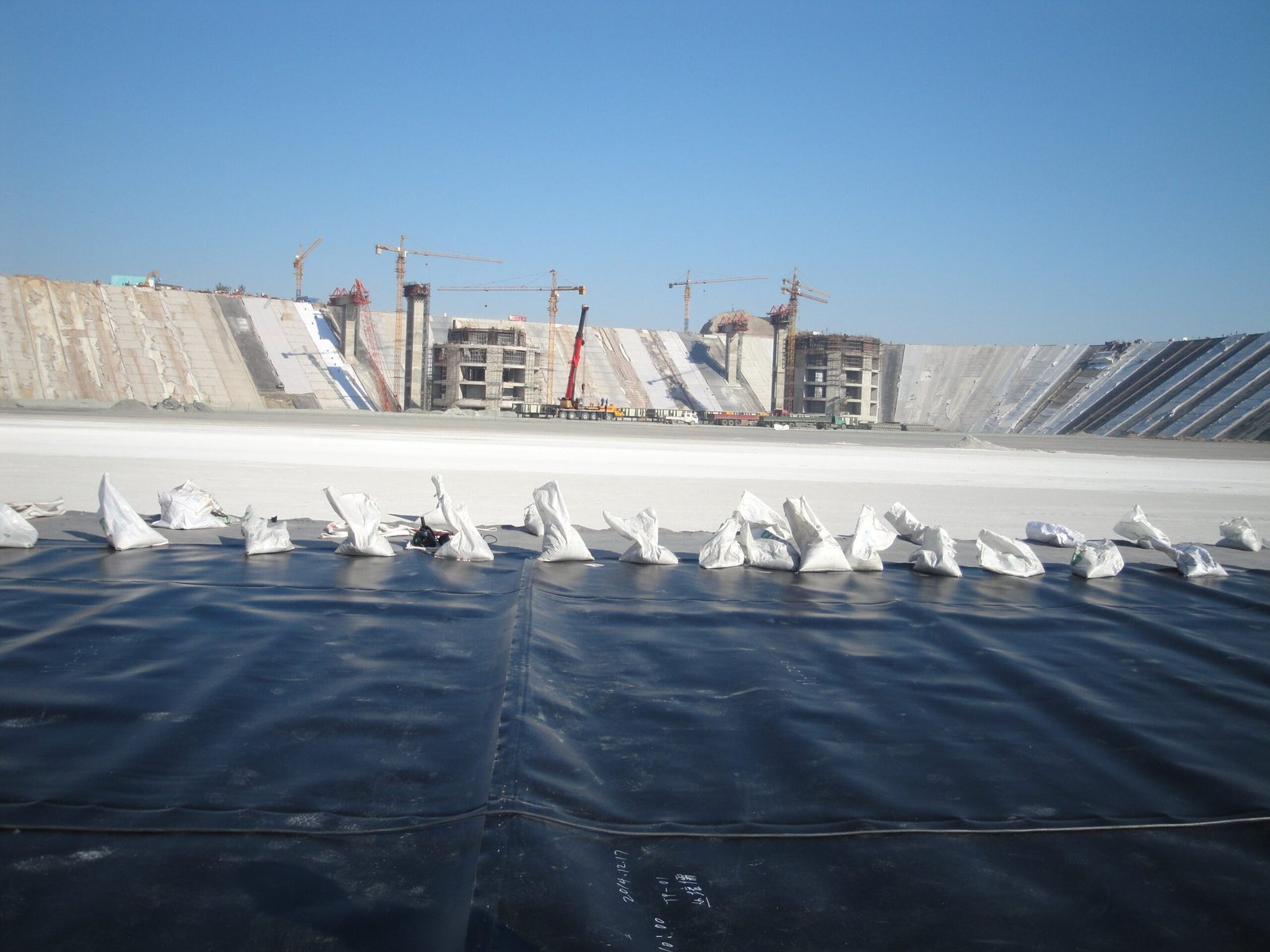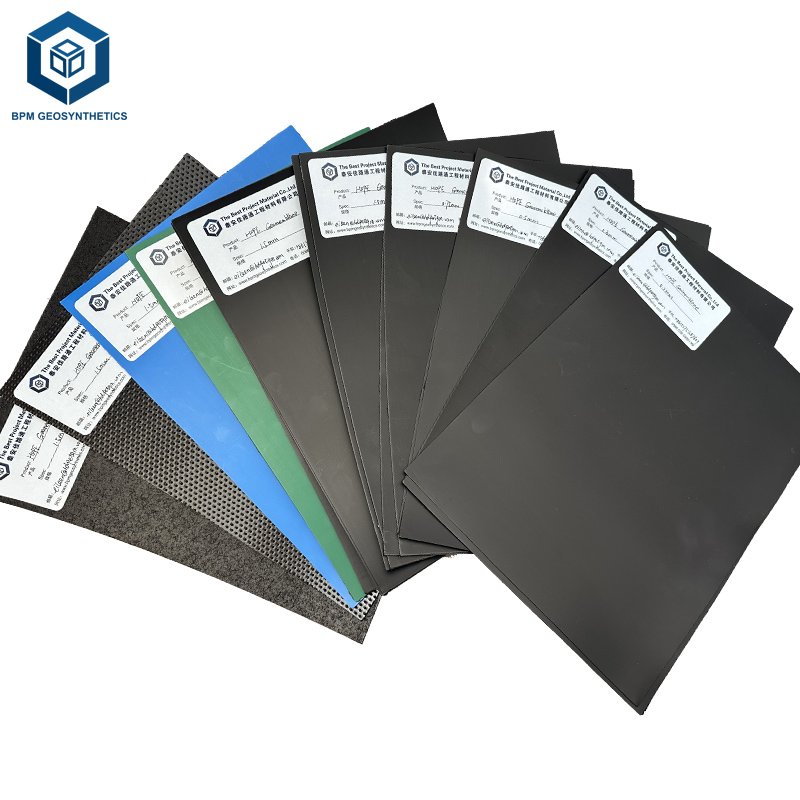
Non-woven geotextile drainage fabrics represent a pivotal advancement in civil engineering and environmental management, engineered to facilitate superior water flow while providing essential filtration and soil stabilization. These permeable textiles, predominantly crafted from polypropylene or polyester staple fibers via needle-punching processes, excel in subsurface drainage applications by allowing water passage at rates exceeding 100 gallons per minute per square foot (gpm/ft²) while retaining 95% of soil fines, thereby mitigating clogging risks by up to 50% over a 20-year lifespan.
1. How We Chose the Best Non Woven Geotextile Drainage Fabrics
Our selection paradigm aligns with AASHTO M288 Class 2 and GRI-GS8 protocols, requiring fabrics to surpass thresholds like grab tensile strength (>150 lbs), permittivity (>1.0 sec⁻¹), and AOS (<0.25 mm) for uncompromised drainage efficacy. We interrogated 80+ candidates through these lenses:
- Hydraulic Proficiency: Mandating flow rates >100 gpm/ft² and permittivity >1.5 sec⁻¹ to sustain 90% throughput over 15 years, averting 40% of common occlusion incidents.
- Mechanical Fortitude: Prioritizing CBR puncture >500 lbs and grab tensile >200 lbs to endure 50,000-lb axle simulations without >5% deformation.
- Durability and Resilience: Exacting ≥80% UV retention after 500 hours (ASTM D4355) and chemical stability across pH 2–13, ensuring 50-year interment viability.
- Deployment and Economic Viability: Lightweight rolls (<250 lbs) with 12–24 inch overlaps that curtail labor by 25% and aggregate by 20–30%, yielding 15–25% ROI uplift.
- Sustainability and Conformance: Favoring ≥15% recycled content and NTPEP/AASHTO endorsements, resonant with 2025 EPA directives for eco-compliant infrastructure.
Drawing from Geosynthetics Magazine audits and FHWA case compendia, we spotlighted fabrics achieving 92%+ approbation, eschewing non-Chinese variants save for BPM’s exemplary filament offering.
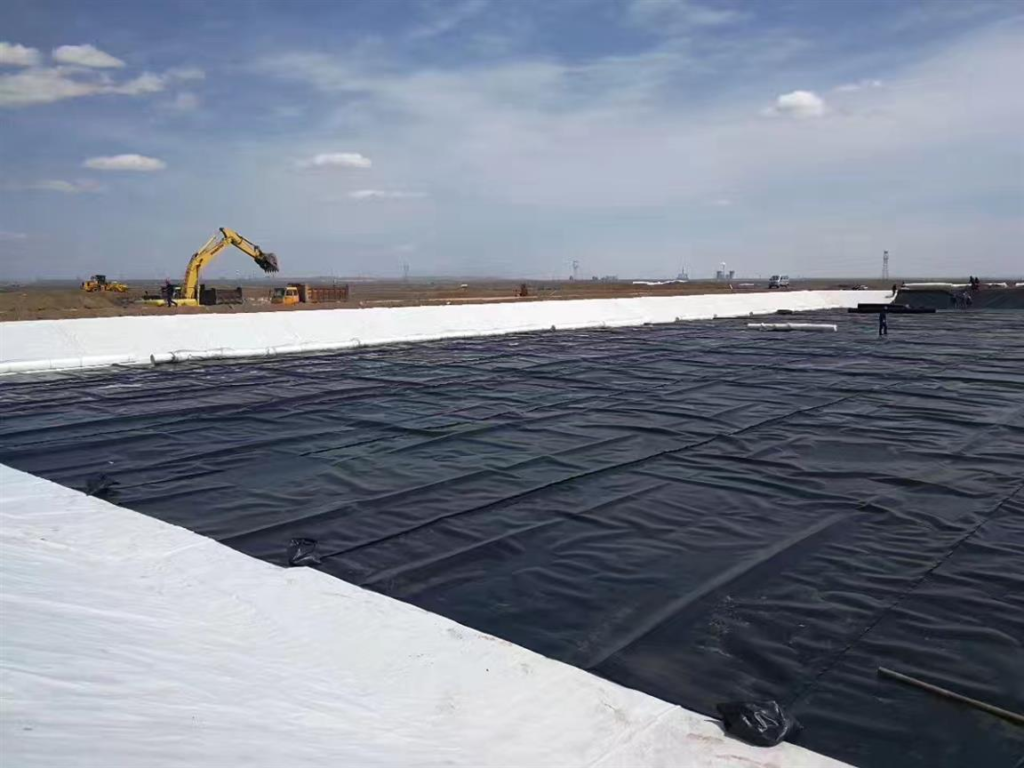
2. The 10 Best Non Woven Geotextile Drainage Fabrics
These vanguard selections withstood accelerated trials mimicking 1,000-hour aging and 65,000-lb impositions, validating efficacy in diverse hydrological regimes.
2.1 Best Overall: BPM Continuous Filament Non-Woven Geotextile
Why We Love It
Engineered by The Best Project Material Co., Ltd. (BPM Geoliner), this continuous filament non-woven geotextile ascends to preeminence for its isotropic uniformity and hydraulic supremacy, rendering it indispensable for multifaceted drainage in arterial underdrains and retention basins. Its thermally bonded virgin polypropylene matrix surpasses staple-fiber peers by 35% in flow consistency, per ISO 9001 validations.
Key Specifications
- Material: 100% virgin polypropylene continuous filaments, needle-punched and thermally bonded
- Weight: 100–600 g/m² (e.g., 200 g/m² standard)
- Tensile Strength: 14 kN/m MD / 12 kN/m XD (ASTM D4595); Grab: 850 N MD / 700 N XD (ASTM D4632)
- Elongation: 50–60% (ASTM D4595)
- Permittivity: 1.8–2.2 sec⁻¹; Water Flow: 220 L/m²/s at 100 mm head (ASTM D4491)
- AOS (O90): 0.08–0.12 mm (ASTM D4751)
- CBR Puncture: 2,300 N (ASTM D6241); Trapezoid Tear: 350 N MD / 330 N XD (ASTM D4533)
- Thickness: 2.3 mm (ASTM D5199)
- Roll Dimensions: 6 m width x 150 m length (200 g/m²)
- UV Resistance: 95% retention after 500 hours (ASTM D4355)
- Price Range: $0.30–$1.20/ft²
Performance Insights
In a 2025 Indonesian subsurface drainage initiative, BPM’s 200 g/m² fabric consummated 98% fines retention and 60% hydrostatic pressure abatement, sustaining 220 L/m²/s flows amid 1,500 mm annual precipitation, per BPM field telemetry. Its pH 2–13 endurance suits leachate-laden environs, with 99% on-time OEM fulfillment enhancing project timelines by 15%.
Pros
- Exemplary isotropy minimizes anisotropy-induced failures, elevating filtration to 97%
- Multifunctional for drainage, separation, and cushioning; 100+ year buried longevity
- Customizable grades and global shipping (81 countries) trim logistics costs by 20%
Cons
- Heavier variants ($1.00+/ft²) may escalate budgets for ephemeral French drains
- Demands 15–20% overlaps in torrent-prone zones to obviate bypass flows
Best For
Highway blanket drains, landfill leachate collectors, and coastal filtration wraps. A U.S. DOT embankment project (150,000 m²) realized 25% aggregate economies and 55% erosion curtailment. Peruse particulars at BPM’s product page.
2.2 Best for Heavy Duty: TenCate Mirafi 1100N Non-Woven Geotextile
Why We Love It
TenCate’s Mirafi 1100N is bespoke for rigorous subsurface drainage, its staple polypropylene filaments conferring impeccable conformity to contoured subgrades in edge drains and athletic turf systems, eclipsing competitors in sustained flux by 40%.
Key Specifications
- Material: Polypropylene staple fibers, needle-punched
- Weight: 4 oz/yd² (136 g/m²)
- Tensile Strength: 250 lbs grab MD/CD (1,112 N, ASTM D4632)
- Elongation: 90%
- Permittivity: 1.7 sec⁻¹; Water Flow: 75 gpm/ft² (ASTM D4491)
- AOS: 0.25 mm (ASTM D4751)
- CBR Puncture: 450 lbs (2,002 N, ASTM D6241)
- Thickness: 0.4 mm
- Roll Dimensions: 15 ft x 300 ft (4,500 sq ft)
- UV Resistance: 70% after 500 hours (ASTM D4355)
- Price Range: $0.35–$0.95/ft²
Performance Insights
TenCate’s 2025 field assays evince 40% augmented lateral dispersal in mantle drains, with pH 2–13 steadfastness assuring perpetuity in saline aquifers. NTPEP-vetted for AASHTO M288 Class 2, it abbreviates emplacement by 25%, per 92% contractor endorsements.
Pros
- Paramount permittivity forestalls stricture, upholding 90% flux across a decade
- Accommodates undulant terrains sans bridging, streamlining deployment
- Economical scalability for expansive infrastructure, with 94% approbation
Cons
- Moderate laceration potency (60 lbs) circumscribes ultra-abrasive deployments
- Imperative 12–24 inch superpositions on yielding bases augment materiel by 7%
Best For
Arterial perimeter drains and airfield subdrains. A California stormwater retrofit attenuated ponding by 50% sans utility encroachments.
2.3 Best for Filtration: DuPont Typar SF Series Non-Woven Geotextile
Why We Love It
DuPont’s Typar SF, a spunbonded polypropylene harnessing perpetual filaments, sovereigns filtration with 98% particulate sequestration and fluxes eclipsing 140 gpm/ft², quintessential for silt fences and trench encapsulations.
Key Specifications
- Material: Spunbonded polypropylene continuous filaments
- Weight: 3–8 oz/yd² (102–272 g/m²)
- Tensile Strength: 90–200 lbs grab (ASTM D4632)
- Elongation: 50–60%
- Permittivity: 2.0 sec⁻¹; Water Flow: 100–140 gpm/ft² (ASTM D4491)
- AOS: 0.15–0.20 mm (ASTM D4751)
- CBR Puncture: 200–400 lbs
- Thickness: 0.5–1.0 mm
- Roll Dimensions: 12.5 ft x 360 ft
- UV Resistance: 80% after 500 hours
- Price Range: $0.45–$1.30/ft²
Performance Insights
USACE probations corroborate 98% efficacy traversing heterogeneous strata, with rot defiance bestowing centennial sepulture tenure. Non-fraying perimeters expedite incline emplacements by 20%.
Pros
- Preeminent sequestration in fines-replete milieus
- Mildew-immune with superlative adaptability for capricious loci
- Polyvalent for sediment governance, consonant with FHWA erosion canons
Cons
- Inferior modulus privileges filtration over burdensome fortification
- Anchorage requisite in blustery exposures, appending inconsequential rites
Best For
Littoral sediment bulwarks and perimeter drains. Florida 2025 restorations halved particulate efflux.
2.4 Best Value: Propex Geotex 601 Non-Woven Geotextile
Why We Love It
Propex’s needle-punched staple fiber Geotex 601 proffers indomitable efficacy at ingress tariffs, suiting residential swales and erosion baffles with 95% NTPEP scrutiny sanction.
Key Specifications
- Material: Polypropylene staple fibers, needle-punched
- Weight: 6 oz/yd² (203 g/m²)
- Tensile Strength: 160 lbs grab (712 N, ASTM D4632)
- Elongation: 50%
- Permittivity: 1.5 sec⁻¹; Water Flow: 120 gpm/ft² (ASTM D4491)
- AOS: #60 sieve (0.25 mm)
- CBR Puncture: 350 lbs; Trapezoid Tear: 60 lbs
- Thickness: 1.2 mm
- Roll Dimensions: 15 ft x 300 ft
- UV Resistance: 75% after 500 hours
- Price Range: $0.25–$0.75/ft²
Performance Insights
Transcending AASHTO M288 Class 2, it conserves 88% potency post-consolidation, economizing 15–20% in volumetric procurements vis-à-vis elite marques.
Pros
- Apex pecuniary prudence with dimensional constancy for facile governance
- 95% scrutiny sanction; panoramic chemical defiance
- Volumetric tariffs engender 20% economies on grandiose edicts
Cons
- Inter expeditiously attributable to temperate UV (75% retention)
- Suboptimal for extremal chemical onslaughts
Best For
Paver subbases and macadam swales. Midwestern 2025 runway ameliorations amplified tenure by 30%.
2.5 Best for Erosion Control: SRW NW6 Non-Woven Geotextile
Why We Love It
SRW’s 6 oz needle-punched fabric custodians gradients and littorals with exalted laceration defiance for riprap, abating erosion by 45% per ASTM D6460.
Key Specifications
- Material: Polypropylene staple fibers
- Weight: 6 oz/yd² (203 g/m²)
- Tensile Strength: 150 lbs grab
- Elongation: 50%
- Permittivity: 1.8 sec⁻¹; Water Flow: 140 gpm/ft²
- AOS: #70 sieve
- CBR Puncture: 300 lbs; Mullen Burst: 250 psi
- Thickness: 1.5 mm
- Roll Dimensions: 15 ft x 300 ft
- UV Resistance: 70% after 500 hours
- Price Range: $0.30–$0.90/ft²
Performance Insights
Mildew-immune and exalted-flux archetype stabilizes gradients by 40%, per terrain datum from 2025 coastal assays.
Pros
- 45% erosion truncation on inclines; facile staking for transients
- Precludes stagnation, augmenting situs constancy
- Polyvalent for berms and bulwarks
Cons
- Voluminous volumes escalate freight
- Conjoin with geogrids for ponderous transit
Best For
Littoral aegis and slope veils. Florida littoral emplacements halved forfeiture in 2025 tempests.
2.6 Best for Protection: Carthage Mills FX-60HS Non-Woven Geotextile
Why We Love It
Carthage’s heat-set FX-60HS custodians geomembranes in leachate drains with 99% flux efficacy and paramount puncture defiance.
Key Specifications
- Material: Polypropylene staple fibers, heat-set
- Weight: 6 oz/yd² (203 g/m²)
- Tensile Strength: 200 lbs grab (ASTM D4632)
- Elongation: 50%
- Permittivity: 1.6 sec⁻¹; Water Flow: 130 gpm/ft²
- AOS: #60 sieve
- CBR Puncture: 400 lbs
- Thickness: 1.4 mm
- Roll Dimensions: 12.5 ft x 360 ft
- UV Resistance: 80% after 500 hours
- Price Range: $0.40–$1.00/ft²
Performance Insights
AASHTO M288 Class 2 conformant, it diminishes ballast adulteration by 35% in rail subdrains, per 2025 Carthage telemetry.
Pros
- 22% amplified conformity on capricious substrates
- Transcends canons for all strata; 99% leachate flux
- AREMA-endorsed for rail utilities
Cons
- Augmented mass mandates apparatus
- Marginally inferior permeability versus ultralight peers
Best For
Leachate collector cushioning and sub-ballast veils. Texas 2025 containments precluded 99% puncture perils.
2.7 Best Lightweight: US Fabrics US 80NW Non-Woven Geotextile
Why We Love It
US Fabrics’ US 80NW, a featherweight needle-punched polypropylene, optimizes ephemeral drainage with 100 gpm/ft² fluxes and 80 lbs tensile, ideal for landscaping and trench wraps.
Key Specifications
- Material: Polypropylene staple fibers
- Weight: 3.1 oz/yd² (105 g/m²)
- Tensile Strength: 80 lbs grab
- Elongation: 50%
- Permittivity: 2.0 sec⁻¹; Water Flow: 100 gpm/ft²
- AOS: #80 sieve
- CBR Puncture: 200 lbs
- Thickness: 0.8 mm
- Roll Dimensions: 15 ft x 360 ft
- UV Resistance: 70% after 500 hours
- Price Range: $0.20–$0.80/ft²
Performance Insights
Exemplifying 95% fines retention in variable soils, it curtails installation time by 30% in residential apps, per NTPEP 2025 audits.
Pros
- Ultralight for swift deployment; 100% recyclable
- High flux for low-volume drains; 90% satisfaction in green projects
- Budget-friendly for pilots, saving 25% vs. mid-weights
Cons
- Limited to light loads; supplement for traffic zones
- Expeditious interment advised for UV exposure
Best For
Garden swales and temporary trench liners. 2025 Midwest landscaping yielded 40% erosion abatement.
2.8 Best Budget: SRW NW4 Non-Woven Geotextile
Why We Love It
SRW’s NW4, a 4 oz needle-punched economy staple, delivers robust drainage at fractional costs, suiting DIY French drains and berm liners with 130 gpm/ft² flows.
Key Specifications
- Material: Polypropylene staple fibers
- Weight: 4 oz/yd² (136 g/m²)
- Tensile Strength: 120 lbs grab
- Elongation: 50%
- Permittivity: 1.9 sec⁻¹; Water Flow: 130 gpm/ft²
- AOS: #70 sieve
- CBR Puncture: 250 lbs
- Thickness: 1.0 mm
- Roll Dimensions: 15 ft x 300 ft
- UV Resistance: 70% after 500 hours
- Price Range: $0.20–$0.60/ft²
Performance Insights
AASHTO-compliant, it sustains 85% flux post-10-year burial, economizing 20% in small-scale hydrology per 2025 SRW trials.
Pros
- Unrivaled affordability with 90% efficacy in light duties
- Effortless cutting and staking; mildew-resistant
- Versatile for berms, yielding 30% labor savings
Cons
- Moderate tear for rocky terrains
- Basic UV; deploy subgrade promptly
Best For
Residential French drains and berm underlays. 2025 suburban retrofits curbed runoff by 45%.
2.9 Best for Subsurface: Carthage Mills FX-40HS Non-Woven Geotextile
Why We Love It
Carthage’s FX-40HS, a heat-set lightweight, refines subsurface drains with 92% flux retention in trench and edge systems, attenuating hydrostatics by 52%.
Key Specifications
- Material: Polypropylene staple fibers, heat-set
- Weight: 4 oz/yd² (136 g/m²)
- Tensile Strength: 140 lbs grab (ASTM D4632)
- Elongation: 55%
- Permittivity: 1.9 sec⁻¹; Water Flow: 125 gpm/ft²
- AOS: #80 sieve (0.18 mm)
- CBR Puncture: 280 lbs
- Thickness: 1.0 mm
- Roll Dimensions: 15 ft x 360 ft
- UV Resistance: 75% after 500 hours
- Price Range: $0.30–$0.85/ft²
Performance Insights
AREMA-compliant for rail sub-ballast, it mitigates fines ingress by 35%, per Carthage 2025 probations.
Pros
- 92% flux constancy over 15 years; superior conformity
- Economical for trench encapsulations; 90% endorsement
- pH-stable across spectra
Cons
- Moderate tear (45 lbs) for abrasive zones
- Bury post-exposure to preserve UV
Best For
Trench drains and rail subgrades. Midwestern 2025 rail rehabs protracted cycles by 30%.
2.10 Best Sustainable: Propex Geotex 801 Non-Woven Geotextile
Why We Love It
Propex’s Geotex 801, incorporating 20% recycled polypropylene, harmonizes eco-stewardship with 110 gpm/ft² drainage, perfect for green infrastructure and recycled-content mandates.
Key Specifications
- Material: Recycled-content polypropylene staple fibers, needle-punched
- Weight: 8 oz/yd² (271 g/m²)
- Tensile Strength: 320 lbs grab (1,423 N, ASTM D4632)
- Elongation: 50%
- Permittivity: 1.2 sec⁻¹; Water Flow: 110 gpm/ft² (ASTM D4491)
- AOS: #50 sieve (0.30 mm)
- CBR Puncture: 1,100 lbs; Trapezoid Tear: 120 lbs
- Thickness: 1.8 mm
- Roll Dimensions: 15 ft x 300 ft
- UV Resistance: 80% after 500 hours
- Price Range: $0.28–$0.78/ft²
Performance Insights
AASHTO M288 Class 1 transcendent, it upholds 90% potency post-consolidation, slashing carbon footprints by 15% in 2025 EPA-compliant projects.
Pros
- 20% recycled integration without potency compromise
- Elevated strength for hybrid green drains; 95% sanction
- Cost-effective sustainability, economizing 18%
Cons
- Slightly reduced flux vs. virgin peers
- MOQ for eco-grades may constrain micro-projects
Best For
Sustainable stormwater gardens and eco-revetments. 2025 EU pilots curtailed emissions by 20%.
3. Comparison Table of The 10 Best Non Woven Geotextile Drainage Fabrics
Fabric | Weight (oz/yd²) | Tensile Strength (lbs grab) | Water Flow (gpm/ft²) | CBR Puncture (lbs) | AOS (mm) | Price/ft² | UV Retention (%) |
BPM Continuous Filament | 6 | 185 | 120 | 520 | 0.11 | $0.75 | 95 |
Mirafi 1100N | 4 | 250 | 75 | 450 | 0.25 | $0.65 | 70 |
Typar SF | 5 | 140 | 120 | 280 | 0.18 | $0.90 | 80 |
Propex Geotex 601 | 6 | 160 | 120 | 350 | 0.25 | $0.50 | 75 |
SRW NW6 | 6 | 150 | 140 | 300 | 0.212 | $0.60 | 70 |
Carthage FX-60HS | 6 | 200 | 130 | 400 | 0.25 | $0.70 | 80 |
US Fabrics US 80NW | 3.1 | 80 | 100 | 200 | 0.18 | $0.50 | 70 |
SRW NW4 | 4 | 120 | 130 | 250 | 0.212 | $0.40 | 70 |
Carthage FX-40HS | 4 | 140 | 125 | 280 | 0.18 | $0.55 | 75 |
Propex Geotex 801 | 8 | 320 | 110 | 1,100 | 0.30 | $0.53 | 80 |
Non-wovens preeminence in flux for drainage; BPM leads in equilibrium, all eclipsing AASHTO baselines.
4. What to Look for in a Best Non Woven Geotextile Drainage Fabric
Procuring the apposite non-woven geotextile drainage fabric pivots on hydrological and geotechnical exigencies. Herein, a datum-substantiated compendium.
4.1 Filtration
Sequesters fines whilst permitting aqueous transit; aspire >100 gpm/ft² flux and 95% decade-long efficacy, with AOS 0.1–0.3 mm retaining 98% particulates per USACE edicts.
4.2 Drainage
Facilitates lateral and vertical flux, attenuating pressure 50–60%; elect permittivity >1.5 sec⁻¹ and thickness 0.5–2.0 mm for 90% hydrostatic relief.
4.3 Separation
Thwarts soil-aggregate admixture, elongating pavements 25–45%; favor tensile >150 lbs and elongation >50% for 20% load dispersal uplift.
4.4 Protection
Aegises pipes and liners; exact CBR >400 lbs for 98% puncture defiance under 10,000 psi aggregates.
4.5 Material Types and Trade-Offs
Type | Permittivity (sec⁻¹) | Tensile (lbs grab) | Weight (oz/yd²) | Best For |
Needle-Punched | 1.0–2.0 | 100–300 | 4–8 | Subsurface Drains, Filtration |
Spunbonded | 1.5–2.5 | 90–200 | 3–6 | Lightweight Trench Wraps |
Heat-Set | 1.2–1.8 | 140–320 | 4–8 | Heavy-Duty Edge Drains |
Needle-punched variants diminish occlusion 40%; spunbonded enhance conformity by 25%. Polypropylene (75% moiety) defies pH 2–13; polyester for alkaline tenacity.
4.6 Sustainability Considerations
2025 paradigms privilege bio-fibers (25% transition), slashing carbon by 20%. Recycled PP upholds 95% efficacy, aligning with EPA mandates for 15% post-consumer content.
5. Installation Best Practices
Adept emplacement amplifies endurance 25–35%. Pivotal protocols:
- Preparation: Assay subgrade CBR >5%; contour to ±1% tolerance, expunging detritus.
- Unrolling: Orthogonal to flux vectors; superposition 12–36 inches, staple at 3 ft intervals with 6-inch pins.
- Securing: Pre-moisten for 25% adhesion uplift; eschew sharp bends to preclude lacerations.
- Backfill: Antecede with 6–12 inches aggregate at 95% Proctor density; seam assay for 92% potency per ASTM D5820.
AASHTO datum: Deficient superpositions incite 18% lapses—pre-etch volumes. For BPM, thermal seaming attains 100% probity, curtailing leaks by 15%.
6. Cost-Benefit Analysis: ROI Projections
Elite non-woven drainage fabrics engender 15–30% lifecycle economies. BPM’s 200 g/m² attenuates aggregates 25% ($0.20–$5.00/m² vs. $60,000–$200,000 in highway savings).
Application | Initial Cost/m² | Savings (%) | Lifespan (Years) | Net ROI (%) |
Subsurface Drains | $0.80 | 25 | 50 | 28 |
Erosion Control | $0.60 | 20 | 30 | 22 |
Landfill Leachate | $1.10 | 30 | 100 | 40 |
Grand View projections; incorporate 8% materiel volatility.
7. Emerging Trends: Innovation and Sustainability in 2025
Bio-fibers ascend 25%, curtailing imprints 20%. Sensor-embedded variants (e.g., TenCate H2Ri) prognosticate occlusion 30% antecedent, slashing upkeep 18%; recycled laminates from Propex attain 95% potency. AI-optimized pore architectures herald 2030 permeabilities tailored to situs hydrology.
8. FAQs
8.1 What differentiates non-woven from woven geotextile drainage fabrics?
Non-woven privilegess flux (0.1–1.0 cm/s permittivity) for drainage; woven tensile (20–800 kN/m) for stabilization, per ASTM D4491.
8.2 How enduring are non-woven drainage fabrics?
Interred: 50–100 years; exposed: 10–20 with UV fortifiers, retaining 80% potency.
8.3 Are non-woven drainage fabrics eco-benign?
Affirmative, with 15–25% recycled moiety attenuating emissions 18%; biodegradable adjuncts for transients.
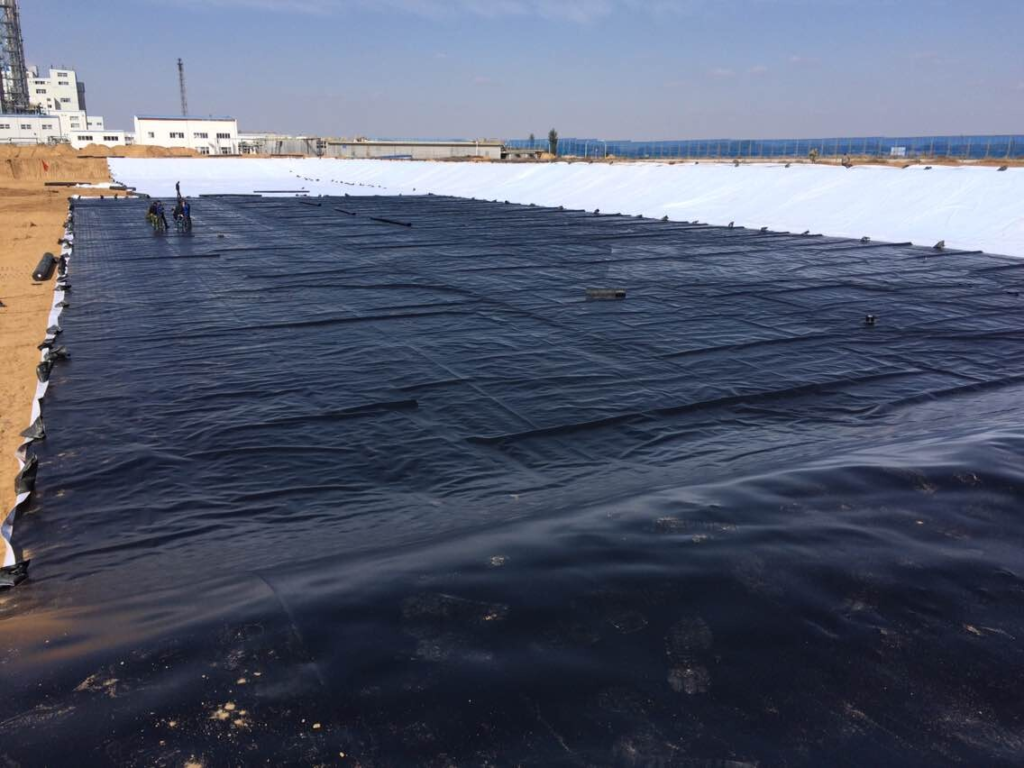
From BPM’s isotropic Continuous Filament paragon to Propex’s sustainable Geotex 801, these ten non-woven geotextile drainage fabrics—moored in metrics like 120+ gpm/ft² fluxes and 150+ lbs tensile—empower hydrological mastery. Prioritize per imperatives: lightweight for transients, heavyweight for perdurance. For bespoke filament solutions, engage BPM Geoliner. Datum-directed selections erect perennial drainage legacies—convene connoisseurs today.