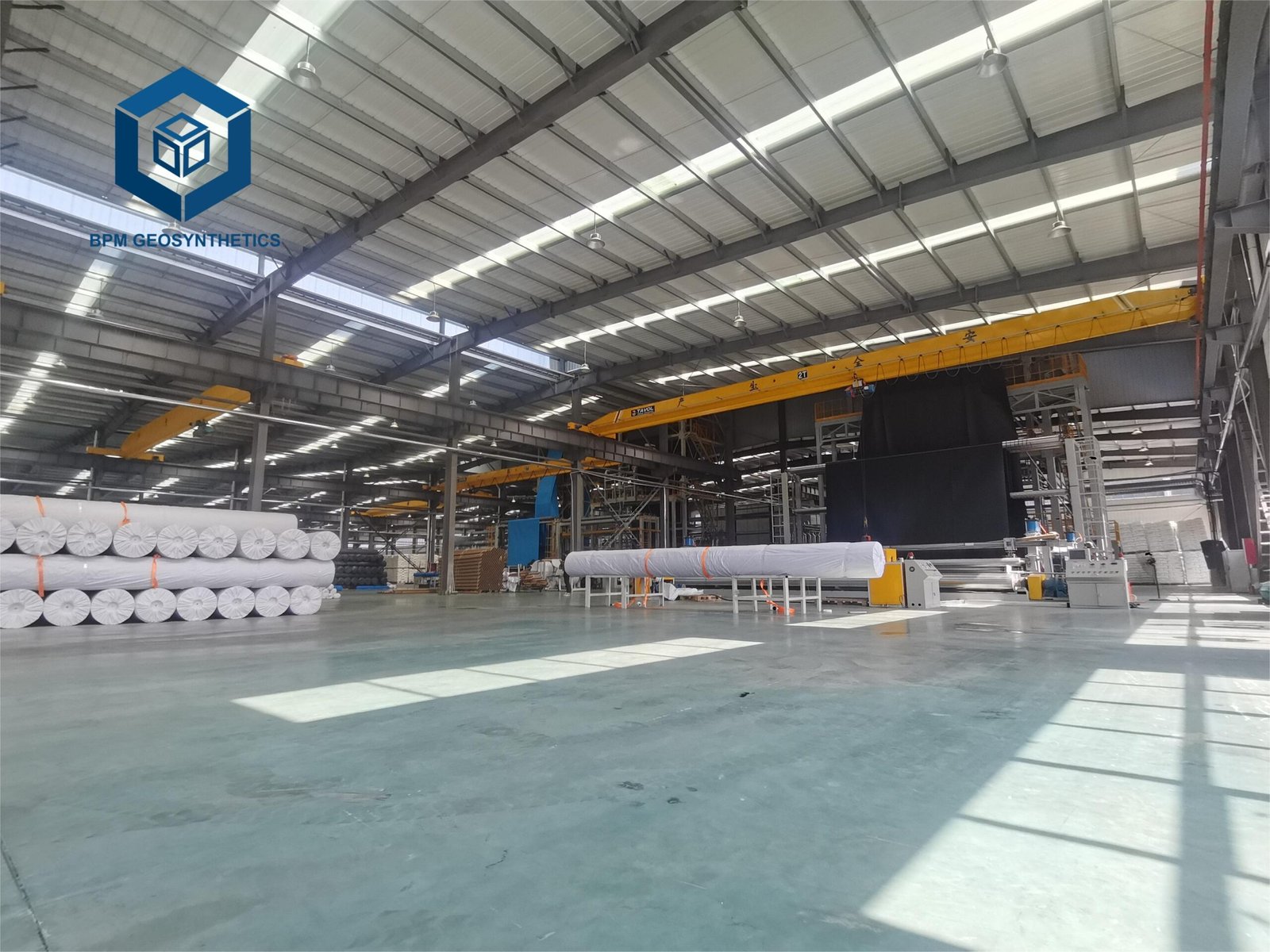
HDPE Liner play an indispensable role as a crucial engineering material in various construction projects. While seemingly simple, they embody the wisdom of materials science and engineering technology, providing reliable protection for modern infrastructure construction. This article will introduce the basic concepts, main characteristics, application areas, and key points of construction for geomembranes, offering a more in-depth understanding of this material in a popular science format.
1.Basic Concepts and Composition of HDPEImpermeable Liner
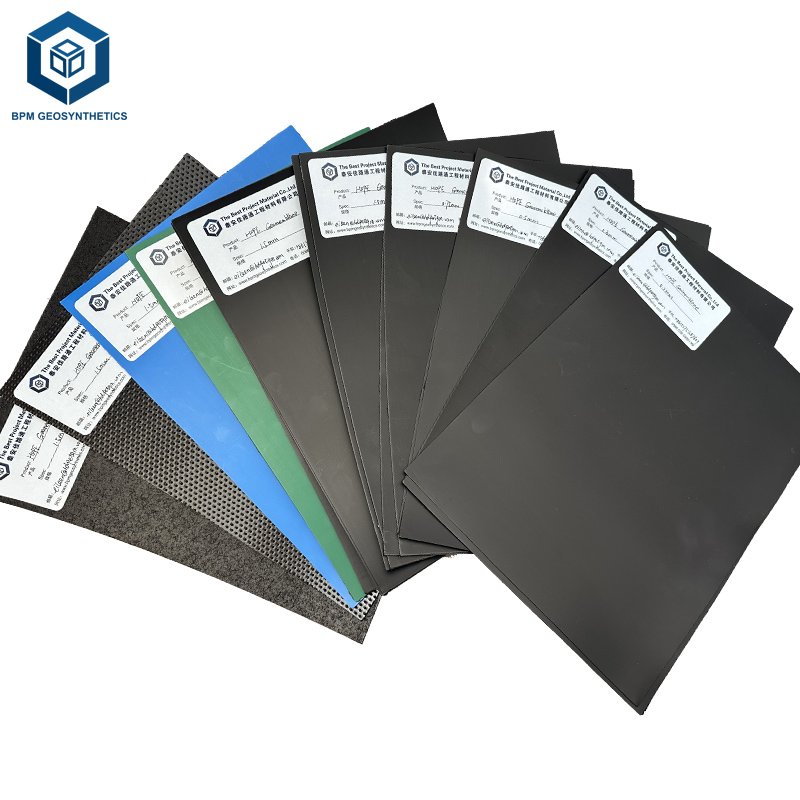
HDPE Impermeable Liner, made from HDPE. They typically appear as black rolls and possess a certain degree of flexibility and durability. Their manufacturing process is similar to that of plastic films in our daily lives, but it is far more complex and rigorous in terms of raw material ratios, production processes, and finished product performance, aiming to meet the stringent requirements of engineering fields regarding impermeability, aging resistance, and chemical corrosion resistance.
Different raw materials endow geomembranes with different properties. For example, geomembranes made from HDPE typically exhibit superior tensile strength, resistance to environmental stress cracking, and UV resistance. Manufacturing processes, such as blow molding or calendering, also determine the uniformity, tensile properties, and final quality grade of the geomembrane. Understanding its composition is fundamental to understanding its function.
2.Core Characteristics and Functions of HDPEImpermeable Liner
Geomembranes are widely used in various engineering applications due to their series of user-satisfactory physicochemical properties.
2.1. Impermeability:
This is the most crucial function of geomembranes. Their extremely low permeability coefficient means that water and other liquids can hardly pass through them, effectively forming an artificial barrier layer that separates fluids on both sides.
2.2 Mechanical Properties:
High-quality geomembranes possess high tensile strength and elongation at break. This means they can withstand stresses caused by foundation settlement and soil deformation without easily tearing or breaking, ensuring the integrity and long-term effectiveness of the impermeability system.
2.3 Environmental Resistance:
This includes resistance to chemical corrosion and aging. Engineering environments may expose geomembranes to various acids, alkalis, and salts, as well as prolonged exposure to ultraviolet radiation and temperature fluctuations. Geomembranes need to maintain stable performance under these adverse conditions to ensure the designed service life of the engineering structure.
Finally, there is the convenience of construction. Geomembranes are supplied in roll form, are relatively lightweight, and are easy to transport and lay on-site. They can be connected into large-area monoliths using specialized welding techniques, resulting in high construction efficiency.
3.Main Application Areas of HDPEImpermeable Linerin Engineering Construction
Geomembranes have a wide range of applications, covering almost all civil engineering fields requiring seepage prevention and isolation.
3.1 In water environment protection projects:
HDPE Impermeable Liner are key materials for reservoirs, artificial lakes, and river regulation projects. Layed at the bottom and slopes of water bodies, they effectively prevent water leakage and loss, while also avoiding groundwater pollution, which is of great significance for water resource protection and efficient utilization.
3.2 In the field of solid waste treatment:
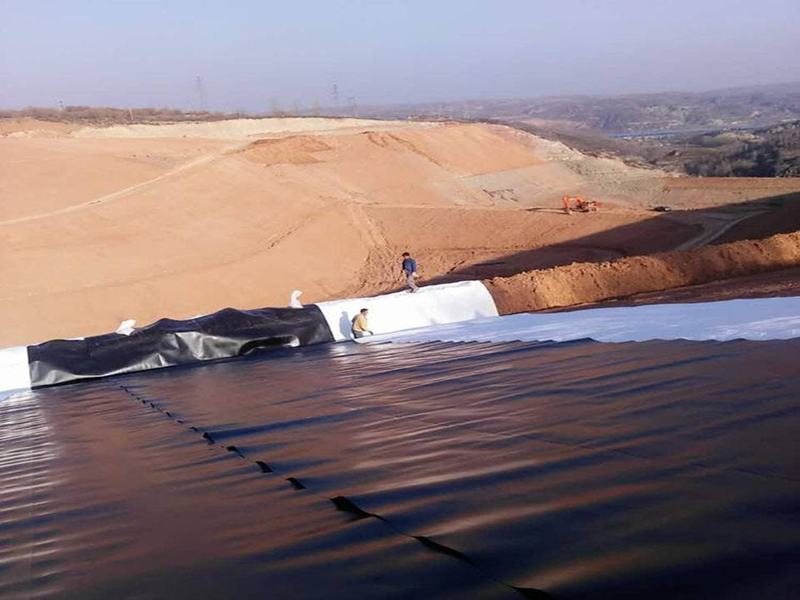
HDPE Impermeable Liner are widely used as seepage-proof linings in facilities such as municipal solid waste landfills and industrial solid waste dumps. It forms a solid barrier, preventing leachate from seeping into the ground and polluting soil and groundwater, serving as one of the last lines of defense for environmental protection.
3.3 Agricultural Irrigation:
HDPE Impermeable Liner are used for lining irrigation channels and preventing seepage in reservoirs. By reducing seepage losses during water transport, they can significantly improve water resource utilization efficiency and provide a stable and reliable water source for agricultural production.
3.4 Municipal Engineering and Transportation Infrastructure:
HDPE Impermeable Liner play a crucial role in municipal engineering and transportation infrastructure (such as roadbed drainage and isolation for highways and railways), tailings dam treatment, and some special industrial projects (such as seepage prevention for chemical storage ponds). Their application improves the quality, safety, and durability of projects.
4.HDPE Impermeable LinerConstruction Process and Key Technologies
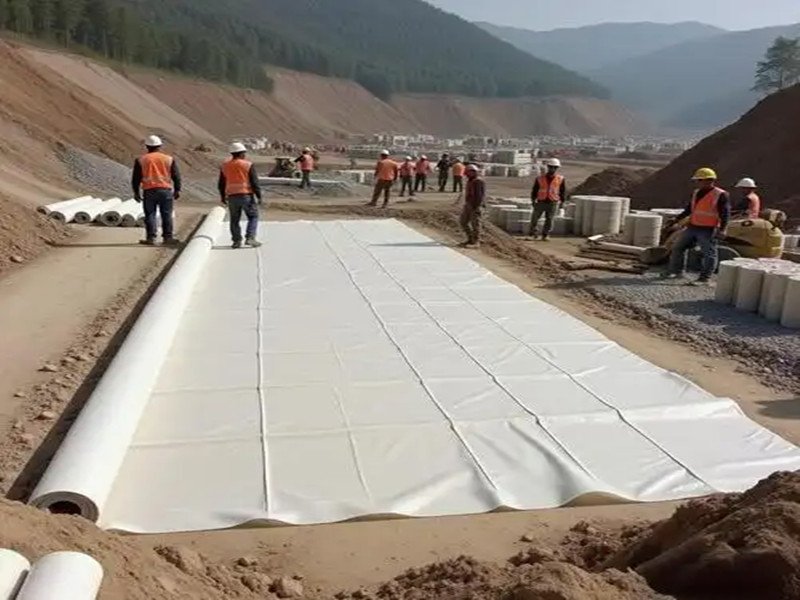
The realization of geomembrane functions depends not only on the quality of the material itself but also on standardized construction techniques. A typical geomembrane laying project mainly includes the following steps:
4.1 Foundation clearing:
The foundation for laying the HDPE Impermeable Liner undergoes rigorous treatment, requiring it to be flat, firm, and free of sharp protrusions. Any tree roots, stones, or rebar ends can puncture the geomembrane, therefore thorough and multifaceted cleaning is essential. The compaction and slope of the foundation must also meet design requirements to ensure the geomembrane adheres tightly to the foundation and facilitates drainage.
4.2 Laying:
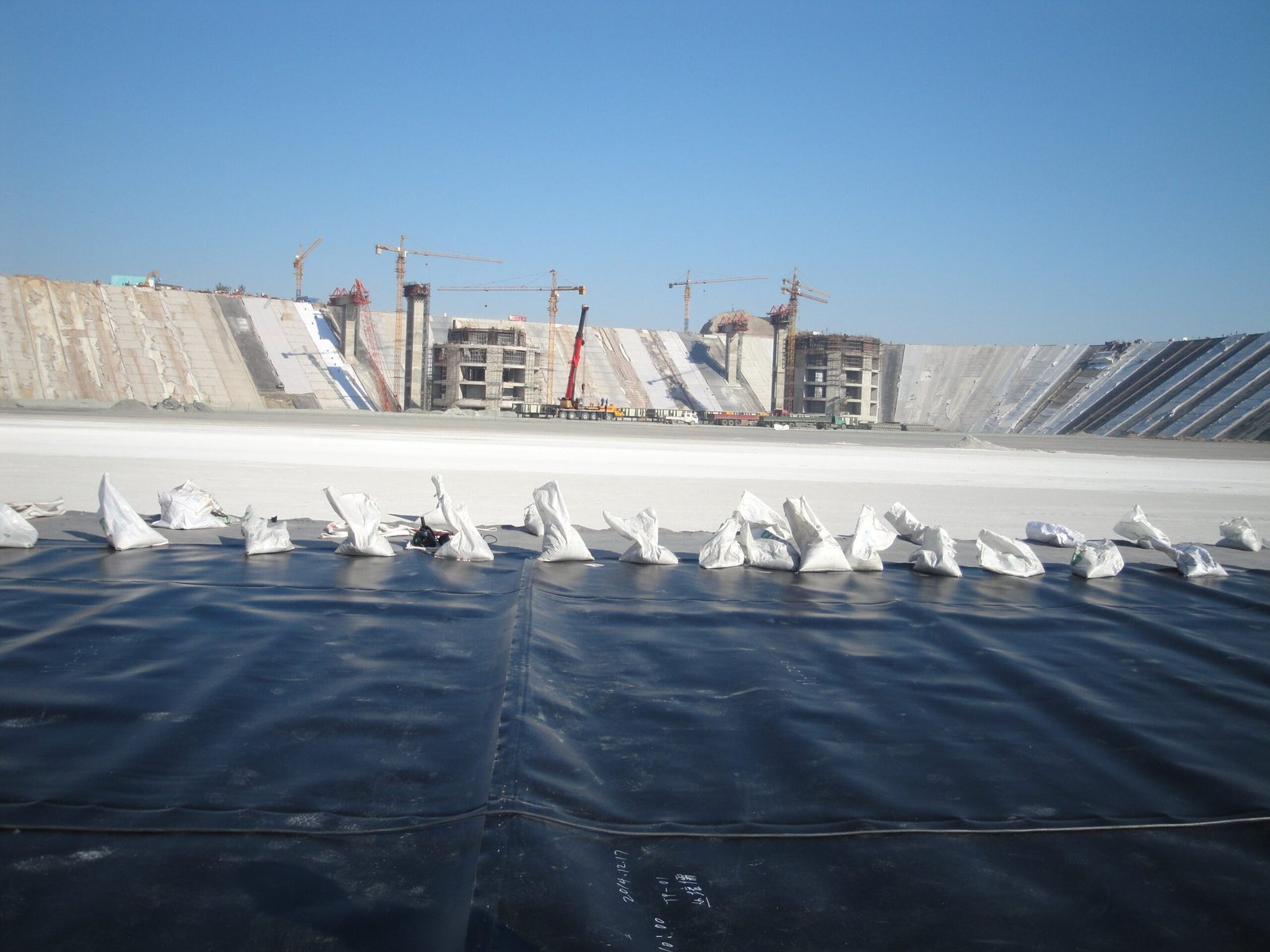
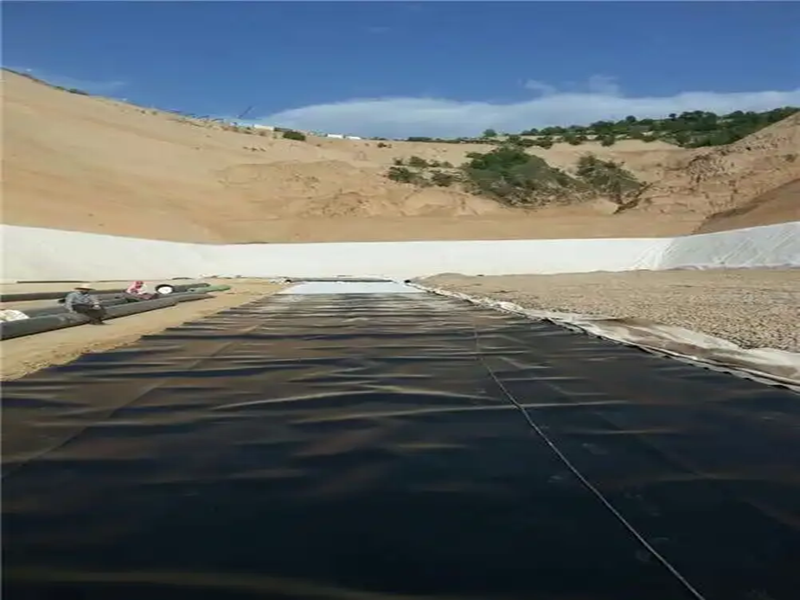
Laying should be carried out in good weather, avoiding work in rain, snow, or strong winds. During laying, strive for a smooth surface, avoiding excessive wrinkles. Allow for deformation due to temperature changes and foundation settlement. The overlap width between membranes must strictly adhere to design specifications.
4.3 Joint Treatment:
This is the most technically demanding and critical step in the entire construction process. Currently, the most reliable joint method is thermofusion welding. Using crawling welding machine to weld. After welding, each weld must undergo non-destructive testing to ensure absolute sealing.
4.4 Inspection and Repair:
After laying and welding are completed, the entire geomembrane surface should be carefully inspected.
4.5 Protective Layer Backfilling:
After the HDPE Impermeable Liner is laid and passes inspection, a protective layer (such as sand or gravel) should be backfilled promptly. The backfilling process should be carried out carefully, using small machinery or manually, to avoid damaging the laid membrane. The protective layer protects the geomembrane from direct UV radiation and mechanical damage, extending its service life.
In conclusion, HDPE Impermeable Liner, as a highly efficient and reliable seepage-proof material, will continue to play a vital role in urban construction, environmental protection, and infrastructure development. Understanding and correctly using geomembranes is of positive practical significance for ensuring project safety and promoting sustainable development. With the continuous integration of materials science and engineering practice, the application prospects of geomembranes will become even broader.