Landfills are common facilities in modern cities for handling solid waste, and one important material used in them is HDPE geomembrane. This material plays a crucial role in preventing environmental pollution. The following sections introduce its basic characteristics and applications.
1.Basic Concepts of HDPE Landfill Liner
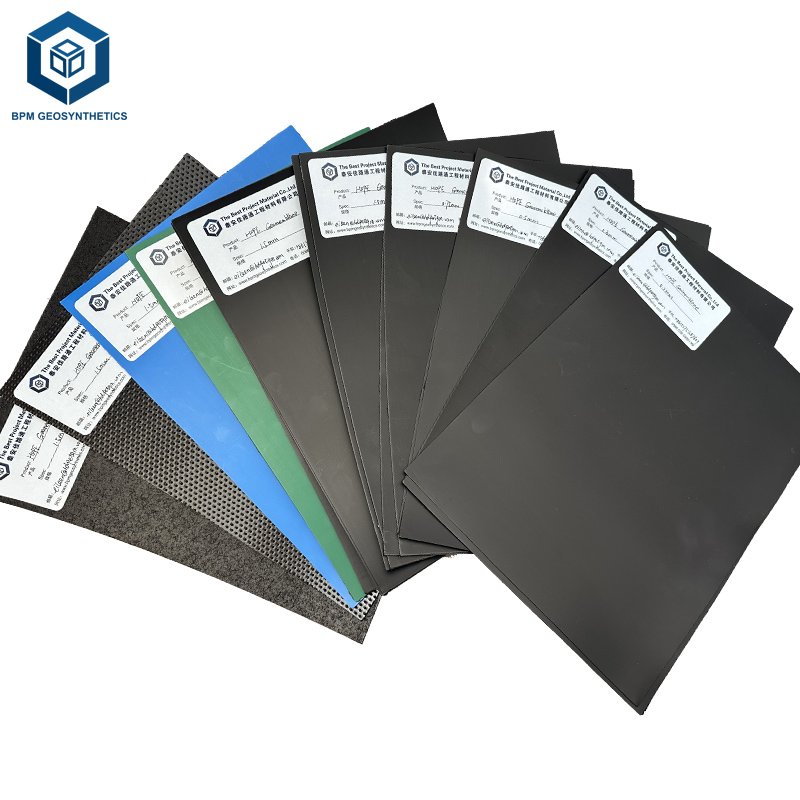
HDPE Landfill Liner is a synthetic material made from high-density polyethylene, usually appearing as black or dark-colored rolls. Its main component is polyethylene resin, processed into a uniform thin film through an extrusion process. This material has a high molecular density, giving it good physical strength and chemical stability. In landfills, it is laid on the bottom layer or cover layer to isolate waste from the surrounding environment.
2. Main Characteristics of HDPE Landfill Liner
2.1. Impermeability:
The dense molecular structure of HDPE geomembrane effectively prevents the penetration of liquids and gases. In landfills, the decomposition of waste produces leachate and biogas, and this membrane prevents these substances from seeping into the soil or groundwater.
2.2. Chemical Resistance:
Various chemical substances in waste, such as acidic or alkaline components, can corrode ordinary materials. HDPE geomembrane is resistant to most chemicals and does not easily degrade during long-term use.
2.3. High Mechanical Strength:
This material has good tensile and tear strength, and can withstand the heavy pressure and mechanical stress in landfills. For example, the membrane is not easily damaged during waste accumulation and compaction equipment operations.
2.4. Adaptability to Temperature Changes:
HDPE geomembrane maintains stability in high or low temperature environments and does not become brittle or soften due to climatic conditions.
2.5. Long Service Life:
With proper installation and maintenance, this material can be used for a long time, reducing the frequency of replacement.
3. Application Methods of HDPE Geomembrane in Landfills
3.1. Bottom Impermeable System:
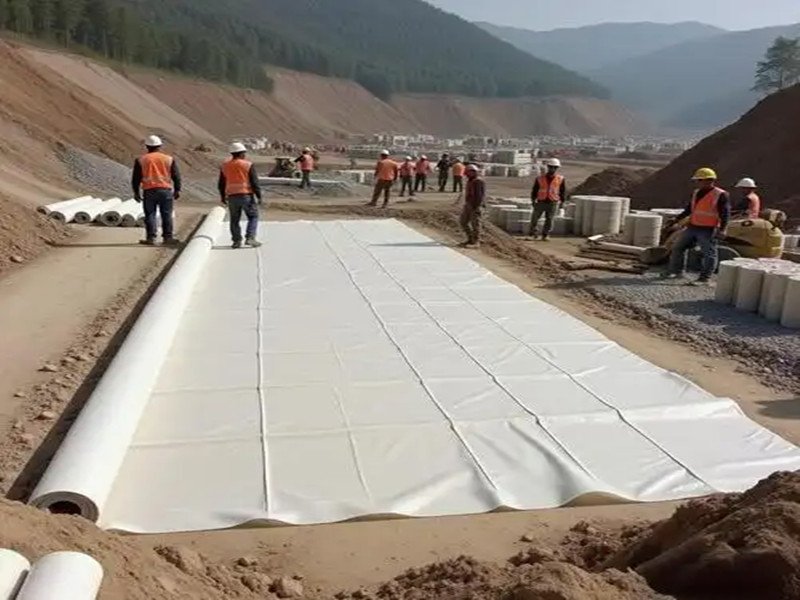
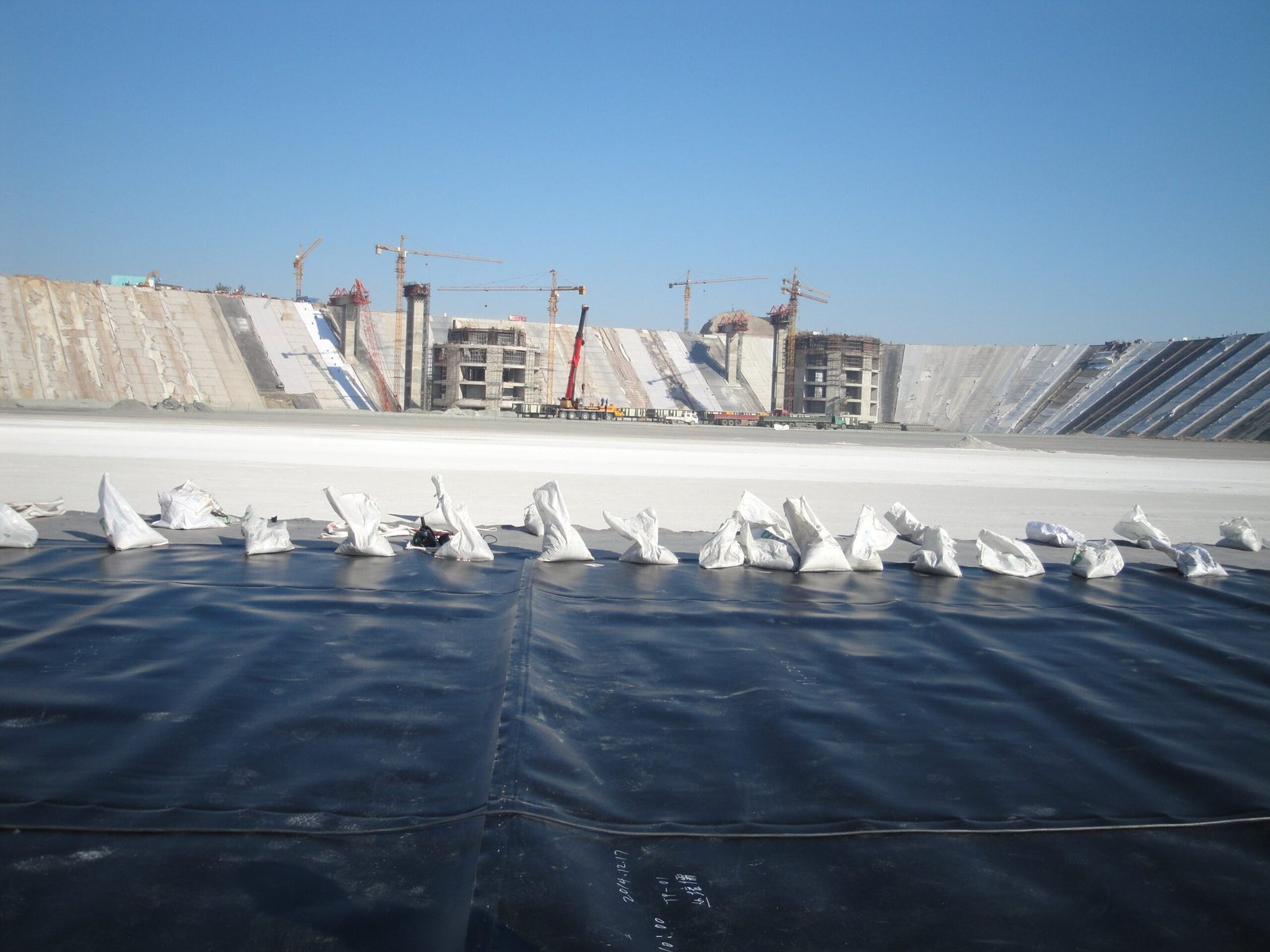
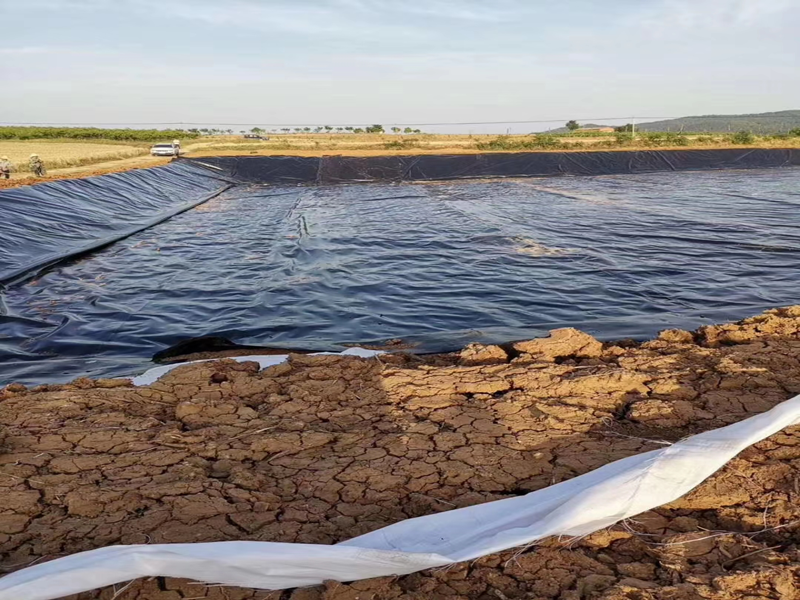
The bottom of the landfill requires an impermeable layer. HDPE geomembrane, as the core material, is combined with other soil layers or drainage materials to form a composite barrier. Before laying, the foundation needs to be leveled, and the membrane is formed into a continuous cover through welding or bonding.
3.2. Intermediate Cover Layer:
During the landfill process, some areas may be temporarily closed off. HDPE geomembranes can be used for temporary covering to reduce odor and pollutant diffusion.
3.3. Final Capping System:
When the landfill reaches capacity, it needs to be closed. HDPE geomembranes, as part of the top cover layer, work with the vegetation layer and drainage system to prevent rainwater infiltration and promote ecological restoration.
3.4. Leachate Collection:
The membrane material, combined with a pipe system, guides leachate to treatment facilities, preventing localized accumulation.
4. Key Points for Installation and Maintenance of HDPE Landfill Liner
4.1 Subgrade Preparation:
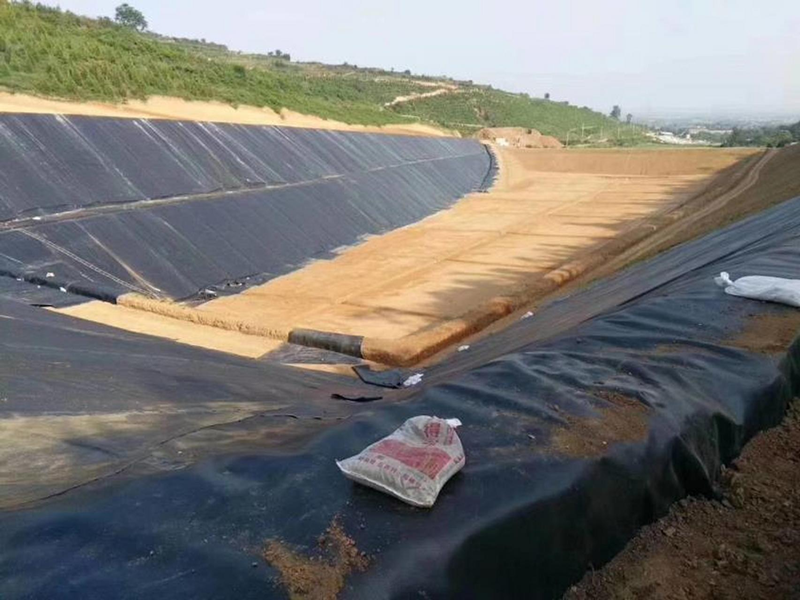
This is fundamental to ensuring the quality of geomembrane installation. The landfill base must be thoroughly cleaned and leveled, removing all sharp objects (such as stones, tree roots, and rebar ends). The subgrade soil should be compacted using equipment such as rollers to ensure the density meets design requirements (usually not less than 0.95). The subgrade surface should be flat, without cracks or significant unevenness, and the slope should be uniform to facilitate leachate drainage. Some designs require laying a layer of non-woven geotextile on the compacted subgrade as a protective layer to buffer the pressure on the subsequent membrane material.
4.2 Geomembrane Laying:
Laying operations should be carried out during periods of clear weather, with wind speeds less than force 4, and temperatures above 5°C, avoiding rain, snow, or strong winds that could affect construction quality. Laying usually proceeds from the lowest point of the site to the highest to reduce stress at the seams. The membrane material should be laid naturally flat, avoiding excessive stretching or wrinkling, and approximately 1%-2% slack should be left to accommodate thermal expansion and contraction due to temperature changes. The overlap width of adjacent membrane sheets is generally not less than 10 cm, and specific requirements should be followed according to the design.
4.3 Seam Treatment:
Seams are the weak points of the anti-seepage system, and their sealing must be ensured. Two main methods are used:
4.3.1 Hot-melt welding:
Suitable for similar HDPE membrane materials, this involves heating and melting the membrane edges before pressing them together, suitable for straight seams. Temperature and pressure must be strictly controlled to ensure a uniform and strong weld.
4.3.2 Extrusion welding:
This uses molten material to fill the seam, suitable for complex shapes or irregular areas.
Before welding, the seam area must be cleaned to ensure it is free of dust and moisture. After welding, non-destructive testing must be performed. Common methods include air pressure testing or vacuum box testing. Defective areas must be re-welded.
5. Economic and Environmental Significance of HDPE Geomembranes
The use of HDPE Landfill Liner reduces the impact of landfills on the surrounding environment and reduces the risk of soil and groundwater pollution. From an economic perspective, although the initial investment may be higher, long-term maintenance costs are lower, and it avoids additional RMB expenditures for pollution control. This material is recyclable, aligning with the concept of resource recycling.
In summary, HDPE geomembranes play a vital role in landfills, helping to control pollution through their properties. Understanding this basic knowledge helps in understanding the basic principles of modern waste management.