Introduction: The Hidden Strength Beneath Every Durable Road
In the world of civil engineering and infrastructure development, the quest for more durable, cost-effective, and sustainable road construction methods is never-ending. While asphalt, concrete, and aggregates capture most of the attention, there’s an unsung hero working beneath the surface: geotextiles. These engineered synthetic fabrics have revolutionized how we build and maintain roads, offering solutions to age-old problems of soil instability, water damage, and premature pavement failure.
For engineers, contractors, and project managers seeking to optimize performance while controlling costs, understanding the comprehensive advantages of geotextiles is essential. This in-depth exploration covers not just the basic benefits but the technical mechanisms, long-term economic impacts, and sustainability advantages that make geotextiles—particularly BPM geotextile solutions—an indispensable component in modern road construction.
Section 1: The Fundamental Problem: Why Roads Fail Prematurely
To appreciate the value of geotextiles, we must first understand the challenges they address. Traditional road construction places aggregate directly on the native soil (subgrade). This seemingly straightforward approach encounters multiple problems:
Soil Contamination: Fine soil particles migrate upward into the aggregate base, weakening its structural integrity.
Aggregate Loss: Conversely, aggregate particles can push downward into soft subgrades, creating ruts and depressions.
Poor Drainage: Water accumulates between layers, reducing soil strength through saturation.
Uneven Settlement: Weak subgrade soils compress unevenly under loads, causing cracking and deformation in the pavement above.
These issues lead to rutting, potholes, cracking, and ultimately, costly premature repairs or complete reconstruction. This is where BPM geotextile membranes provide transformative solutions.
Section 2: Core Advantages of Geotextiles in Road Construction
2.1 Separation: The Critical Barrier Function
Separation is arguably the most fundamental function of geotextiles in road construction. BPM separation geotextiles act as a physical barrier between the subgrade soil and the aggregate base layer.
How It Works:
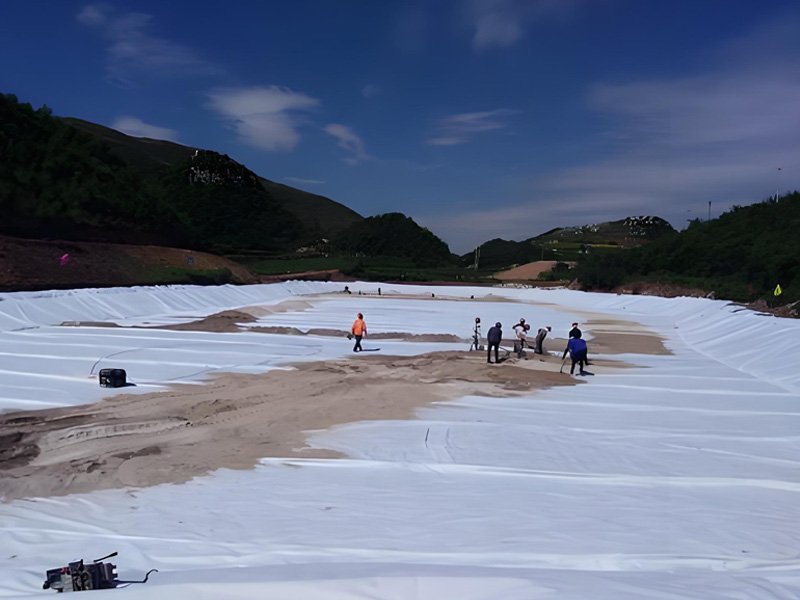
When placed directly on the prepared subgrade, BPM geotextile fabrics prevent the intermixing of dissimilar materials. The fabric allows water to pass through while retaining soil particles on one side and aggregate on the other. This maintains the structural integrity and design thickness of both layers.
Technical Benefits:
Preserves the drainage characteristics and angularity of aggregate
Maintains the designed thickness of base materials
Prevents “pumping” of fine soils into the base during dynamic loading
Reduces aggregate loss into soft subgrades
Economic Impact:
By preventing contamination, BPM separation geotextiles can reduce aggregate requirements by up to 30% while extending the service life of the road section. The initial investment in BPM geotextile products is typically recovered multiple times over through reduced maintenance and delayed rehabilitation.
2.2 Filtration and Drainage: Managing Water Effectively
Water is the primary enemy of road longevity. BPM filtration geotextiles provide engineered solutions for subsurface water management.
How It Works:
These geotextiles are designed with specific pore sizes that allow water to pass while retaining soil particles. When installed alongside drainage systems or within road structures, BPM drainage geotextiles facilitate the movement of water away from critical areas while preventing soil erosion and clogging of drainage systems.
Technical Benefits:
Reduces pore water pressure within soil structures
Prevents soil particle migration into drainage aggregates
Maintains soil stability during and after precipitation events
Mitigates frost heave in cold climates by allowing proper drainage
Case Study Application:
In a recent highway project in Canada, combining needle-punched nonwoven geotextiles with underground drainage systems reduced seasonal maintenance costs by 47% and significantly reduced frost damage on treated sections of the road.
2.3 Reinforcement: Adding Tensile Strength to Soil
Soil has strong compressive strength but virtually no tensile strength. BPM reinforcement geotextiles address this inherent weakness by providing tensile elements that distribute loads over a wider area.
How It Works:
When placed within or between soil layers, BPM high-strength geotextiles interact with soil particles through friction and confinement, creating a reinforced composite material with improved mechanical properties. This is particularly valuable on weak subgrades where traditional construction would require extensive excavation and replacement.
Technical Benefits:
Increases bearing capacity of weak soils
Reduces differential settlement
Allows construction on sites previously considered unsuitable
Enables steeper embankment slopes, reducing right-of-way requirements
Economic Impact:
By utilizing BPM soil reinforcement geotextiles, projects can often avoid costly soil replacement operations. In a recent access road project over peat soils, the use of BPM woven geotextiles reduced fill material requirements by 40% and cut overall construction costs by 28% compared to traditional excavation and replacement methods.
2.4 Erosion Control: Protection During and After Construction
Erosion poses significant risks during the construction phase and throughout the road’s service life. BPM erosion control geotextiles provide temporary and permanent solutions.
How It Works:
These specialized fabrics protect exposed soil surfaces from water and wind erosion. BPM temporary erosion control blankets are used on slopes and drainage channels during construction, while permanent installations protect embankments and drainage ways long-term.
Technical Benefits:
Stabilizes soil until vegetation establishes
Reduces sediment runoff into surrounding environments
Protects against surface erosion from rainfall and runoff
Maintains embankment integrity during extreme weather events
Section 3: Material Science: The BPM Advantage in Geotextile Manufacturing
Not all geotextiles are created equal. BPM geotextile solutions are engineered with specific properties to maximize performance in road applications.
3.1 Polymer Selection and UV Stabilization
BPM geotextile products utilize high-quality polypropylene and polyester polymers with enhanced UV stabilizers. This ensures that even when exposed during construction, the material maintains its engineered properties throughout its design life.
3.2 Manufacturing Processes for Specific Applications
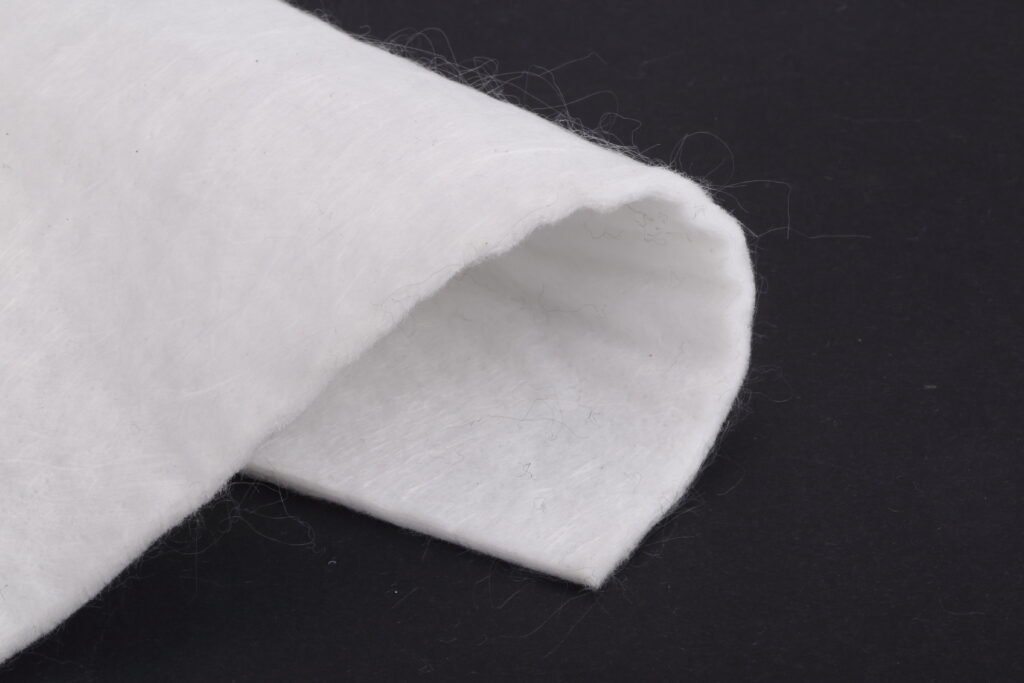
BPM needle-punched nonwoven geotextiles: Ideal for separation, filtration, and drainage applications with their isotropic properties and high permeability.
BPM woven geotextiles: Excellent for reinforcement applications where high tensile strength and low elongation are required.
BPM composite geotextiles: Combine multiple materials for specialized functions like drainage with filtration or reinforcement with separation.
3.3 Quality Assurance and Consistency
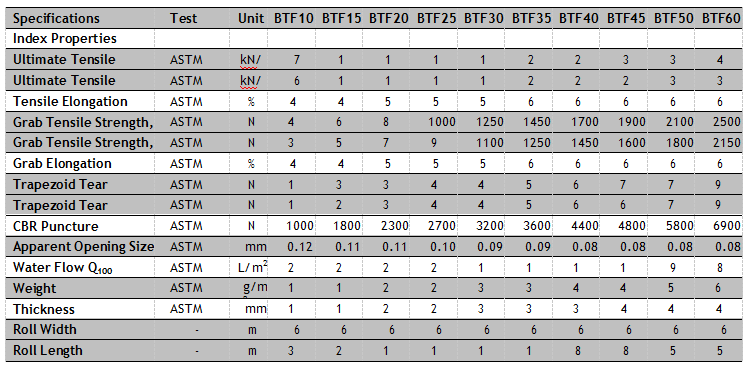
Every roll of BPM geotextile fabric undergoes rigorous testing to ensure it meets or exceeds international standards (ASTM, ISO, GRI). This consistency is critical for engineers who rely on predictable material performance in their designs.
Section 4: Sustainability and Environmental Benefits
Modern construction increasingly prioritizes environmental responsibility. BPM geotextile solutions contribute significantly to sustainable road construction.
4.1 Resource Conservation
By improving the efficiency of construction and extending service life, BPM geotextiles reduce the consumption of non-renewable resources:
Reduced aggregate mining and transportation
Lower energy consumption in material production
Decreased frequency of reconstruction
4.2 Carbon Footprint Reduction
A life-cycle assessment of roads constructed with BPM geotextile membranes shows a 15-25% reduction in carbon footprint compared to traditional methods, primarily due to:
Reduced material transportation
Extended maintenance intervals
Lower frequency of major rehabilitation
Section 5: Economic Analysis: Cost Savings Over the Life Cycle
While some focus solely on initial material costs, the true value of BPM geotextile solutions emerges when considering the complete life cycle of a road.
5.1 Initial Construction Savings
Reduced aggregate requirements (15-30% savings)
Less excavation and soil disposal
Faster construction times due to improved working platforms
Ability to use locally available, lower-quality fill materials
5.2 Maintenance and Rehabilitation Savings
Extended time between resurfacing operations (typically 30-50% longer)
Reduced frequency of pothole repairs and patching
Lower annual maintenance costs
5.3 Total Cost of Ownership Analysis
When evaluated over a 30-year period, roads incorporating BPM geotextile products typically show a 20-40% lower total cost compared to conventionally constructed sections. This analysis includes initial construction, routine maintenance, periodic rehabilitation, and eventual reconstruction.
Section 6: Implementation Best Practices
To maximize the benefits of BPM geotextile solutions, proper installation is crucial.
6.1 Site Preparation
Proper subgrade compaction and grading
Removal of sharp objects and debris
Ensuring adequate overlap (typically 12-18 inches)
6.2 Material Handling and Placement
Protection from UV exposure before covering
Proper orientation of roll direction
Immediate covering with aggregate to prevent displacement
6.3 Quality Control During Installation
Verification of material specifications
Inspection of seams and overlaps
Documentation of installation for future reference
Section 7: Future Trends and Innovations
The geotextile industry continues to evolve, and BPM geosynthetics is at the forefront of several key developments:
7.1 Smart Geotextiles
BPM is developing geotextiles with integrated sensors that can monitor strain, moisture, and temperature, providing real-time data on road performance.
7.2 Enhanced Sustainable Materials
Research into bio-based polymers and recycled content aims to further reduce the environmental impact of BPM geotextile products.
7.3 Application-Specific Solutions
Continued refinement of products for extreme environments, including permafrost regions, coastal areas, and heavy industrial applications.
Conclusion: Building Better Roads with BPM Geotextile Solutions
The advantages of incorporating geotextiles into road construction are comprehensive and well-documented. From separation and stabilization to drainage and reinforcement, these engineered fabrics address the fundamental challenges that lead to premature pavement failure. When specifying geotextiles for your next project, consider not just the material cost but the complete value proposition.
BPM geotextile solutions offer technical excellence, consistent quality, and proven performance backed by engineering support and technical expertise. By choosing BPM geotextile products, you’re investing not just in a product, but in the long-term performance, durability, and cost-effectiveness of your infrastructure.