Polyethylene Geomembrane fish farming, as an emerging aquaculture method, has gradually attracted the attention of fish farmers in recent years. Geomembrane is a thin film made of polymer materials, possessing excellent waterproof, moisture-proof, and corrosion-resistant properties, thus finding widespread application in fish farming. This article will analyze the advantages and disadvantages of Polyethylene Geomembrane fish farming to provide a reference for fish farmers.
1.What Is Polyethylene Geomembrane?
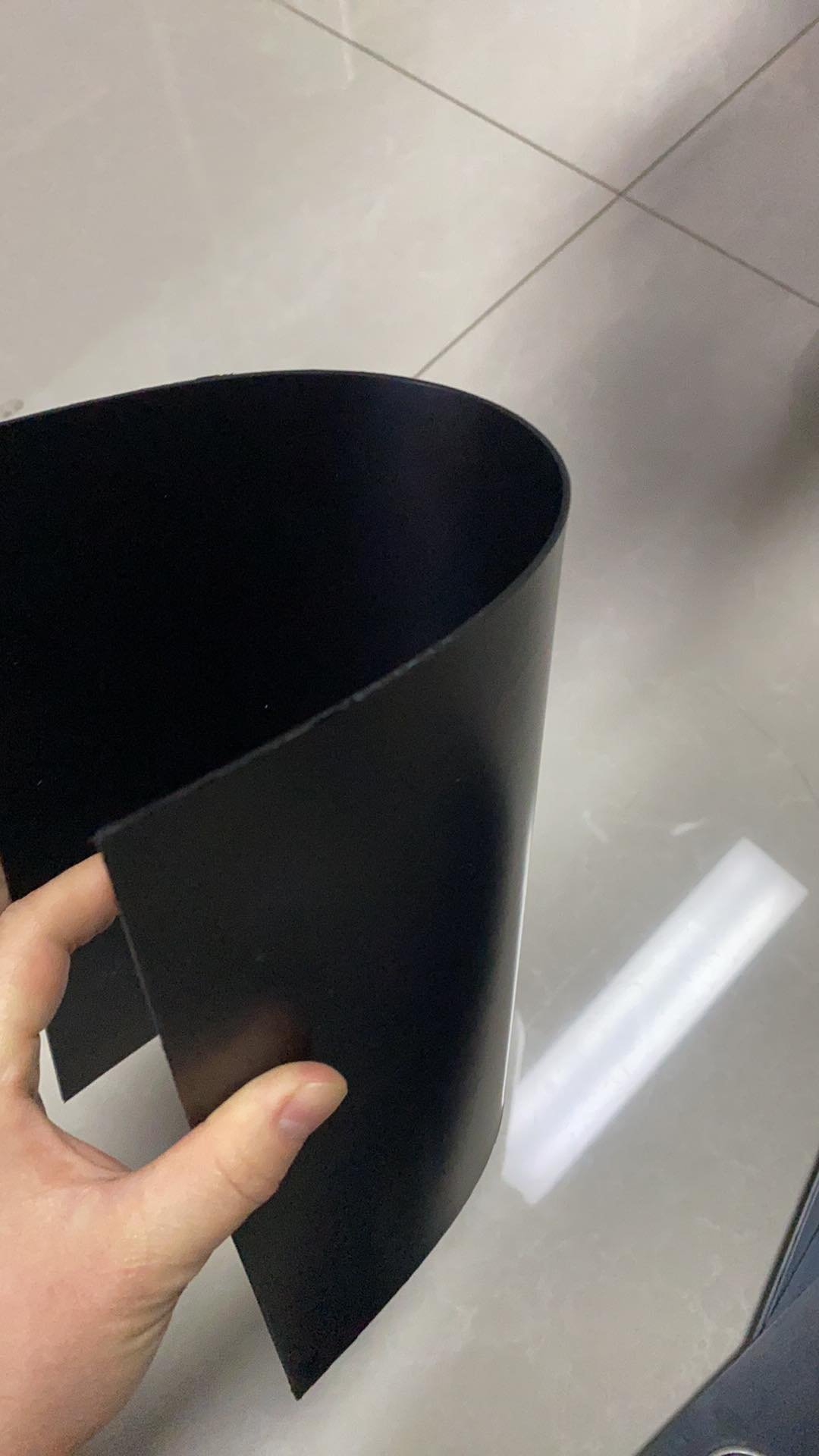
Polyethylene Geomembrane is a high-molecular polymer film with excellent impermeability, aging resistance, and corrosion resistance, and is widely used in water conservancy, environmental protection, and construction. In aquaculture, Polyethylene Geomembrane are mainly used for seepage prevention in ponds and the construction of aquaculture ponds. By laying geomembranes, water loss and leakage can be effectively prevented, improving the water retention capacity of ponds.
2.Advantages of Polyethylene Geomembrane in Aquaculture
2.1. Excellent seepage prevention:
Geomembranes have excellent seepage prevention properties, effectively preventing water loss and leakage, and improving the water retention capacity of ponds.
2.2. Convenient construction:
Geomembranes are lightweight, easy to transport and lay, and construction is convenient and quick, greatly shortening the project cycle.
2.3. High durability:
Geomembranes have good anti-aging properties and a long service life, meeting the long-term needs of aquaculture.
2.4. Good environmental protection:
Geomembrane materials are environmentally friendly and non-toxic, and will not cause secondary pollution to aquaculture water, conforming to the concept of modern green aquaculture.
3.Disadvantages of Polyethylene Geomembrane in Aquaculture
3.1. Higher cost:
Compared with traditional building materials such as brick masonry and concrete, geomembranes are more expensive, increasing the investment burden on farmers.
3.2. Easily damaged:
Geomembranes are easily scratched or punctured by sharp objects during construction and require special care to protect them.
3.3. High Environmental Requirements:
Geomembranes have high environmental requirements and need to be installed in a dry, flat environment; otherwise, problems such as wrinkles and blistering may occur.
4.Precautions for Using Polyethylene Geomembrane
4.1. Select the Appropriate Geomembrane Model and Thickness:
Select the appropriate geomembrane model and thickness according to the characteristics and usage requirements of the aquaculture pond to ensure seepage prevention effect and service life.
4.2. Strengthen Geomembrane Protection:
Strengthen the protection of the geomembrane during transportation and construction to avoid scratches, punctures, and other problems.
4.3. Strictly Control the Construction Environment:
Ensure the environment is dry and flat before laying the geomembrane to avoid wrinkles, blistering, and other problems.
4.4. Regular Inspection and Maintenance:
Regularly inspect and maintain the geomembrane, and repair any damage promptly to ensure seepage prevention effect and service life.

5.Installation Precautions:
5.1 Construction Method
Do not drag or pull the geomembrane during transportation to avoid punctures from sharp objects.
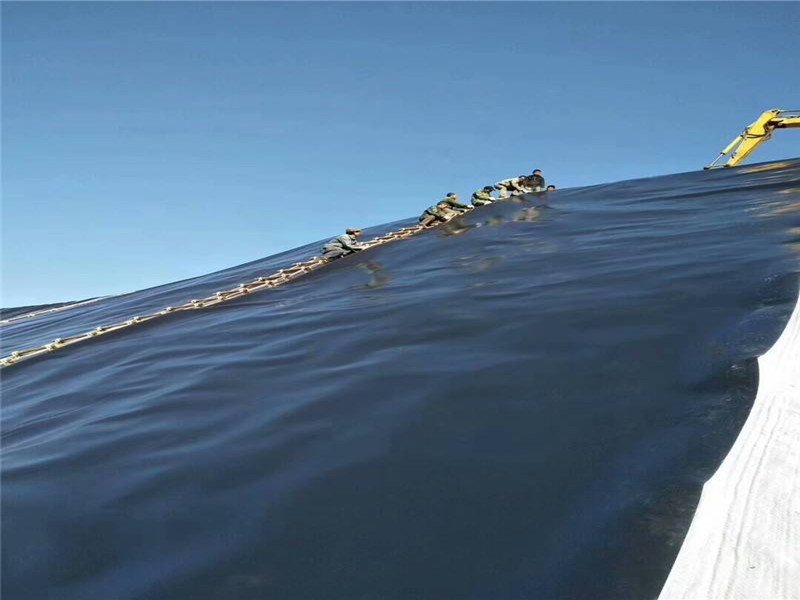
5.1.1 The geomembrane should be extended from the bottom to the top. Do not overtighten it, leaving a 1.50% margin to allow for localized sinking and stretching. Considering the actual conditions of this project, the slope will be laid from top to bottom.
5.1.2 The longitudinal joints of two adjacent sections should not be aligned horizontally and should be staggered by at least 1m.
5.1.3 The longitudinal joints should be at least 1.50m from the dam foot and bend foot and should be located on a flat surface.
5.1.4 The slope should be laid first, followed by the field bottom.
5.1.5 When laying the slope, the membrane should be extended in a direction generally parallel to the maximum slope line.
5.2 Laying
5.1.1 Before cutting the geomembrane, its dimensions should be accurately measured and then cut according to the actual dimensions. Cutting according to the dimensions shown in the diagram is generally not recommended. Each piece should be numbered and recorded in detail on a dedicated form.
5.1.2 When laying the geomembrane, minimize welds. This will minimize raw material consumption while ensuring quality. This also facilitates quality assurance.
5.1.3 The overlap width of joints between membranes should generally be no less than 10 cm. Welds should generally be arranged parallel to the maximum slope, i.e., aligned with the slope.
5.1.4 In general, joint lengths should be minimized at corners and in irregular locations. Unless otherwise specified, welds should be avoided within 1.5 meters of the top slope or stress concentration areas on slopes greater than 1:6.
5.1.5 During geomembrane laying, avoid creating artificial wrinkles. When temperatures are low, the membrane should be stretched tight and laid flat. 6.1.6 After the geomembrane is laid, walking on the membrane surface and moving tools should be minimized. Any objects that may cause harm to the anti-seepage membrane should not be placed on the membrane or carried while walking on the membrane to avoid accidental damage to the membrane.
6. Summary
Polyethylene Geomembrane, as a new type of building material, have broad application prospects in aquaculture. By rationally selecting and using geomembranes, the water retention capacity of ponds and aquaculture efficiency can be effectively improved. However, we must also pay attention to its shortcomings and deficiencies, strengthen management and maintenance, and ensure the sustainable development of aquaculture.
The Best Project Material Co., Ltd (BPM) is the leading geomembrane manufacturer, supplier, wholesaler and exporter. Our main innovative products include Smooth Geomembrane HDPE Liner, Textured HDPE Geomembrane, Composite Geomembrane Liner and other geosynthetics, etc. All of them had been certificated by the ISO9001, ISO14001, Soncap, SASO and BV certificates and passed SGS and Intertek test.