CASE STUDY
Location : Ecuador
Product(s) : HDPE Pond Liner
Application : Aquaculture Project Issue HDPE pond liner is used in aquaculture, which is easier to catch and clean, thus saving a lot of cost and time, speeding up the aquaculture cycle, and helping to improve the output. Then the customer in Ecuador decided to lay HDPE pond liner.
Benefit
1. Impounding HDPE pond
liner has the advantages of low permeability coefficient and strong water storage performance, which can better prevent the water in the fish pond from seeping into the soil, effectively monitor the water level, save water conservation costs, and prevent the reverse filtration of underground toxic substances into the fish pond, reduce the pollution of water quality, and help the healthy growth of fish.
2. Keep water quality stable
The use of HDPE pond liner in aquaculture can well maintain the balance of water quality, reduce the change of water conditions, and reduce the cost and time of water quality control.
3. Monitoring oxygen content
The use of HDPE pond liner in aquaculture can reduce the oxygen loss caused by soil infiltration, facilitate the monitoring of oxygen content in water, and save the cost of oxygen supplement in fish ponds.
4. Reduce maintenance costs
The use of HDPE pond liner in aquaculture can better inhibit the growth of algae in the water. The geomembrane itself contains anti ultraviolet additives, so the geomembrane is not afraid of sun exposure. Since the cost and time of maintenance are relatively low, it can be more convenient and fast to catch.
5. Increase output
Compared with direct pond excavation, the use of HDPE geomembrane in aquaculture can make the slope more stable, help eliminate the harm of rain, waves, wind and other natural conditions to fish, and also make the pond have a deeper depth and steeper slope, which is conducive to improving fish production.
6. Reduce fishing time
HDPE pond liner is used in aquaculture, and there will be no weeds, sludge and other sundries that affect the fishing speed at the bottom of the pond. Therefore, fishing can be carried out more efficiently, reducing the fishing time, and improving the vitality and freshness of fish and shrimp.
7. Reduce disease transmission
The use of HDPE geomembrane in aquaculture can reduce the environmental adaptability of bacteria in the fish pond, which is conducive to ensuring the healthy growth of fish and shrimp. Because it isolates the contact between soil and water, it reduces the possibility of disease transmission to the pond, thus reducing the drug cost of fish farming.
8. Easy to clean pond
The use of HDPE pond liner in aquaculture can make the pond cleaning more convenient, and it is easier to install a clean drainage system in the pond.
9. Accelerate the breeding cycle
HDPE geomembrane pond liner is used in aquaculture, which is easier to catch and clean, thus saving a lot of cost and time, speeding up the aquaculture cycle, and helping to improve the output.
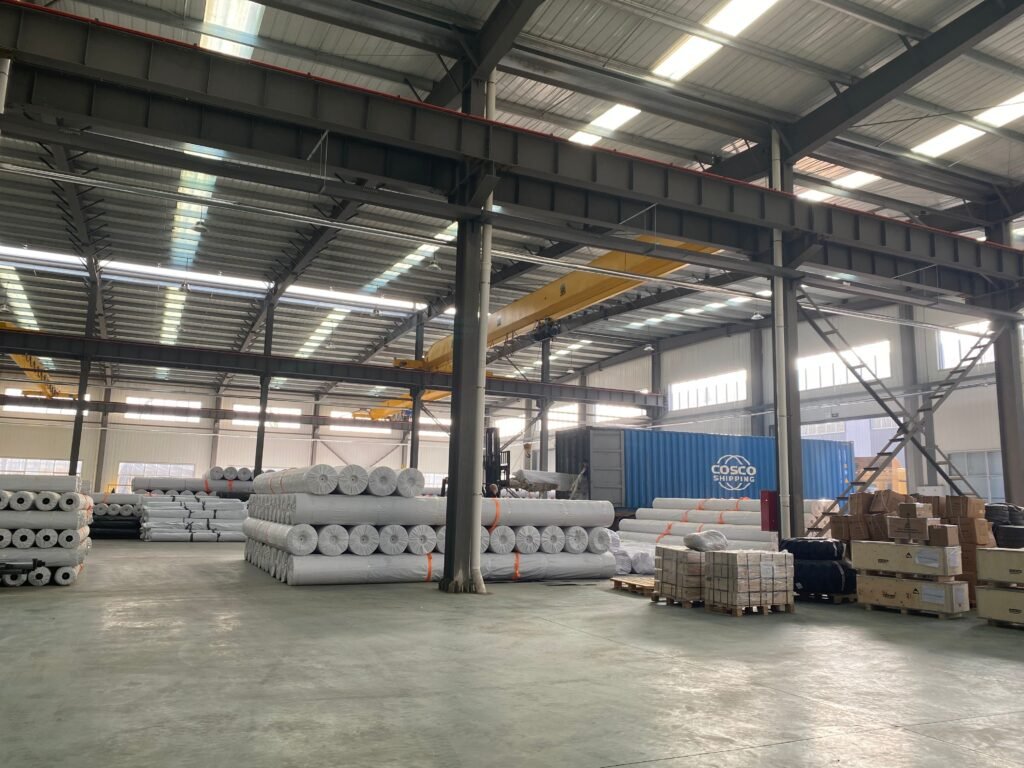
Construction method of HDPE Plastic Roll Geomembrane:
Before applying impermeable membrane, the slope surface should be leveled to prevent sharp outburst, and then the loose soil should be covered with impermeable membrane.
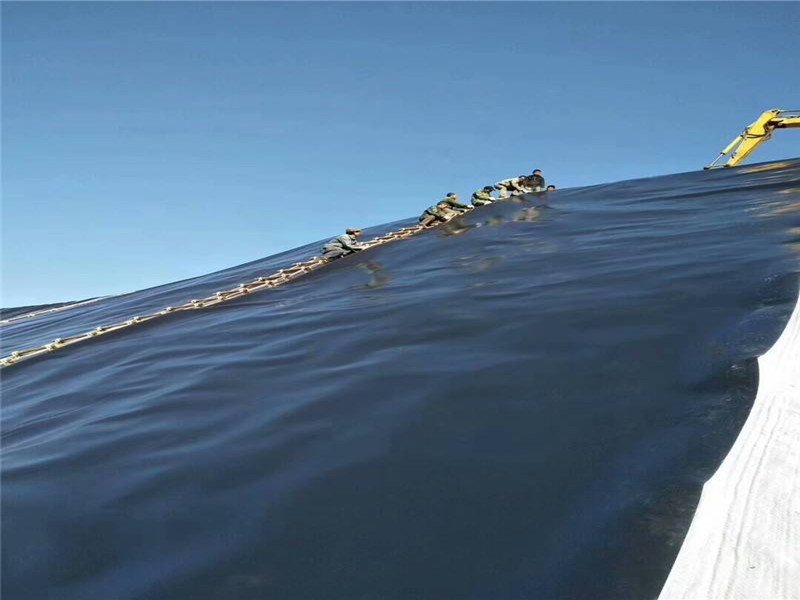
1) It should be extended from the bottom to the high position, not too tight, and 1.50% margin should be reserved for local sinking and stretching. Considering the actual situation of the project, the slope is laid from top to bottom.
2) The two adjacent longitudinal joints shall not be in a horizontal line, and shall be staggered by more than 1m.
3) The longitudinal joint shall be more than 1.50M away from the dam foot and bending foot, and shall be set on the plane.
4) Slope first and then bottom.
5) When the slope is laid, the film spreading direction should be basically parallel to the maximum slope line.
Slope laying: before laying the anti-seepage geomembrane on the slope, the laying area shall be inspected and measured. According to the measured size, the anti-seepage geomembrane with matching size in the warehouse shall be transported to the anchorage ditch platform of phase I. during laying, the convenient way of “pushing” from top to bottom shall be adopted according to the actual site conditions. In the sector area, it should be cut reasonably to make the upper and lower ends firmly anchored.
Site bottom laying: before laying the anti-seepage geomembrane, the laying area shall be inspected and measured, and the anti-seepage membrane matched with the size in the warehouse shall be transported to the corresponding position according to the measured size. During laying, the anti-seepage membrane shall be pushed manually in a certain direction.
Alignment and alignment:The paving of BPM HDPE textured geomembrane, no matter the side slope or the bottom of the field, should be flat and straight to avoid wrinkles and ripples, so as to make the two geomembranes aligned and aligned. According to the design requirements, the lap width is generally about 10 cm.
Pressing: press the aligned and aligned BPM HDPE textured geomembrane with sand bags in time to prevent the wind from blowing and pulling. Laying in Anchorage ditch: at the top of anchorage ditch, a certain amount of impervious membrane shall be reserved according to the design requirements for local sinking and stretching.
Longitudinal joint: the uphill section is on the upper side and the downhill section is on the lower side, and sufficient lap length ≥ 15cm shall be reserved. The bentonite pad shall be laid in the area after passing the acceptance, and the manual “push paving” shall be carried out in a certain direction.
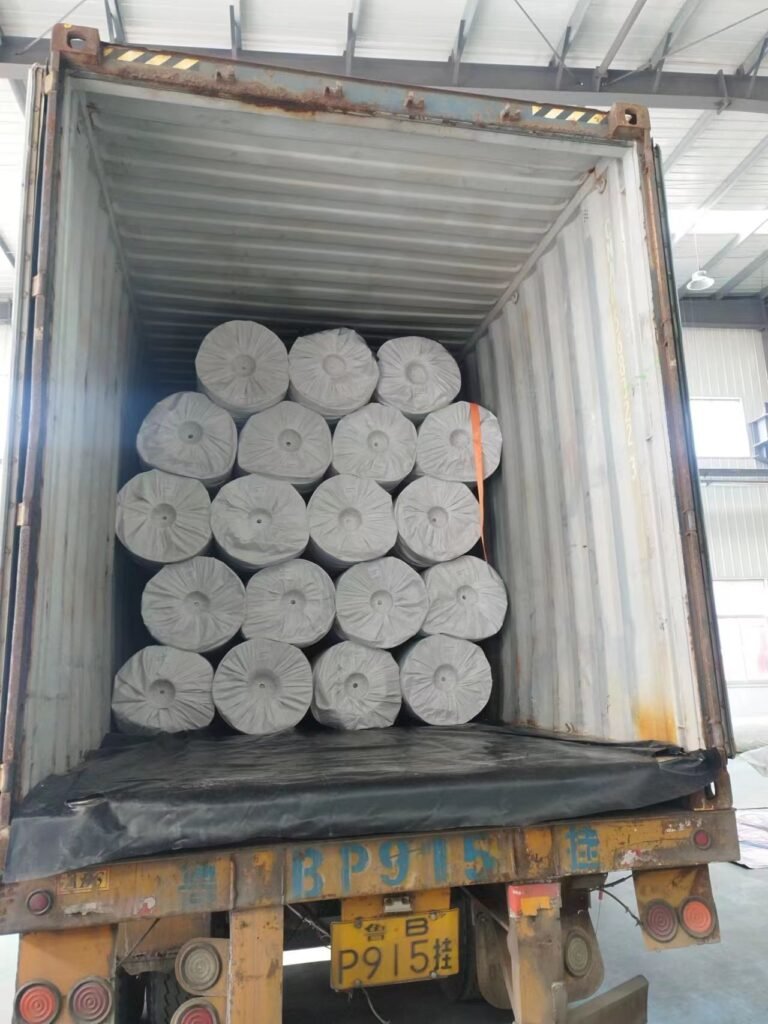
Specifications of HDPE Pond Liner for Aquaculture Project in Ecuador
Total HDPE pond liner quantity–372400 squares meters
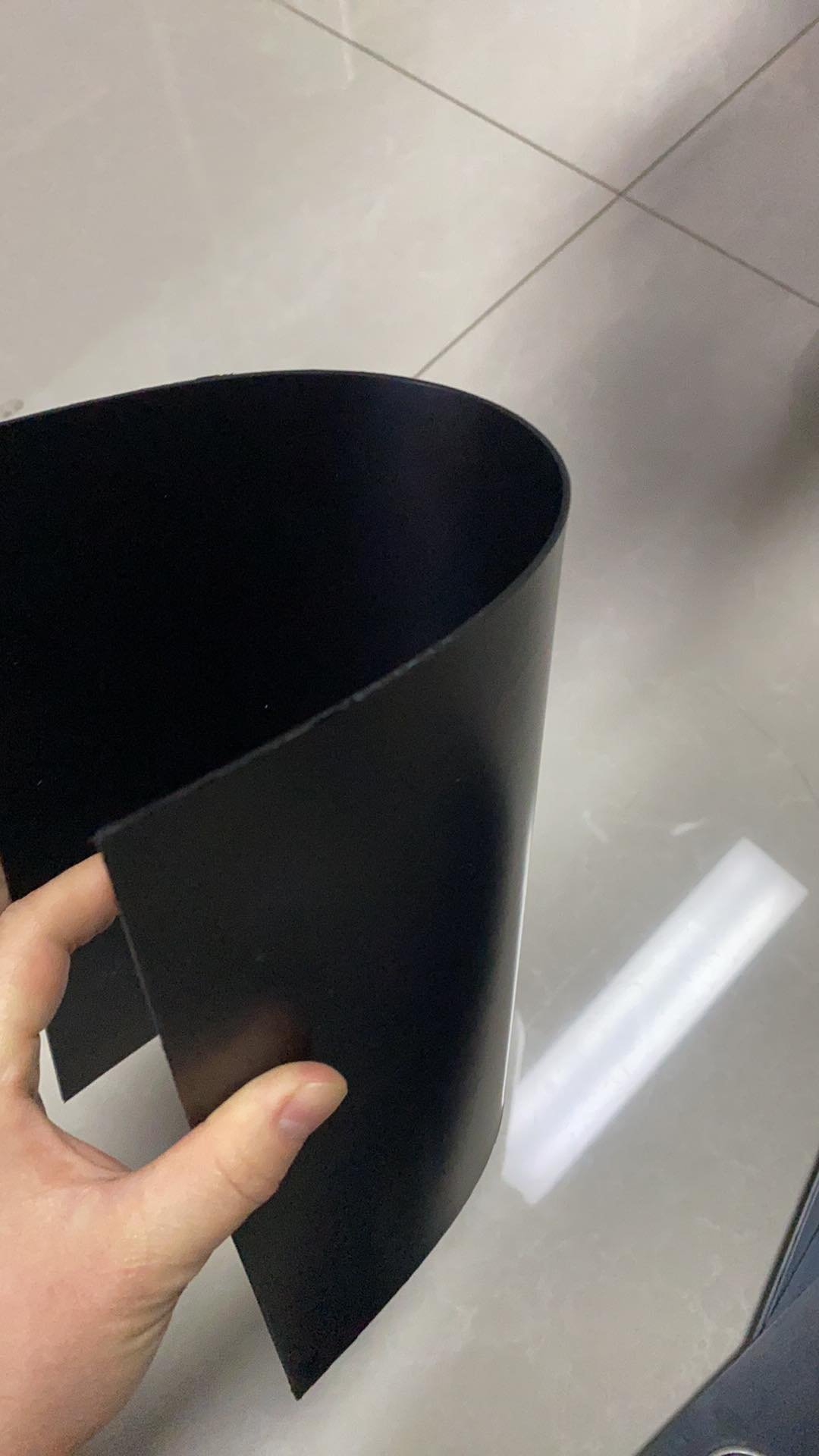
Thickness – 0.75mm
Each roll size – 7m*280m
BPM had provided many types of effective and states of the art geomembranes and other geosythetics to over 120 countries. Our main customers are from Australia, France, Sweden, UK, Hong Kong, Hungary, New Zealand, Poland, Mexico, Ecuador, Brazil, Pakistan, Bangladesh, Thailand, Vietnam, Malaysia, Indonesia, Singapore, Philippines, Sri Lanka, India, UAE, Saudi Arabia, Qatar, Kenya, Ghana, Ethiopia, Somalia, Nigeria, South Africa, Swaziland, Mongolia etc.