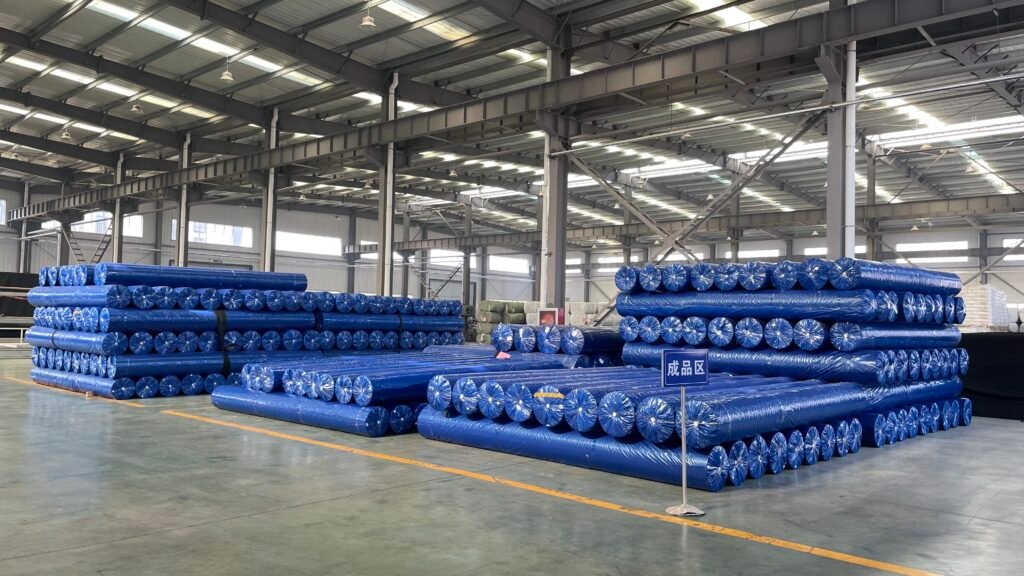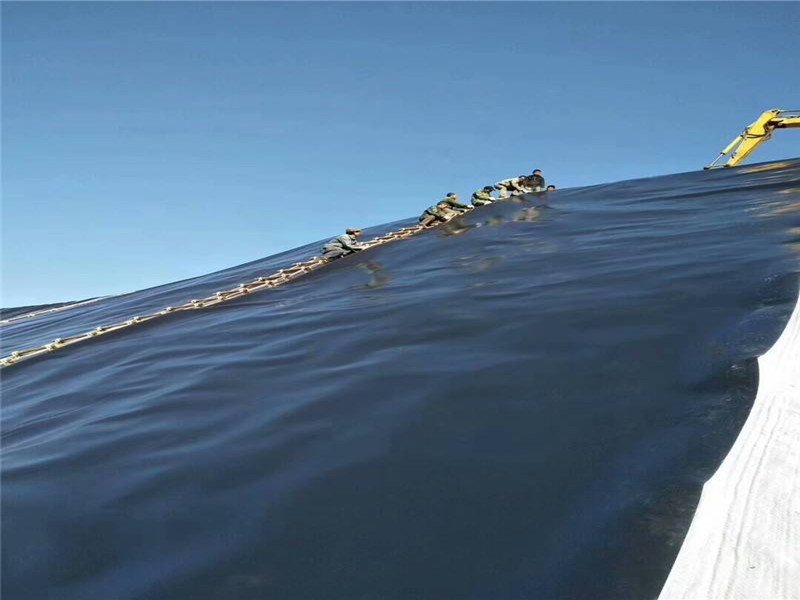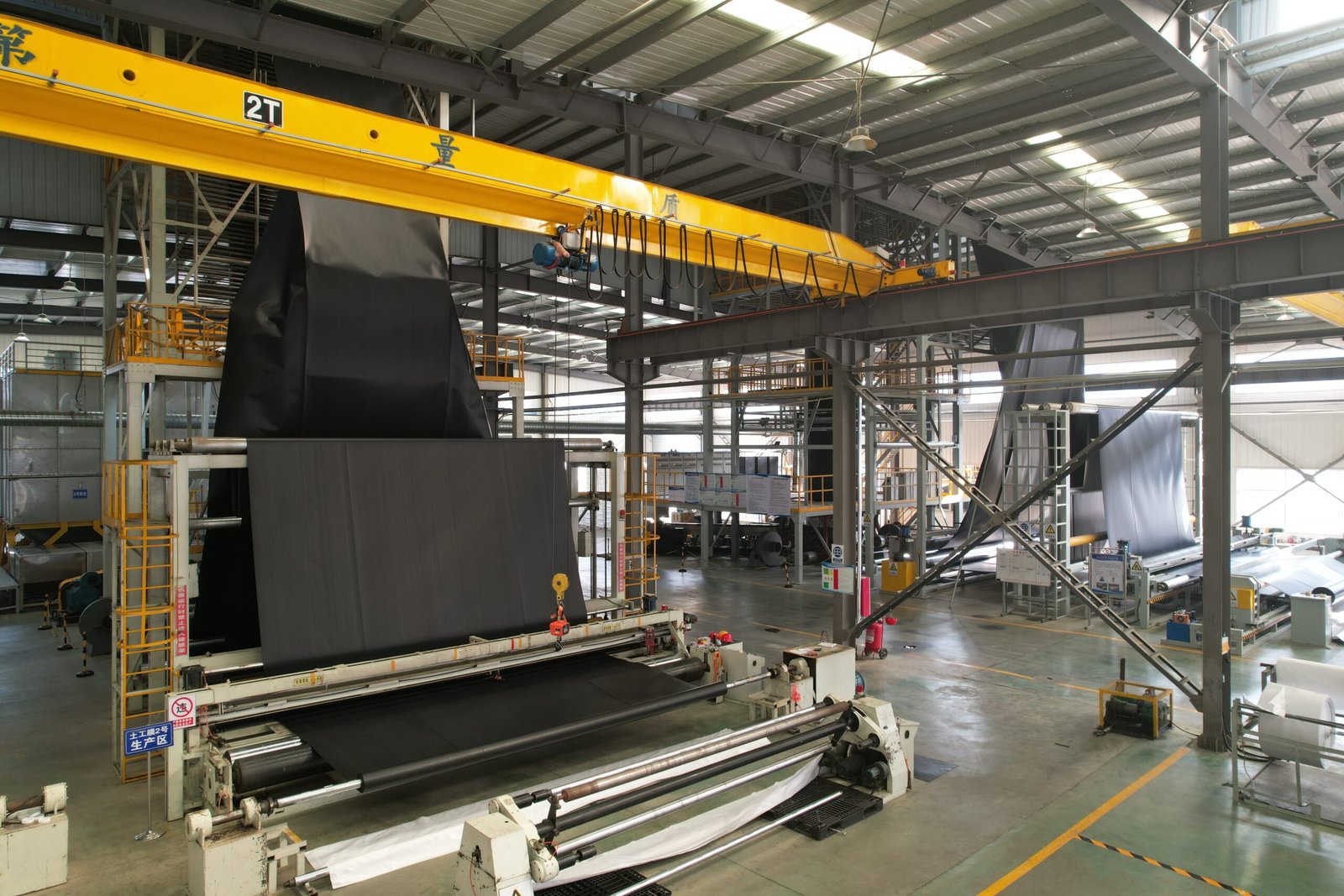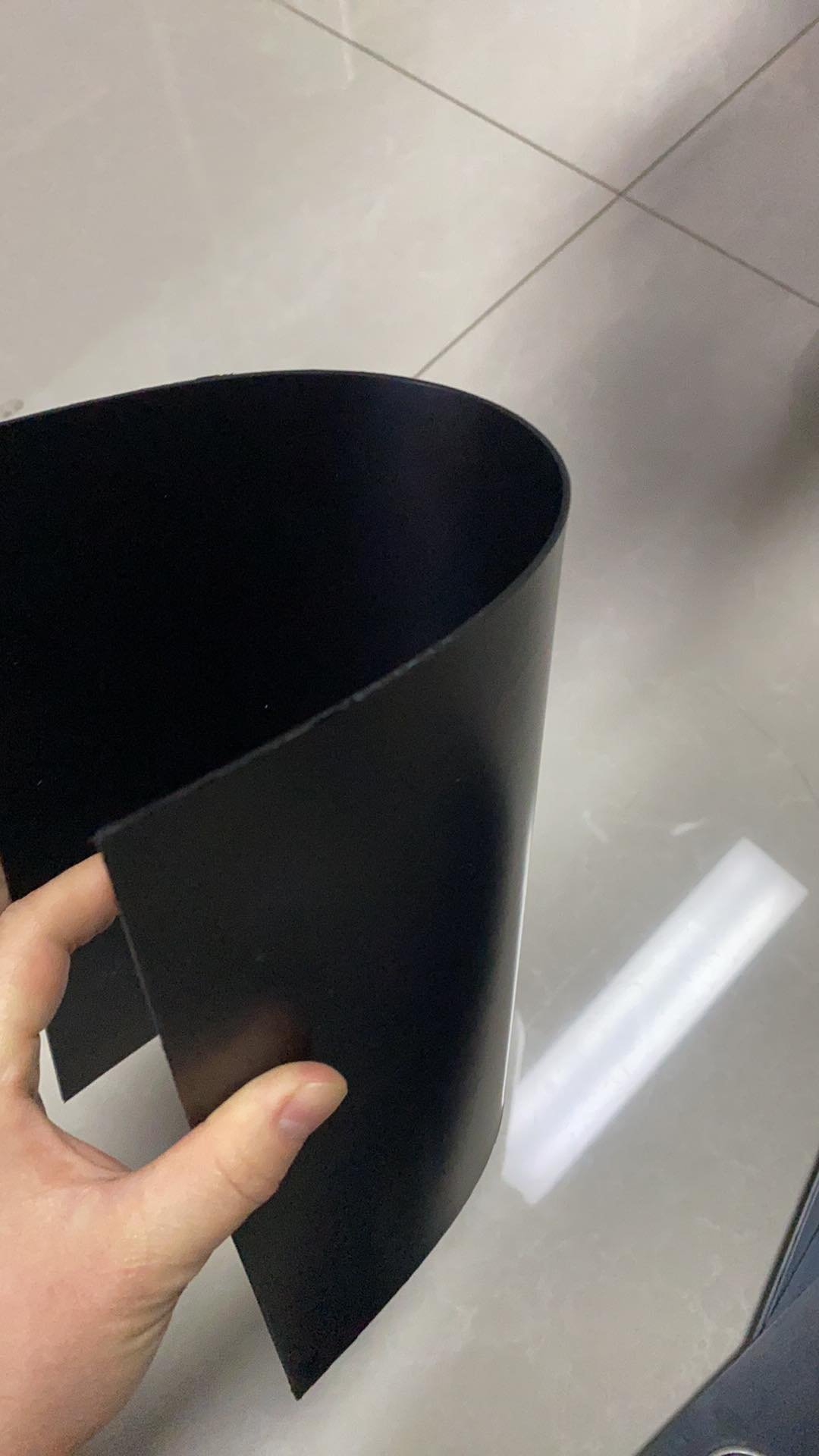
Non woven Geotextile Fabric is made from 100% virgin staple polypropylene fibers that are tangled and interlocked with each other by needle-punching process. It is the kind of non wovengeotextile fabric which is robust, durable, permeable and resist to deformation. BPM short fiber nonwoven geotextile fabric is widely used to increase ground support and soil stabilization in a given location, it has the characteristics of high tensile strength, high elongation rate, excellent UV stabilization, excellent filtration and good abrasion resistance, etc. Everyone knows that filtration, separation, protection, drainage applications in civil environmental engineering and construction projects, but it also has its own disadvantages. This article will briefly elaborate to you.
1.What Is Non woven Geotextile Fabric
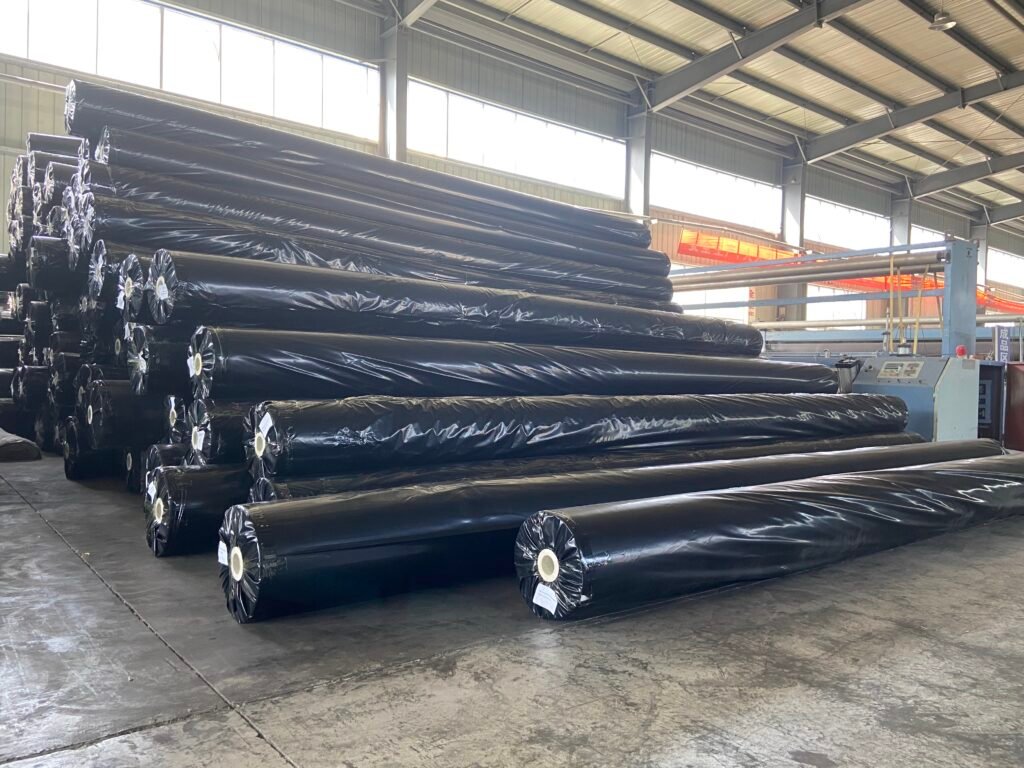
Non woven Geotextile Fabric is often made from polypropylene or polyester fibers processed by woven, needle-punched or heat-bonded methods. short fiber needle punched geotextile fabric is made from 100% virgin staple polypropylene fibers that are tangled and interlocked with each other by needle-punching process. It is the kind of non woven geotextile fabric which is robust, durable, permeable and resist to deformation. BPM short fiber nonwoven geotextile fabric is widely used to increase ground support and soil stabilization in a given location, it has the characteristics of high tensile strength, high elongation rate, excellent UV stabilization, excellent filtration and good abrasion resistance, etc. It is widely used for filtration, separation, protection, drainage applications in civil environmental engineering and construction projects.
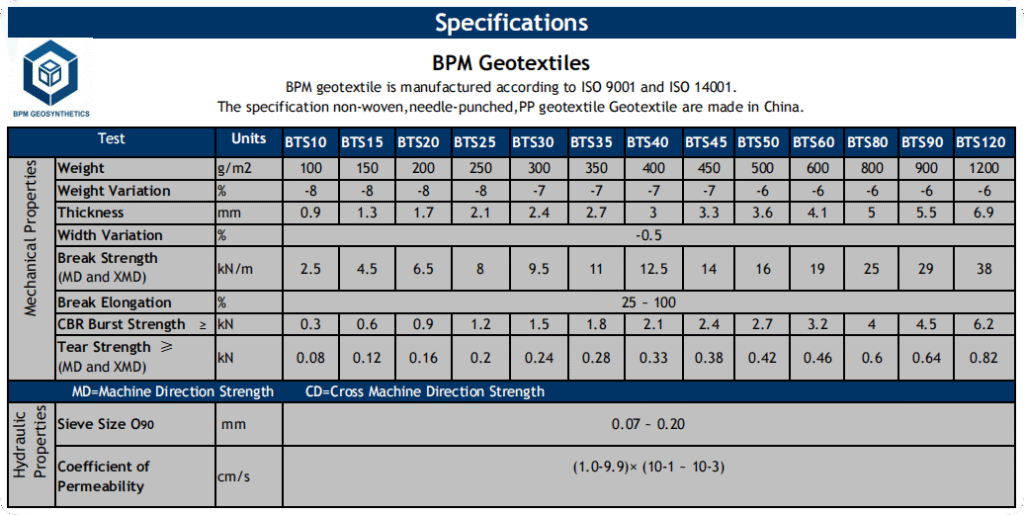
Specifications of Non woven Geotextile Fabric
2. What Are The Advantages Of Non woven Geotextile Fabric?
A. High tensile strength
B. Excellent water permeability and drainage
C.Good filtration effect
D.High corrosion resistance
E.Good separation, drainage, reinforcement, protection function
F. High flexibility
G. Resistant to acids and alkalis
H. Anti-oxidation
I. Best creep resistance
J. Easy construction
3. What Are Disadvantages Of Non woven Geotextile Fabric?
Non-woven geotextile fabrics are widely used in civil engineering and construction for filtration, drainage, and separation. However, they also have several disadvantages compared to woven geotextiles or other alternatives.
Here are the key drawbacks:
1. Lower Tensile Strength – Non-woven geotextiles generally have lower tensile strength compared to woven geotextiles, making them less suitable for high-stress applications like reinforcement of steep slopes or heavy load-bearing structures. – Prone to tearing under mechanical stress (e.g., during installation or under heavy machinery).
2. Poor UV Resistance – Most non-woven geotextiles are not UV-stabilized and degrade faster when exposed to sunlight for long periods. – Requires covering with soil or other materials if used in exposed applications.
3. Clogging Potential in Filtration – While they are excellent for drainage, fine-particle soils (like silt or clay) can clog the fabric’s pores over time, reducing permeability. – Requires proper **gradation and soil compatibility testing** to prevent long-term failure.
4. Limited Load Distribution Capacity – Due to their random fiber structure, they distribute loads less effectively than woven geotextiles, making them less ideal for road base stabilization under heavy traffic.
5. Susceptibility to Chemical Degradation – Some non-woven geotextiles (especially polypropylene-based) can degrade when exposed to harsh chemicals, oils, or extreme pH levels. – Not ideal for landfill liners or hazardous waste containment where chemical resistance is critical.
6. Thickness Variability & Compression Issues – Their thickness can compress under heavy loads, reducing drainage capacity over time. – Requires careful selection of weight (grams per square meter, GSM) to ensure long-term performance.
7. Higher Cost Compared to Woven in Some Cases – While generally cost-effective, high-quality needle-punched non-woven geotextiles can be more expensive than simple woven alternatives for certain applications.
When to Avoid Non-Woven Geotextiles?
– High-load applications (e.g., road reinforcement).
– Long-term UV exposure (unless stabilized).
– Highly acidic/alkaline environments.
– Fine-soil filtration without proper testing.
Best Alternatives
– Woven geotextiles
– Better for reinforcement and high-strength needs.
– HDPE geomembranes
– Superior for chemical resistance and containment.
– Composite geotextiles
– Combine filtration and strength.
Conclusion: Non-woven geotextiles excel in drainage and separation but have limitations in strength, UV resistance, and chemical durability. Proper selection based on project requirements is crucial. Would you like a comparison table vs. woven geotextiles?
4. Does Non woven Geotextile Fabric Really Work?
4.1 Application Area
A. Improve the slope stability and soil reinforcement.
B. Retaining and reinforcement wall backfill.
C. Strengthen weak road and fix the cracks on the road.
D. Isolation layer of artificial backfill soil stone foundation and different tundra.
E. Filtration layer of drainage pipe or gravel.
F. Vertical or horizontal drainage;
G. Bury in soil to release air pressure.
I. Reinforce the weak foundation of road, railway, embankment and airport, etc.
4.2 Construction methods
1. Preparation: Before installing geotextile, prepare necessary tools and materials such as geotextile rolls, hoes, shovels, bentonite, nails, etc.
2. Surface cleaning: Clean the surface of the construction area to ensure a smooth surface, and remove any debris and excess vegetation.
3. Layout and measurement: Determine the laying range and position of geotextile according to engineering needs. Use measuring tools to measure the length and width of the laying area.
4. Laying geotextile: Slowly unfold the geotextile onto the laying area and ensure that it is in close contact with the ground. Avoid excessive stretching or damaging the geotextile.
5. Fixing geotextile: Use nails or other suitable fixtures to fix the geotextile to the ground. Ensure that the connection between the fixed object and the geotextile is firm and reliable to prevent movement and looseness.
6. Drainage management: Install drainage facilities (such as drainage channels or pipes) at the installation site as needed to ensure the smooth flow of water under the geotextile.
7. Regular inspection: Regularly check the condition of the geotextile to ensure its normal operation. If necessary, repair or replace the damaged parts.
5. Summary
BPM had been specialized in manufacturing and delivering one stop Non woven Geotextile Fabric and geosynthetics products and solutions to over 36 countries since its foundation in 2007. We are not only manufacturing best quality geotextile products but also providing professional fabrication and installation service. OEM and ODM are also available. If you have any questions or inquiries, please fill and submit the following form, we will reply as soon as possible.