PVC geomembrane liners remain one of the most flexible and widely used impermeable barriers for water containment, decorative ponds, irrigation canals, aquaculture facilities, and selected environmental applications. Polyvinyl chloride (PVC) geomembranes offer excellent conformability to irregular subgrades, high elongation, and reliable seaming performance, making them particularly suitable for projects where flexibility and ease of installation are priorities.
In this 2026 buyer’s guide we review seven leading PVC geomembrane liner options. Rankings are based on measurable mechanical properties (tensile strength, elongation, puncture and tear resistance), chemical and UV stability, seam performance, field track record, certifications, and overall value. Data are drawn from ASTM D7176, FGI specifications, manufacturer technical data sheets, and documented project performance.
Choosing the right PVC geomembrane liner helps prevent seepage, protect groundwater, reduce water loss, and extend project service life while controlling installation and long-term maintenance costs.
What Is a PVC Geomembrane Liner?
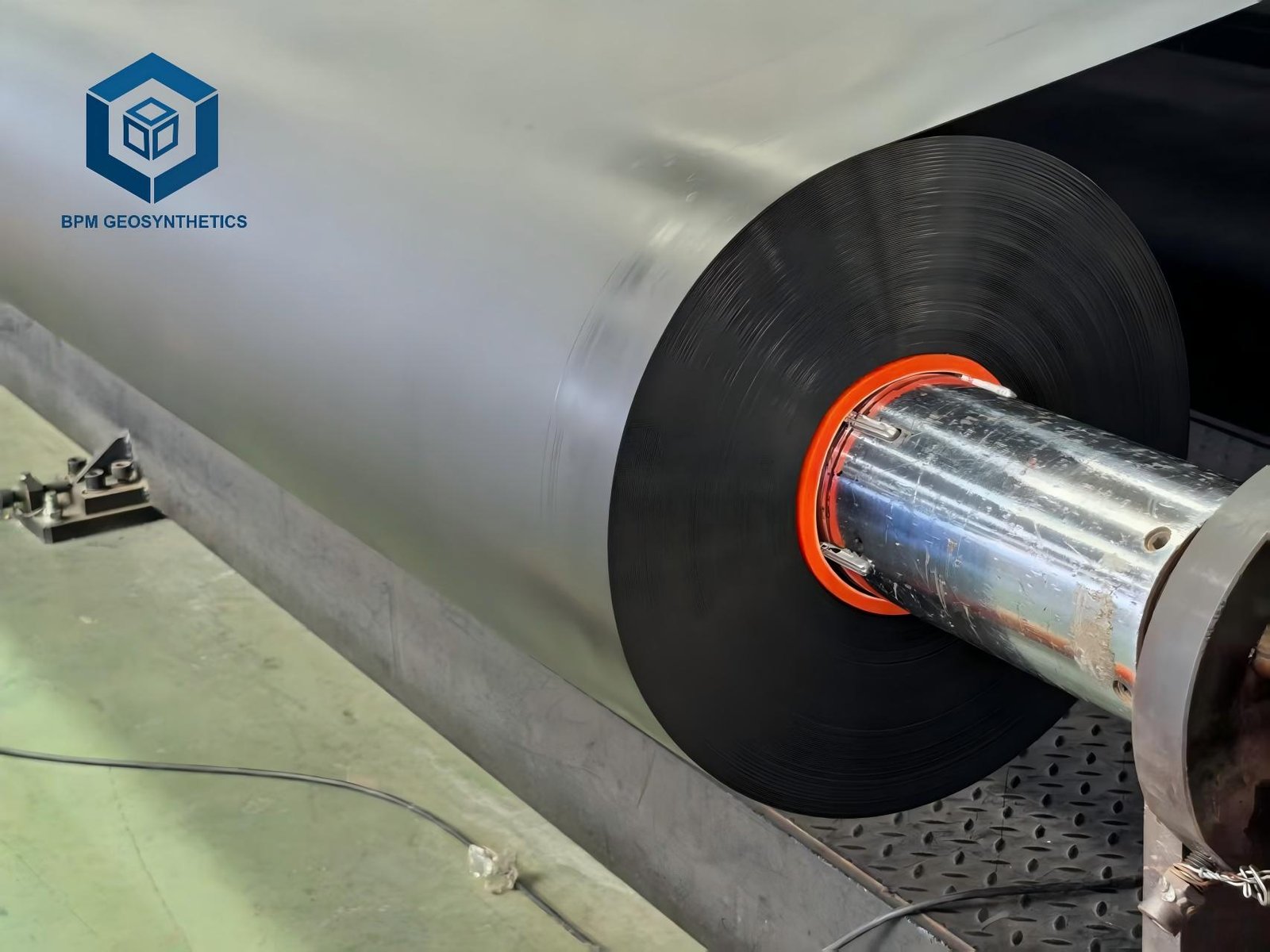
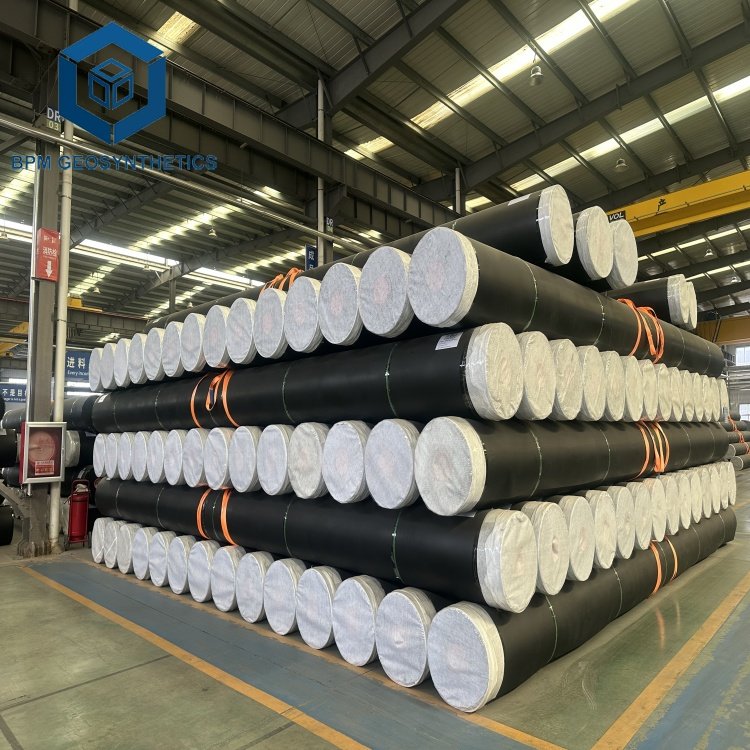
A PVC geomembrane liner is a flexible synthetic membrane manufactured from polyvinyl chloride resin compounded with plasticizers, UV stabilizers, biocides, and other additives. It is typically produced by calendering or extrusion and supplied in rolls for field installation.
PVC geomembranes are available in non-reinforced and reinforced (scrim-reinforced) versions. Thicknesses commonly range from 0.25 mm (10 mil) to 1.52 mm (60 mil) or higher. Non-reinforced grades emphasize flexibility and elongation, while reinforced grades increase tensile strength and dimensional stability.
Key advantages of PVC geomembrane liners include:
- High flexibility and elongation (typically 250–450 %)
- Excellent conformability to uneven or complex subgrades
- Reliable thermal or dielectric welding performance
- Good puncture and tear resistance for many applications
- Fish-safe formulations available for aquaculture and decorative ponds
- Competitive cost for moderate-duty containment projects
- Long service life when properly installed and protected
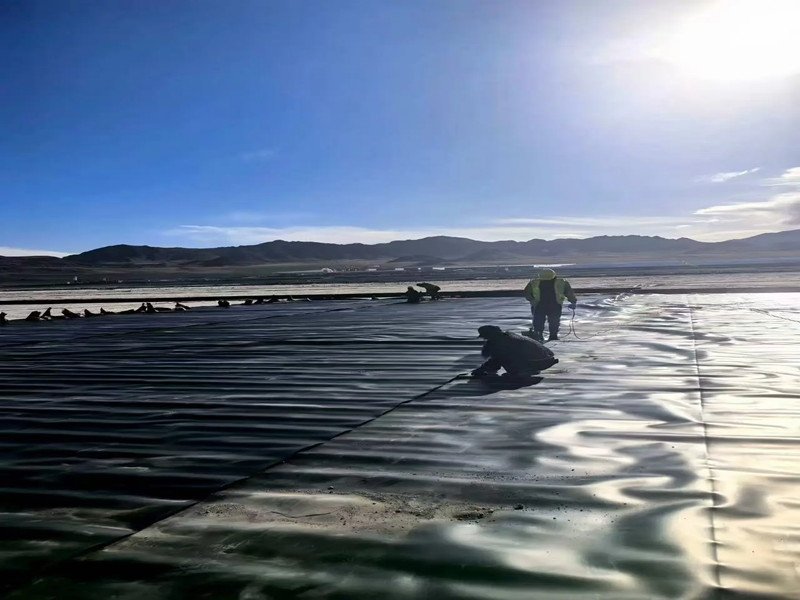
PVC liners are widely used in ornamental and recreational ponds, irrigation canals, aquaculture ponds, secondary containment, green roofs, and selected landfill or lagoon covers where extreme chemical resistance is not the primary requirement.
PVC vs. HDPE and LLDPE Geomembrane Liners
PVC, HDPE, and LLDPE geomembranes serve overlapping but distinct roles.
HDPE geomembranes offer higher tensile strength, superior chemical resistance, and greater long-term durability under aggressive chemical or high-load conditions. They are preferred for landfills, mining heap-leach pads, and hazardous-waste containment.
LLDPE geomembranes provide higher flexibility than HDPE while retaining good chemical resistance, making them suitable for settlement-prone or irregular sites.
PVC geomembranes excel in flexibility and ease of installation on complex shapes. They typically show lower chemical resistance to hydrocarbons and certain solvents compared with polyethylene liners, and plasticizer migration can occur over very long exposure periods if formulations are not optimized. For fish-safe decorative ponds, irrigation canals, and projects prioritizing conformability, PVC remains a strong choice.
Select PVC when flexibility, ease of fabrication, and moderate chemical exposure are primary concerns.
Select HDPE or LLDPE when higher chemical resistance, stiffness, or ultra-long service life under demanding conditions is required.
How to Choose the Best PVC Geomembrane Liner
Project owners and contractors should evaluate the following factors before specifying a PVC geomembrane liner.
1. Thickness
Common thicknesses range from 20 mil (0.51 mm) to 60 mil (1.52 mm). Thinner grades (20–30 mil) suit decorative ponds and low-stress applications. 40 mil (1.0 mm) is a popular all-round grade. Heavier grades (50–60 mil) are preferred for canals, reservoirs, and higher hydraulic heads.
2. Reinforcement
Non-reinforced PVC offers maximum flexibility. Scrim-reinforced PVC increases tensile strength and dimensional stability, beneficial on slopes or under higher loads.
3. Mechanical Properties
Look for tensile strength at break of at least 12–24 kN/m (depending on thickness), elongation of 250–450 %, puncture resistance of 200–500 N, and tear strength consistent with ASTM D1004 or equivalent.
4. Chemical, UV, and Fish Safety
Confirm UV stabilizers for exposed service and biocide packages for aquatic applications. NSF/ANSI 61 or equivalent certification is important for potable or fish-safe use.
5. Seaming and Installation
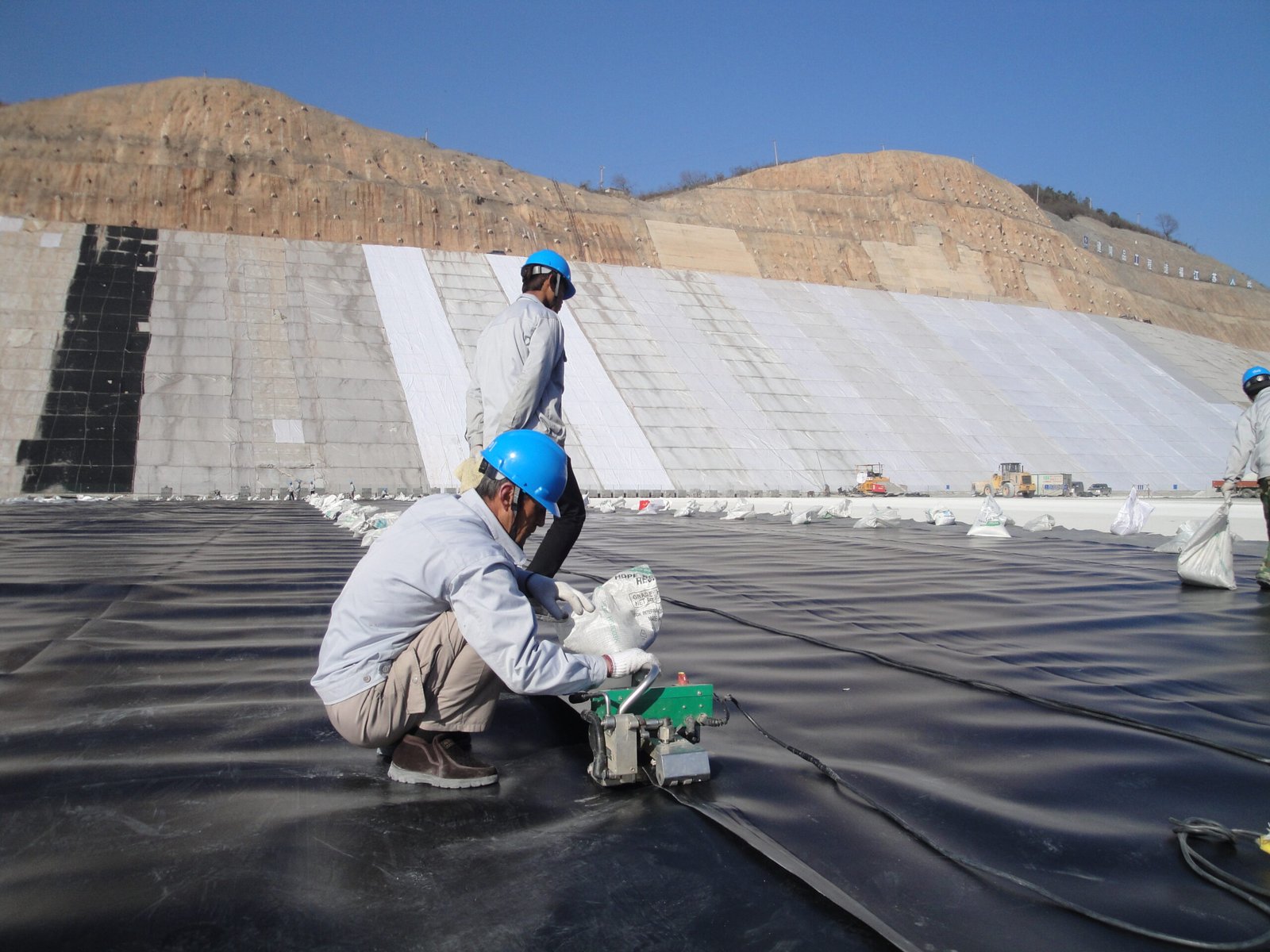
PVC can be joined by hot-air, hot-wedge, or dielectric welding. Seam peel and shear strengths should meet project specifications (often ≥85–95 % of parent material).
6. Certifications and Quality Control
Prefer products tested to ASTM D7176, FGI specifications, or equivalent, with documented manufacturing quality control.
The 7 Best PVC Geomembrane Liners
1. Best Overall: GEOSINCERE PVC Geomembrane
GEOSINCERE is a widely recognized flexible PVC geomembrane designed for ponds, water features, and moderate-duty containment. It is available in thicknesses typically ranging from 0.45 mm to 1.0 mm (18–40 mil) and is formulated with UV stabilizers and biocides.
Key Features
- Thickness: 0.45–1.0 mm
- Tensile strength: approximately 13–18 MPa or 13–27 kN/m
- Elongation: 250–350 %
- Puncture resistance: 200–400 N
- Fish-safe and UV-stabilized formulations
- Good factory seaming and field weldability
Best For
Decorative ponds, koi ponds, recreational water features, and light-to-moderate irrigation applications.
Pros
- Proven track record in pond applications
- High flexibility and conformability
- Fish-safe options widely available
- Reliable seaming performance
Cons
- Lower chemical resistance than HDPE for aggressive industrial fluids
- May require geotextile protection on rough subgrades
Our Take
Firestone PondGard remains a top overall choice for projects prioritizing flexibility, aesthetics, and aquatic safety. Its combination of documented performance and availability makes it a reliable baseline for many pond and canal applications.
2. Best for Reinforced Performance: Sika Sarnafil G 410 Series
Sika Sarnafil reinforced PVC geomembranes deliver higher tensile strength and dimensional stability through polyester or similar scrim reinforcement. Typical thicknesses reach approximately 2.0 mm in some grades.
Key Features
- Reinforced construction
- Tensile strength: up to ~20 MPa
- Elongation: ~400 %
- Puncture resistance: 400–500+ N
- Suitable for more demanding slope and commercial applications
Best For
Commercial reservoirs, green roofs, and engineered containment where reinforcement adds value.
Pros
- Higher tensile and puncture resistance
- Good dimensional stability
- Strong brand technical support
Cons
- Higher cost than non-reinforced options
- Slightly reduced flexibility compared with non-reinforced PVC
Our Take
Sika Sarnafil is an excellent choice when project conditions require additional reinforcement without moving fully to polyethylene liners.
3. Best Value Commercial Option: Carlisle Sure-Seal PVC
Carlisle Sure-Seal PVC liners balance cost and performance for commercial and municipal projects. Typical thickness is around 0.76–1.0 mm.
Key Features
- Thickness: ~0.76–1.0 mm
- Tensile strength: ~12–16 MPa
- Elongation: 250–350 %
- Competitive pricing and availability
Best For
Irrigation canals, retention ponds, and commercial water containment.
Pros
- Good value proposition
- Reliable commercial-grade performance
- Wide availability
Cons
- Mechanical properties generally mid-range
Our Take
Carlisle offers solid everyday performance for projects that need a dependable PVC liner without premium pricing.
4. Best for Custom Fabrication: EPI Environmental PVC Liners
EPI is known for high-quality flexible PVC geomembranes and strong custom fabrication capabilities. Products meet or exceed ASTM D7176 requirements.
Key Features
- Thickness range: 0.25–1.5 mm
- High elongation (often 380 %+ in key grades)
- Strong hydrostatic resistance
- Custom panel fabrication
Best For
Custom-shaped ponds, complex containment geometries, and projects requiring large fabricated panels.
Pros
- Excellent conformability
- Strong fabrication support
- Good mechanical property package
Cons
- Lead times for large custom orders may vary
Our Take
EPI is a preferred option when project geometry demands custom fabrication and high flexibility.
5. Best for Irrigation and Canals: Layfield EnviroPVC / Aquamax Range
Layfield supplies PVC geomembranes tailored for hydraulic applications such as canals and reservoirs.
Key Features
- Thickness: 0.76–1.02 mm typical
- Balanced tensile and elongation properties
- Formulations suited to prolonged water exposure
Best For
Irrigation canals, agricultural reservoirs, and water conveyance systems.
Pros
- Proven hydraulic application experience
- Good UV and water resistance
- Practical roll sizes
Cons
- May require additional protection on rocky subgrades
Our Take
Layfield products perform reliably in water management projects where seepage control and long-term water exposure are primary concerns.
6. Best Reinforced / Scrim Option: AGRU America PVC Variants
AGRU offers extruded and reinforced PVC options suitable for industrial and environmental containment.
Key Features
- Thickness: 0.5–1.5 mm
- Enhanced tensile strength in reinforced grades
- Good chemical and puncture performance for PVC class
Best For
Industrial secondary containment and selected environmental applications.
Pros
- Strong manufacturing consistency
- Reinforced options available
- Suitable for more demanding PVC uses
Cons
- Higher cost than basic pond grades
Our Take
AGRU is a solid choice when PVC is preferred but project conditions require elevated mechanical properties.
7. Best Flexible / High-Value Option: Atarfil and Comparable Flexible PVC Grades
Atarfil and similar flexible PVC geomembranes emphasize high elongation and ease of installation on complex terrain.
Key Features
- Thickness: 0.5–1.0 mm
- Elongation often 280–450 %
- Competitive pricing and good conformability
Best For
Irregular ponds, landscaping features, and cost-sensitive flexible containment.
Pros
- High flexibility
- Good value
- Easy handling and welding
Cons
- Lower tensile strength than reinforced grades
Our Take
These flexible grades deliver excellent performance where conformability is the dominant design driver.
Comparison Tables
Table 1: Core Technical Parameters of Leading PVC Geomembrane Liners
Rank | Product / Brand | Thickness (mm) | Tensile Strength (approx.) | Elongation (%) | Puncture Resistance (N) | Key Advantage |
1 | Firestone PondGard | 0.45–1.0 | 13–18 MPa / 13–27 kN/m | 250–350 | 200–400 | Best overall pond performance |
2 | Sika Sarnafil G 410 | ~1.5–2.0 | ~20 MPa | ~400 | 400–500+ | Reinforced strength |
3 | Carlisle Sure-Seal | 0.76–1.0 | 12–16 MPa | 250–350 | 250–380 | Commercial value |
4 | EPI Environmental | 0.25–1.5 | Meets/exceeds ASTM | 380+ | High | Custom fabrication |
5 | Layfield Enviro / Aquamax | 0.76–1.02 | 14–16 MPa | 280–360 | 220–350 | Irrigation & canals |
6 | AGRU America PVC | 0.5–1.5 | 15–22 MPa | 250–350 | 280–400 | Reinforced industrial |
7 | Atarfil Flexible PVC | 0.5–1.0 | 14–20 MPa | 280–450 | 250–420 | High flexibility & value |
Table 2: Additional Performance & Application Indicators
Product / Brand | Typical Certifications / Standards | Primary Applications | Relative Cost Level | Notes on Longevity (covered) |
Firestone PondGard | ASTM, industry fish-safe | Ponds, water features | Medium | 15–30+ years |
Sika Sarnafil | Project & system certifications | Commercial, green roofs | Higher | 15–30 years |
Carlisle Sure-Seal | Commercial ASTM compliance | Canals, retention | Medium-Low | 15–25 years |
EPI | ASTM D7176, PGI | Custom ponds & containment | Medium | 20–30+ years |
Layfield | Hydraulic application standards | Irrigation, reservoirs | Medium | 15–25 years |
AGRU | Industrial & environmental | Secondary containment | Medium-High | 15–30 years |
Atarfil Flexible | Flexible PVC standards | Landscaping, irregular sites | Lower-Medium | 15–25 years |
Values are approximate and based on published technical data and industry ranges. Always request current manufacturer data sheets and project-specific testing.
Installation and Performance Considerations
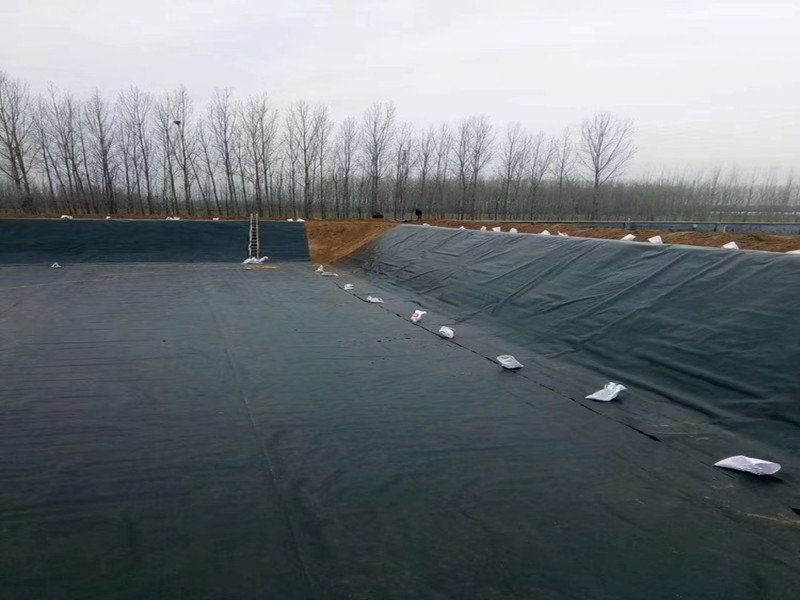
Successful performance of any PVC geomembrane liner depends on proper subgrade preparation, protection (often with non-woven geotextile), correct welding parameters, and quality assurance testing (peel, shear, and non-destructive methods). Protective cover layers significantly extend service life by reducing UV exposure and mechanical damage.
Conclusion
PVC geomembrane liners continue to provide an effective, flexible, and cost-efficient solution for a wide range of water containment and moderate-duty environmental applications. The seven products reviewed here represent leading options based on measurable mechanical properties, field performance, certifications, and overall value.
Firestone PondGard stands out as the best overall choice for most pond and water-feature projects, while reinforced options such as Sika Sarnafil and AGRU address higher-demand conditions. Custom fabrication specialists like EPI and practical hydraulic grades from Layfield further expand the toolkit available to engineers and contractors.
When specifying a PVC geomembrane liner, match thickness, reinforcement, chemical compatibility, and certification requirements to the specific project conditions. Proper installation and protection remain essential to achieving the full design life of the liner.
For detailed technical data sheets, project-specific recommendations, or competitive quotations on high-quality geomembrane solutions, contact experienced manufacturers and suppliers who can provide ASTM-compliant products and technical support tailored to your containment requirements.