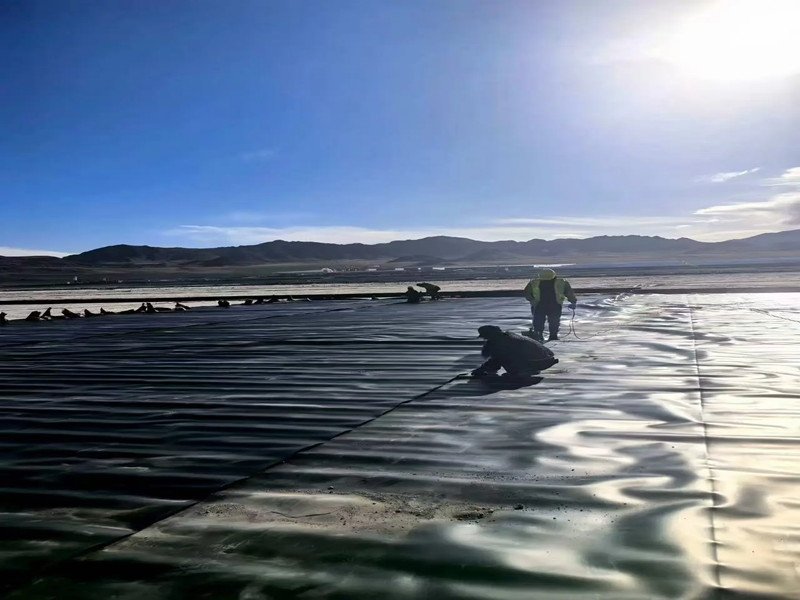
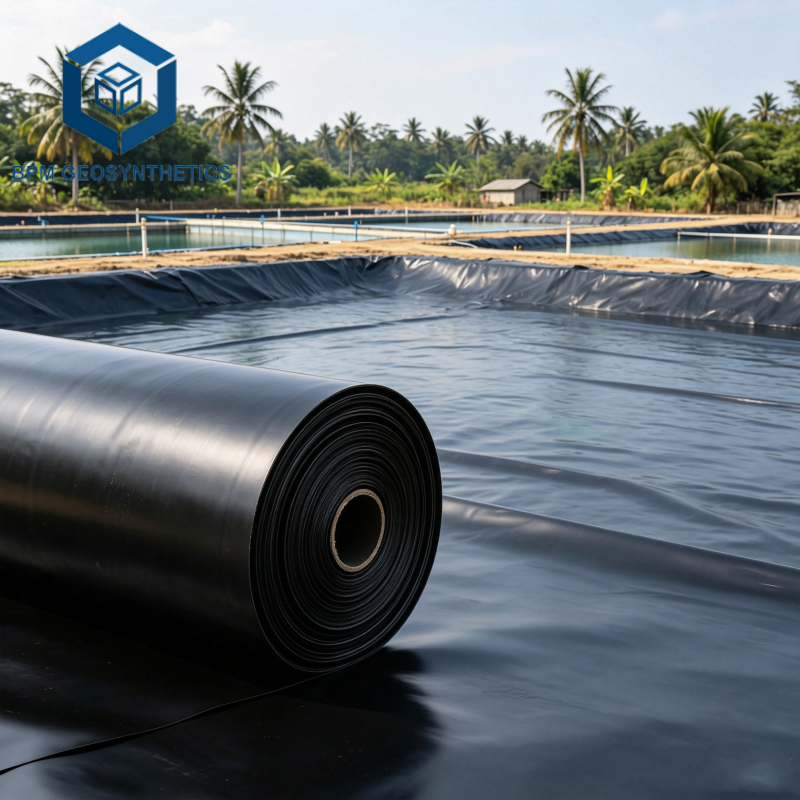
Geo membranes (also written geomembranes) are low-permeability synthetic liners engineered to control the migration of liquids and gases in civil, environmental, and geotechnical engineering projects. Defined under ASTM D4439 as relatively impermeable membranes used in contact with soil, rock, or other geotechnical materials, these liners typically achieve hydraulic conductivity below 1 × 10⁻¹³ cm/s and provide 95–99 % containment efficiency in properly designed systems. Manufactured primarily from polymeric materials such as high-density polyethylene (HDPE), linear low-density polyethylene (LLDPE), polyvinyl chloride (PVC), ethylene propylene diene monomer (EPDM), and related compounds, geo membranes serve as critical barriers in landfills, mining heap-leach pads, water reservoirs, industrial containment, canals, and aquaculture.
In 2026 the global geo membranes market continues to expand, driven by stricter environmental regulations, growth in mining and waste management, and increasing demand for water conservation infrastructure. HDPE remains the dominant material, accounting for the majority of critical containment installations because of its superior chemical resistance, tensile strength, puncture performance, and documented multi-decade service life under GRI-GM13 standards. This comprehensive review presents the ten best geo membranes available, evaluated across material types, quantifiable mechanical and durability properties, manufacturing quality, certifications, and project suitability. Special emphasis is placed on the Smooth HDPE Geomembrane Liner manufactured by The Project Material Co., Ltd. (BPM Geosynthetics). Other Chinese manufacturers are excluded from detailed comparison.
Understanding Geo Membranes – Types and Core Functions
Geo membranes function as barriers that prevent fluid or gas migration. Key performance attributes include:
- Extremely low permeability
- Chemical resistance across a wide pH and solvent range
- Mechanical strength (tensile, tear, puncture)
- UV and oxidative stability (via carbon black and antioxidants)
- Weldability or seaming reliability
- Long-term durability under buried or exposed conditions
Primary polymer families include:
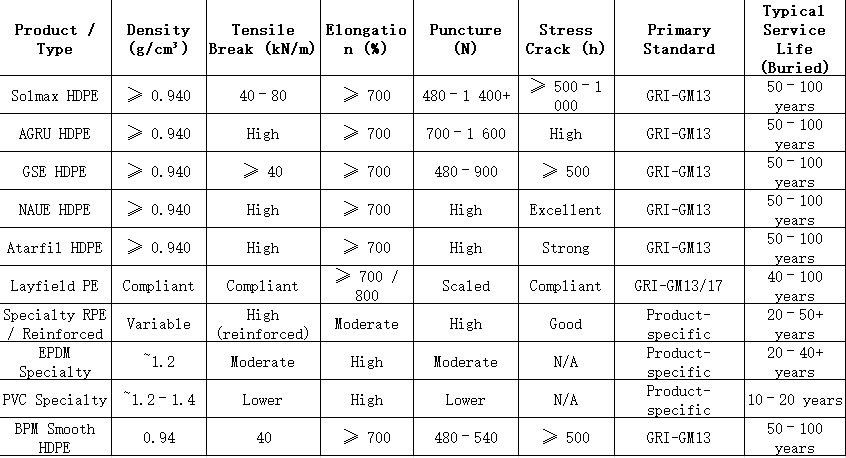
HDPE (High-Density Polyethylene) – Density ≥ 0.940 g/cm³, governed by GRI-GM13. Highest chemical resistance, tensile strength, and puncture resistance. Elongation at break ≥ 700 %. Preferred for landfills, mining, and aggressive chemical containment. Service life often 50–100 years when buried.
LLDPE (Linear Low-Density Polyethylene) – Density ≤ 0.939 g/cm³, governed by GRI-GM17. Higher elongation (≥ 800 %) and superior flexibility for settlement-prone sites and complex geometries. Excellent for landfill caps and soft subgrades.
PVC (Polyvinyl Chloride) – Highly flexible, easy to seam with adhesives or solvents. Lower long-term durability due to plasticizer migration. Common in decorative ponds and temporary applications.
EPDM (Ethylene Propylene Diene Monomer) – Excellent flexibility and weather resistance. Used in water features and some exposed covers.
Other specialty materials – Reinforced polyethylene (RPE), chlorosulfonated polyethylene (CSPE), flexible polypropylene (fPP), and bituminous geomembranes for niche applications.
Thickness typically ranges from 0.5 mm to 3.0 mm (20–120 mil), with 1.5 mm (60 mil) serving as the industry workhorse for many critical projects.
The Top 10 Geo Membranes – Detailed Review
1. Solmax HDPE / LLDPE Geo Membranes (Canada / Global)
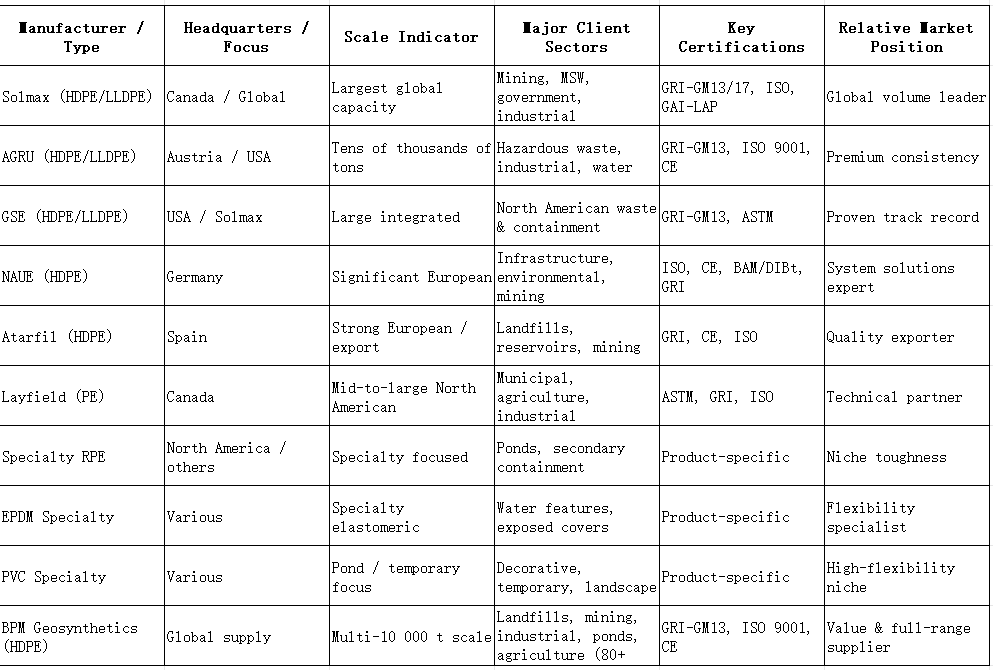
Solmax is the global volume leader in polyethylene geo membranes. HDPE grades meet or exceed GRI-GM13 with tensile break strengths typically 40–80 kN/m and puncture resistance scaling from 480 N (1.5 mm) to over 1 000 N in heavier gauges. LLDPE options deliver elongation ≥ 800 % and multiaxial performance. Density for HDPE is ≥ 0.940 g/cm³; carbon-black content is controlled at 2–3 %. Wide rolls (up to 10 m) reduce seams. High-pressure OIT ≥ 400 min supports long service life. Smooth, textured, conductive, and white-surfaced variants are available. Annual capacity estimates exceed tens of thousands of tons. Certifications include GRI-GM13/GM17, ISO 9001/14001, and GAI-LAP. Major clients span international mining, municipal solid-waste authorities, and large EPC contractors across more than 100 countries. Market position is that of global scale and consistency leader.
2. AGRU HDPE / LLDPE Geo Membranes (Austria / USA)
AGRU employs flat-die extrusion for exceptional thickness uniformity (±5 % or better). HDPE products in 0.75–3.0 mm thicknesses deliver high tensile properties and stress-crack resistance well above 500 h. Puncture resistance frequently exceeds 700–1 600 N in heavier gauges. LLDPE grades emphasize flexibility. High-pressure OIT ≥ 400 min. Roll widths up to 10.5 m. Certifications include GRI-GM13, ISO 9001, CE, and NSF where applicable. Clients include hazardous-waste facilities, industrial containment owners, and water authorities. AGRU is recognized for premium engineering consistency.
3. GSE HDPE / LLDPE (Legacy under Solmax)
GSE polyethylene geo membranes retain a multi-decade North American track record. Standard 1.5 mm HDPE offers tensile break ≥ 40 kN/m, elongation ≥ 700 %, and puncture resistance 480–900 N. LLDPE variants provide higher elongation for caps. Density and carbon-black formulations meet GRI standards. Field performance from hundreds of millions of square meters installed demonstrates reliable containment. Welding characteristics align with standard hot-wedge parameters.
4. NAUE Carbofol / Polyethylene Geo Membranes (Germany)
NAUE supplies high-durability HDPE geo membranes, often in composite systems with geosynthetic clay liners. Thicknesses typically 1.0–2.5 mm provide robust tensile and puncture values consistent with GRI-GM13. Wide rolls (up to 9.4 m) and European certifications (ISO, CE, BAM/DIBt) support infrastructure and environmental projects. Emphasis on chemical resistance and long-term performance.
5. Atarfil Polyethylene Geo Membranes (Spain)
Atarfil manufactures HDPE and flexible polyethylene grades using advanced extrusion. Thickness range 0.75–3.0 mm, tensile properties meeting GRI-GM13, and high environmental stress-crack resistance. Roll widths up to 10 m reduce field seams. High-pressure OIT and UV performance support exposed or covered applications. Certifications include GRI, CE, and ISO. Strong presence in Europe, Latin America, and selected global markets.
6. Layfield Polyethylene Geo Membranes (Canada)
Layfield offers HDPE and LLDPE liners from 0.75–2.5 mm with tensile and puncture values aligned with GRI-GM13/GM17. Noted for conformability and used extensively in North American municipal, agricultural, and industrial containment. Density, carbon-black content, and OIT meet industry minimums. Fabrication capabilities support large-panel delivery. Certifications follow ASTM and GRI protocols.
7. Specialty Reinforced Polyethylene (RPE) / Coated Woven Geo Membranes
Specialty producers supply reinforced polyethylene or coated woven geo membranes that combine high tear and puncture resistance with flexibility. These are valued in pond liners, secondary containment, and applications requiring enhanced toughness. Performance typically meets or approaches GRI-equivalent mechanical requirements while offering abrasion resistance advantages.
8. EPDM and Specialty Elastomeric Geo Membranes
EPDM geo membranes provide excellent flexibility, weather resistance, and cold-temperature performance. They are commonly used in water features, decorative ponds, and some exposed covers. Thicknesses typically 1.0–2.0 mm. Longevity is strong under proper formulation, though chemical resistance is generally lower than HDPE for aggressive leachates.
9. PVC Geo Membranes
PVC geo membranes offer high flexibility and ease of seaming with adhesives or solvents. They conform well to complex shapes and are popular for decorative ponds, temporary containment, and some water features. Long-term durability is limited by plasticizer migration, resulting in shorter service lives (often 10–20 years exposed) compared with polyethylene. Suitable for lower-stress, non-aggressive applications.
10. BPM Smooth HDPE Geomembrane Liner (The Project Material Co., Ltd. / BPM Geosynthetics)
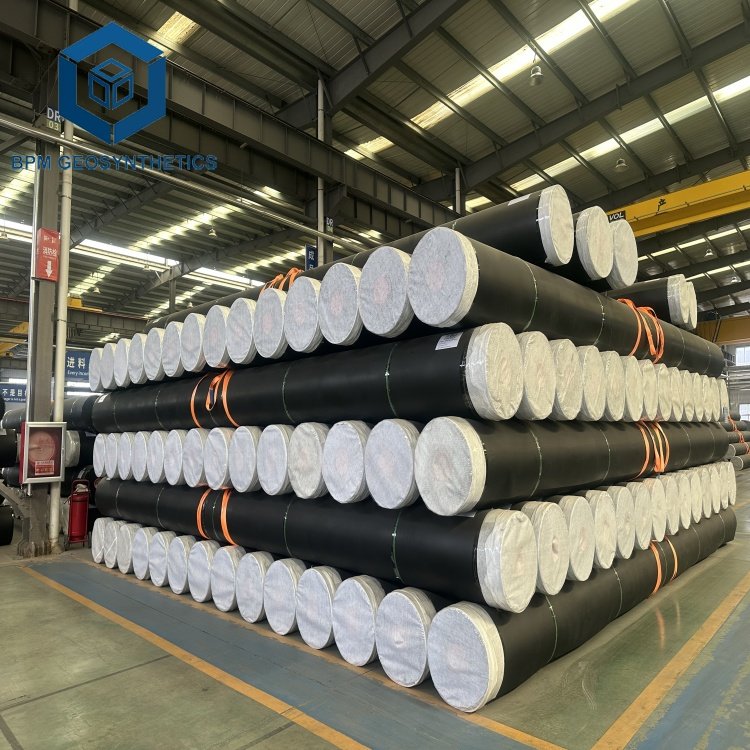
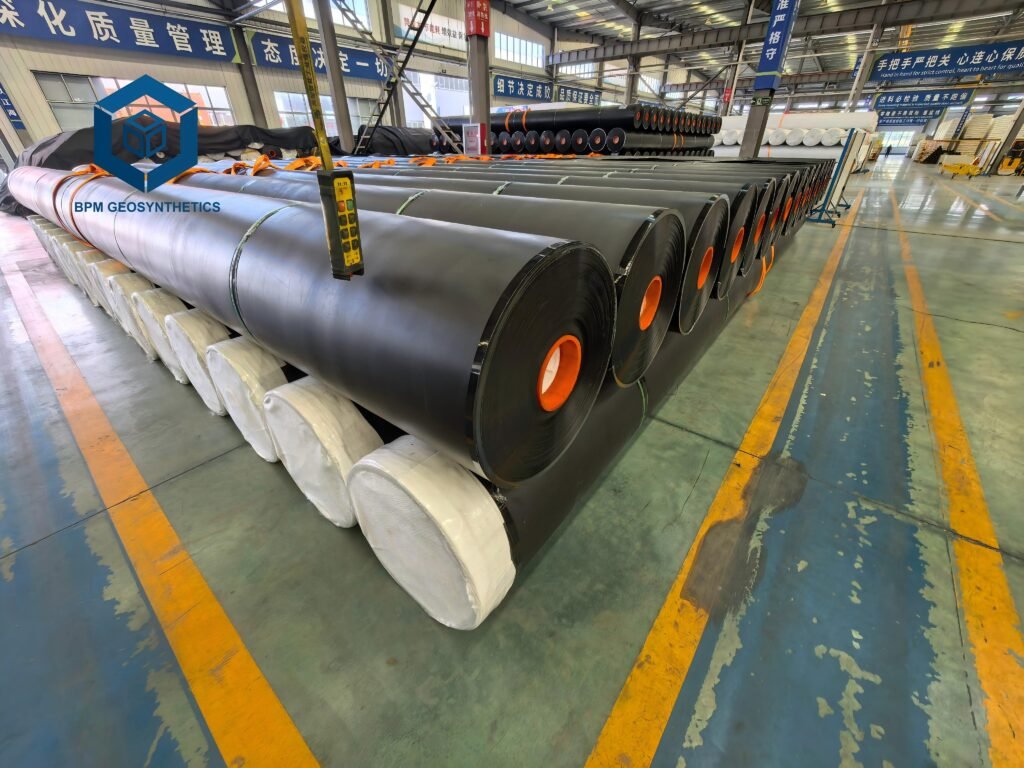
BPM’s Smooth HDPE Geomembrane Liner is manufactured from virgin resin with 2.0–3.0 % premium carbon black. Available thicknesses span 0.5–3.0 mm (focus on 0.75–2.5 mm for critical work). Typical properties for a 1.5 mm grade include density 0.94 g/cm³, tensile yield strength 22 kN/m, break strength 40 kN/m, elongation ≥ 700 %, tear resistance 187 N, puncture resistance 480–540 N (scaling to 960 N at 3.0 mm), stress-crack resistance ≥ 500 h, and high-pressure OIT ≥ 400 min. Roll widths of approximately 7 m and tight thickness tolerance facilitate high-quality hot-wedge welding. The product fully complies with GRI-GM13, ISO 9001, and CE requirements and is supplied with comprehensive third-party test reports. BPM liners have been installed in municipal solid-waste, hazardous-waste, mining, industrial, agricultural, and water-containment projects across more than 80 countries.
Comparison Table 1 – Core Technical Parameters of Leading Geo Membranes (Typical 1.5 mm Smooth Grades Where Applicable)
Comparison Table 2 – Market Position, Scale, Clients and Certifications
Installation, Welding and Long-Term Performance Considerations
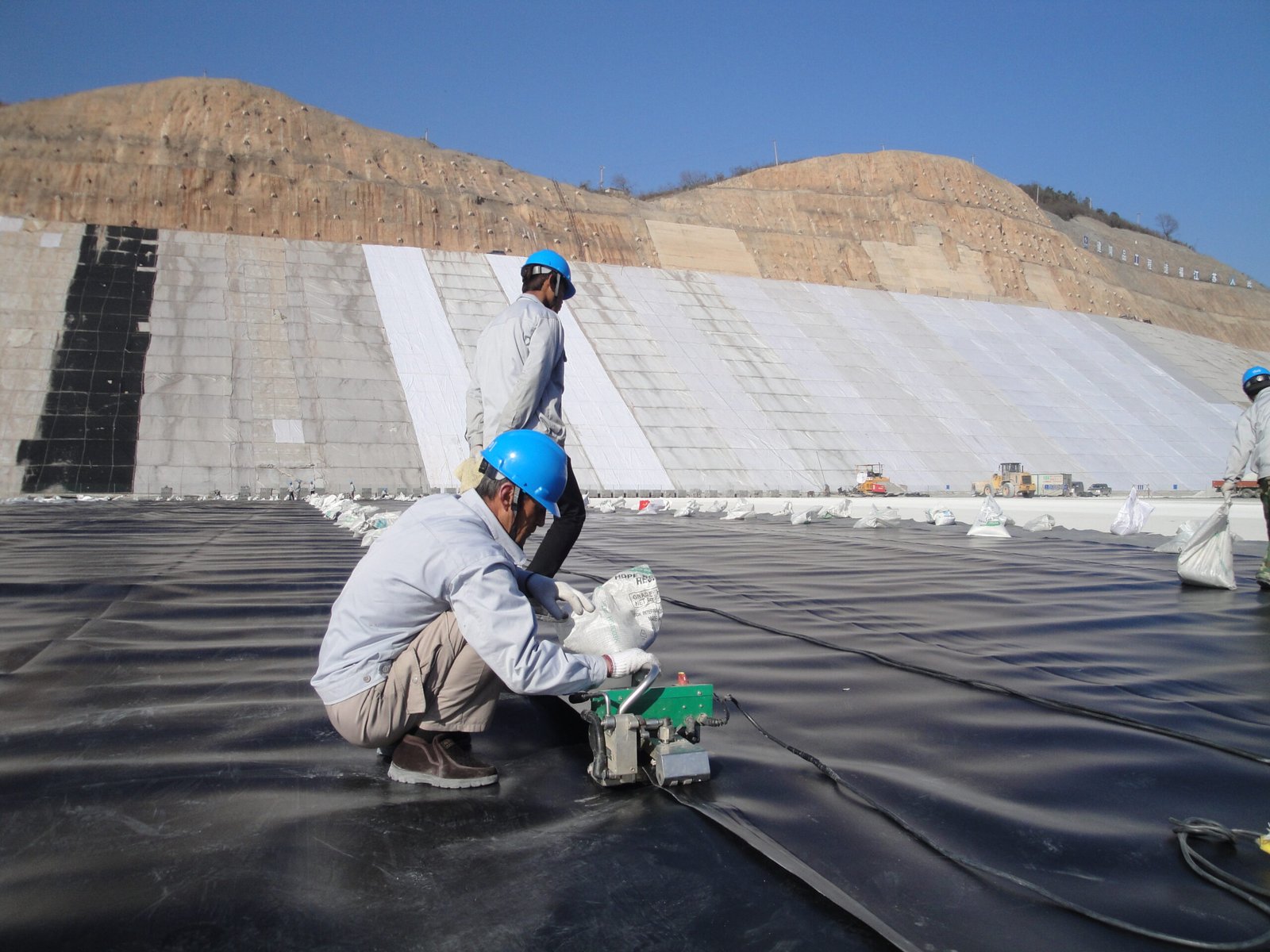
Polyethylene geo membranes (HDPE and LLDPE) are primarily joined by hot-wedge welding (typical parameters for HDPE: 380–450 °C, speed adjusted by thickness) or extrusion welding for details. Dual-track seams allow non-destructive air-channel testing. Proper parameter control yields seam strengths of 85–98 % of parent material. PVC is commonly seamed with solvents or adhesives; EPDM often uses tapes or specialized adhesives.
Long-term performance depends on antioxidant package (OIT and high-pressure OIT), carbon-black dispersion, protection from ultraviolet exposure, and mechanical damage during installation. Buried HDPE liners routinely achieve design lives of 50–100 years; exposed applications require careful UV stabilization.
BPM Geosynthetics Advantages in Geo Membrane Supply
The Project Material Co., Ltd. (BPM Geosynthetics) manufactures Smooth HDPE Geomembrane Liners that deliver GRI-GM13-compliant performance across a full thickness range of 0.5–3.0 mm. Virgin-resin formulations with 2.0–3.0 % carbon black achieve density 0.94 g/cm³, tensile yield strengths from 11 kN/m (0.75 mm) to 44 kN/m (3.0 mm), break strengths from 20 kN/m to 80 kN/m, elongation ≥ 700 %, puncture resistance from 240 N to 960 N, stress-crack resistance ≥ 500 h, and high-pressure OIT ≥ 400 min.
Approximately 7 m roll widths reduce field seams. Tight thickness tolerance ensures consistent welding behavior. Full third-party test documentation, ISO 9001 quality systems, and CE marking provide international traceability. Production capacity measured in tens of thousands of tons annually supports large landfill, mining, and industrial contracts with competitive pricing and reliable lead times. BPM liners have demonstrated field weld success rates consistent with the highest industry benchmarks across diverse climatic and chemical environments in more than 80 countries.
Engineers and project owners select BPM HDPE geo membranes when they require a proven balance of strength, chemical resistance, weldability, documentation, and value—particularly for primary landfill liners, heap-leach pads, industrial containment, and water-storage projects where the higher crystallinity and mechanical properties of HDPE outperform more flexible alternatives.
Material Selection Guidance for Geo Membranes
Specify HDPE (GRI-GM13) for primary landfill base liners, chemically aggressive environments, high-overburden applications, and projects prioritizing maximum tensile strength, puncture resistance, and documented stress-crack performance.
Specify LLDPE (GRI-GM17) for landfill caps, settlement-prone subgrades, complex geometries, and applications where high elongation and multiaxial strain capacity reduce stress concentrations.
Specify PVC or EPDM for highly irregular shapes, decorative water features, or temporary applications where flexibility and ease of seaming outweigh long-term chemical and UV durability requirements.
BPM Smooth HDPE serves as the high-performance default for most critical containment when long-term integrity and chemical resistance are paramount. Hybrid or dual-liner systems can combine materials where site conditions demand it.
Decision metrics include expected chemical exposure, differential settlement magnitude, overburden pressure, installation method, temperature range, regulatory requirements, and total installed cost inclusive of subgrade preparation and quality-assurance testing.
Conclusion
The top 10 geo membranes of 2026—Solmax HDPE/LLDPE, AGRU, GSE, NAUE, Atarfil, Layfield, specialty reinforced polyethylene, EPDM specialty, PVC specialty, and the BPM Smooth HDPE Geomembrane Liner—represent the current state of the art in impermeable barrier technology. HDPE grades deliver superior strength, chemical resistance, and long-term durability under GRI-GM13, while LLDPE provides unmatched flexibility, and PVC/EPDM serve specialized flexibility and ease-of-installation needs.
Among these, the BPM Geosynthetics Smooth HDPE Geomembrane Liner stands out for its balanced mechanical properties (tensile break up to 80 kN/m, puncture up to 960 N), consistent weldability, full GRI-GM13 compliance, comprehensive documentation, and competitive value for large-scale international projects. When specifying geo membranes, prioritize verified test data, thickness uniformity, welding documentation, chemical compatibility, and alignment with site-specific mechanical and regulatory demands.
For detailed technical data sheets, project quotations, or guidance on selecting the optimal geo membrane for your containment requirements, contact The Project Material Co., Ltd. (BPM Geosynthetics). Their Smooth HDPE Geomembrane Liner series is engineered to deliver reliable, long-lasting performance in the most demanding environmental, mining, industrial, and water-management applications.