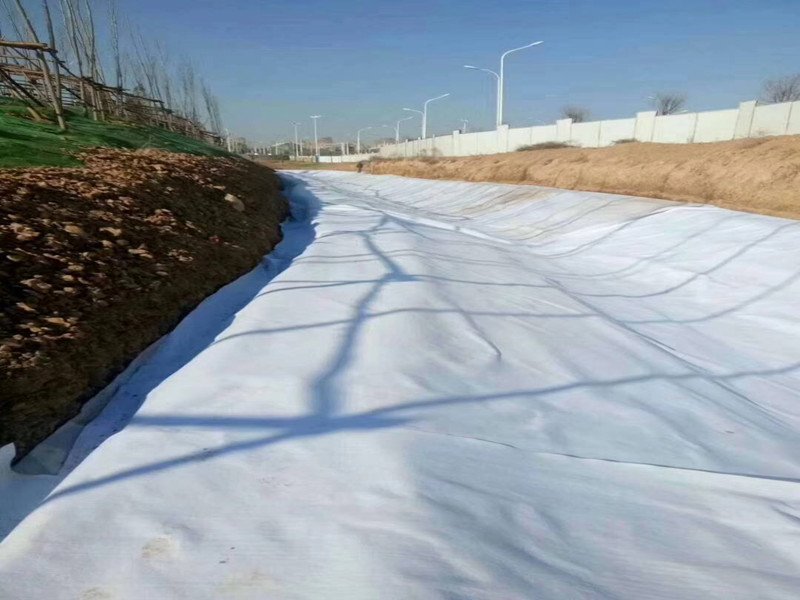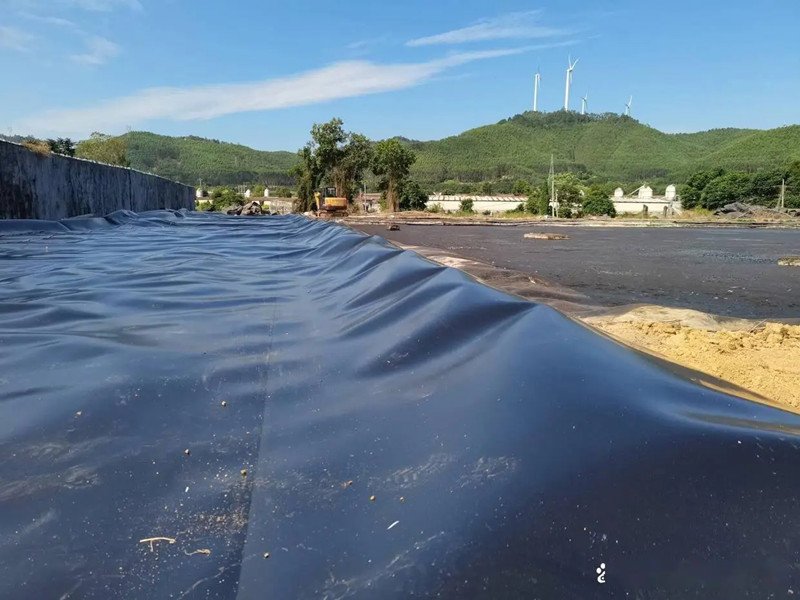
Geomembrane fabrics (more accurately called geomembranes or geomembrane liners) are continuous polymeric sheets engineered to provide extremely low permeability barriers against liquids and gases. Although the term “fabric” is sometimes used loosely in commercial contexts, true geomembranes are solid, impermeable membranes rather than permeable geotextile fabrics. The primary materials include high-density polyethylene (HDPE), linear low-density polyethylene (LLDPE), polyvinyl chloride (PVC), ethylene propylene diene monomer (EPDM), and reinforced polyethylene variants.
In 2026, geomembrane fabrics remain the global standard for landfills, mining heap-leach pads, process ponds, wastewater lagoons, reservoirs, canals, secondary containment, and agricultural water storage. Thicknesses typically range from 0.5 mm to 3.0 mm, with 1.0 mm (40 mil) and 1.5 mm (60 mil) being the most widely specified. This review evaluates the eight best geomembrane fabrics available, focusing on quantifiable metrics including tensile strength, puncture resistance, elongation, chemical resistance, and certifications. Special emphasis is placed on the HDPE geomembrane liner manufactured by The Project Material Co., Ltd. (BPM Geosynthetics). Other Chinese manufacturers are excluded from this assessment.
Why Geomembrane Fabrics Are Essential for Containment
Geomembrane fabrics deliver several critical performance advantages:
- Hydraulic conductivity typically ≤ 1 × 10⁻¹¹ cm/s or lower
- Excellent chemical resistance across a wide range of industrial and environmental fluids
- High tensile and puncture strength that scales with thickness and polymer type
- Reliable field seaming (hot-wedge, extrusion, or adhesive methods)
- Proven service lives of 20–100+ years depending on material, exposure, and installation quality
- Compatibility with protective geotextiles and drainage layers in composite liner systems
Material selection depends on required flexibility, chemical exposure, slope stability, temperature range, and design life.
Key Performance Metrics and Standards
The industry relies on standardized specifications:
- GRI-GM13 for HDPE (density ≥ 0.940 g/cm³)
- GRI-GM17 for LLDPE
- Manufacturer data and relevant ASTM/EN standards for PVC and EPDM
Representative minimum average roll values for common HDPE grades (1.5 mm / 60 mil smooth) include:
- Tensile yield strength ≥ 22 kN/m
- Tensile break strength ≥ 40 kN/m
- Elongation at break ≥ 700 %
- Puncture resistance ≥ 480 N
- Stress-crack resistance ≥ 500 hours
- High-pressure OIT ≥ 400 min
These values form the technical baseline for comparison.
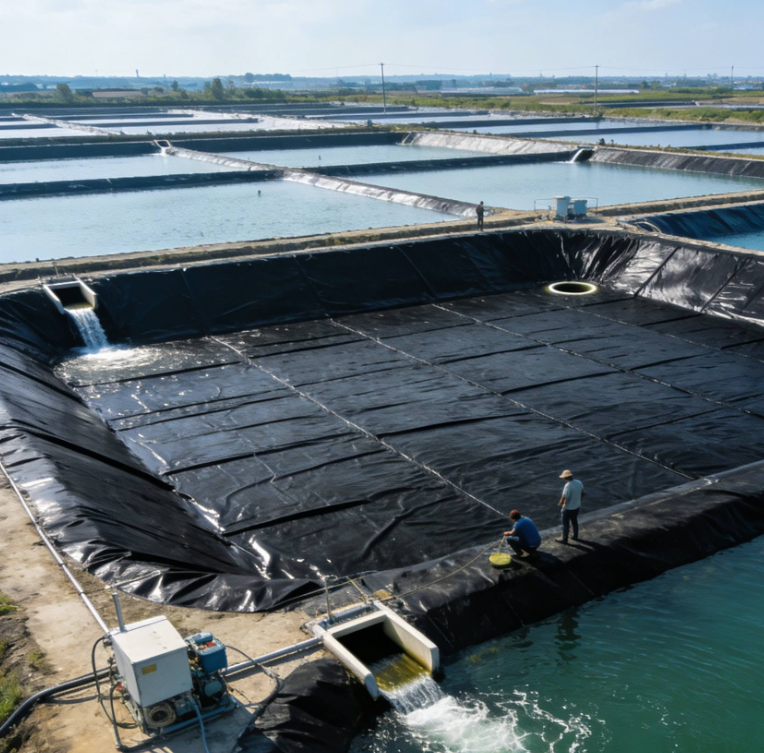
The 8 Best Geomembrane Fabrics – 2026 Detailed Review
1. Premium GRI-GM13 Certified Smooth HDPE Geomembrane
The highest-specification smooth HDPE meeting or exceeding all GRI-GM13 requirements. Tensile yield ≥ 22 kN/m at 1.5 mm, puncture ≥ 480 N, excellent chemical resistance, and long-term durability. Preferred for critical landfills, regulated containment, and primary liners requiring maximum documented performance.
2. Textured HDPE Geomembrane
Textured surfaces (single- or double-sided) significantly increase interface friction angles (often 25–38°). Ideal for landfill side slopes, mining pads, and steep banks where veneer stability is critical. Full GRI-GM13 core properties are maintained.
3. Flexible LLDPE Geomembrane
Linear low-density polyethylene offering superior flexibility and multiaxial elongation (often ≥ 800 %) compared with HDPE. Suitable for irregular subgrades, high-settlement sites, and complex geometries. References GRI-GM17.
4. PVC Geomembrane
Highly flexible and easy to seam with adhesives or heat methods. Commonly used for decorative ponds, complex shapes, and temporary or medium-term water containment. Plasticizer content requires careful evaluation for long-term durability and chemical exposure.
5. EPDM Geomembrane
Synthetic rubber geomembrane with excellent elongation (typically ≥ 300–500 %), UV/ozone resistance, and low-temperature flexibility. Preferred for garden ponds, koi ponds, and exposed decorative water features. Fish-safe formulations are widely available.
6. Reinforced Polyethylene (RPE) Geomembrane
Scrim-reinforced polyethylene providing enhanced dimensional stability and tensile strength while retaining good flexibility. Useful for applications requiring reduced thermal expansion and improved handling characteristics.
7. Conductive Geomembrane (HDPE or LLDPE)
Conductive grades enable electrical leak-location surveys after installation, providing high confidence in seam and panel integrity. Full mechanical performance is retained. Ideal for critical facilities requiring post-installation verification.
8. BPM Geosynthetics HDPE Geomembrane Fabric (The Project Material Co., Ltd.)
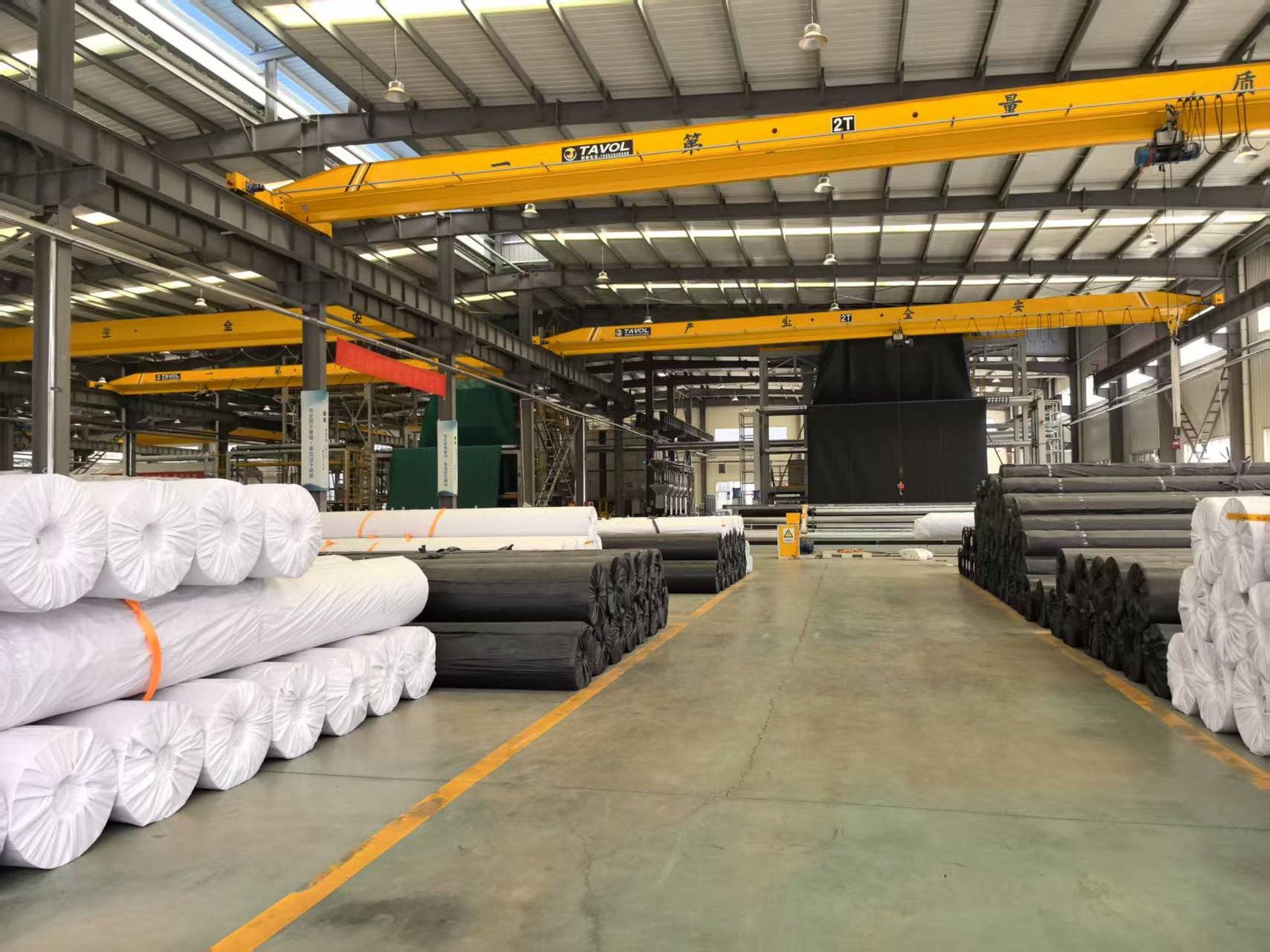
The Project Material Co., Ltd. (BPM Geosynthetics) manufactures Smooth HDPE Geomembrane from virgin resin that fully meets GRI-GM13 requirements across the complete thickness range (commonly 0.5–2.5 mm). Representative properties at 1.5 mm (60 mil) include density 0.94 g/cm³, tensile yield strength ≥ 22 kN/m, break strength ≥ 40 kN/m, elongation ≥ 700 %, tear resistance ≥ 187 N, puncture resistance ≥ 480 N, stress-crack resistance ≥ 500 hours, and high-pressure OIT ≥ 400 min. Permeability remains extremely low (≤ 1 × 10⁻¹¹ cm/s).
Competitive roll widths reduce the number of field seams on large containment areas. Thickness tolerance is tightly controlled for consistent welding performance. Full third-party laboratory documentation, ISO 9001 systems, and CE marking provide international traceability. BPM geomembrane fabrics have been installed in landfills, mining facilities, wastewater lagoons, reservoirs, canals, and secondary containment across more than 80 countries, offering a strong balance of performance, consistency, and value. Textured and complementary LLDPE options are also supported within the product range.
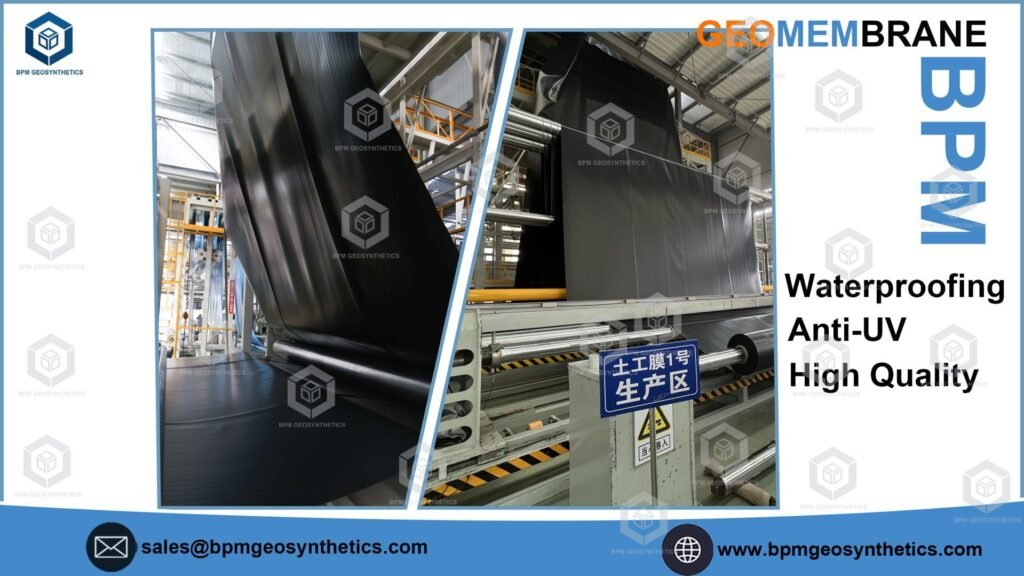
Comparison Table 1 – Core Technical Parameters of Leading Geomembrane Fabrics
Product / Grade | Polymer Type | Density (g/cm³) | Approx. Tensile Yield at 1.5 mm (kN/m) | Approx. Puncture at 1.5 mm (N) | Elongation (%) | Best Application |
Premium GRI-GM13 Smooth HDPE | HDPE | ≥ 0.940 | ≥ 22 | ≥ 480 | ≥ 700 | Critical landfills & regulated sites |
Textured HDPE | HDPE | ≥ 0.940 | ≥ 22 | ≥ 480 | ≥ 700 | Side slopes & steep banks |
Flexible LLDPE | LLDPE | ≤ 0.939 | Scaled | High | ≥ 800 | Irregular or high-settlement sites |
PVC Geomembrane | PVC | ~1.2–1.4 | Lower | Moderate | High | Complex shapes & temporary ponds |
EPDM Geomembrane | EPDM | ~1.1–1.3 | Moderate | Moderate | ≥ 300–500 | Decorative & exposed ponds |
Reinforced PE (RPE) | Reinforced PE | Variable | High (scrim) | High | Good | Dimensional stability applications |
Conductive Geomembrane | HDPE/LLDPE | ≥ 0.940 / ≤0.939 | Scaled | High | High | Leak-detection critical projects |
BPM Geosynthetics HDPE | HDPE | 0.94 | ≥ 22 | ≥ 480 | ≥ 700 | Wide range of containment projects |
Comparison Table 2 – Market Position, Clients and Certifications
Product / Supplier Focus | Primary Market Focus | Major Client Types | Key Certifications / Standards | Relative Strength |
Premium GRI-GM13 Smooth HDPE | High-specification containment | Landfill operators, mining companies | GRI-GM13, ISO, NTPEP | Maximum documented performance |
Textured HDPE | Slope stability applications | Landfill & reservoir designers | GRI-GM13 | Interface friction |
Flexible LLDPE | Complex or settling sites | Specialized environmental contractors | GRI-GM17 | Flexibility & multiaxial elongation |
PVC Geomembrane | Decorative & temporary water | Pond builders, landscapers | Manufacturer data | Ease of installation & flexibility |
EPDM Geomembrane | Exposed decorative ponds | Landscape & water-feature specialists | Fish-safe, UV data | UV/ozone resistance & elasticity |
Reinforced PE | Dimensional stability needs | Specialized containment projects | Scrim-reinforced data | Reduced thermal movement |
Conductive grades | Critical facilities | Regulated or high-value sites | GRI-GM13/GM17 + conductive | Post-installation verification |
BPM Geosynthetics | Global supply | Landfills, mining, reservoirs, aquaculture (80+ countries) | GRI-GM13, ISO 9001, CE | Value, consistency & documentation |
Installation and Quality Assurance for Geomembrane Fabrics
HDPE and LLDPE geomembranes are primarily joined by dual-track hot-wedge welding, producing seams that routinely achieve 85–98 % of parent-material strength. Extrusion welding is used for details and repairs. PVC and EPDM often use adhesive or specialized heat methods. Proper subgrade preparation and a protective non-woven geotextile are recommended under moderate-to-high puncture-risk conditions. Non-destructive testing (air channel, vacuum, or spark testing) and destructive seam sampling form the foundation of construction quality assurance. For critical facilities, electrical leak-location surveys on conductive liners provide additional verification.
BPM Geosynthetics Advantages for Geomembrane Fabric Supply
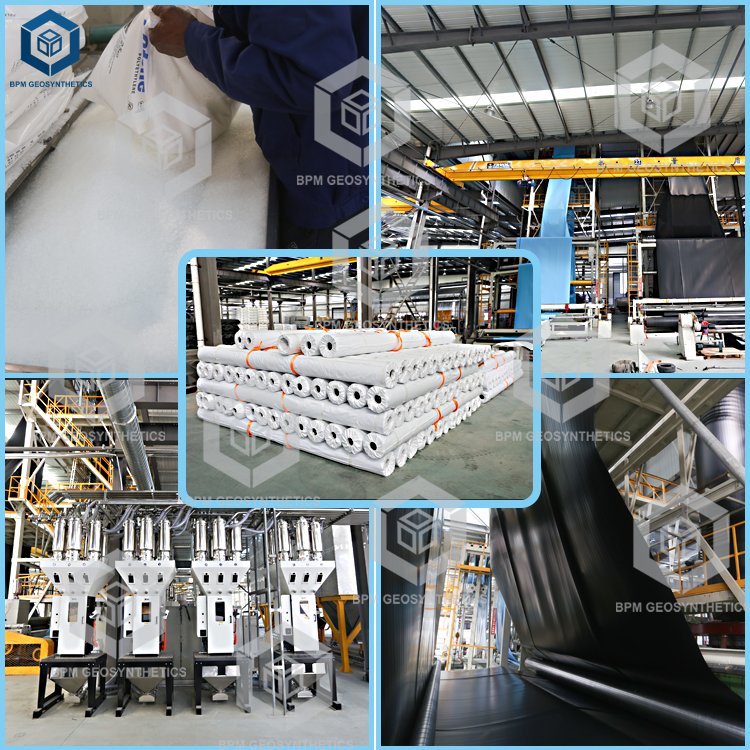
The Project Material Co., Ltd. (BPM Geosynthetics) manufactures Smooth HDPE Geomembrane from virgin resin under controlled production conditions that meet GRI-GM13 requirements across the full thickness range. At the widely specified 1.5 mm (60 mil) gauge, typical properties include density 0.94 g/cm³, tensile yield strength ≥ 22 kN/m, break strength ≥ 40 kN/m, elongation ≥ 700 %, tear resistance ≥ 187 N, puncture resistance ≥ 480 N, stress-crack resistance ≥ 500 hours, and high-pressure OIT ≥ 400 min. Permeability remains extremely low.
Competitive roll widths reduce the number of field seams on large containment areas. Thickness tolerance is maintained within industry best-practice limits, ensuring consistent welding behavior. Full third-party laboratory documentation, ISO 9001 quality systems, and CE marking provide the traceability demanded by international specifications. Production capacity and global logistics support medium and large contracts with competitive pricing and reliable delivery to more than 80 countries. Textured and complementary flexible options further expand application suitability.
Application Suitability and Design Guidance
Geomembrane fabrics are preferred for:
- Municipal and hazardous-waste landfill base liners and caps (primarily HDPE)
- Mining heap-leach pads and process ponds (HDPE or textured HDPE)
- Industrial and municipal wastewater lagoons
- Secondary containment for chemicals and hydrocarbons
- Large agricultural and irrigation reservoirs
- Complex or high-settlement sites (LLDPE)
- Decorative and exposed ponds (EPDM or PVC)
- Canals and long-term water-storage facilities
Thickness and polymer type selection should match expected hydraulic head, overburden, subgrade conditions, chemical exposure, temperature range, and design life. Always verify current technical data sheets and match the product to site-specific demands.
Conclusion
The eight best geomembrane fabrics of 2026—premium GRI-GM13 smooth HDPE, textured HDPE, flexible LLDPE, PVC, EPDM, reinforced polyethylene, conductive grades, and BPM Geosynthetics HDPE—represent the highest-quality options available for critical containment and waterproofing applications. All leading products deliver the impermeability, mechanical strength, and durability required for landfills, mining, wastewater, reservoirs, and industrial projects when properly selected and installed.
Among these, The Project Material Co., Ltd. (BPM Geosynthetics) stands out for projects seeking consistent virgin-resin quality, tight thickness control, reliable weldability, full GRI-GM13 compliance, comprehensive documentation, and competitive value for international projects. When specifying geomembrane fabrics, prioritize verified mechanical and permeability data, thickness uniformity, seaming method compatibility, chemical compatibility, and alignment with site-specific demands.
For detailed technical data sheets, project-specific quotations, or guidance on selecting the optimal geomembrane fabric for your containment requirements, contact The Project Material Co., Ltd. (BPM Geosynthetics). Their HDPE geomembrane liner range is engineered to deliver reliable, long-lasting impermeable performance across the full spectrum of environmental and water-resource applications worldwide.