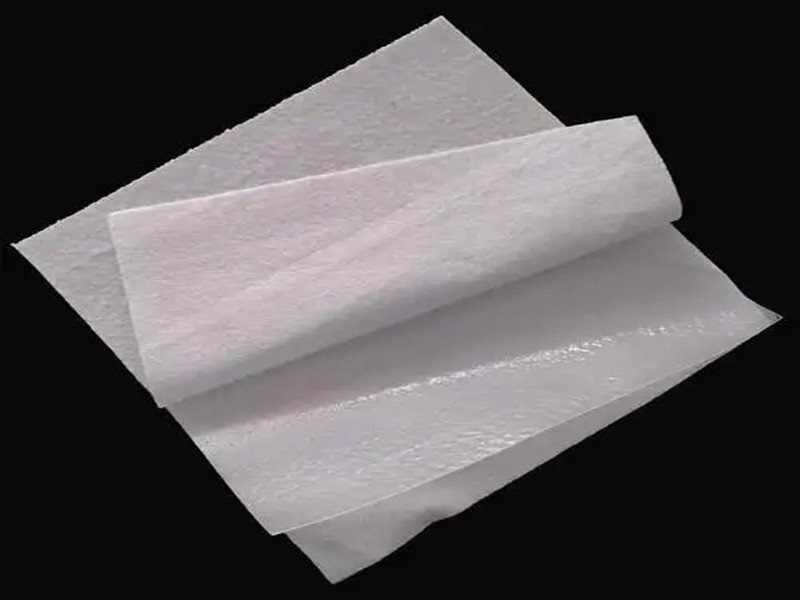
Composite geomembranes are multi-layered geosynthetic materials combining a membrane and fabric. They typically use high-density polyethylene (HDPE), linear low-density polyethylene (LLDPE), or polyvinyl chloride (PVC) geomembrane as the core layer, covered with one or two layers of needle-punched nonwoven geotextile. They are formed in one step through thermal bonding, adhesive bonding, or calendering processes. Based on the number of fabric layers, they are available in specifications such as “one fabric layer and one membrane,” “two fabric layers and one membrane,” and “one fabric layer and two membranes.”
1.Structural Principles
1.1 Intermediate Membrane Layer:
Permeability coefficient ≤1×10⁻¹² cm·s⁻¹, providing a barrier against liquids or gases.
1.2 Side Fabric Layers:
Distribute stress, resist punctures and bursts, and protect the membrane from construction damage and UV aging.
1.3 Interface Synergy:
After thermal fusion, the fabric and membrane form a unified whole, with a tensile strength exceeding 20 kN·m⁻¹ and an elongation >40%, adaptable to uneven foundation settlement.
2.Core Applications
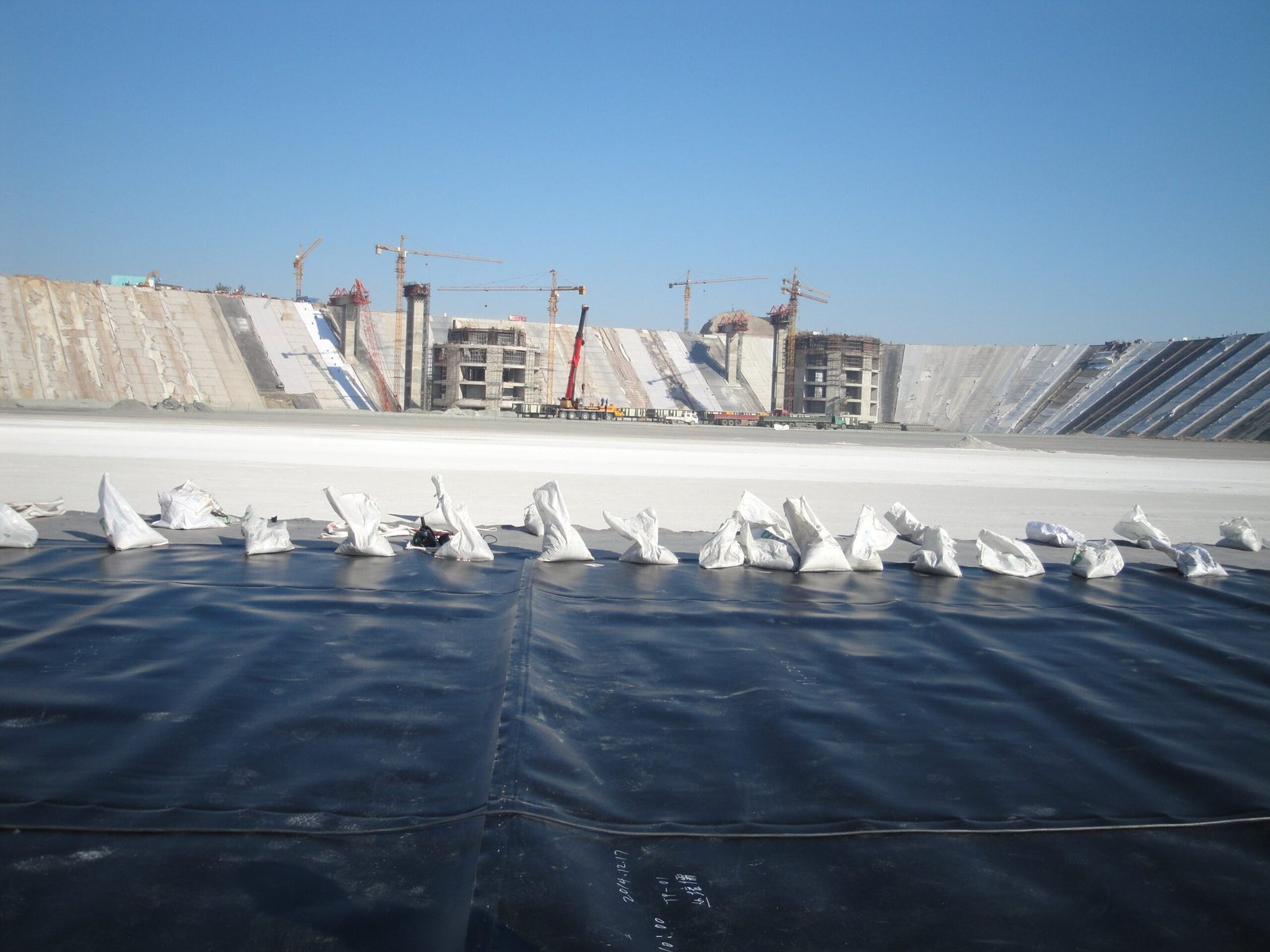
2.1 Water Conservancy and Reservoirs:
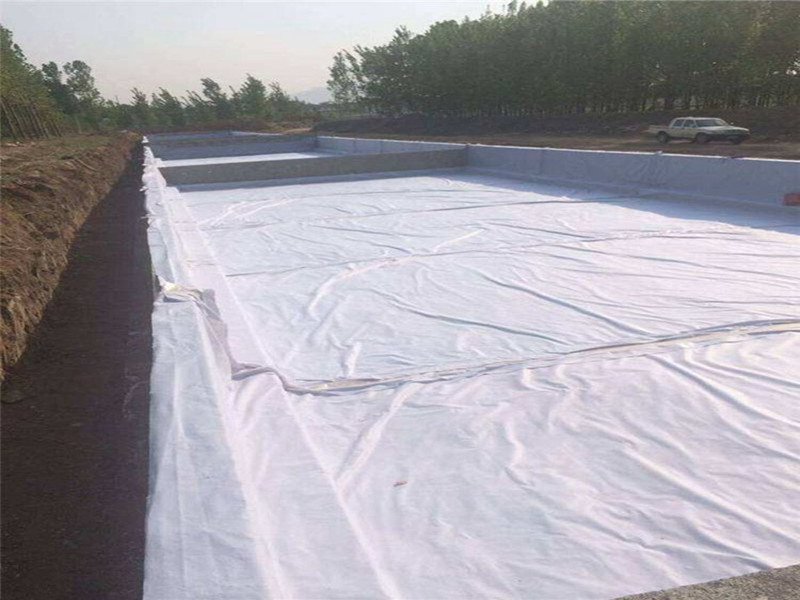
Lining of reservoirs, rivers, artificial lakes, and channels; replaces the traditional clay + membrane “two-layer cloth, three-layer felt” process, reducing the thickness of the seepage prevention section by 30%–50% and shortening the construction period by 40%.
2.2 Environmental Engineering:
Bottom seepage prevention and sealing of municipal solid waste landfills; hazardous waste storage facilities; leachate regulating ponds; resistant to corrosion from high concentrations of NH₄⁺、COD、Cl⁻ leachate; service life > 30 years.
2.3 Transportation and Municipal Engineering:
Soft soil isolation layer for highways and railways; waterproof cushion layer between the primary support and secondary lining of tunnels; seepage prevention for airport runways and aprons; prevents groundwater rise that could cause frost heave or frost heave in the roadbed.
2.4 Agriculture and Mining
Biogas digesters, shrimp ponds in aquaculture, salt field crystallization ponds; mine tailings ponds, heap leaching fields, cyanide tailings ponds, combining seepage prevention and drainage functions to reduce the risk of acidic wastewater leakage.
3.Performance Advantages
3.1 Seepage Prevention + Reinforcement “Two-in-One”
Single HDPE membrane is easily punctured by sharp objects. After lamination, the puncture strength is increased by 3-5 times, and the tensile strength is increased by more than 2 times, meeting the requirements of high water head and high load conditions.
3.2 Convenient Construction and Strong Adaptability
Roll width 2-7 m, each roll weighs 150-400 kg, can be laid flat, on slopes, or suspended. The requirement for base surface flatness is lower than that of concrete, reducing labor by 30%.
3.3 Chemical Corrosion Resistance and Aging Resistance
The membrane layer contains 2%–2.5% carbon black and antioxidants, and the fabric layer contains UV stabilizers. After 5,000 hours of UV aging, the strength retention rate is >85%, allowing for long-term service in environments with pH 3–11.
3.4 Drainage and Filtration Function
The non-woven fabric has a porosity of 80%–90%, allowing gas or seepage water under the membrane to be discharged laterally, preventing membrane rupture caused by “air hammer” or “water hammer,” and also providing a reverse filtration and soil retention function.
3.5 Economical Overall Cost Advantage
Although the unit price is higher than that of a single membrane, the elimination of upper and lower bedding layers, geotextiles, and other supporting materials reduces the overall cost by 15%–25%, and the cost of subsequent leakage repair is almost zero.
3.6 Easy to detect and repair
100% non-destructive testing can be performed using vacuum chamber, EDM, or dual-electrode method; when holes are found, hot melt welding rods can be used for on-site repair, with repair strength ≥ 85% of the base material.
5.Construction Key Points
5.1 Substrate:
Remove tree roots and stones; compaction degree ≥90%, local unevenness <2 cm.
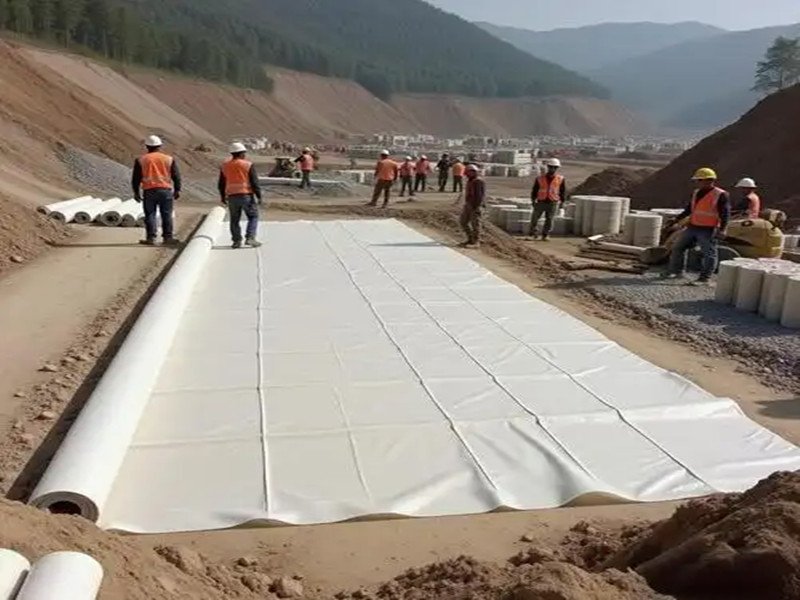
5.2 Laying:
Fabric side up, membrane side down; overlap width 10 cm (hot-melt welding) or 15 cm (adhesive bonding).
5.3 Welding:
Membrane layers use double-track hot-melt overlap; weld shear strength ≥85% of the parent material; fabric layers are sewn or hot-air bonded.
5.4 Inspection:
Vacuum test once per 1000 m², 100% electric spark scanning; repair any holes immediately.
5.5 Backfilling:
First lay 30 cm of fine soil or sand as a buffer; direct compaction by heavy machinery is strictly prohibited.
5. Summary
In summary, composite geomembranes solve the pain points of traditional membranes, such as easy damage, easy aging, and high construction and protection costs, and have become the preferred material for seepage prevention systems in modern water conservancy, environmental protection, transportation, mining, and other fields.
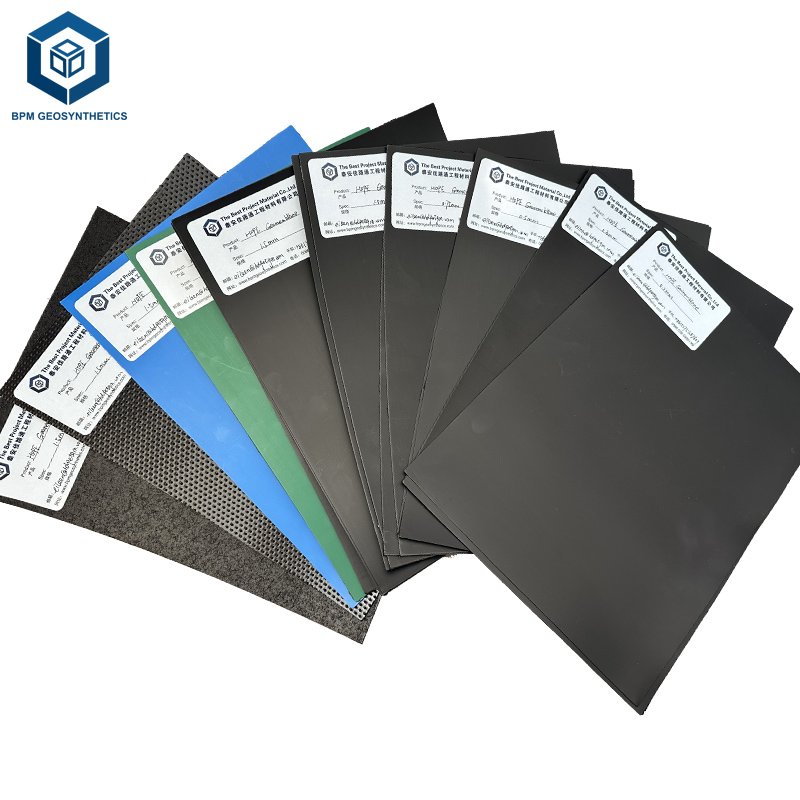
The Best Project Material Co., Ltd (BPM) is the leading geomembrane manufacturer, supplier, wholesaler and exporter. Our main innovative products include Smooth Geomembrane HDPE Liner, Textured HDPE Geomembrane, Composite Geomembrane Liner and other geosynthetics, etc. All of them had been certificated by the ISO9001, ISO14001, Soncap, SASO and BV certificates and passed SGS and Intertek test.